Advertisement
Advertisement
June 2016
An Interview With Raghu Kolluri, MD
The VEINS meeting course director discusses ideal interdisciplinary vascular care and reflects on the physicians who continue to mentor and inspire him.
When and how did you decide that you wanted to specialize in vascular medicine?
I attended internal medicine residency at Riverside Methodist Hospital in Columbus, Ohio, with the goal to become an intensivist. While on cardiology service during my internship, however, I saw a patient with bilateral brachial artery fibromuscular dysplasia and eventually published a case report and literature review on this topic with Dr. Gary Ansel. I was exposed to the field of vascular medicine by Drs. Ansel and Mitchell Silver. During the second year of my residency, I spent an elective month in the vascular medicine section at the Cleveland Clinic and fell in love with the field. I then went on to complete a fellowship program in vascular medicine at the Cleveland Clinic.
Who were your greatest mentors, and what is some of the most memorable advice you received?
I have many mentors and role models. During my internship, Dr. Ansel once said, “We have lots of folks in the cath lab—we need more good doctors outside the cath lab in the field of vascular medicine.” That statement essentially shaped my career. It has been a pleasure and an honor to work with him at OhioHealth, and I continue to seek his advice regularly. Dr. John (Jerry) Bartholomew, my program director at Cleveland Clinic, had a huge influence on me. I remember him once saying, “We can do all we want with research and publishing papers, but as a doctor, it is our duty to care for patients.” His attention to detail is incredible. Dr. Bartholomew is a very kind man and routinely went back to check on the complex patients, even after we had signed off on the consult, just to make sure everything was going well.
I also called upon Dr. Michael Jaff at every crucial step of my career for advice, and I still call on him for guidance. Dr. Thom Rooke is my role model for teaching. His ability to simplify the most complex clinical topic into a highly entertaining lecture is enviable. As I mature in my career, I feel lucky to work with my mentors as colleagues. Of course, my father, Dr. Rangaiah Kolluri, was my first mentor. He is a family practitioner who continues to provide care for indigent patients in India. He encouraged me to not only become a physician, but he also taught me the importance of serving in medical societies.
What do you think is the ideal working/collaborative relationship between noninterventional specialists such as yourself, as well as the Society of Vascular Medicine (SVM), with interventional/surgical practitioners and societies?
I see patients in the clinic every day of the week as a vascular medicine specialist, unlike my interventional and surgical colleagues who need to spend time in the cath lab or in the operating room. This allows increased patient volume for the practice and increased disease diagnosis and identification. Incorporating vascular medicine into interventional and surgical practices really kicks the patient care up a notch in my opinion. I believe that the vascular disease spectrum is too vast to be able to be cared for by one single specialty. At OhioHealth, I receive consults from my vascular surgery and cardiology partners routinely. These consults range from anticoagulation issues to hypercoagulable state management. They also refer patients to me for atypical lower extremity wounds, rare vascular entities, Raynaud’s disease, and lymphedema. At OhioHealth, vascular medicine specialists have played a key role in the development of unbiased multispecialty clinical pathway guidelines.
As the treasurer and a member of the executive board of SVM, it makes me happy to see a strong interest among other vascular societies to collaborate with us. SVM is routinely asked to endorse multisociety guidelines for management of vascular disease. As a specialty, we feel like we are the Switzerland of vascular disease. We have no skin in the game, in regard to surgery or intervention. Appropriate evidence-based patient care is all we care about. We are very happy to work with our surgical and interventional colleagues. All top-notch cardiovascular centers in the United States either have vascular medicine specialists or are looking for one to join their team. I believe, with increasing age and increasing awareness of vascular disease, we need more vascular teams to care for our patients, and I believe that vascular medicine will be an integral part of these teams.
Practicing in a large organization like OhioHealth, with 11 hospitals and multiple vascular practices and specialties, how do you strive to deliver a uniform level of care at all sites?
As mentioned, the vascular team concept is key in managing our vascular patients. A couple of years ago, our health system created the OhioHealth Vascular Institute (OHVI). The executive committee consists of members representing cardiothoracic surgery, interventional cardiology, interventional radiology, vascular medicine, and vascular surgery. Our aim is to deliver cost-effective, integrated, comprehensive vascular care of the highest quality that best serves our patients.
Providing uniform care across the system has been a top priority for us. This does not mean that all procedures and surgeries are done at all hospitals. For example, if superficial femoral artery disease is treated at an outlying hospital, the care provided for that patient should be no different than the care provided at the tertiary care center. The most complex procedures are limited to the tertiary care centers within the system. OHVI members can obtain either global or partial credentialing, depending on their skill set. New members also undergo peer review and are mentored by senior members of the institute in a very collegial manner. We also unified our vascular lab protocols across all the vascular labs within the system. It was a challenge to unify protocols in approximately 25 vascular labs that are managed by several medical and technical directors across the system, but we did it. As a result, a patient can get a carotid duplex at any vascular lab within our health system, and the interpretation of that duplex will be identical at all sites. With regular quality improvement meetings, ongoing peer review, and reappointment credentialing, we hope to continue delivering world-class care to our vascular patients in central Ohio.
Are there any innovative ways to increase vascular referrals and communicate with colleagues in a HIPAA-compliant manner in modern-day clinical practice?
Yes, there are. Over the last 2 years, OHVI turned into a very large entity without walls. We needed a place to store all of the clinical pathway guidelines we had created. These guidelines needed to be easily accessible to our members, our referring doctors, and emergency room doctors. We also wanted to communicate with each other and with the referring doctors in a HIPAA-compliant manner. This lead to the creation of the OHVI app. Pagers have become obsolete, and all doctors carry smart phones. Our app allows the referring doctors to access our membership list by our specialty and location. The clinical pathway guidelines for the most common vascular diseases are also easily accessible. HIPAA-compliant messaging is available within this app. The members can also access ongoing clinical trials within the health system and quickly look up the inclusion and exclusion criteria. It has been a great success for us, and we continue to add new features to this app. The OHVI app is available both on the Apple App Store and Google Play at no charge.
The VEINS meeting is coming up on its fifth anniversary this September in Las Vegas. What can attendees expect to learn and experience this year?
It is fantastic to see The VEINS grow every year. The move to join and co-localize with VIVA has been an incredible experience. The VEINS has distinguished itself as the venous meeting with faculty representing all vascular specialties. The merger with VIVA has allowed attendees to get the entire breadth of vascular education, including arterial, lymphatic, thrombotic, and venous disease. New for this year is a wound care session. We are fortunate to have stellar faculty running this session, including podiatry and plastic surgery, along with the vascular specialists. This session will be a complement to both The VEINS and the critical limb ischemia precourse content.
During the main sessions, faculty panel members will discuss critical issues in vascular research that affect patient care in a roundtable session format. On-stage live patient scanning will allow audience participation and interaction with faculty in an intimate setting. Attendees will also get an opportunity to perform duplex scans in small groups on volunteer patients. In summary, the audience will experience state-of-the-art venous content delivered by both national and international experts. I hope to see your readers in Vegas this September.
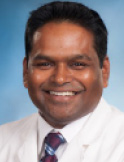
Raghu Kolluri, MD
System Medical Director, Vascular Medicine
Medical Director of Vascular Laboratories
OhioHealth Heart and Vascular Service Line
Columbus, Ohio
raghu.kolluri@ohiohealth.com
Disclosures: Consultant/speaker for Medtronic, Boston Scientific Corporation, Bard Peripheral Vascular, Philips Volcano, Spectranetics Corporation, and Cook Medical.
Advertisement
Advertisement
Interested in reading more interviews?
To read more interviews with thought leaders in the vascular field, check out our Profiles & Perspectives hub.
Read More