Advertisement
Advertisement
October 2016 Europe Supplement
Sponsored by Boston Scientific Corporation
The Future of Drug-Eluting Therapies: What Will the Treatment Algorithm Look Like?
Prior to the advent of drug-eluting therapies in the superficial femoral artery (SFA), specifically drug-eluting stents (DESs) and drug-coated balloons (DCBs), there really existed no agreed-upon algorithm to direct revascularization in this vascular territory. All devices (balloons, stents, covered stents, atherectomy, etc) had their niches, their advocates, and their detractors, and it was reasonable from a data perspective to use any or all of them depending on the circumstance, lesion-specific qualities, and operator preference. Moreover, there are a variety of operators—vascular surgeons, interventional radiologists, and interventional cardiologists—whose specialties may each have their own preferred approaches and opinions on relevant endpoints.
Enter the DES and DCB therapies and their ability to deliver antiproliferative drug to the vessel wall; head-to-head data have demonstrated a clear advantage over standard percutaneous transluminal angioplasty (PTA). Further, in the case of the Zilver PTX DES (Cook Medical), data against bare-metal stents (BMSs) also demonstrate superiority. In many interventional labs, these two device categories have begun to provide the possibility of a final common pathway; that is, regardless of the tools used to achieve and secure acute procedural patency, DESs and DCBs are the finishing therapy used to assure the maximum potential for long-term patency.
FACTORS GOING INTO PROCEDURAL DECISION MAKING
In this construct, then, how does the operator choose between DES and DCB? There are several important aspects related to this decision; specifically, many of the following factors (and others not listed) will be variably weighted by each operator, and it is unlikely that any two operators are exactly alike in their ultimate assessments. The following are considerations for the intervention, lesion, patient, or clinical/economic environment, and it is important to remember that these issues can be used in combination and are not mutually exclusive from one another:
- Acute/procedural tolerance for a non–stent-like angiographic result
- Amount of the lab time per intervention
- Degree of aversion to implanting metal prosthesis (stent)
- Lesion complexity
- Degree of calcification
- Presence of chronic total occlusion
- Lesion(s) at flexion points
- Prior intervention: in-stent restenosis (ISR) versus prior PTA restenosis
- Lesion length
- Familiarity/comfort/preference/patience with atherectomy devices
- Long-term patency data
- Claudication versus critical limb ischemia
- Reimbursement pressures related to:
- Office-based lab (OBL): no transitional pass-through payment for DCB and solid reimbursement for stent and/or atherectomy
- Risk sharing for 1- to 2-year outcomes
Let’s walk through a few of these considerations to better understand how they might affect choice of interventional tools, which operators they are most relevant for, and how they might be combined to come up with a treatment plan.
ACUTE/PROCEDURAL TOLERANCE FOR A NON–STENT-LIKE ANGIOGRAPHIC RESULT
This particular factor applies specifically to the operator’s willingness to nuance the result of their intervention after PTA (with or without other adjunctive devices) in conjunction with the use of a DCB. This generally boils down to not only the operator’s comfort with an imperfect result that may not look like a traditionally successful outcome, but also their willingness and availability (office patients waiting, etc) to spend a bit more time in lesion assessment postintervention. It also may relate to the willingness and ability of the operator to use adjunctive therapy (specialty balloon, atherectomy, etc) ahead of the PTA, which is likely to improve the post-PTA result and give a more stent-like result but will take more time to set up (eg, filter deployment) and perform, especially in the case of atherectomy. Obviously this consideration also relates, in most cases, directly to the complexity of the lesion because this will affect the choice of tools and outcome of intervention.
DEGREE OF AVERSION TO IMPLANTING METAL PROSTHESIS (STENT)
Some operators will prefer to implant a stent—it is both expedient and gives a certainty of result that largely eliminates the need to spend time and effort to further assess/treat the lesion as well as the associated small risk of early failure.
Other operators have the complete opposite thinking and will prefer to avoid implanting a stent whenever possible primarily due to the difficulty of managing/treating in-stent restenosis (ISR). Should it occur, the likelihood of recurrent ISR after first ISR treatment is approximately 70% at 6 months; although this has been shown to be improved after laser debulking,1 it still remains approximately 50% at 6 months. These operators may be more willing to work toward a nonstent solution up front in the initial procedure so their use of adjunctive devices and DCBs is likely to be much greater.
To be fair, there are simply times when the lesion and its response to initial interventional maneuvers will dictate the course of required therapy. Witness the IN.PACT Global registry long-lesion cohort, which reported > 40% stent usage in combination with DCB for lesions > 21 cm in length—note that the patency of the long-lesion length group did not suffer too badly but may have been positively impacted due to the use of a scaffold. Or the data from Fanelli et al’s initial analysis demonstrating the untoward effect that increasing degrees of calcium have on long-term patency after DCB treatment.2 This is countered, fortunately, both with some preclinical data from Tellez et al3 demonstrating no decrement in drug uptake in vessels first treated with rotational atherectomy in hypercholesterolemic swine, as well as clinical data from the pilot DEFINITIVE AR study suggesting a trend toward better long-term patency with adjunctive directional atherectomy.4 Lastly, the early uncontrolled but prospective data for DCB treatment of ISR (IN.PACT Global study) appears to be encouraging, thus limiting some of the prior concerns with the phenomenon of ISR.
PROPOSED ALGORITHM FOR THE APPLICATION OF ANTIPROLIFERATIVE THERAPY CHOICES IN THE SFA
In our lab, the decision to use either a DES or DCB is predicated on the presenting lesion appearance, as well as its response to the first therapeutic maneuver. As an extreme example, in a long chronic total occlusion with significant calcium, it is unlikely that a simple PTA/DCB combination will be successful, in which case atherectomy—if appropriate to the crossing path of the wire—would be used first. If not possible to debulk, then PTA and DES would be chosen. For most other lesions with less severe presenting anatomic features, most would have a predilation or debulking and then an assessment of the lesion appearance and estimation of the need for scaffolding. If favorable as a stand-alone preparatory result, then a DCB would be employed to finish the procedure, always with the back-up of a BMS should the need arise after the DCB.
NEW DES DATA ON THE HORIZON
Heretofore, there had been only one SFA DES—with good long-term data—available for use in the United States, the Zilver PTX. But a novel DES has been introduced by Boston Scientific, the Eluvia platform, which has performed admirably in its first human experience, the MAJESTIC trial (57 patients). This DES has a polymer coating designed to allow a sustained elution of the paclitaxel from its surface beyond 1 year in keeping with the temporal biology of SFA restenosis (Figure 1), rather than in the early burst pattern seen in the Zilver PTX device that has no polymeric coating. The MAJESTIC study demonstrated remarkable 1-year outcomes with Eluvia, with a primary patency of 96.1%. At the 2016 CIRSE meeting, the 2-year data were reported, showing an equally remarkable and unprecedented freedom from target lesion revascularization of 92.5%, with 91% of patients reporting little or no claudication symptoms or limitations (Figure 2).

Figure 1. The Eluvia DES surface polymer construction.

Figure 2. MAJESTIC trial freedom from target lesion revascularization through 24 months.
Even more exciting is the current head-to-head IMPERIAL trial, the first of its kind for antiproliferative SFA therapies, comparing the Zilver PTX and Eluvia platforms in a randomized fashion. This trial will better inform the DES choices for operators in the SFA and will begin to replace the usual, but only semiquantitative, post-hoc unbalanced comparisons between trials of different devices not directly tested against each other. The trial is more than halfway completed enrollment and is enrolling quickly. Results should be available in 2018.

Figure 3. The Eluvia clinical trials are expected to study nearly 1,800 patients across more than 100 centers worldwide.
Additional clinical data in a less select, real-world population of patients will be obtained from two further studies in Europe (Figure 3). The 750-subject EMINENT trial is currently enrolling in Europe, randomizing Eluvia to BMS in a 2:1 ratio. EMINENT will also provide important economic data that will inform decision making on device selection and the clinical returns for the patient at the payer level as well. The second trial currently underway is the REGAL Registry, which will enroll 500 nonrandomized patients, also in a broad anatomic and clinical group of patients in order to further extend the indications for this promising technology.
1. Dippel EJ, Makam P, Kovach R, et al; EXCITE ISR Investigators. Randomized controlled study of excimer laser atherectomy for treatment of femoropopliteal in-stent restenosis: initial results from the EXCITE ISR trial (EXCImer Laser Randomized Controlled Study for Treatment of FemoropopliTEal In-Stent Restenosis. JACC Cardiovasc Interv. 2015;8:92-101.
2. Fanelli F, Cannavale A, Gazzetti M, et al. Calcium burden assessment and impact on drug-eluting balloons in peripheral arterial disease. Cardiovasc Intervent Radiol. 2014;37:898-907.
3. Tellez A, Dattilo R, Mustapha JA, et al. Biological effect of orbital atherectomy and adjunctive paclitaxel-coated balloon therapy on vascular healing and drug retention: early experimental insights into the familial hypercholesterolaemic swine model of femoral artery stenosis. EuroIntervention. 2014;10:1002-1008.
4. Zeller T. DEFINITIVE AR: a pilot study of antirestenosis treatment. Presented at Vascular InterVentional Advances (VIVA); November 4-7, 2014; Las Vegas, NV.
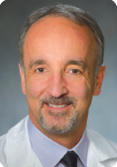
William A. Gray, MD
System Chief of Cardiovascular Services
Main Line Health
President
Lankenau Heart Institute
Wynnewood, Pennsylvania
grayw@mlhs.org
Disclosures: Consultant for Boston Scientific Corporation.
Advertisement
Advertisement