Advertisement
Advertisement
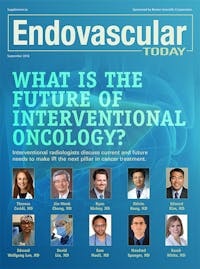
September 2016 Supplement
Sponsored by Boston Scientific Corporation
What Does the Future Hold for Interventional Oncology?
A collection of projections from interventional radiologists around the world.

As technological advances are made, previous limitations are being broken. Technically for interventional oncologists, this may translate to enhancing our ability to get more focused with microcatheters and wires, allowing superselective catheterizations with greater ease. Imaging guidance hardware and software help physicians to see exactly where our therapies are being delivered while limiting nontumor targeting. Radioembolization has accelerated at a rapid rate and is becoming more and more incorporated into mainstream practices as it evolves.
Multidisciplinary teams focusing on disease states are the future of treating cancer, and interventional oncology needs to be a main player. We provide a range of therapies from curative to neoadjuvant to palliative. Precision medicine is one of the most electrifying terms right now, as newer drugs target tumors through things such as biomarkers, checkpoint inhibitors, and multikinase cascades. Interventional oncology may be able to precisely deliver these therapies through potential vectors intra-arterially or potentiate its effects through radiation or ablation, inducing an abscopal effect. Hepatocellular carcinoma, metastatic colorectal cancer, and metastatic neuroendocrine tumors are the main tumors that are currently well targeted with locoregional therapies. However, with synergistic effects, many more metastatic diseases may be targeted. Collaboration with other subspecialties is the key to advancing treatment for patients.
It is a very exciting time for interventional oncology. We are in the renaissance of interventional oncology and have experienced rapid advancement in almost every aspect of our practice. It’s difficult to prophesize about what the future holds, but I believe that these three areas have changed or will change our craft: (1) improvements in our imaging technologies, (2) the development of new delivery platforms, and (3) the introduction of immuno-oncology.
Imaging is everything to us, and we now have insights into tumors that have extended far beyond multiphasic CT and digital subtraction angiography. The developments of time-resolved imaging, new contrast agents, and complex navigation algorithms have allowed us the precision to prospectively plan our attack on the tumor. Parenchymal blood volume (PBV) has the potential to predict the vascular capacitance of tumors (using conventional or cone beam CT), and may give us the ability to optimize the size of particle and intensity of therapy when performing embolotherapy. Three-dimensional fusion or navigation software has permitted reductions in contrast, vessel selection (with embolotherapy), and increased efficiency/precision when performing ablation, all while reducing risks associated with radiation and operator error.
It would be futile to have improvements in imaging without the ability to get to where we need to go. With embolization, our tools are optimized to the vasculature and vulnerability of the tumor: pressure-assisted embolization, steerable microcatheters, and purpose-built wires give us the ability to give what we want, exactly where we want. With ablation technologies, we now have a veritable quiver of platforms and advanced planning software to predict and confirm treatment.
Furthermore, the intimate relationship between locoregional and systemic therapy will play a key role in the future of cancer care. The introduction of new classes of systemic therapies, termed immuno-oncologic agents (such as PD-1 inhibitors, designed as “check point inhibitors”) work on the basis of gearing the body’s own immune system into overdrive, uncovering the cloak that protects the cancer from detection, and triggering the immune system to attack cancer. With these therapies, increasing the circulating fragments of the tumor serve as homing signals to the immune system—phenomena that are well recognized with our ablative and embolotherapeutic agents. This type of activation is recognized anecdotally in the radiation oncology literature (termed the abscopal effect) and could become a cornerstone to cancer therapy, with an essential role for the interventional oncologist.
We are getting better at what we do, smarter in the way we are doing it, and stronger in the role that we play in contemporary cancer care. As we continue to innovate, explore, and extend, we have no limit as to what we can do.

In the world of oncology, interventional oncology has been, and remains, a disruptive innovation challenging the traditional methods of cancer treatment. Minimally invasive, well-tolerated cancer treatments that rely on the most advanced medical technologies to precisely target tumors have promised to change the status quo of cancer therapy. Yet, years after their initial implementation, the exact role of interventional oncology therapies has yet to be defined for so many cancers.
Although the benefits of particular interventional oncology therapies have been identified for certain types of cancer, the promise of interventional oncology is far from fulfilled. We must continue to evaluate the role of interventional oncology treatments as complements or alternatives to surgery, chemotherapy, and radiation. We must address questions regarding the timing and sequence of treatments. And we must tease out the complexities related to patient selection and extent of disease.
The future of interventional oncology lies in our ability to transition interventional oncology therapies from being disruptive innovations to the standards of care. This, in turn, requires high-level evidence from large and well-designed clinical trials. With the help of public and private resources, we need to unite the community of interventional radiologists and collaborate with our oncology colleagues to generate, assemble, and analyze the clinical data necessary to not only realize but also maximize the potential of interventional oncology treatments.

Twenty years ago, interventional oncology was a minor part of interventional radiology. With the introduction of locoregional therapies and development of supporting technologies, interventional oncology has become the mainstay in the management of hepatocellular carcinoma. However, it is not easy to predict the future of interventional oncology in the next 20 years. We will soon encounter harsh challenges from less invasive surgical options, external beam radiotherapy (including stereotactic ablative technique, proton beam, and heavy-ion therapy), and new systemic anticancer agents or immunotherapeutic strategies. To overcome those external challenges, we have to critically review the outcome of our practice and realize the limitations of current interventional oncology practice. Every treatment option has its own advantages and disadvantages. Interventional oncology options are not an exception. Without efforts to maximize clinical benefits by improving therapeutic efficiency and reducing side effects or complications, the area of interventional oncology options will be substantially shrunken by newly emerging treatment options.
The areas of weak scientific evidence and marginal efficiency will be the most vulnerable. For example, chemoembolization is currently the most commonly performed procedure for hepatocellular carcinoma. However, there is a very wide gray zone between competing treatment options. In the gray zone, the evidence supporting chemoembolization is weak and the amount of clinical benefit achieved with chemoembolization is rather small. We should be aware of these facts, and we should continue to develop or incorporate new technologies or strategies to improve the therapeutic outcomes and safety of interventional oncology practice.

Much of interventional radiology and interventional oncology therapies have been rooted in locoregional treatments (organ based). Our innovations, technologies, and technique advancements have centered on our unique ability to minimally invasively navigate through the body to a target—the “FedEx” of therapy delivery—be it drug-based, thermal, yttrium-90 radiation, or blood flow alteration. However, being only locoregional has limited our appeal and acceptance in the broader oncology landscape. Considerable research collaborations and new directions within our institution suggest new trends in interventional oncology’s role in the field of personalized medicine, combination therapies, harnessing the abscopal effect, and immunotherapy.
Interventional oncologists are uniquely positioned to be the primary specialty to obtain high-yield tumoral tissue, which allows customized therapy alteration using host and tumoral genetic factors to predict or minimize treatment tolerance and maximize effects. Notwithstanding, interventional oncology practice is trending using combination therapy, where therapies synergistically work together to improve patient outcomes—both within interventional oncology and outside. There is excitement growing in the abscopal effect, where locoregional treatment causes unintended systemic tumor reduction observed in radiofrequency ablation, cryoablation, radiation, and chemoembolization. This is thought to be the trigger for enhanced systemic immunologic tumoral attack. Coupled with the growing availability for new immunotherapy agents seeking new indications, this may pave the road for interventional oncology procedures to function as immunotherapy “vaccines.” This lends itself to foster new multidisciplinary collaborations, particularly with medical immunotherapists, further promoting interventional oncology as a fourth pillar of oncology.

Interventional oncology is a rapidly growing field. The changes I see coming are twofold: further acceptance of image-guided cancer treatment by the profession and community, followed by intrusion into the field by doctors without training in imaging. Technically, I expect visible beads to dominate the near future. I see greater use of cone beam CT for planning and diagnosis, followed by immediate retreatment of actively enhancing areas after embolization. I hopefully await delivery devices for drugs not yet routinely used in the liver. Yttrium-90 radioembolization will prove to prolong survival in colorectal metastases to the liver, and then will still be ignored by mainstream oncology.

Those who have a role in interventional oncology have come to know that all tumors are not created equal. We know this from the work of oncologists, hepatologists, surgeons, and interventionists who have come before us. We know, for example, that hepatocellular carcinoma is unique in that it does not respond to traditional systemic chemotherapeutic agents like other malignancies. With this knowledge, a whole world of liver-directed therapy has evolved. Treatment regimens are well developed for myriad different malignancies and are neoplasm-specific (ie, the protocols for pancreatic cancer are vastly different from that of hepatocellular carcinoma). However, do we know for certain how to treat one hepatocellular carcinoma from the next? We look at tumor size, number, location, resectability, liver function, and performance status to determine if medical, surgical, or minimally invasive treatment is the best option. Even with all of these factors taken into consideration, we know that each tumor is its own beast. In the medical oncology world, there has been a great deal of effort and success towards identifying certain tumor factors or characteristics that can be targeted for treatment. Going forward, I have to think this is where interventional oncology is headed: treatment based on individual tumor biology. Well-established interventional oncology practices already know that each treatment should be patient specific. Our future appears to be going one step further, devising therapies that are not only specific to the patient but also to the patient’s individual tumor.
The future of interventional oncology should be written as “PIO”: personalized interventional oncology or precision interventional oncology. As a new era of personalized cancer medicine is evolving rapidly and becoming more applicable to our oncologic practice, our interventional locoregional therapy armamentariums (eg, ablations, tumor embolization including yttrium-90 selective internal radiation therapy) should also become more personalized therapies. This means cancer genomic and proteomic data should provide rationale for each treatment option for individual patients. The era of treating every tumor and every patient uniformly with the same dose of chemotherapy or radiation based on how it looks on imaging is over. As an integral and essential member of a cancer treatment group, we have to understand and familiarize ourselves with the subcellular/molecular mechanism of tumorigenesis, metastasis, and tumor heterogeneity and use this information to make our clinical decisions tailored to each patient’s molecular profile. In addition to personalized interventional oncology, we need to have a broader understanding and involvement in precision cancer medicine. Precision cancer medicine develops the necessary processes and infrastructure to bring enhanced genomic information and tumoral mechanistic information into the clinical realm. Image-guided biopsies and radiogenomics will be even more deeply integrated with precision cancer medicine to provide necessary samples and imaging information correlated with cancer genomics. As interventional oncologists, we must have a broader understanding of both “personalized and precision cancer medicine” to play an integral part of oncologic patient care and, furthermore, to become an inventor and innovator of a novel therapy development.
Increasing emphasis has been placed on the expertise and collaboration of multiple medical specialties to provide cancer care. Interventional oncology improves patient survival and quality of life and is now recognized as a critical component of the multidisciplinary team that includes medical, surgical, and radiation oncology.

Moving forward, we have the opportunity to expand our traditional armamentarium of therapies to include molecular therapies, gene therapies, and immunotherapies. Any novel therapy must accumulate in the target tissue in large enough quantities to be efficacious, which is a barrier to traditional routes of delivery. Our medical colleagues are limited in their treatment approaches in ways that interventional radiologists are not—our image-guided approaches can expand our specialty to treat any malignancy that can be reached by needle and/or catheter.
This will require further refinement of the devices and techniques we already use, as well as more active participation in clinical trials and registries.

Personalized medicine will dominate cancer care, and tumor biopsies will be completely replaced by liquid biopsies. Interventional oncology will be the fourth pillar of cancer care, standing side-by-side with medical, surgical, and radiation oncology. Patients will routinely seek out minimally invasive ways to treat their cancer, whereby drugs can be delivered site-selectively, mitigating the severe associated systemic toxicities. Intravenous cytotoxic systemic chemotherapy will be reserved for the salvage setting, and immunotherapy enhanced by ablation will be first-line therapy in all unresectable cancers.
This will require interventional oncologists to be an integral part in all clinical cancer centers. All patients treated with the newly developed therapies will be on protocol and their data will be included in international registries. Safety and efficacy of procedures will be proven with studies reporting large numbers of patients, and standard techniques will be employed so meaningful data can be generated.
Advertisement
Advertisement