Advertisement
Advertisement
October 2018
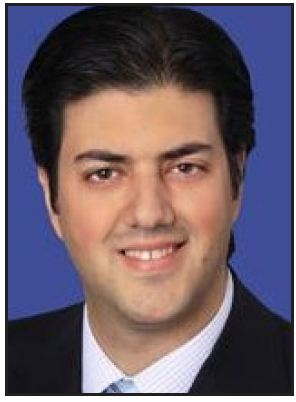
An Interview With Guilherme Dabus, MD, FAHA
Dr. Dabus discusses the rapidly evolving field of neurointerventional stroke care, areas that require further study and efforts, and the path that led him to find his passion for this specialty.
In your opinion, where is the biggest current knowledge gap in endovascular stroke care?
I think we still need adjustments to our stroke systems of care. In my opinion, an important gap is that despite significant efforts from our professional societies, some of our patients are still being taken to facilities where intravenous tissue plasminogen activator (IV tPA) can be administered but endovascular care cannot be provided. Although it is important that IV tPA is given as quickly as possible, this should not be done at the expense of delaying endovascular care because, ultimately, that is what will make the difference for patients with large vessel occlusion (LVO). Data from the STRATIS registry support that the interhospital transfer process is onerous for the patient by delaying endovascular treatment and negatively impacting the outcome.1 In our community, as well as other cities, counties, and to a certain level, states, we have been working very hard along with emergency medical services and hospitals to provide endovascular stroke care in a streamlined process and pathway that will lead to faster door-to-groin times and, therefore, faster recanalization, and better outcomes for our patients.
In the past several years, we have seen the global standard of care for emergent LVO (ELVO) change entirely, followed relatively quickly by expansions of the time horizon in which mechanical thrombectomy is recommended as the first-line therapy in appropriate patients. What do you predict will be the next horizon in patient candidacy, whether based on timing or anatomy?
Endovascular treatment with mechanical thrombectomy is the first-line treatment for patients with LVO up to 24 hours from symptom onset, as per current scientific evidence independent of IV tPA eligibility. We have several trials now demonstrating the benefits of mechanical thrombectomy in this patient population with a number needed to treat of 3, making it one of the most powerful emergent treatments in medicine today. However, mechanical treatment is still only being performed in selected patients, and some would argue that we are overselecting patients, which explains the success of the treatment. New studies are being designed or are already underway to evaluate whether some patient groups not included in the current guidelines would benefit from endovascular treatment, such as those with low National Institutes of Health Stroke Scale scores and LVOs, distal occlusions, those already presenting with a large core—to mention a few. I think in the future we will be much more inclusive, which will decrease the overall rate of good outcomes, but it will also increase the total number of patients being helped.
What do you believe is the most significant update or takeaway from the Society of NeuroInterventional Surgery (SNIS) Standards and Guidelines Committee's recommendations on neuroendovascular management of ELVO published earlier this year?
This type of document is very important in our field, because it provides guidance to the physicians who are involved in the endovascular treatment of acute stroke. The SNIS Standards and Guidelines Committee's recommendations analyzed the published data not only from the major randomized controlled trials but also from other studies and registries to provide direction and recommendations regarding several technical aspects of the procedure (eg, the use of interarterial thrombolysis, sedation vs general anesthesia, access site, use of flow arrest and balloon guide catheter, thrombectomy devices choices and techniques), with the aim of achieving the most rapid and complete recanalization possible. However, it is worth noting that because our field is so dynamic and rapidly evolving, some of the recommendations will be outdated very soon, if not already.
Stroke care has recently absorbed much of the spotlight in the field of neurointervention, but other conditions and treatment options have also rapidly progressed in the past few years. Aside from ELVO, what research or developments are you most excited about?
Our field continues to evolve and mature. There is no question that endovascular mechanical thrombectomy has advanced tremendously and is in the spotlight of neurointervention; however, I am still very excited about the new technologies that continue to come out to improve aneurysm treatment, particularly devices addressing bifurcation aneurysms. In my practice, most of the treatments that I perform are aneurysm treatment (elective and urgent) and endovascular stroke treatment. I believe that this is true for most practitioners in the field, and therefore, it is only fair that these two disease processes share the neurointerventional spotlight. I am also very passionate and interested in the treatment of arteriovenous malformations, dural arteriovenous fistulas, and head and neck vascular malformations, in addition to new embolic materials, devices (such as microballoons), and new techniques to deliver the embolic agents.
With the seventh annual Miami Neuro Symposium approaching in November, what is the hot topic or main theme this year? What are you most looking forward to at this year's meeting?
The Miami Neuro Symposium was conceived to update and educate our medical community on the recent advances in the management of neurological/neurosurgical/neuroendovascular problems. As such, the key components of the program will emphasize selection criteria for endovascular treatment of acute stroke and aneurysms, as well as provide updates on what has been the most important recent clinical evidence and technical advances in our field.
What path led you to radiology and, ultimately, neuroradiology?
My father is a radiologist back in Brazil, and because of that, I have been exposed to radiology since my early years during medical school. I was very intrigued by the technology and machinery involved in radiology and thought that it would be a career that I would enjoy. While I always enjoyed the aspect of the physician-patient relationship, it was only during my radiology residency that I had direct contact with neuroradiology as a separate subspecialty and subsequently interventional neuroradiology and neuroendovascular surgery. It was kind of love at first sight or, better put, first interaction. When I performed my first femoral access cerebral angiography and, as I progressed, first neuroendovascular treatment, I knew that God willing, that's what I wanted to do for the rest of my life. Different than some of my other colleagues, I don't see neuroendovascular surgery and interventional neuroradiology as just a group of techniques that I can use and offer to treat patients. Instead, I see this as my career. I knew from the beginning that it would be difficult, stressful, demanding, and would require long hours and extensive training, but so far, I have enjoyed every bit of it.
What is your favorite activity or pastime when you get a few hours or days with no on-call or hospital duties?
Because of the nature of what I do, when I am off, I try as much as possible to spend quality time with my family. You know, kids grow up fast, so every time that I can, I try to attend all of their school and sport events. My wife is an artist, so I do my best to attend her art exhibitions where she presents her paintings. When it comes to sports, being Brazilian, I really enjoy football (soccer) and playing tennis and, every once in a while, golf (which explains why I am a terrible golfer!). Now, one thing that I really love is playing guitar, so every time that I can, I try to get together with my band and play some music.
1. Froehler MT, Saver JL, Zaidat OO, et al. Interhospital transfer before thrombectomy is associated with delayed treatment and worse outcome in the STRATIS Registry (Systematic Evaluation of Patients Treated With Neurothrombectomy Devices for Acute Ischemic Stroke). Circulation. 2017;136:2311-2321.
Guilherme Dabus, MD, FAHA
Miami Cardiac and Vascular Institute and
Baptist Neuroscience Center
Miami, Florida
guilhermed@baptisthealth.net
Disclosures: None.
Advertisement
Advertisement
Interested in reading more interviews?
To read more interviews with thought leaders in the vascular field, check out our Profiles & Perspectives hub.
Read More