Advertisement
Advertisement
November 2020
Sponsored by JOTEC GmbH, a fully owned subsidiary of CryoLife, Inc.
Making the Revolutionary Routine
TAAA treatment with E-xtra DESIGN ENGINEERING and E-nside.
With Sébastien Déglise, MD; Céline Deslarzes-Dubuis, MD; Philipp J. Schaefer, MD; Mario Lescan, MD; and Migdat Mustafi, MD
The JOTEC E-xtra DESIGN ENGINEERING and E-nside are available under CE Mark only and are not approved in the United States.
E-xtra DESIGN ENGINEERING: Inner Branch Technology


Since the first aortic stent graft implantation 30 years ago, endograft design has improved, and endovascular aneurysm repair (EVAR) is now the treatment of choice for infrarenal abdominal aortic aneurysms (AAAs). Although physicians’ experience has grown in parallel with technology, the durability of the endovascular approach remains a matter of concern, especially in cases of an unfavorable neck or more complex aortic aneurysms. Many vascular specialists have considered fenestrated EVAR (FEVAR) the gold standard for “straightforward” juxtarenal AAAs, based on robust data regarding technical success, long-term target vessel patency, and sealing.1,2
WHY IS INNER BRANCH TECHNOLOGY NEEDED?
One of the main reasons FEVAR has been successful is because it allows for use of tie technology in a narrow environment as well as for the cannulation of the target vessels from below. Initially, the goal of FEVAR was to limit aortic coverage using two fenestrations and one scallop; however, as FEVAR durability relies on the ability to achieve a suitable and healthy proximal sealing, more physicians propose a three- or four-fenestration solution to obtain better long-term outcomes.3
The FEVAR strategy also carries some drawbacks. There is no real sealing and fixation zone for the bridging stent, so there is the risk of late type III endoleak. The most important limitation of FEVAR is the need for accurate and precise planning. Difficult anatomies, especially with angulation or tortuosity, may lead to unpredictable deployment and impossible cannulation of the target vessels. Thus, to solve these problems, stent grafts with outer branches (branched EVAR [BEVAR]) have been developed to treat more extensive thoracic AAAs (TAAAs). The branch offers a good and stable sealing zone for long bridging stents that are required to reach the target vessels of the TAAA. Moreover, the larger lumen of a TAAA allows for more flexibility during the planning and the deployment phase. However, in case of large thrombus or kinked anatomy, the outer branches might get compressed against the aortic wall.
Although both FEVAR and BEVAR have shown excellent results in dedicated indications,4,5 they seem to face certain limitations, especially in difficult and specific anatomic situations. This was the main reason to develop inner branches (iBEVAR). The idea was to combine the benefits of both techniques, allowing for minimal aortic coverage and the ability to work in kinked environments. The bridging stent steady fixation ensures proper sealing with a lower risk of branch compression. The result is easier and more flexible planning to lower the risks of failure due to malpositioning of the stent graft.
E-xtra DESIGN ENGINEERING INNER BRANCH TECHNOLOGY
The inner branch of E-xtra DESIGN ENGINEERING (JOTEC) is fixed to the fabric of the stent graft with a fixation seam and is surrounded by an asymmetric compression spring to avoid potential collapse due to the blood pressure, maintain tunnel patency throughout the cannulation phase, and avoid any infolding when advancing the rigid sheath. The three outlet dot markers and the ostial ring marker provide good visualization of the branch and adequate orientation of the C-arm for easier cannulation. The inner branches exist in different configurations, with lengths from 17 to 19 mm with a diameter of 6 to 8 mm. The size of the outlet can vary, depending on a compromise between the widest possible outlet and the technical design limitations given by the springs supporting the stent graft. However, one major advantage and advance in the inner branch technology is the wider outlet. This new design offers more flexibility when positioning the stent graft and therefore minimizes the risk of kinking of the bridging stent.
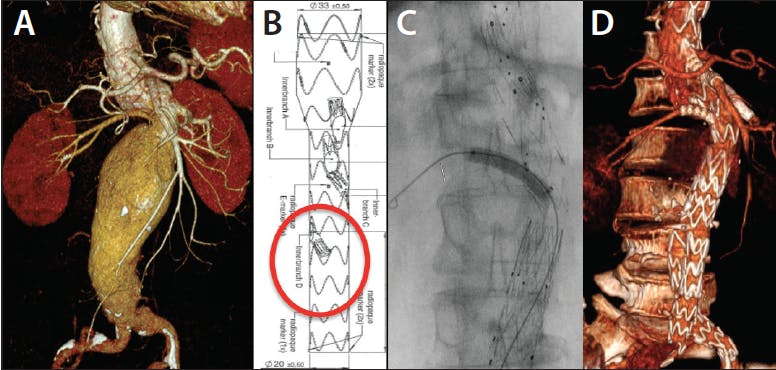
Figure 1. A juxtarenal AAA with kinking of the aorta and upward RRA. Preoperative three-dimensional (3D) CT (A). E-xtra DESIGN ENGINEERING with three antegrade inner branches and one retrograde branch for the RRA (red circle) (B). Intraoperative view of deployment of the bridging stent in the retrograde inner branch (C). The postoperative 3D CT showed no leak and good conformability of the right bridging stent without any kinking (D).
Inner branches are totally integrated in the armamentarium of the E-xtra DESIGN ENGINEERING technology and can be incorporated into each main body shape and configuration. The inner branch can also include an integrated bifurcation, opening new perspectives for treatment such as previous EVAR failure. To perfectly fit to the anatomy of the target vessels and especially in challenging trajectory, inner branches can be antegrade or retrograde.
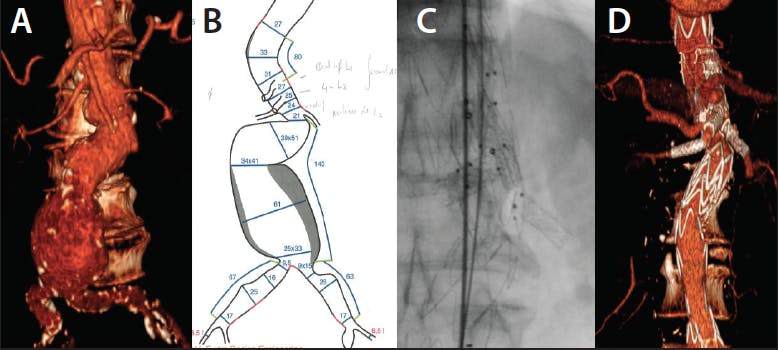
Figure 2. A juxtarenal AAA with severe angulation of the aorta above the aneurysm. Preoperative 3D CT (A). Preoperative sizing (B). Intraoperative view of the final position of the E-xtra DESIGN ENGINEERING stent graft and renal stents without any kinking (C). The postoperative 3D CT showed no leak and conformability of the E-xtra DESIGN ENGINEERING and bridging stents (D).
ADVANTAGES AND INDICATIONS OF INNER BRANCHES
iBEVAR technology aims to be effective in a wide range of aortic anatomies using a unique, systematic, and reproducible approach. Because the configuration can be perfectly tailored to the geometric variations of the aorta, iBEVAR technology provides a solution for the most complex anatomy, with an easy cannulation of the target vessels. However, this technology really shows its full potential in some specific and dedicated indications, including (1) steep trajectory of the target vessels; (2) a narrow aorta, especially with angulation; (3) failed previous EVAR, chimney EVAR (and even FEVAR); and (4) chronic dissection associated with TAAAs.
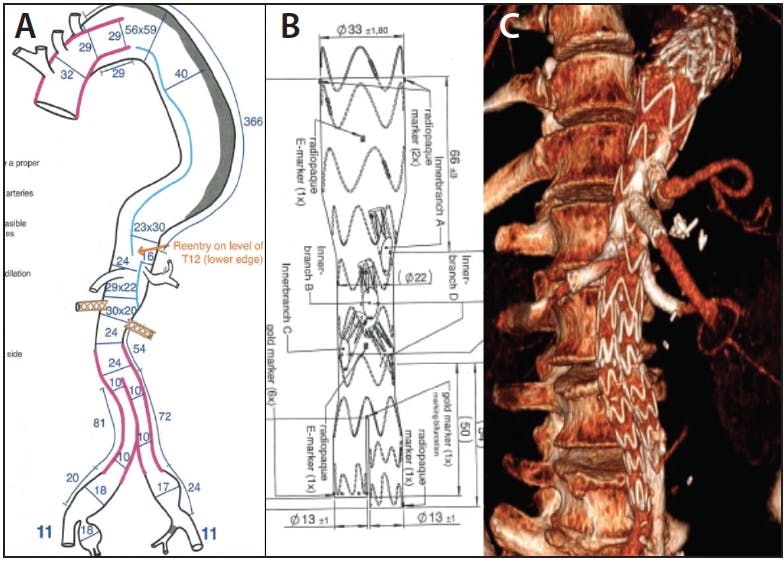
Figure 3. A postdissection TAAA with small true lumen, the celiac trunk arising from the false lumen, stented renal arteries, and a previous aorto-bi-iliac graft. Preoperative sizing with localization of the reentry tear C (A). An E-xtra DESIGN ENGINEERING stent graft with four inner branches and an integrated bifurcation. The plan was to first place a thoracic stent graft in the elephant trunk and distally in the false lumen. The second step was to open the proximal part of the E-xtra DESIGN ENGINEERING in the thoracic stent graft and in the false lumen up to the branch for the celiac trunk. The distal part was planned to open in the true lumen (B). The postoperative 3D CT showed no leak and conformability of the E-xtra DESIGN ENGINEERING. Long bridging stents were required for the renal arteries (C).
Our Experience With E-xtra DESIGN ENGINEERING Inner Branches
Since our first use of the E-xtra DESIGN ENGINEERING stent graft in 2014, we have used iBEVAR in several situations where other configurations were contraindicated. Our technical success rate was 100%, even in complex anatomy where the deployment was not totally precise. Over time, use of inner branches has been increasing and today represents > 50% of all E-xtra DESIGN ENGINEERING stent grafts implanted in our center. This same tendency has been observed in other centers. In 2019, iBEVAR represented approximately two-thirds of the branch E-xtra DESIGN ENGINEERING production of CryoLife/JOTEC, and more than 1,000 iBEVAR cases have been performed to date.
CONCLUSION
Inner branch technology seems to combine the best of both FEVAR and BEVAR. However, use of the technology should not be compared directly with FEVAR (or even BEVAR) but rather be seen as complementary. It opens new perspectives for emergency treatment of TAAAs with the launch of E-nside (JOTEC), the only off-the-shelf precannulated thoracoabdominal stent graft with inner branches. This device will eliminate the waiting period caused by manufacturing, offering a ready-to-use solution for 70% of patients who would normally require a custom-made stent graft.
1. Verhoeven EL, Katsargyris A, Oikonomou K, et al. Fenestrated endovascular aortic aneurysm repair as a first line treatment option to treat short necked, juxtarenal, and suprarenal aneurysms. Eur J Vasc Endovasc Surg. 2016;51:775-781. doi: 10.1016/j.ejvs.2015.12.014
2. Mohamed N, Galyfos G, Anastasiadou C, et al. Fenestrated endovascular repair for pararenal or juxtarenal abdominal aortic aneurysms: a systematic review. Ann Vasc Surg. 2020;63:399-408. doi: 10.1016/j.avsg.2019.09.016
3. Katsargyris A, Oikonomou K, Kouvelos G, et al. Comparison of outcomes for double fenestrated endovascular aneurysm repair versus triple or quadruple fenestrated endovascular aneurysm repair in the treatment of complex abdominal aortic aneurysms. J Vasc Surg. 2017;66:29-36. doi: 10.1016/j.jvs.2016.11.043
4. Oderich GS, Ribeiro M, Reis de Souza L, et al. Endovascular repair of thoracoabdominal aortic aneurysms using fenestrated and branched endografts. J Thorac Cardiovasc Surg. 2017;153:S32-S41.e7. doi: 10.1016/j.jtcvs.2016.10.008
5. Tenorio ER, Kärkkäinen JM, Mendes BC, et al. Outcomes of directional branches using self-expandable or balloon-expandable stent grafts during endovascular repair of thoracoabdominal aortic aneurysms. J Vasc Surg. 2020;71:1489-1502.e6. doi: 10.1016/j.jvs.2019.07.079
Case Report: Percutaneous Endovascular Repair of Postdissection TAAA With JOTEC E-xtra DESIGN ENGINEERING

During the last 2 decades, endovascular repair of TAAAs has evolved rapidly, and patient-specific or off-the-shelf fenestrated and/or branched stent grafts are used increasingly to exclude TAAA. Multiple studies have shown high technical success rates, complication rates, and mid-term stability, but peri-interventional morbidity and mortality rates vary widely depending on operator experience, clinical experience, patient selection, and staging. Yet, endovascular repair of TAAA is an evolving and challenging field, as procedural standardization is continuously optimized in the various aortic intervention centers and as patient-specific and off-the-shelf stent grafts allow treatment of more complex pathoanatomies. Aortic aneurysm patients present with increasing age and comorbidities and are often unfit for open surgery, and this especially holds true for TAAA patients. Thus, aortic intervention centers are faced with a growing TAAA patient population, requiring a growing demand of technical solutions in terms of endovascular repair.
E-xtra DESIGN ENGINEERING: CONCEPT AND DESIGN
Several manufacturers provide elaborated patient-specific and off-the-shelf stent grafts, which allow operators to offer endovascular treatment to a greater population of TAAA patients. Among those providers, JOTEC/CryoLife has gained a remarkable market share in patient-specific, custom-made solutions for endovascular repair of TAAA, namely by the concept of E-xtra DESIGN ENGINEERING (JOTEC). E-xtra DESIGN ENGINEERING offers the concept of both manufacturing of patient-specific vascular implants tailored to the patient’s anatomy and offering close cooperation with on-time product delivery. The vascular treatment range covers the thoracoabdominoiliac segment, starting from the distal segment of the aortic arch to the descending and abdominal aorta including the visceral arteries and ending in both the external and the internal iliac arteries. Based on the patient’s anatomy and pathologic findings in the TAAA, entire technical endovascular solutions with E-xtra DESIGN ENGINEERING may include regular off-the-shelf stent grafts and patient-specific manufactured stent grafts, respecting each vascular detail of interest. The endovascular repair itself is done by assembling all stent grafts in a modular way, according to a dedicated deployment protocol.
The branched and fenestrated stent grafts by E-xtra DESIGN ENGINEERING are based on the E-vita THORACIC 3G (JOTEC) design, which was developed for thoracic endovascular aortic repair (TEVAR). The main body is tubular with proximal open bare springs. The covered segment consists of self-expanding nitinol Z stent rings sewn to an inner tightly woven polyester fabric. All specifications such as branches, fenestrations, and scallops may be adjusted to the patient’s vascular anatomy and are incorporated according to the 3D measuring protocol, respecting the axial and longitudinal dimensions and circular orientations. The length and diameter of the proximal and distal segments of the stent graft may vary and serve as a sealing zone with the aortic wall or attachment zone with additional stent grafts for proximal or distal extension. The core of the tubular graft may be smaller in diameter depending on anatomic requirements and possible incorporation of branches and fenestrations and is limited to a minimum diameter of 16 mm. Fenestrations range from 5 to 12 mm in diameter, and for unusual purposes (spinal cord ischemia prevention), specifically designed ad hoc fenestrations can be even greater in dimension. Branches range from 6 to 10 mm in diameter and 15 to 19 mm in length, can go downward or upward, and can be outer or inner with respect to the main stent graft lumen.
TEVAR FOR POSTDISSECTION TAAA
TEVAR for TAAA has been standardized to some extent. Aneurysmatic pathologies based on aortic dissections, so-called postdissection TAAA, still remain extremely challenging. These postdissection TAAA patients are usually referred in a chronic dissection stage, with a combination of pathologic findings such as aneurysm formation, a rigid dissection membrane with true and false lumen, and perfusion of visceral arteries via both the true and false lumen (Figure 1 and Figure 2). Thus, preinterventional planning requires utmost care to address each specific pathologic finding with a respective technical solution, maintain antegrade blood flow into the target visceral and iliac arteries, and exclude the aneurysm. For TEVAR of postdissection TAAA with multiple entry and reentry tears, it might be necessary to cross the dissection membrane (intimal flap) from true to false lumen and back to the true lumen to access all target visceral arteries. The major focus is to select all aortic, visceral, and iliac landing zones in the true lumen segments, which provides hemodynamically stable perfusion of target arteries and exclusion of relevant type I endoleaks. In cases of partial collapse and pararenal occlusion of the true lumen, extended endovascular stent grafting of target visceral arteries must be considered (Figure 1). The patient-specific stent graft is designed to fulfill those requirements by incorporating any dedicated branch or fenestration (Figure 3).
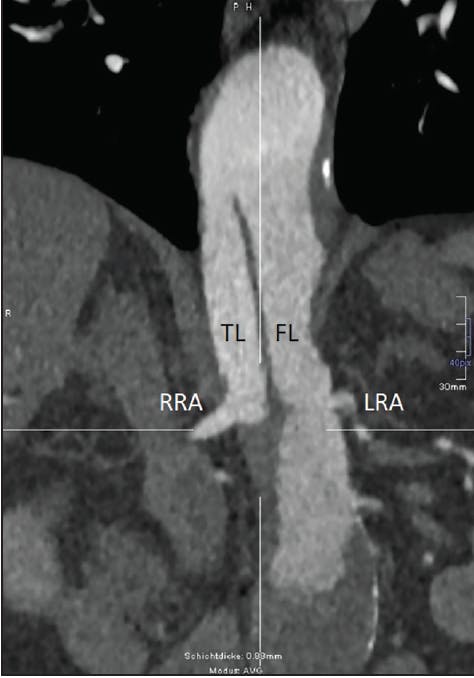
Figure 1. Coronal multiplanar reconstruction (MPR) CTA demonstrating a 5.6-cm postdissection TAAA with luminal splitting of the true and false lumen, perfusion of the RRA via the true lumen and the LRA via the false lumen, and collapse and infrarenal occlusion of the true lumen.
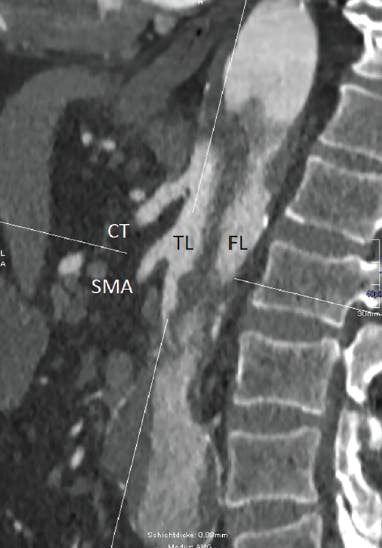
Figure 2. Sagittal MPR CTA with perfusion of the celiac trunk and SMA via the true lumen.
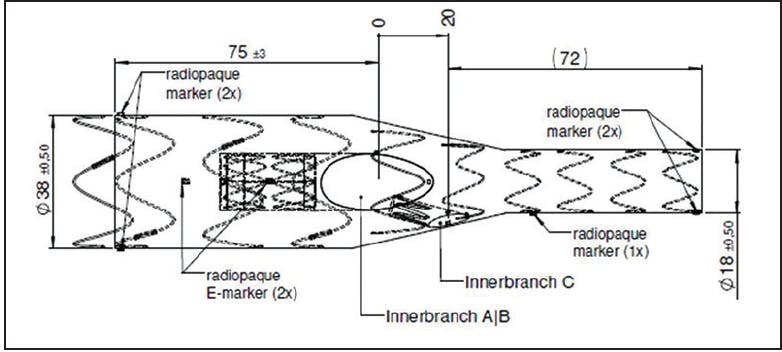
Figure 3. Final drawing of the tailored patient-specific stent graft with two 8-mm downward inner branches A/B in "double-barreled shotgun" for the celiac trunk and SMA and one 6-mm downward inner branch C for the RRA.
Case Example: Postdissection TAAA With Progressive Collapse and Occlusion
At University Hospital Kiel, Germany, EVAR is done percutaneously when deemed possible, which holds true for the vast majority. TEVAR for TAAA is performed under general anesthesia, with percutaneous access via both groins for the large-profile aortic stent grafts, and transbrachial access with 7- to 8-F sheaths for peripheral stent grafts are used for the visceral arteries.
In this case example of a 5.6-cm postdissection TAAA with progressive collapse and occlusion of the true lumen pararenally (Figure 1 and Figure 2), a regular, tubular, tapered 38- X 33- X 170-mm endoprosthesis (E-vita THORACIC) was placed in the proximal descending aorta. With adequate overlap to the stent graft in place, a first patient-specific tapered E-xtra DESIGN ENGINEERING stent graft (38 X 18 X 167 mm) was deployed, in which three inner downward branches were incorporated, two combined in a "double-barreled shotgun" for the celiac trunk and superior mesenteric artery (SMA) and a single branch for the right renal artery (RRA) (Figure 3). The distal ostiums were endovascularly placed proximal to the luminal splitting, and then the respective three visceral arteries were grafted via the true lumen with use of long peripheral endoprostheses (each by combining a self-expanding and a balloon-expandable Viabahn [Gore & Associates]), bridging the gap of > 15 cm. The distal end of the first patient-specific stent graft was in the false lumen proximal to the ostium of the left renal artery (LRA). With overlap in the latter stent graft, another patient-specific bifurcated E-xtra DESIGN ENGINEERING stent graft (22 X 13/13 X 142 mm) with an inner downward branch for the LRA was deployed. TEVAR was completed by placing endoprostheses in the LRA (self-expanding Viabahn) and both common iliac arteries (E-tegra 15 X 22 X 105 mm in the right and 15 X 19 X 90 mm in the left, JOTEC), all three with a landing zone in the true lumen. The postinterventional CT scan before discharge demonstrated perfect patency and perfusion of the thoracoabdominoiliac stent grafts (Figure 4) and treated visceral arteries, with delineation of endoprostheses in the true lumen for the celiac trunk, SMA, and RRA and in the false lumen for the LRA (Figure 5). A slight type II endoleak was present and was considered acceptable.
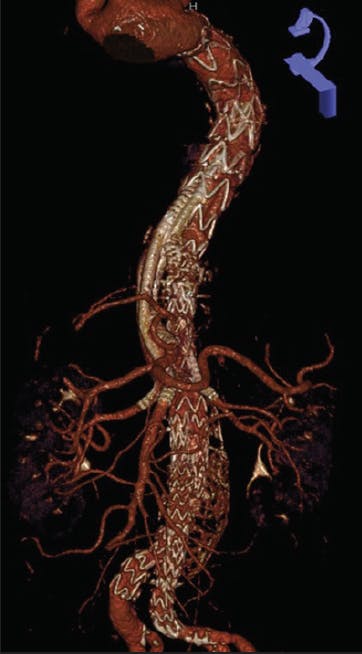
Figure 4. Volume rendering technique (VRT) CTA showing all stent grafts in place.
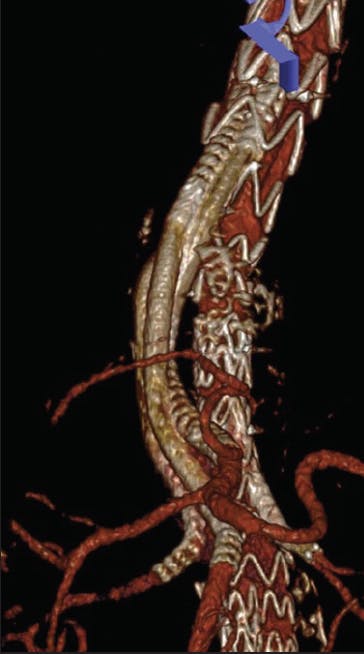
Figure 5. VRT CTA of the paravisceral segment. Note the delineation of long endoprostheses for the celiac trunk, SMA, and RRA via the true lumen and delineation of the main body and endoprosthesis for the LRA via the false lumen.
CONCLUSION
E-xtra DESIGN ENGINEERING offers elaborated and patient-specific solutions for endovascular repair of TAAA, covering a wide range of aneurysmal disease in the aortic, iliac, and visceral artery segments. With tailored stent grafts and time delivery, E-xtra DESIGN ENGINEERING supports experienced operators to achieve optimal treatment results, improve patient-centered care, and exceed limits in endovascular repair of complex TAAA.
Case Report: Endovascular Treatment of a TAAA With the New “Off-the-Shelf” E-nside Endograft


BEVAR is widely used in the treatment of TAAAs and has evolved into an important alternative to open repair. Because it is minimally invasive, BEVAR guarantees quicker recovery from surgery with low postoperative morbidity and mortality, particularly in older patients with severe comorbidities.1 In the past, the majority of patients with TAAA were treated with custom-made endografts with a production time of more than 4 weeks. Thus, BEVAR was available only in elective patients, whereas patients with symptomatic or ruptured TAAA, who would be at particularly high risk of mortality after open repair, were not candidates for BEVAR. The first “inner-branch–based,” “off-the-shelf” device for the treatment of the majority of TAAA patients (E-nside thoracoabdominal stent graft, JOTEC) received CE Mark approval this year. The endograft consists of four precannulated inner branches with wide oval-shaped outlets, allowing for optimal orientation of the bridging stent graft (BSG) toward the target arteries (celiac trunk, SMA, LRA, and RRA) in both longitudinal and horizontal planes. Thus, the inner branch orientation of E-nside to the SMA (at 8° right), the RRA (at 288° right), the celiac trunk (at 23° left), and the LRA (at 80° left) allows a horizontal angle variation of ± 25° for the visceral and ± 35° for the renal vessels. Regarding the horizontal angulation, the allowed range for each visceral artery is between 0° and 45°. Further featured technical aspects account for stability and patency of the inner branch during and after the implantation or enlarge the pull-out force of the BSG (migration reduction system).
CASE STUDY
We report a clinical case during the limited market release phase of the E-nside graft. A 68-year-old woman was diagnosed with an asymptomatic TAAA with a maximum diameter of 70 mm, at a level 25 mm proximal to the celiac trunk (Figure 1). The patient had a history of hypertension, nicotine abuse, and dyslipoproteinemia. Her continuous medication included ramipril and simvastatin.
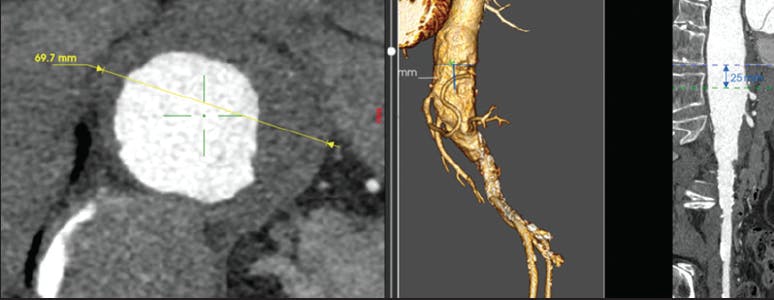
Figure 1. Preoperative CT scan showing a TAAA with a maximum extent of 70 mm.
Anatomic Considerations
CTA showed no tortuosity and moderate calcifications of the access vessels with the lowest diameter in the right external iliac artery of 7.1 mm. The right femoral artery had a diameter of 8 mm and showed no calcification. Therefore, percutaneous access was planned and performed for the staged procedure.
The proximal landing zone for the E-nside was created with a 200-mm-long endograft tapered from 40 mm to 34 mm (Valiant Navion, Medtronic), which was deployed in the proximal descending artery (diameter, 33 mm), with the distal landing zone 2 cm proximal to the celiac trunk.
The E-nside implantation was performed 3 weeks later to address the adaptation of spinal collateral network after the TEVAR implantation and thus reduce the risk of paraplegia. The anatomic planning considerations for E-nside included the horizontal angles of the offsprings of renovisceral arteries. In this case, angles of the celiac trunk (27° left), the SMA (13° left), and the RRA (83° right) were inside the range of 25° or 35° for the visceral and renal arteries, respectively. The LRA (121° left) was 6° posterior to the range given in the instructions for use (Figure 2).
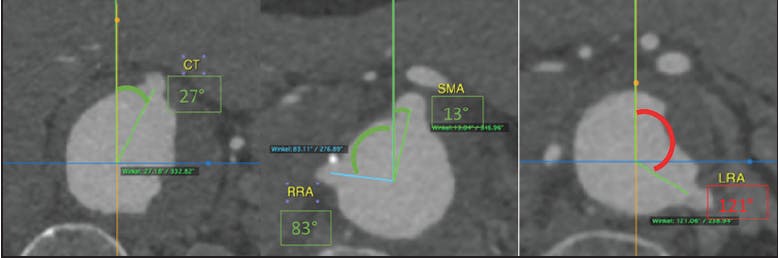
Figure 2. Preoperative CT scan with the evaluation of the horizontal angles of renovisceral arteries.
Procedural Algorithm
The procedure was performed under general anesthesia with right femoral percutaneous access and a cutdown to the left brachial artery for the BSG implantation, and 6-F sheaths were placed in the left femoral and brachial artery. Angiography was performed with a pigtail placed from the brachial artery. We marked the LRA with a 5-F catheter and introduced the E-nside over a Lunderquist wire (Cook Medical). The E-nside was placed with its proximal end about 9 cm proximal to the celiac trunk offspring and deployed after the angiographic marking of the RRA. “E”-markers sutured to the anterior graft fabric at 0° guaranteed optimal rotation of the graft in the aorta and were adjusted during the deployment. Tip capturing was then opened, and the secure wire was removed from the precannulation tube for the LRA. A 0.018-inch, 400-cm nonhydrophilic wire was then advanced through the precannulation tube and reached the aortic arch, where it was snared to the brachial artery. With the established through-and-through wire, we advanced an 8.5-F sheath into the LRA innerbranch under continuous, controlled tension exerted on the 0.018-inch wire. A catheter was then used to cannulate the LRA and place a Rosen wire (Cook Medical) for the implantation of the balloon-expandable BSG (Viabahn VBX, Gore & Associates). The through-and-through wire provided more stability for the sheath and was not removed until the BSG implantation. The same implantation algorithm was used for all renovisceral vessels (Figure 3). Figure 4 shows the 3D reconstructions before and after successful aneurysm exclusion.
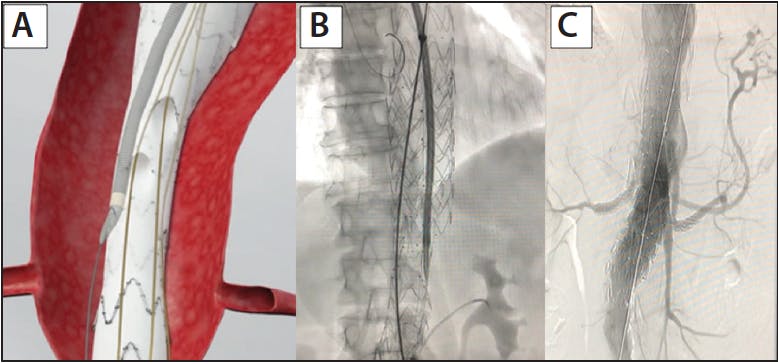
Figure 3. The illustration (A) and intraoperative fluoroscopy (B) demonstrate the conformable sheath being advanced over a through-and-through wire into the inner branch. Completion angiography showed a successful E-nside stent graft implantation (C).
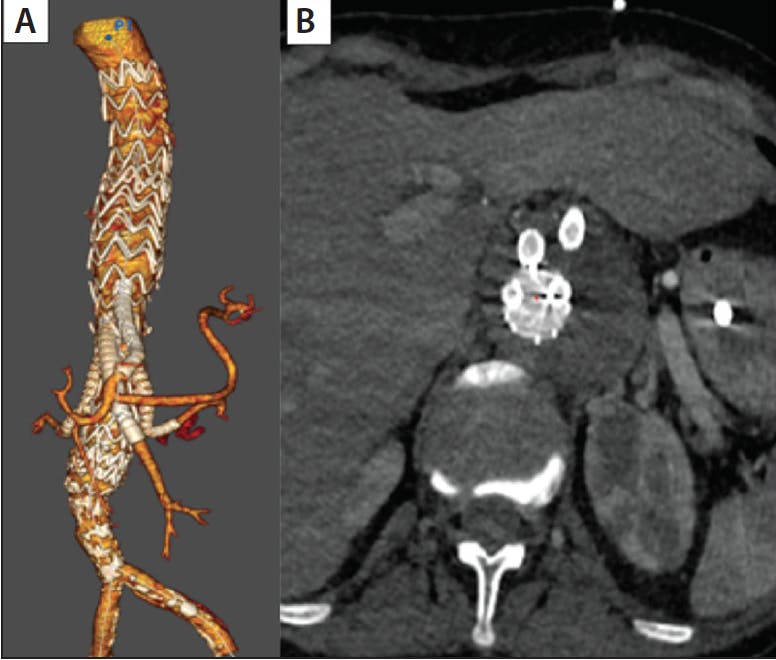
Figure 4. Postoperative (A) 3D reconstruction and axial CT scan (B) showing successful implantation of the E-nside stent graft.
DISCUSSION
Based on an immense experience provided by E-xtra DESIGN ENGINEERING (JOTEC), E-nside was designed as an “off-the-shelf” solution for the treatment of a considerable variety of TAAA anatomies.2,3 The use of precannulation tubes is optional and left to the decision of the attending surgeon. However, their use facilitates inner branch cannulation, shortens the procedure time, and may have a positive effect on the radiation exposure.
In this case, we started with the cannulation of the LRA, where the most complicated cannulation was expected due to the anatomy. Generally, the sequence of the BSG implantation is not set in the instructions for use and can be determined by the surgeon. The asymmetric compression springs and the stability seam, which improve the inner branch stability and the migration reduction system for the BSG, are further important technical evolutions, which aim for the long-term durability of E-nside, which will be evaluated in the already planned E-nside registry.
1. Aftab M, Songdechakraiwut T, Green SY, et al. Contemporary outcomes of open thoracoabdominal aortic aneurysm repair in octogenarians. J Thorac Cardiovasc Surg 2015;149(2 suppl):S134-141. doi: 10.1016/j.jtcvs.2014.09.038
2. Youssef M, Deglise S, Szopinski P, et al. A multicenter experience with a new fenestrated-branched device for endovascular repair of thoracoabdominal aortic aneurysms. J Endovasc Ther 2018;25:209-219. doi: 10.1177/1526602817752147
3. Lucatelli P, Cini M, Benvenuti A, et al. Custom-made endograft for endovascular repair of thoraco-abdominal aneurysm and type B dissection: single-centre experience. Cardiovasc Intervent Radiol 2018;41:1174-1183. doi: 10.1007/s00270-018-1975-3
Advertisement
Advertisement
