Advertisement
Advertisement
October 2020
A Decade at the Helm
An interview with Ziv J Haskal, MD, on his tenure as JVIR’s Editor-in-Chief.
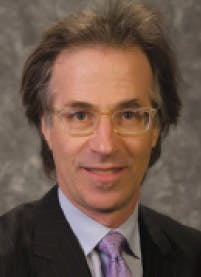
After serving as Editor-in-Chief of Journal of Vascular and Interventional Radiology (JVIR) since 2011, Dr. Ziv J Haskal’s tenure comes to an end January 1, 2021. During his time as Editor-in-Chief, manuscript submissions nearly tripled; the impact factor was raised to 3.037; and numerous print, electronic, and new media offerings were introduced. We spoke with Dr. Haskal about his 10 years of leadership at JVIR, his thoughts on social media, how to write a scientific paper, and more.
Just as your tenure was set to come to its scheduled end, JVIR’s impact factor crested 3.0 for the first time in its history. What does this mean to you as its Editor-in-Chief for the past decade?
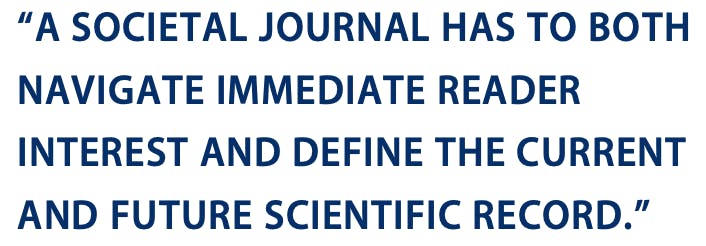
 It’s a really big deal. It puts JVIR into a new stratum of peer journals and more definitively stamps its role as the nexus of interventional radiology research. Getting there has been a gradual and continuous path. A societal journal has to both navigate immediate reader interest and define the current and future scientific record. High quality or ground-breaking results that draw citations from future papers in the next 2 years will elevate impact factor.
The editor also places bets on unusual work that may bear such fruit—or not. One positive example was an early osteoarthritis embolization report that every reviewer recommended be flat-out rejected. Accepting it opened an entirely new therapeutic area. Equally, papers can be of great reader interest and draw large numbers of downloads and high Altimetric scores but few subsequent citations. Those can immediately drive patient benefit without improving impact factor. I’ve tried to listen to both “voices” when making editorial decisions.
What does this have to do with impact factor? If JVIR were solely seeking to elevate impact factor, we would publish a very thin journal focused on just one or two topics that would be heavily cited. The number would climb, but the readership would drop. However, the impact factor has continuously climbed, and the journal has been member-rated as the single biggest asset of Society of Interventional Radiology membership.
To the uninitiated, what is the significance of the 3.0 milestone?
This is a mental “step function.” The impact factor is naturally a continuum. But moving into the “threes” puts JVIR in a very different group from its previous peers. JVIR has steadily increased its impact factor throughout my tenure. Simply put, this 3.0 milestone has placed it into a different league.
Impact factor is sometimes viewed as a controversial metric. What are the potential pitfalls of emphasizing impact factor as a journal quality metric, and how can they be mitigated?
Impact factor is the crudest metric of a journal’s relative importance—a brute force bibliometric. It describes the frequency of citation of an average article in a journal per year. Eigenfactor and other “luxury” measures are more discerning by taking into account quality, quality of the citing journal, etc. Editors can try to cheat the impact factor up by many means, such as forcing authors to cite the journal’s papers. There will always be more self-citation in highly specialized journals because they publish the majority of work in their areas, but forcing it onto authors is not appropriate.

How has JVIR approached increasing other metrics such as page views, nonjournal links, social media heat, etc?
We entered into social media early, well ahead of most other similar journals. The journal receives millions of media impressions per year as a result. The Twitter feed is one of the largest, if not the largest, within the imaging and interventional arena. Our Twitter feed alone drives thousands of people to individual JVIR papers. I use Twitter, our JVIRAccess.org blog, and article inserts and other media to highlight papers, share specific research findings, and provide docent guidance and curation. Essentially, we share many forms of content presentation to serve readers’ and researchers’ needs at any given moment—from “Give me something quick and enticing, the high points” to “I want detailed analyses and nothing less.”
One of the highlight presentations we’ve seen in the past few years was your address of the European Trainee Forum group at CIRSE 2019 (the annual conference of the Cardiovascular and Interventional Radiological Society of Europe), where you shared an editor’s insights on how to write (and read) a scientific paper. What are some key points you can share from that talk?
I’ve viewed my journal mission as manyfold: define a level of excellence in content and presentation for JVIR that authors and published content would rise to meet, and define an editorial standard to match. That has been a methodical and intentional process, perhaps as the “Adam Smith” of our literature, if you will. Equally, I’ve created lower bars for entry publications to new or one-time authors, such as for our Letters, Images in IR, Extreme IR, and Viewpoint categories. I’ve focused a lot of my teaching time in the large and small person-to-person writing seminars, called the JVIR Editor’s Writing Club, which I have held worldwide and now online. In groups from five to 50, I’ve taught close to 1,000 attendees how to create a logical project, form hypotheses, review literature, and craft successful publications. It’s something that hardly any universities teach but faculty are measured by. Publish or perish. I have a call-to-arms column on this in the November issue of JVIR.
My best advice to a new or newer author is to find a mentor who is interested in your project and your career. Review their first-author publications in PubMed, and make sure they have a proven track record for first-author publications. Lacking that, the most enthusiastic mentor may still lead to frustrations, time sinks, and potential failure. I’ve seen endless numbers of those submissions.
Looking back on your tenure, do you have any regrets or anything you’d do differently with the wisdom of a bit more time and the experience of hindsight?
Editing the journal has been a career highlight. My first years at JVIR were spent building infrastructure; defining specific editorial roles, standards, and expectations; and enacting business practices and editorial processes that would assure standard processes and metrics. I set a public goal of average time to first review of < 30 days, and we have stayed true for 10 years straight in the face of tripled submission volumes. When I started, there were papers that had been held for nearly a year in submission or revision, and submissions were falling. In parallel, I’ve used the journal to launch an entire portfolio of social media, multimedia, and new features. Many have succeeded, and many have come and gone, as they should. The last years have seen more gradual changes because the journal is now an oil tanker that will assuredly move ahead on course.
What am I both proudest of and regret? That I’ve read and edited every single paper, the number of which is in the 10,000s. I am an “activist editor.” This was essential to build consistent quality and coherence of content throughout my term. We dig deep into the content of our submissions, and the revisions can be demanding. It guarantees the neutral, formal, and humble voice that published research should provide. Has it worked? Absolutely. Res ipsa loquitur. But it has been a second job of nearly 40 hours per week. The increased volume has left me little time to launch other JVIR initiatives that I’ve held in queue, slowed down my own research initiatives, and left less time for just plain reading books.

JVIR finds itself with esteemed hands set to receive the handoff. What advice will you offer your friend and colleague, incoming Editor-in-Chief Dr. Daniel Sze?
I’ve known Dan for decades, and I’ve no worries. We’ve had many long conversations, editor to editor. He’s a brilliant choice. He’s got a world-class scientific mind, a strong sense of the literature, and his own ideas. He’ll hone his editorial voice by doing the daily work of the Editor-in-Chief. I’m confident that the journal will retain its excellence and, equally, will evolve in unexpected ways that I look forward to discovering.
Advertisement
Advertisement