Advertisement
Advertisement
August 2021
A Complex Case of Recurrent Acute Pulmonary Embolism
Moderator: Aditya Sharma, MD;
Panelists: Riyaz Bashir, MD; Linda M. Harris, MD, FACS, DFSVS; and Srini Tummala, MD
CASE PRESENTATION
Eight days ago, a woman in her mid-60s with abdominal pain was admitted to an outside hospital. She was diagnosed with a partial small bowel obstruction, which was being treated with conservative therapy. A prophylactic dose of heparin was administered for thromboprophylaxis since her admission. On day 6 of admission, she became acutely short of breath and was diagnosed with bilateral acute pulmonary embolism (PE). She underwent ultrasound-assisted, catheter-directed lysis, and a total of 10 mg of tissue plasminogen activator (tPA) was administered over 10 hours in both pulmonary arteries (PAs). After the administration of lytic therapy, the patient reported feeling better, with improvement in breathing. After completion of the administration of lytic therapy, heparin was administered intravenously at a therapeutic dose. She was transferred on a heparin drip to our institution the next day for further management of partial small bowel obstruction.
On day 1 of arrival, she became short of breath requiring 6 L of oxygen, which was an acute change in her respiratory status. Within a few hours, she had increasing shortness of breath, requiring 15 L of oxygen via a nonrebreather. She was therapeutic on heparin throughout her entire hospital course. She remained hemodynamically stable except for developing tachycardia. Complete blood count and the comprehensive metabolic panel were normal except for a platelet count of 51,000/µL. Her platelet count at the outside hospital was > 200,000/µL. B-type natriuretic peptide (BNP) was elevated at 1,237 pg/mL. COVID-19 polymerase chain reaction test was negative.
How would you further approach this patient?
Dr. Bashir: This patient most likely has acute heparin-induced thrombocytopenia (HIT) with thrombosis from the heparin therapy started for the deep vein thrombosis (DVT) prophylaxis. His 4T score is > 4, which is highly suggestive of HIT. It is very important to make a prompt diagnosis of HIT and stop all heparin infusions including heparinized flushes. This is particularly important in patients being considered for catheter-based therapies, where most operators will be placing multiple catheters in the pulmonary arteries and using heparin for anticoagulation. Because the incidence of HIT is significantly lower with the use of low-molecular-weight heparins, many institutions have switched to using them for DVT prophylaxis for this reason.
Patients with acute HIT are in a severe hypercoagulable state, and we may even consider delaying a catheter-based intervention for a few days in stable patients to allow the acute inflammatory state of HIT to resolve. Another important step in the management of this patient is performing a venous duplex ultrasound to see if there is any mobile thrombus in the iliocaval or femoral veins and to identify the access site for the catheter-based interventions. If a mobile thrombus is identified, then we will consider placement of an inferior vena cava (IVC) filter; otherwise we will not use an IVC filter. Use of intravenous (IV) lepirudin should be considered if the patient's renal function is normal; however, if the patient's renal function is poor, then argatroban infusion is the best option. Use of IV infusion of bivalirudin is reasonable during the catheter-based intervention; however, infusion during thrombolysis needs careful dose adjustments.
Dr. Tummala: Although prolonged immobilization is a risk factor for venous thromboembolism, prophylactic anticoagulation is generally effective at reducing the risk. This is a patient who presented with a small bowel obstruction and developed PE despite therapy with prophylactic heparin. This is concerning for an underlying prothrombotic state. A patient with a bowel obstruction and a prothrombotic state could be related to an underlying malignancy, especially an adenocarcinoma, or a prothrombotic state related to HIT. In this case, the patient’s pretest 4T score indicates a high probability for HIT. Therefore, the most important thing to do is stop any form of heparin administration. If the patient was unstable, then tPA may have a role again.
Given her hypoxemia, I would transfer her to the intensive care unit and start her on argatroban and initiate oxygen by high-flow nasal cannula (HFNC). Based on recent European Society of Cardiology guidelines and the risk of hemodynamic worsening, HFNC would be preferred to positive pressure ventilation (PPV), including both nasal intermittent positive pressure ventilation and especially invasive mechanical ventilation. I would repeat a pulmonary CTA and cardiac echocardiogram with bubble study to evaluate whether her decompensation is due to worsening PE, right to left shunt, or another process. If the worsening is due to worsening clot burden despite the recent catheter-directed tPA lysis, I would now consider catheter-based therapy with an aspiration thrombectomy system after a multidisciplinary discussion in the context of PE response team (PERT) including critical care, pulmonology, cardiac surgery, and interventional radiology/cardiology.
Dr. Harris: The decision for intervention with PE is based on the severity of the cardiac and pulmonary compromise. Many patients with PE are adequately treated with anticoagulation alone. Most interventions today are minimally invasive and related to less morbidity. There is more widespread ability to offer intervention by a variety of practitioners in most institutions, even those without cardiac surgery capability.
Cardiac echocardiography would help to stratify the level of compromise. Clearly, based on the BNP, this patient has a cardiac strain related to the PE, placing her at minimum at submassive PE. In addition to the echocardiogram, pulmonary CTA would help elucidate the treatment plans.
The decrease in platelet count is very concerning for HIT. I would immediately stop all heparin products and assess for HIT. She would be maintained on argatroban pending results of the studies.
CASE CONTINUED
The sudden reduction in platelet count was concerning for HIT, and the clinical pretest probability for HIT was high. Heparin administration was stopped, and bivalirudin was administered intravenously. Heparin antibody testing was ordered. Pulmonary CTA showed acute PE extending from the bilateral right and left main PAs and involving all lobes, with a right ventricular/left ventricular (RV/LV) diameter ratio of 1.6 and dilated main PA measuring 3.7 cm (Figure 1). An echocardiogram showed abnormal septal motion with systolic and diastolic flattening of the interventricular septum. A severely dilated right ventricle with a moderate reduction in RV ejection fraction and PA systolic pressure > 61 mm Hg were also noted. She was now only talking in short sentences and would stop to take breaths.
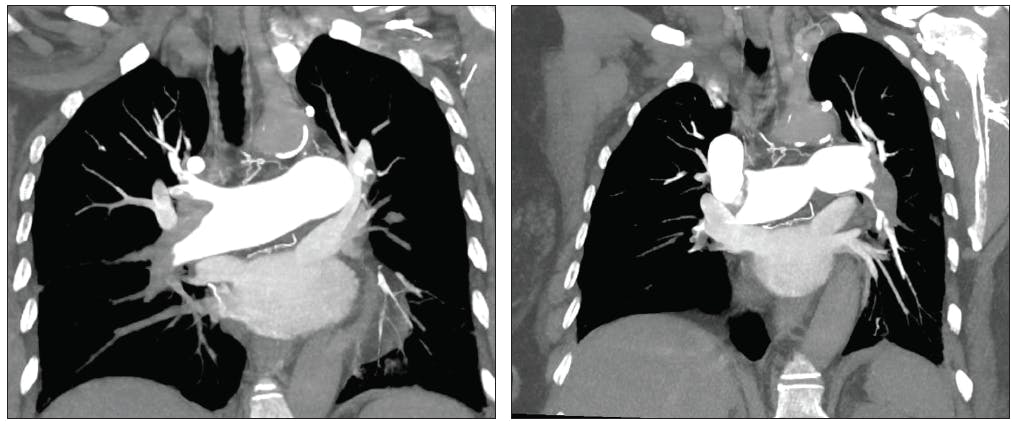
Figure 1. CT pulmonary angiogram revealed significant bilateral acute PE.
How would you treat this patient?
Dr. Tummala: Given the high probability of HIT, stopping heparin therapy as mentioned previously is appropriate. Although argatroban has long been used as the first-line therapy in patients with HIT, bivalirudin is also effective. Due to its renal clearance, bivalirudin may also be preferred to argatroban in patients with hepatic dysfunction. Although the systolic blood pressure and troponin values are not mentioned, based on the high RV/LV ratio and tachycardia, her Bova score of at least 3 would place her in stage 2, with an 18% risk of PE-related complications (death from PE, hemodynamic collapse, or recurrent nonfatal PE) at 30 days and a 6.8% risk of PE-related mortality at 30 days. Given this risk, PERT discussion and escalation of intervention is appropriate. Based on the report of worsening clot burden occurring despite prior therapy with catheter-directed tPA, a catheter-based therapy with an aspiration thrombectomy system performed by an experienced operator is a good approach. Furthermore, the procedure should be performed with the least sedation required given the patient’s hemodynamic status. As we know, general anesthesia and PPV are associated with a higher risk of cardiovascular collapse in patients with intermediate- and high-risk PE, and current guidelines recommend that these should be avoided unless the patient receives surgical management with extracorporeal mechanical support (ECMO) or if the patient experiences cardiac arrest. Cardiac surgery should also be involved in the decision-making to determine the need for ECMO. It is worth noting that the images are also concerning for chronic thromboembolic pulmonary hypertension (CTEPH) (eccentric nature of the filling defects, the degree of dilatation of the PA, and the presence of what appear to be collateral vessels). True chronic thromboembolic disease (CTED) is not simply organized clot, but rather clot that has been replaced by a fibrotic vessel lining and is likely not amenable to thrombectomy or tPA. The importance of recognizing this as a possibility will help to set appropriate expectations for the results of the interventional procedure and what to expect in terms of both angiographic and hemodynamic benefit. Consultation with a pulmonary hypertension expert should be considered, if such a person is not already part of the PERT.
Dr. Harris: With the patient’s recent surgery, this limits the safe use of thrombolytic agents. With the decompensation despite anticoagulation, I would pursue mechanical thrombectomy as a first-line approach, reserving thrombolytics only if absolutely needed. I would initially consider either using the FlowTriever (Inari Medical) or performing suction thrombectomy with Indigo Lightning 12 (Penumbra, Inc.). Depending on the clinical improvement and images, I would then proceed with additional thrombolysis only if needed with a Cragg-McNamara catheter (Medtronic). Duration of therapy would again be guided by clinical improvement.
If significant improvement had occurred, I would also assess the patient for lower extremity DVT with duplex ultrasonography, and if present, I would place a retrievable IVC filter due to the massive PE. If additional thrombolysis was required, filter placement would be delayed until after the PE was fully addressed so as to not compromise those interventions.
Dr. Bashir: This patient has significant shortness of breath and a dilated right ventricle with elevated biomarkers suggestive of high–intermediate-risk PE; therefore, advanced therapeutic options need to be considered, including catheter-based thrombus removal, systemic thrombolysis, or surgical thrombectomy. Systemic thrombolysis is associated with > 10% major bleeding risk, and the risk may be higher in this patient, who had already received 10 mg of tPA a few days ago. Surgical thrombectomy is also associated with a high mortality rate (> 20%), and these patients do not tolerate anesthesia well. Therefore, catheter-based thrombus removal is a very feasible option. There are several methods of catheter-based thrombus removal, which include a standard catheter-directed thrombolysis (CDT) and ultrasound-assisted catheter-directed thrombolysis (USCDT), pharmacomechanical catheter-directed thrombolysis (PMCDT), and finally mechanical thrombectomy (MT) without any thrombolysis. Because this patient was already treated once with USCDT without a durable response, I would prefer PMCDT or MT. The advantages of PMCDT is wider distribution of the thrombolysis across a large cross-section of the PA, which may have been the reason why USCDT was not very effective in the first place. The advantages of MT is that the need of thrombolysis may be obviated; however, it does increase the risk of distal embolization, which is particularly problematic if it occurs into those segments of the lung that were functioning normally prior to the intervention. The role of ECMO as a standby in this patient is very reasonable, and we do this commonly in patients with elevated lactate levels and severely reduced cardiac index. If patients do need ECMO, the efficacy of bivalirudin may be reduced due to adherence of this drug to the circulatory tubings.
Another question in the management of this patient is to understand whether the worsening pulmonary status of this patient 2 days after USCDT was due to recurrent PE versus in-situ PE. Based on the CT appearance of the thrombus in the right and left PA, I suspect that it was in-situ pulmonary thrombosis on top of an existing PE due to acute HIT. This would make me further avoid using an IVC filter.
CASE CONTINUED
We proceeded with catheter-directed therapy with ECMO as a backup in the event she decompensated during the procedure. With fluoroscopic guidance, 4-F access sheaths were placed within the right common femoral artery and the left common femoral vein if emergent ECMO was needed. Right atrial pressures were 34/19 mm Hg (mean, 19 mm Hg), and main PA pressure (PAP) was 49/24 mm Hg (mean, 34 mm Hg). Suction thrombectomy of the main and right PAs was performed with the Indigo system using the Lightning 12 suction thrombectomy catheter. After successful aspiration of thrombus, the suction thrombectomy system and pigtail catheter were removed. A 4-F, 65-cm Cragg-McNamara lysis catheter was placed in both PAs with drip infusion of 1 mg/hour of tPA. After 12 hours of lysis, the patient reported significant improvement in symptoms with a decrease in oxygen requirement to 4 L via nasal cannula. PAPs were reduced to 35/5 mm Hg (mean, 16 mm Hg) with a significant reduction in thrombus burden on angiogram. Lysis was terminated.
How would you manage this patient now with regard to additional therapies, anticoagulation, and need for IVC filter placement?
Dr. Harris: Although I do not advocate or practice placement of IVC filters for routine PE, I think that a retrievable filter is a reasonable additional precaution for patients with limited pulmonary reserve, those who have already demonstrated significant compromise requiring intervention for massive or submassive PE, and those with persistent DVT. As this was an instigated PE, I would transition the patient to a direct oral anticoagulant (DOAC) such as apixaban and obtain a follow-up echocardiogram. She would be maintained on anticoagulation for 6 months.
Dr. Tummala: Long-term management will depend largely on whether the diagnosis of HIT was ultimately confirmed with a serotonin release assay. If HIT is present, then avoidance of all heparin-related products is essential. Long-term anticoagulation could be given with DOACs. Typically, in cases of severe HIT such as this, the transition from direct thrombin inhibitor to DOAC should be initiated once the platelet count has improved.
The strongest indication for an IVC filter is PE with an absolute contraindication to anticoagulation. Patients with PE who are expected to have interruptions of anticoagulation due to surgical procedures or thrombocytopenia (for example due to chemotherapy) may also benefit for the same reasons. Although retrospective data suggest that IVC filters might improve outcomes in patients with large PE, subsequent randomized controlled trials have largely not borne that out. In fact, they have suggested an increased risk of harm with IVC filters. Ultimately, they can be considered on a case-by-case basis depending on other clinical factors but should not the employed as a general rule in all patients with intermediate–high-risk PE.
Dr. Bashir: I would therapeutically anticoagulate the patient with non-heparin anticoagulants such as argatroban or lepirudin until the patient’s platelet count is > 150,000/µL. After that, I would transition the patient to a DOAC such as rivaroxaban. Because this patient did not have any active bleeding, I do not see any need for an IVC filter. However, if he did have mobile thrombus in his IVC or iliofemoral veins, then I would consider a retrievable IVC filter. I avoid aspirin in these settings, as it may lead to increased bleeding rates. The role of fondaparinux in these patients is not well studied, but many hematologists consider it a reasonable option for anticoagulation in HIT. In case this patient needs to be anticoagulated with warfarin, we need to make sure that the platelet counts have normalized, and there is an overlap period when the patient is treated with both the IV non-heparin anticoagulant and oral warfarin. In addition, we need to make sure that the international normalized ratio does not increase markedly because it may lead to warfarin skin necrosis or venous gangrene.
CASE CONTINUED
The patient continued with a therapeutic dose IV bivalirudin during the catheter-directed therapies and lytic infusion and after the procedure. On day 3 postprocedure, the platelet count improved to 110,000/µL. Heparin antibody test and serotonin release assay tests supported the diagnosis of HIT. The small bowel obstruction had resolved as well. She continued to improve clinically with no external oxygen requirements. Bivalirudin was stopped, and the patient was started on a loading dose of apixaban of 10 mg twice daily. An echocardiogram obtained 72 hours after the procedure showed significant improvement in RV function with pulmonary systolic pressure reduced to 32 mm Hg. The patient was discharged 2 days later.
What is your outpatient approach to this patient’s care?
Dr. Tummala: Long-term management should include continued anticoagulation and repeat imaging with a pulmonary CTA after at least 3 months of therapeutic anticoagulation to determine whether or not she indeed has CTED. If she is found to have CTED, she should be referred to a physician or center specializing in the management of PA hypertension for consideration of additional therapies.
Dr. Harris: She would again undergo echocardiography at 3 months to assess return to normal cardiopulmonary function as well as repeat venous duplex ultrasound. If she was able to tolerate anticoagulation and cardiac and pulmonary function had normalized, I would then remove the IVC filter while continuing anticoagulation for 6 full months.
Dr. Bashir: When the platelet count returns to a normal range, we will start them on a DOAC such as rivaroxiban or apixaban. Then, the patient will return for evaluation in the post-PE PERT clinics in 2 weeks and then in 3 months. The echocardiogram and ventilation perfusion scan will be repeated at 3 months to establish a baseline perfusion in case a patient comes back with shortness of breath in the future. If a patient has persistent exertional shortness of breath and an abnormal ventilation perfusion scan, then we will refer them to our CTEPH program, where they are evaluated for both CTEPH and CTED. Most of these patients are evaluated with cardiopulmonary exercise testing. In the absence of CTED or CTEPH, we would anticoagulate these patients for 6 months. In patients with very large volume thrombus like this patient ,we will also evaluate the pelvic veins for an obstructive/compressive pathology such as May-Thurner syndrome or a mass (large fibroids, malignant tumor). If an obstructive pathology is found, we usually treat it.
CASE CONCLUSION
One week after discharge, the patient reported continued improvement in her symptoms. The platelet count was back to normal. At 3-month follow-up, an echocardiogram showed a normal right ventricle with no signs of elevated pulmonary pressures. The 6-minute walk test was within a normal range of walking with no signs of dyspnea and a Borg score of zero. Anticoagulation was stopped at that time, given the provoked nature of PE.
MODERATOR'S SUMMARY
This case outlines the importance of considering HIT as an etiology for recurrent thrombosis, particularly when the patient is on heparin. Additionally, we all highlight the importance of appropriate risk stratification for short-term mortality. We would consider a catheter-based approach, which often is a combination of lytic therapy with mechanical thrombectomy. Anticoagulation for 3 months and then evaluation of chronic thromboembolic pulmonary hypertension was also recommended.
Advertisement
Advertisement