Advertisement
Advertisement
August 2021
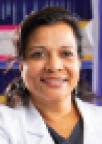
An Interview With Sonya Noor, MD, FACS
Dr. Noor shares her story of cofounding the Buffalo Endovascular & Vascular Surgical Associates practice, thoughts on prioritizing vascular health for women, the importance of clinical pathways for DVT and amputation prevention, and managing burnout.
Tell us about the process of founding your vascular surgery practice, Buffalo Endovascular & Vascular Surgical Associates (BEVSA). With the knowledge you have now after more than 13 years in business, what do you wish you knew when starting out (eg, community engagement, patient referrals, economics)?
After I graduated, I joined my favorite attending in a community multispecialty group in Buffalo. Within the first 2 years, I realized that as a profitable specialty, we were subsidizing the multispecialty group, but the referral rate from the group was < 40%. I discussed with my partner whether we should look into forming our own group, and he responded with certainty about 6 to 8 months later, when I was 6 months pregnant. Essentially, I had my son in September 2007 and cofounded the BEVSA practice in October 2007—two babies a month apart. We were successful at this because of the advisors I gathered for support and guidance. We were then established as a vascular surgery practice, so we could maintain some of our patients and grow new referral relationships. Our advisors set us up with the fundamental processes needed to run a practice.
Over the last 14 years, I have continued to grow and improve processes, infrastructure, and referral relationships. Our goals as a practice are to remain patient centric, respect one another in the practice, and never be afraid to offer and receive feedback. I have learned empathy and how to be a better leader. I’ve also learned the importance of recognizing that this is a relationship business, and building strong relationships with our patients and referring physicians is an essential and fundamental need for success.
You’ve presented on and have a particular interest in abdominal aortic aneurysms (AAAs) in women. What screening and periprocedural changes would you like to see to improve outcomes for women with AAA?
Women tend to be caregivers and think of themselves last. I try to educate all the women who come to the practice about health in general, whether they are the patient, caregiver, or decision-maker. I believe educating women makes a very strong impact on the health of the family and all the people they touch.
We offer screening to all male and female vascular patients with a family history of AAA and a history of smoking; I believe that AAA is an underdiagnosed and fatal disease. Taking a few extra minutes to explain to a female patient that they have an aneurysm that can be treated and cured can go a long way in not “putting it off.” It is important to take care of yourself before you can properly take care of others. I believe that earlier diagnosis and better endovascular aortic aneurysm devices (eg, Ovation, Endologix) can improve outcomes for women with AAA with less iliac injury, fewer complications, and good longer-term outcomes.
What is your favorite procedure to perform and why?
My favorite operation used to be carotid endarterectomy; it was fairly simple, safe, and elegant and, when done correctly, could prevent stroke, a not only fatal but severely disabling complication. With innovation, transcarotid artery revascularization (TCAR) appears to be safer to do, easier for patients to tolerate, and has fewer complications. My experience continues to grow with this procedure, and our practice now performs the highest number of TCARs in the area. I am proud to say that we have improved outcomes in patients with carotid disease.
Earlier this year, you announced the launch of the Deep Vein Thrombosis (DVT) Alert Program at Kaleida Health Hospitals, a clinical pathway to allow for early diagnosis and treatment of DVT. How would you summarize the key features of this pathway, and what changes do you hope to see for DVT care as a result of the program?
We have advanced so much in the cardiovascular space, especially for peripheral artery disease with newer devices like drug-eluting stents and drug-coated balloons, but almost no improvements have been made on the venous side until recently. We now have technology that allows us to treat acute clot, such as ClotTriever (Inari Medical) or Clot Hunter (Boston Scientific Corporation) to name a few. However, an otherwise young and usually healthy DVT patient is condemned to delayed diagnosis and, commonly, postthrombotic syndrome development. The only way to break this cycle is early diagnosis and treatment of patients with appropriate intervention, not to just put everyone on anticoagulation. This requires improved awareness in the community, education, and a simple clinical pathway for nonvascular providers in the emergency room, family practice, and primary care to follow. That was the goal of the DVT program. Hopefully, this will allow patients with DVTs to get more than just anticoagulation, development of recurrent DVT, venous hypertension, venous ulcers, and postthrombotic syndrome.
As Medical Director of the Amputation Prevention Program at Gates Vascular Institute, what do you consider to be most effective for preventing amputations and ensuring adequate access to vascular care?
This program was created to improve awareness in the community to stop the cycle of amputation without appropriate arterial evaluation. It also created a pathway for appropriate specialties to get involved when a patient is admitted to the hospital, so the patient receives adequate care in the hospital and postdischarge. Multispecialty involvement in the amputation prevention program was critical and included not only the vascular surgery but also vascular interventional radiology, podiatry, infectious disease, plastic surgery, and wound care nursing and centers. It is still a work in progress, but I think patients are getting better care in and out of the hospital.
You’ve invested a lot of effort in teaching the next generation of vascular surgeons. What are the most important professional and personal tips would you share with an aspiring vascular surgeon?
I never thought of myself as a teacher or researcher when I started my career in vascular surgery and community practice. I have been blessed to work at a center where community surgeons and the university can work closely together. I participate in training the residents and fellows and have realized the importance of research, as I have been a principal investigator for multiple trials now. The residents and fellows have kept us on our toes, keeping us abreast of new information and data and, in return, allowing us to share our experiences with them. I have learned so much from them and feel proud that I have invested in the next generation of vascular surgeons. I try to stay in touch to see how they are doing postgraduation, and we have become colleagues as time has passed.
Residency and fellowship can be some of the hardest and most trying times for a young, budding vascular surgeon. You may often question why you are doing this. My advice is that the best investment you can make in your future and education is to try to learn as much as you can under someone else’s supervision. Then, learn to trust your instincts and what you’ve learned and always put the patient first, and you won’t go wrong. I also would like to thank the residents and fellows I have spent time with for all the medical and nonmedical pearls I learned from them.
A recent paper from the Journal of Vascular Surgery explored the incidence of burnout in vascular surgeons.1 What are your preferred methods of ensuring wellness and balance? How do you fit this into a busy clinical schedule?
Burnout and stress are real in all walks of life, and managing and balancing mental health is important. We are finally talking about it openly and can address its challenges without feeling ashamed and made out as weak if you feel burnt out. I try to make time for myself every day to do something fun. I make diet and exercise a priority, and I try to get a workout in first thing in the morning a few times a week. I also try to play tennis a few times a week, throwing in a yoga class when I can. Every quarter, I aim to take a minivacation with my son to visit friends.
Probably the most important thing I do every morning is a few minutes of meditation and reexamining my purpose so that I have clarity and peace in everything I do for the rest of the day.
1. Coleman DM, Money SR, Meltzer AJ, et al. SVS Wellness Task Force. Vascular surgeon wellness and burnout: a report from the Society for Vascular Surgery Wellness Task Force. J Vasc Surg. 2021;73:1841-1850.e3. doi: 10.1016/j.jvs.2020.10.065
Advertisement
Advertisement
Interested in reading more interviews?
To read more interviews with thought leaders in the vascular field, check out our Profiles & Perspectives hub.
Read More