Advertisement
Advertisement
August 2021
Enlarging Aortoiliac Aneurysm With Combined Hostile Neck and Iliofemoral Access Challenges
Moderator: Brant W. Ullery, MD, MBA, FACS, FSVS;
Panelists: Venita Chandra, MD; Sukgu Han, MD, MS; and Grace J. Wang, MD, MSCE
CASE PRESENTATION
A man in his early 80s with a history of tobacco use, coronary artery disease (CAD), diverticulitis requiring Hartmann procedure, and remote occupational injury that resulted in right above-knee amputation 50 years prior presented for a second opinion regarding management of an enlarging aortoiliac aneurysm (7-mm growth over the past year) (Figure 1, Figure 2 and Figure 3). He was functionally independent with aid of a prosthesis and void of any claudication or active anginal symptoms. The patient denied any back or abdominal pain.
Preoperative CTA.
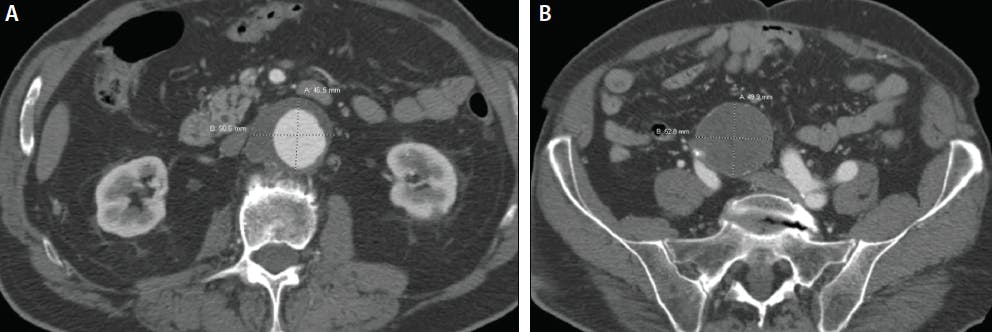
Figure 1. Preoperative cross-sectional imaging showing a 5.1-cm juxtarenal aortic aneurysm (A) and a 5.3-cm right CIA aneurysm (B).
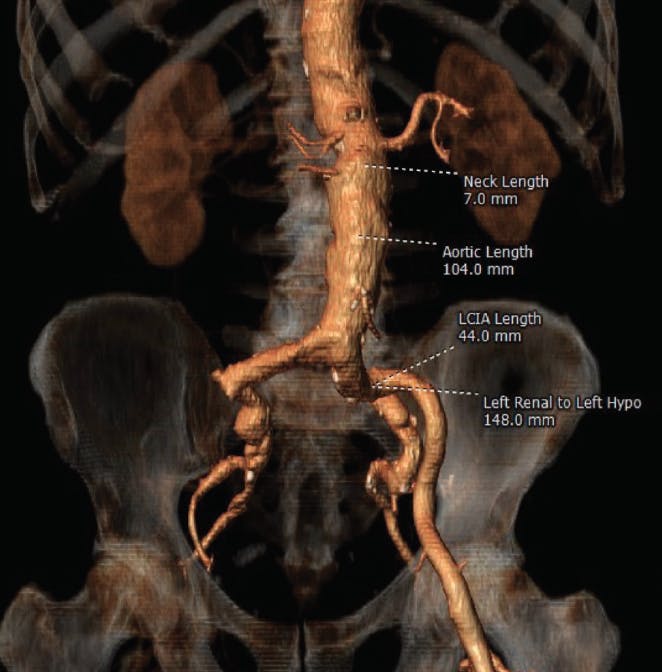
Figure 2. Three-dimensional reconstruction of the aortoiliac aneurysm, including a 7-mm infrarenal neck length and incidental note of chronic right iliofemoral arterial occlusion.
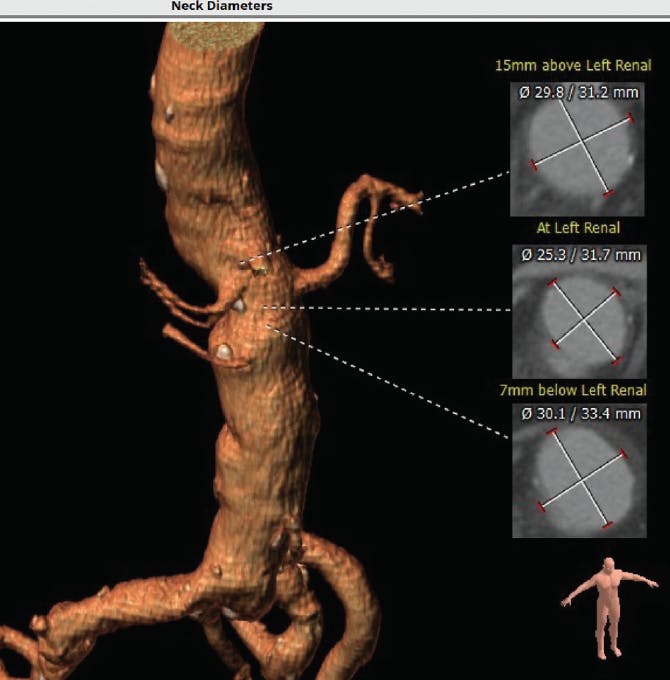
Figure 3. Juxtarenal aortic neck diameter measurements.
Aside from anatomic factors, how do patient characteristics (eg, age, ambulatory status, frailty) and social factors (eg, support system, reliability of follow-up) affect your management of asymptomatic aneurysms that approach or exceed conventional size thresholds for repair?
Dr. Chandra: Consideration of patient characteristics and functional status is an incredibly important component to managing patients such as this. My assessment of their status, including both patient and social factors, is always a key factor in my decision-making as to whether intervention should be performed and if so, what intervention to proceed with.
Dr. Han: Although I do not have an absolute age cutoff for offering repair, a combination of multiple factors including age, cardiopulmonary comorbidities, and frailty are considerations in the context of the complexity of the procedure (and associated perioperative risks) required to achieve durable repair. Social factors such as the support system and reliability of follow-up are particularly relevant if the patient would benefit from the use of investigational devices. In my practice, indications based on the size or growth of asymptomatic aneurysms are not altered by patient characteristics. High comorbidity burden and advanced age would favor endovascular over open repair, as long as the life expectancy of the patient exceeds the rupture risk of the aneurysm.
Dr. Wang: Chronologic age alone is not a deterrent to offering aortic aneurysm repair, but a patient’s overall comorbidity status and frailty are taken into account before considering repair. Because this is a prophylactic procedure, I want to ensure that the offered procedure reduces his risk of aneurysm rupture but at the same time does not adversely impact his quality of life. The fact that he is functionally independent with a prosthesis and does not have active CAD allows for one to contemplate prophylactic aortic intervention.
Based on the limited clinical data and his associated anatomic challenges, would you offer this patient repair? If so, what would your open or endovascular approach entail?
Dr. Wang: He has a 5.1-cm juxtarenal aortic aneurysm with an accessory right renal artery and a 5.3-cm right common iliac artery (CIA) aneurysm. Without contralateral groin access, repair with a commercially available fenestrated stent graft could not be done with the typical cannulation of both fenestrations before committing to device positioning.
Thus, there are two operative options. The first is the endovascular repair of the juxtarenal aortic aneurysm and right CIA aneurysm with an aorto-uni-iliac (AUI) device delivered up the left side. I would first plug the right internal iliac artery to prevent back-bleeding into the right CIA aneurysm. I would also use the left brachial for arteriographic access for the AUI. After deploying the AUI (covering the right, lower accessory renal artery), I would use Heli-FX EndoAnchors (Medtronic) because the neck is marginal at only 7 mm in length. I would then do a left-to-right femorofemoral artery bypass. Because I am taking away his right internal iliac artery, I am concerned he won’t be able to walk on his prosthesis well without revascularization of the right common femoral artery and profunda branches.
The other option is transperitoneal (to avoid the colostomy) open aneurysm repair with a bifurcated graft. I would clamp the suprarenal, sew the infrarenal, sacrifice the right inferior accessory renal artery for the proximal anastomosis, sew to the left CIA and the right common femoral artery, and reimplant the right internal iliac artery to the right limb.
Dr. Chandra: This is quite the complex case! I would certainly counsel the patient on the risks, benefits, and alternatives. I am most concerned about the right iliac aneurysm above an occluded external iliac artery (EIA). Certainly, an open approach (aorto-bi-iliac repair of the juxtarenal abdominal aortic aneurysm [AAA] and iliac aneurysm repair) would be the simplest way to manage all of his challenges, but the concern is his previous colectomy and CAD. If together we felt the risks were too great for an open procedure, I would offer an endovascular approach. I would try to cross the right iliac occlusion (often possible), proceed with coiling the right hypogastric artery, and perform endovascular aneurysm repair (EVAR) with EndoAnchors to address the short neck. I would be prepared for AUI femorofemoral bypass if we couldn’t cross the right iliac occlusion.
Dr. Han: Advanced age, history of operations due to intra-abdominal sepsis, and CAD would favor endovascular repair. Although the large neck length measures 7 mm, the pararenal and paravisceral aortic segments appear irregular, with posterior bulging. To my review, this appears to be a paravisceral AAA with double right renal arteries and concomitant right CIA and hypogastric aneurysms. The right EIA is diminutive, with possible short-segment occlusion under the inguinal ligament.
I would plan to perform five-vessel fenestrated EVAR for the proximal seal at the low (approximately 4 cm) supraceliac aorta and infrarenal bifurcated EVAR device, using the contralateral gait to seal across the right hypogastric aneurysm. Access would be from the upper extremity, preferably open left brachial access for the branch stents (including the right hypogastric) and percutaneous left femoral access for the aortic components. The patient would be enrolled in a physician-sponsored investigational device exemption protocol.
If the patient insisted on an endovascular solution, how would you counsel him regarding potential failure mechanisms for EVAR? Are there any additional procedural adjuncts that could ameliorate these risks in the short or long term? Do you survey these patients any differently in follow-up?
Dr. Han: I agree with the patient on the endovascular solution. Postoperatively, this patient would be closely followed through the investigational protocol at 1, 6, and 12 months and then annually with CTA combined with visceral/mesenteric duplex ultrasound, as well as clinic visits with a basic metabolic panel.
Dr. Wang: The short-term outcomes of EVAR with short neck and EndoAnchors are promising, but type Ia endoleak and graft migration is still a concern. A recent meta-analysis reported that out of eight studies and a total of 968 patients, technical success was high.1 However, 6.23% had a persistent type Ia endoleak at 6 months, and migration requiring a proximal cuff occurred in 0.26%. Thus, I would counsel the patient on the need for regular CTA follow-up at 1, 6, and 12 months for the first year. Further surveillance intervals would be determined by how the 1-year CTA looked. The absence of endoleak or sac regression, for example, would argue for waiting another year before rescanning.
Dr. Chandra: It is difficult to fully convey the challenges of endovascular solutions, but it is important to discuss with patients. I would tell this patient that we would normally choose a fenestrated device with his anatomy but that this is not an option given his iliac situation. I would explain the endoleak concept, which I find is often confusing to patients. I usually end by telling them they’re “stuck with me” because close lifelong follow-up is key. My usual follow-up algorithm is CTA at 1 and 6 months, then yearly after that. If there is significant endoleak, I will consider 3-month follow-up with duplex ultrasound.
APPROACH OF THE MODERATOR
This case involves a highly functional elderly patient with intermediate perioperative risk based on comorbidities and elevated anatomic risk based on a hostile abdomen (prior diverticulitis with Hartmann procedure and subsequent colostomy reversal). Regardless of physiologic fitness, my general management strategy for older patients centers on an endovascular-first approach. Nevertheless, this would not be a conventional EVAR given his complex aneurysm morphology. Endovascular strategies in such cases frequently require multiple adjunctive procedural components, including EndoAnchors, prophylactic embolization of type II endoleak sources, and potential extra-anatomic bypass (if an AUI configuration was chosen). As such, we did discuss the risks and benefits of open and complex endovascular repair options.
Ultimately, the patient was against any open repair because of the prolonged hospitalization and pain issues that accompanied his index laparotomy for diverticular disease several years before. I felt confident that a proximal seal could be obtained despite his short, wide infrarenal neck as long as EndoAnchors were utilized at the index procedure. Although the initial reflexive case planning included an AUI configuration with femorofemoral bypass due to his chronic right EIA occlusion, I remained optimistic that the generous right hypogastric arterial system would accommodate an iliac limb in order to use a conventional bifurcated device and avoid the need for femoral crossover bypass. I was concerned that the multiple large branches off the aneurysm sac (eg, accessory right renal, inferior mesenteric artery) would subject this patient to an unacceptably high risk for late aneurysm sac enlargement caused by type II endoleak(s). As such, I planned to prophylactically embolize as many of these as possible during the initial phase of the procedure. If this embolization portion of the procedure proved to be time-intensive, I discussed the potential for staging the procedure with interval EVAR in the weeks to follow.
The procedure was performed rather expeditiously. I achieved percutaneous access of the left femoral artery and open surgical exposure of the proximal left brachial artery. Embolization of the right inferior accessory renal artery, inferior mesenteric artery, and right EIA was performed without significant difficulty (Figure 4). As such, I proceeded with EVAR using a 36-mm Endurant IIs bifurcated device (Medtronic). Given the high-risk infrarenal neck anatomy, a total of eight EndoAnchors were placed circumferentially below the proximal edge of the main body device. I was able to easily cannulate the contralateral limb via my antegrade access, and I ultimately placed a series of overlapping balloon-expandable covered stents (Viabahn VBX, Gore & Associates) to serve as my contralateral iliac limb into the right hypogastric artery. Completion angiography confirmed successful exclusion of both the aortic and right iliac aneurysms (Figure 5). A small residual type II endoleak was noted from paired lumbar arteries. The right hypogastric arterial system provided reconstituted flow into the right femoral system, consistent with the preimplant imaging. Follow-up imaging at 1 year demonstrated spontaneous resolution of the remaining small type II endoleak and > 1-cm sac regression in both the juxtarenal aortic and right iliac aneurysms (Figure 6).
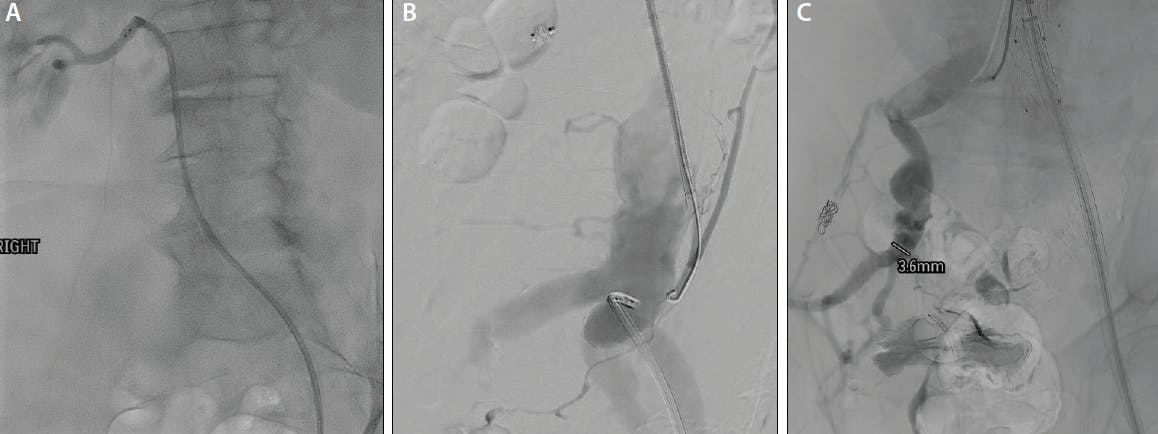
Figure 4. Prophylactic embolization of type II endoleak sources during index aortic intervention: inferior accessory right renal artery (A), inferior mesenteric artery (B), and right EIA (C).
Video 2. Completion angiogram.
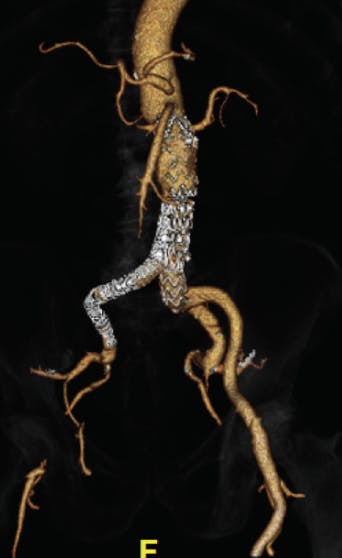
Figure 5. Postoperative CTA showing successful endovascular exclusion of the aortoiliac aneurysm as well as patency of the right hypogastric limb and corresponding distal reconstitution of the right femoral bifurcation.
Video 3. Postoperative CTA.
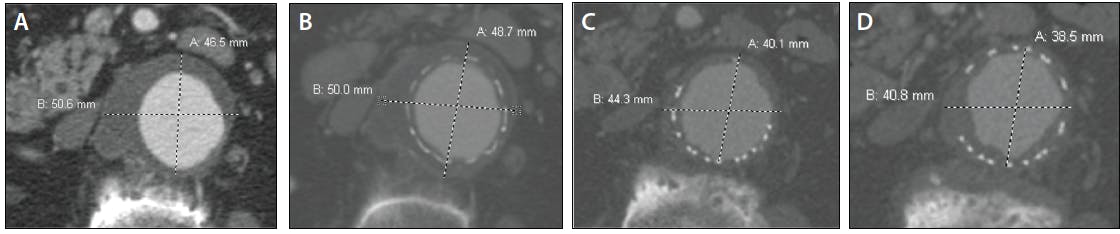
Figure 6. Sac dynamics of the juxarenal aortic aneurysm as noted by maximum sac diameter at various time points: preoperatively (5.1 X 4.7 cm) (A) and at 1 (B), 6 (3.7 X 3.4 cm) (C), and 12 months (D) postoperatively. Early follow-up showed continued sac regression, including resolution of a small residual type II endoleak from lumbar artery.
This patient’s multiple anatomic challenges required several layers of adjunctive techniques to obtain a satisfactory endovascular solution. The case planning was intentionally deliberate and sufficiently flexible to accommodate the need to stage the procedure (eg, prolonged embolization efforts), convert to AUI configuration and crossover bypass (patient was prepped for this unlikely possibility), or even perform parallel stenting if a refractory type Ia endoleak was encountered (antegrade access was already obtained). In such cases, I believe flexibility is important because hemodynamic changes, access challenges, or other unexpected technical issues can derail a procedure at any time.
Moreover, this case also highlights the importance of never “burning any bridges”—particularly in complex and off-label endovascular aortic surgery. As highlighted previously, plans were made to respond to any potential for residual large endoleak or right leg malperfusion on completion angiography. Lastly, the aforementioned anatomic challenges each add incremental risk for compromised durability for EVAR in this case. It is important to minimize this risk upfront at the index procedure and proactively integrate adjunctive procedures (eg, prophylactic embolization of large side branches, liberal use of EndoAnchors in hostile neck anatomy) to minimize the risk for late EVAR failure and delayed rupture. I do follow complex EVAR patients closer than most, including the continuation of postoperative cross-sectional imaging as necessary beyond the first year. When sac regression is obtained with a corresponding absence of endoleak, I return these patients to duplex imaging surveillance.
1. Karaolanis G, Antonopoulos CN, Koutsias S, et al. Outcomes of endosutured aneurysm repair with the Heli-FX EndoAnchor implants. Vascular. 2020;28:568-576. doi: 10.1177/1708538120923417
Advertisement
Advertisement