Advertisement
Advertisement
August 2021
Sponsored by Reflow Medical, Inc.
The Reflow Medical Innovation Algorithm
A closer look at Reflow Medical’s iterative approach to device development that partners physicians and engineers in a continuous feedback loop to pursue solutions backed by clinical data.
With S. Jay Mathews, MD, MS, FACC, FSCAI; Fadi A. Saab, MD, FACC, FSCAI, FASE; Peter A. Soukas, MD, FACC, FSVM, FSCAI, FACP, RPVI; and John A. Phillips, MD, MA, FSCAI, RPVI



Despite advances in therapy and prevention, cardiovascular disease (CVD) remains the leading cause of death globally,1 and the clinical need for advanced, effective devices used to treat coronary artery disease and peripheral artery disease (PAD) is critical. The interventional cardiology device market was valued at roughly $3.2 billion in 2020, with over 965,000 percutaneous coronary interventions (PCIs) performed every year.2 PAD affects approximately 230 million people worldwide, and cases involving critical limb ischemia (CLI) below-the-knee procedures are expected to increase.3
Focusing on the expressed needs of physicians on the front lines treating patients with CVD, Reflow Medical, Inc. has developed what it calls an “Innovation Algorithm.” This iterative approach to device development partners physicians and engineers in a continuous feedback loop as they pursue solutions backed by verifiable clinical data (Figure 1).

Figure 1. The Reflow Medical Innovation Algorithm, which partners physicians and engineers in a continuous feedback loop.
The company’s initial focus was on designing a line of devices that facilitate accessing and crossing calcified lesions in the peripheral vasculature. The peripheral portfolio consists of the Wingman™ CTO Catheter and the Spex™ Support Catheters, including the new low-profile Spex™ LP line, which are all FDA 510(k) cleared. It has also resulted in the design and development of a unique line of microcatheters and crossing catheters (coraForce™, coraFlex™, and coraCross™) for use in complex PCI and CLI, also all FDA 510(k) cleared. The ongoing synergistic approach has led to the development of Reflow’s novel therapeutic device known as the Temporary Spur Stent System (not FDA approved/cleared), currently undergoing clinical trials in Europe and New Zealand (DEEPER OUS [NCT03807531] and DEEPER LIMUS [NCT04162418]).
Leading experts Drs. S. Jay Mathews, Fadi Saab, and Peter Soukas were asked about their experience with the Innovation Algorithm and the feedback loop with engineers during the device development process. The Case Study sidebar describes a woman with Rutherford class 5 CLI in which the Spex™ LP and coraForce™ were used to facilitate percutaneous transluminal angioplasty (PTA) of severely occluded proximal posterior tibial (PT) and anterior tibial (AT) arteries.
The Reflow Medical Innovation Algorithm is based on a development cycle that involves the physician at every stage. What have been the key touchpoints for you in Reflow’s device development process?
Dr. Mathews: I’ve been involved from the product inception process all the way to the actual final product that makes it to market and commercialization. One of Reflow’s strengths is how quickly they can take a concept and create a prototype. We’re able to see very quickly with these rapid prototyping methods what can work and what might not work. Obviously, you go through the regulatory phase as well. Feedback comes from the FDA, based on the testing that is necessary for them, and then there’s the limited product release. That’s sometimes where we discover other enhancements. It’s kind of a soft launch, and it’s really great at that point to be able to say, “Hey, well, this works; what if we take it a step further in this direction?”
Dr. Soukas: The closer the collaboration between the doctor and the engineers, the better off the product will be. This allows the physicians to be more successful, which is what we’re all here for—to save limbs, save lives, improve quality of life and do it in a cost-conscious manner, hopefully on an outpatient basis so that patients return to a good quality of life in a very short period.
Dr. Saab: One of the things that I enjoy immensely is the ability of Reflow Medical to understand and conceptualize the thought process of physicians. This might be a bit unusual because I don’t think physicians are very good in terms of taking a medical idea that they see very clearly in their heads and helping it materialize or understanding what it takes for an idea to materialize in a way that can ultimately meet the needs of patients. Reflow is able to understand the physician’s thought process and mind set.
Can you cite an example of how your comments or experience with a particular product in development were incorporated into the final device?
Dr. Soukas: I had one frustration with trying to feed the wire into the back of the first-generation Spex™ catheter. The wire would get hung up, especially if there was any significant bend on the tip of the wire. We were finding that we needed to back load the wire into the catheter, or we had to put a wire introducer into the back of the catheter, which was a bit inconvenient. It was determined that it was a relatively simple fix, and the fix happened so quickly after I mentioned it. I’ve never had that degree of involvement, specificity, and quick response time from a manufacturing partner.
Dr. Saab: Reflow brought a flow model of the Spex™ LP into our lab. I understand that the engineers always try to simulate what happens in real life clinically. They really were very close to doing that. As a physician, I want to close my eyes and test the catheter and the wires. And when I’m closing my eyes, does it feel like I am using this in an actual patient? You’re providing that feedback. I just use terms like “this doesn’t feel right,” “this doesn’t feel natural,” “this feels stiff,” or “this resistance is not something that you will meet in real life.” The Reflow engineers will try to gauge that and put that in a mathematical or engineering format that they can actually dig back and apply to the platforms they’re working on.
Dr. Mathews: When the Spex™ LP came to market, there were some needed enhancements, such as being able to see the catheter further, improving radiopacity. This is important when using x-ray images from a very large magnification. If you’re far away, trying to reduce radiation, you need to be able to see the catheter to have procedural success. This was one feature that was improved. Another feature that was improved was changing the back end of the catheter to make it easier for wire engagement, introducing the wire into the catheter. The back end of the catheter was altered and the strain relief was adjusted to make it more robust. It’s about efficiency—you want to be able to get the catheter, use it quickly, get it to where you need it to go, get across the lesion, and then switch up to the next thing.
How important is product synergy to the success of a procedure? For example, peripheral devices that can work together, whether they are made by the same company or different manufacturers?
Dr. Soukas: One nice trick is the ability to put a 0.014-inch Spex™ LP inside of a 0.035-inch device. It’s like a mother-and-daughter configuration and very similar to what we do in the coronary anatomy. This gives extra stability and pushability so that the guide catheter stays put, and the extra reach with the guidewire can be the difference between success and failure in terms of having enough stability in the platform that you can cross through. So, the fact that you can telescope a 0.014-inch device and a 0.035-inch device, it’s going to give you much more pushability than if you just had a support catheter and were trying to just push a wire through.
It also gives the ability to change out that wire and save on fluoroscopy and contrast usage, because it’s very quick and easy to just change out the wire and use an escalating wire strategy if you have the platform in there already. I think a lot of operators like this idea of starting with maybe a hydrophilic 3-g tip wire and then escalating to an intermediate wire (eg, a 12-g wire), and then if necessary, going up to a 30- or 40-g tip wire. If you have that platform in place, it’s very easy to make those wire exchanges. This particular synergy is very appealing, not only from a crossing standpoint but to reduce radiation exposure and amount of contrast.
Dr. Mathews: This is not just catheter technology but a whole portfolio of devices to treat both CLI and coronary artery disease. It’s really nice to see these peripheral catheters make it into the coronary space and also see how technologies developed for complex coronary artery disease, especially chronic total occlusion technology, can in turn be used in patients with CLI.
Dr. Saab: The research and development team and the whole team at Reflow understood early on that there are different devices, different options for treatment, and gaps within treatment, and they wanted to make sure that number one, are they able to fill in some of those gaps and address some of those needs? Hence, the development of the Wingman™ and Spur™ devices. Second, they wanted to make sure that the devices can be used symbiotically or can be used in conjunction with other devices from other manufacturers/vendors in a way that serves both the patient’s and the physician’s needs.
What are the advantages or disadvantages of the Innovation Algorithm?
Dr. Saab: Physicians like to work with agile companies, because there are not a lot of layers of bureaucracy. The team and the company take the feedback and apply it. As physicians, we want results quickly, and we understand that turning things around in 2 to 4 months is a magnificent amount of time. In our field, innovation is so important, as are the needs of the patients. Growth is explosive, and device modifications should happen quickly to keep up. Working with Reflow Medical, we’re seeing this kind of quick turnaround.
Dr. Soukas: With larger companies, typically, the pace of innovation is slower, there is more bureaucracy, and thus they are more inefficient. This can be a source of great frustration. That’s sort of the polar opposite of Reflow, where you provide feedback and there is an almost immediate response where there will be a new device for you to look and try as quickly as a week later.
Dr. Mathews: An advantage of the Innovation Algorithm is that if I don’t feel that the product is working up to spec, I’m not going to be shy to say that there’s an issue, and at the end of the day, I know that the issue will be addressed. With other companies, if you mention an issue, there’s a possibility that there will be a delay in it being addressed or it won’t be addressed at all. Reflow solicits feedback from a lot of sources and works closely with regulatory agencies, and they can make some meaningful changes that improve the products. The products are never “done”—they continue to evolve. Spex™ LP is going to continue to improve; new technologies will be introduced to make it an even better catheter. There is always the opportunity to introduce new ideas and concepts to make the portfolio better.
CONCLUSION
Aggressive development of peripheral vascular devices will continue to enhance physicians’ ability to effectively treat a burgeoning patient population. According to a survey by iHealthcareAnalyst, Inc., the global market for peripheral vascular devices is forecast to reach $13.5 billion by 2027.4 Based on positive results over the past 10 years, Reflow Medical plans to expand the reach of its continuous feedback loop—the Innovation Algorithm—among its physician partners and developers.
CASE STUDY: TREATMENT OF STENOSIS OF THE PROXIMAL AND MID ANTERIOR TIBIAL AND DORSALIS PEDIS ARTERIES FACILITATED BY SPEX™ LP and CORAFORCE™
By John A. Phillips, MD, MA, FSCAI, RPVI
A woman in her early 70s with dyslipidemia and former tobacco use presented with Rutherford class 5 CLI involving the left great toe. The ankle-brachial index was 0.69 on the left. Arterial duplex demonstrated < 50% stenosis throughout the imaged vessels, including the proximal PT and AT arteries. However, the vascular examination revealed a palpable left common femoral artery and popliteal artery, with an absent dorsalis pedis (DP) pulse and signal and a biphasic PT signal on Doppler assessment.
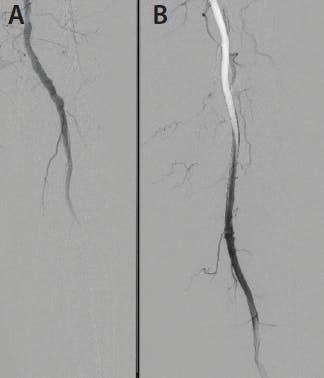
Figure 1. Angiograms showing a patent superficial femoral artery (A) and popliteal artery (B).
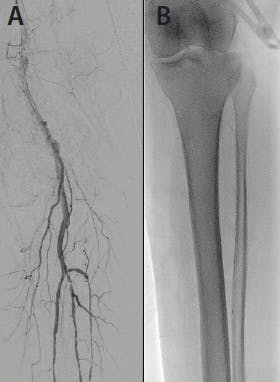
Figure 2. Angiogram showing stenosis in the proximal and mid AT (A). A 0.018-inch Spex™ LP was used to cross the AT (B).
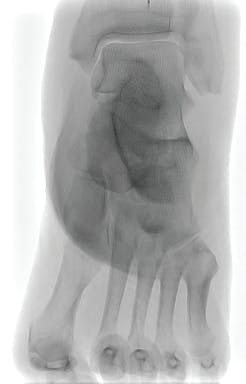
Figure 3. Close-up image of the Spex™ LP .018 in the distal AT.
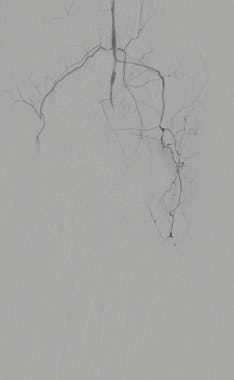
Figure 4. Angiogram showing the occluded distal AT and DP arteries.
Given the CLI and absent DP signal, the patient was taken for antegrade angiography. Angiography showed patent superficial femoral and popliteal arteries and stenosis in the proximal and mid AT (Figure 1 and Figure 2A). A 5-F, 30-cm sheath and 0.014-inch Hi-Torque Command wire (Abbott) were used to wire the occluded AT into the DP, and a Spex™ LP 0.018-inch support catheter was used to the mid DP (Figure 2B and Figure 3); however, we were unable to cross with the new Spex™ LP device. We switched to a 0.014-inch coraForce™ and were successful in crossing into the DP (Figure 4 and Figure 5). Serial PTA was performed with long inflation times (up to 5 minutes) to both the DP, starting with a 1.0-mm balloon and then a 2.0-mm balloon, and the distal AT, ending with a 2.5-mm balloon. Post-PTA angiograms showed patent AT and DP arteries (Figures 6, Figure 7, and Figure 8).
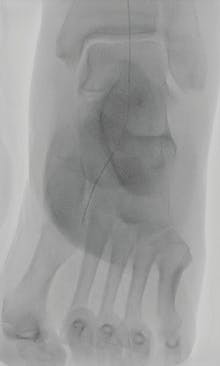
Figure 5. A 0.014-inch coraForce™ was used to cross the DP.

Figure 6. Injection of contrast through coraForce™ .014.
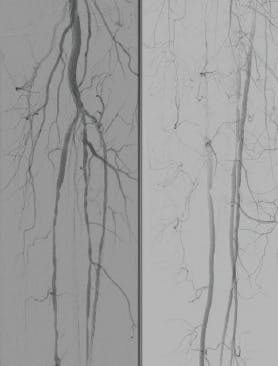
Figure 7. Post-PTA angiograms of the AT artery.
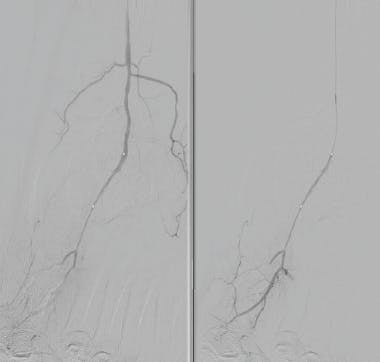
Figure 8. Post-PTA angiograms of the DP artery.

1. World Health Organization. Cardiovascular diseases (CVDs). Published June 11, 2021. Accessed July 23, 2021. https://www.who.int/en/news-room/fact-sheets/detail/cardiovascular-diseases-(cvds)
2. iData Research. Interventional cardiology market size, share & COVID19 impact analysis, United States, 2020-2026, MedSuite, includes: coronary stent market, coronary balloon catheter market, introducer sheath market, and 12 more. Published September 29, 2020. Accessed July 23, 2021. https://idataresearch.com/product/interventional-cardiology-market-united-states/
3. Polonsky TS, McDermott MM. Lower extremity peripheral artery disease without chronic limb-threatening ischemia. JAMA. 2021;325:2188-2198. doi: 10.1001/jama.2021.2126
4. iHealthcareAnalyst. Global peripheral vascular devices market $13.5 billion by 2027. Published June 2, 2021. Accessed July 20, 2021. https://www.ihealthcareanalyst.com/global-peripheral-vascular-devices-market/
Advertisement
Advertisement