Advertisement
Advertisement
August 2021
Sponsored by Medtronic
Time to Stop Doing Angiography in the Dark: The FlowMet™ Peripheral Blood Flow Monitoring System
Among the most-used noninvasive perfusion assessment methods for patients with peripheral artery disease (PAD), considerable variations exist to the degree of accuracy, interpretation, promptness, and actionability of the presented results. Most obvious in the ambulatory setting, these inconsistencies are more apparent intraprocedurally and may contribute to undesirable technical and long-term outcomes for patients. The gold standard of digital subtraction angiography after intervention lacks a clinically based classification system that has been validated for the outcomes of wound healing, freedom from amputation, and improvement in symptoms. Contemporary attempts to advance intraprocedural blood flow monitoring technology have produced incremental improvement but have yet to establish the ideal tool for this important objective. This article reviews the FlowMet™ system (Medtronic), a novel, noninvasive, optical device that was designed specifically to measure peripheral blood flow. Also in this article are case examples and a discussion of the FlowMet system technology and clinical applicability.
REVIEW OF SYSTEM AND FUNCTIONALITY
The FlowMet system is a real-time peripheral blood flow monitoring system that is used for intraprocedural monitoring in patients with PAD. The technology is based on laser speckle plethysmography, which detects a speckle pattern from scattered laser light at a rate of 250 Hz. The images are collected via a single-use sensor that is secured to the patient’s digit and connected via cable to a tablet with the FlowMet system software installed.
The device provides both volumetric blood flow (Flow Value) and Flow Waveform measurements. Flow Value represents the magnitude of blood flow through a calibrated numeric scale. “No flow” is designated at a value of 1.0, and the upper limit of accurate readings can be made up to 100.0. The Flow Waveform is analogous to a Doppler waveform continuum (triphasic, biphasic, monophasic, nonphasic) and reflects blood flow changes during the cardiac cycle.1 Each patient has a unique preprocedural Flow Waveform and Flow Value at baseline, which takes into account proximal arterial stenoses, cardiac function, cardiac valvular disease, arteriolar/capillary reactivity, and temperature, among other factors.
The Flow Value and waveform are displayed in real time on the FlowMet system tablet for immediate interpretation and evaluation. The Flow Waveform is displayed in large format across the top of the monitor and can be saved at any time for reference. The Flow Value is displayed on the upper right side of the monitor as a unitless number and corresponds to a color-coded slider bar. The colors are based on the arterial blood flow detected in the digit: red indicates low flow, and green indicates high flow. As the procedure progresses, the user can choose to visualize a graphical depiction of the change in Flow Value throughout the procedure. Alternatively, the user can show a list of previously captured Flow Waveforms and Flow Values from different time points during the case.
The system offers the option to record and save the real-time data, add notations associated with an event during the procedure, and produce a summary evaluation of the procedure from beginning to end. All data can be analyzed and exported for review at a later date. The single-use, disposable laser sensor is discarded postprocedure.
CASE EXAMPLE 1
A woman in her late 50s with diabetes mellitus and a 60 pack-year smoking history presented with ischemic rest pain and a nonhealing right dorsal foot wound. Femoral pulses were palpable, and pedal pulses were nonpalpable. Her ankle-brachial index (ABI) was noncompressible on the affected side, and her toe-brachial index (TBI) was 0.31. Right lower extremity angiography was recommended via retrograde left femoral access. At the time of diagnostic angiography, her FlowMet system Waveform was dampened with a Flow Value of 1.3 (Figure 1A). Angiography showed multifocal high-grade stenosis in the superficial femoral artery (SFA) with a distal chronic total occlusion (CTO; Figure 1B). The popliteal artery had 80% diffuse stenosis, and the anterior tibial and posterior tibial arteries were occluded in the midcalf. The dominant peroneal artery terminated at the dorsalis pedis (DP) artery and was the primary blood supply to the foot.
Crossing the distal SFA CTO was technically challenging, requiring the use of the Enteer™ reentry catheter and wire (Medtronic). Once intraluminal access was achieved, a SpiderFX™ embolic protection device (Medtronic) was placed in the popliteal artery, and directional atherectomy of the SFA and popliteal arteries was performed with a HawkOne™ LS directional atherectomy system (Medtronic). An excellent technical result was achieved in the proximal and mid-SFA and popliteal artery. However, after atherectomy and low-pressure balloon inflation with a 5-mm standard angioplasty balloon, repeat angiography demonstrated a class C dissection at the site of reentry (Figure 2). A review of the FlowMet system at that point showed a high-amplitude waveform with a dicrotic notch and a Flow Value of 24 (Figure 3). In my experience, that indicates there is no hemodynamically significant stenosis present.
Based on these findings, I elected not to proceed with stent placement and instead chose drug-coated balloon (DCB) angioplasty using a 5- X 120-mm IN.PACT™ Admiral™ drug-coated balloon catheter (Medtronic), with plans for provisional stenting as needed thereafter. After DCB angioplasty at nominal pressure for 3 minutes, there was no change to the FlowMet system display, and therefore, stent placement was not considered necessary. The embolic filter was recaptured and removed, and the procedure was completed without complication. The patient had a palpable DP pulse at the end of the case. She was initiated on dual antiplatelet therapy and directed back to the referring podiatrist for ongoing wound care.
The patient returned at 3-month follow-up with a palpable DP pulse, a healed dorsal foot wound, and noninvasive testing showing triphasic tibial waveforms and a TBI of 1.12 (Figure 4). This successful outcome was certainly reinforced by the presence of the FlowMet system and may even prolong the intervention’s efficacy by avoiding provisional stent placement.
Case Example 1
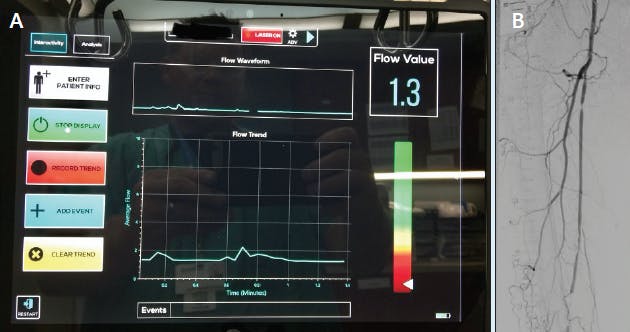
Figure 1. The baseline FlowMet system display at diagnostic angiography showed a dampened waveform and low Flow Value (1.3), suggesting abnormal or low blood flow (A). The initial angiogram showed multifocal SFA stenoses and distal CTO (B).
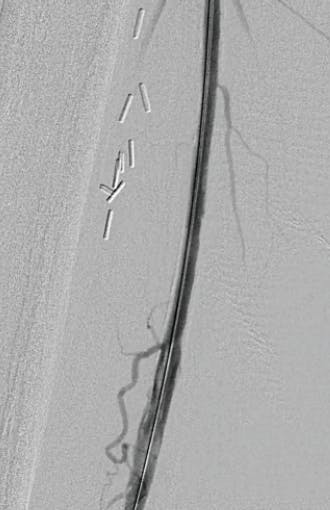
Figure 2. Postintervention angiogram demonstrated a class C dissection at the level of reentry.
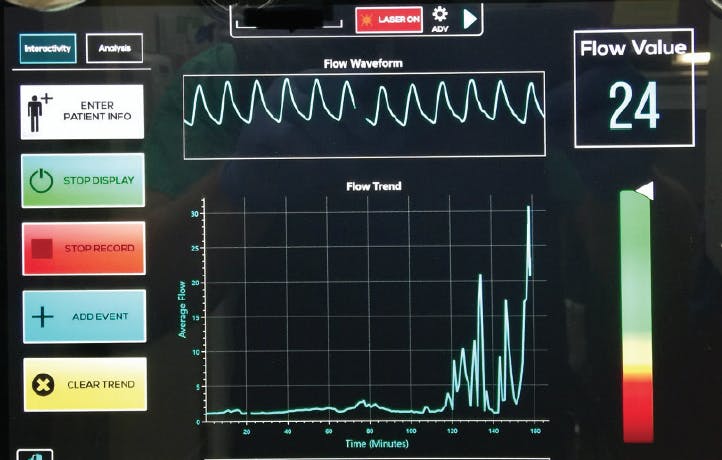
Figure 3. FlowMet system postintervention demonstrated a triphasic waveform and significantly increased Flow Value, consistent with normal arterial blood flow.
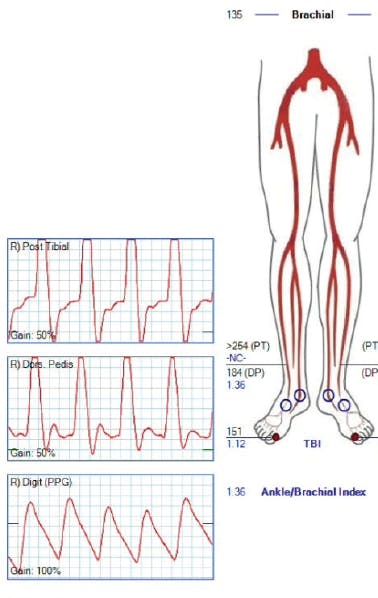
Figure 4. Noninvasive testing at 3 months postintervention.
CASE EXAMPLE 2
A woman in her early 70s with hypertension, hyperlipidemia, chronic kidney disease, and a long-standing smoking history presented with chronic lifestyle-limiting claudication of the left lower extremity and new-onset ischemic rest pain starting 4 weeks before presentation. She had nonpalpable pedal pulses, an ABI of 0.18, and a toe pressure of 0 mm Hg. Left lower extremity angiography was recommended.
Diagnostic angiography from the retrograde right femoral access demonstrated a long-segment SFA occlusion (Figure 5A) with faint reconstitution of the popliteal and tibial arteries. The FlowMet system display is illustrated in Figure 5B. After placement of a 7-F, up-and-over sheath, wire and catheter crossing of the SFA occlusion was achieved, and a SpiderFX embolic protection device was placed in the distal popliteal artery. Directional atherectomy was performed throughout the entirety of the SFA with a HawkOne™ LX device (Medtronic), followed by angioplasty with 5- X 250-mm and 5- X 150-mm IN.PACT Admiral DCBs. This treatment strategy resulted in a suitable technical result (Figure 6).
Despite this result, surprisingly little change was noted on the FlowMet system. A close examination of the embolic filter using digital subtraction angiography showed the suspected culprit: a full filter. The filter was carefully removed without difficulty, and a pulsatile waveform immediately emerged on the FlowMet system from the prior flat line. However, the Flow Waveform remained a very low amplitude, monophasic wave, with a Flow Value hovering in the 2 to 3 range. This was far less than was expected after SFA recanalization.
Suspecting tibial occlusive disease that was previously poorly visualized, an additional below-knee angiogram was performed (Figure 7). The multifocal stenosis demonstrated in the proximal posterior tibial and peroneal arteries was treated with directional atherectomy using a HawkOne™ S device (Medtronic) and postdilated with a 2.5-mm angioplasty balloon. After tibial artery treatment, a prompt uptick was seen in the Flow Value (11.1), accompanied by a high-amplitude triphasic waveform (Figure 8). The Flow Value might be expected to be higher after multilevel intervention, but in this case, the small-caliber vessels were likely responsible. Nonetheless, Flow Values > 10 suggest normal diagnosis when accompanied with a strong waveform.1 A strong waveform appearance is a reliable indicator of flow in my experience, and this is reflected in the postprocedure ABI of 1.04 and toe pressure of 74 mm Hg (Figure 9).
Case Example 2
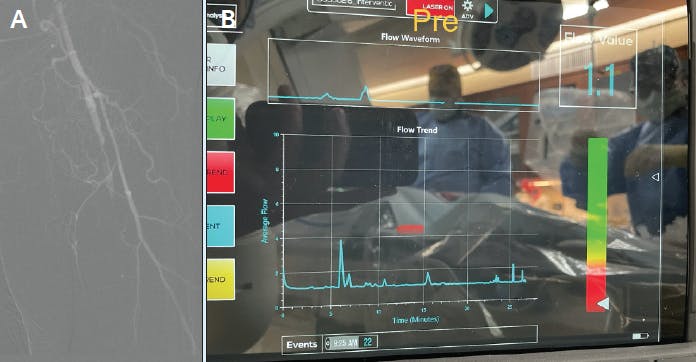
Figure 5. CO2 angiogram showed a long-segment SFA occlusion (popliteal reconstitution is not visualized on this image) (A). The preintervention FlowMet system display showed a dampened waveform and Flow Value of 1.1, suggesting very low or abnormal blood flow (B).
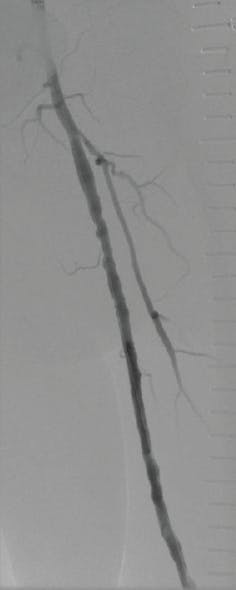
Figure 6. Angiogram after SFA intervention with directional atherectomy and long IN.PACT Admiral DCB angioplasty.
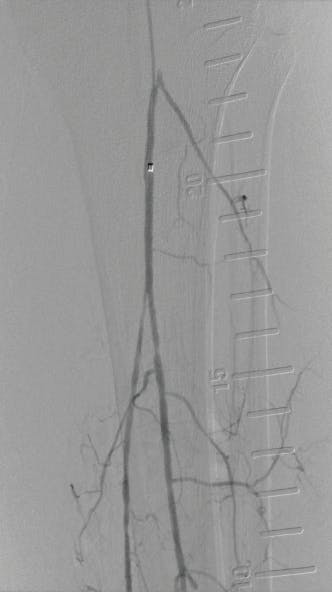
Figure 7. Multifocal stenosis of the proximal posterior tibial and peroneal arteries on angiography.
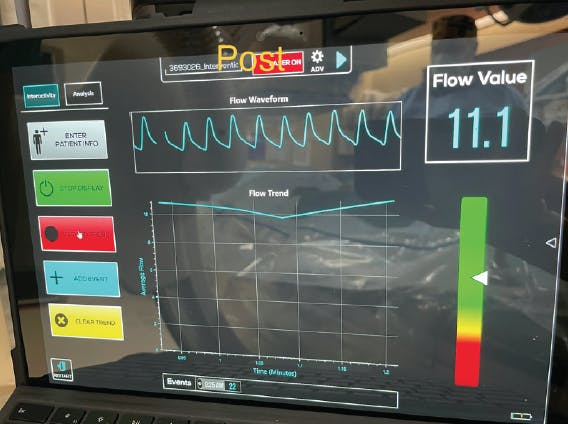
Figure 8. FlowMet system postintervention demonstrated that blood flow improved from preprocedure readings; a triphasic waveform was shown, and the Flow Value increased to 11.1.
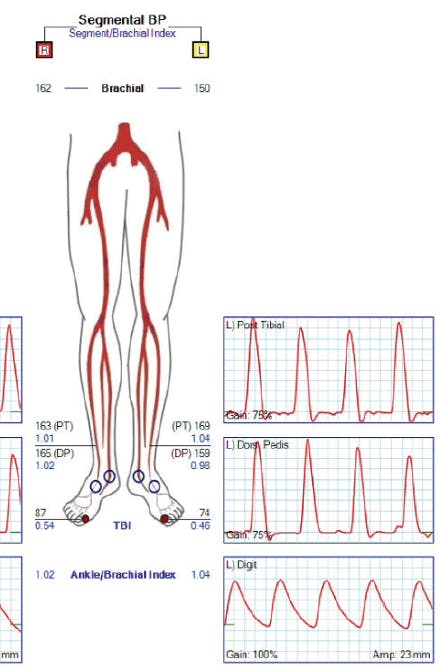
Figure 9. Noninvasive testing postprocedure.
At two points in this case, the FlowMet system display did not align with the angiographic result, and this was namely because of a debris-filled embolic filter and untreated tibial occlusive lesions. On each occasion, thoughtful evaluation of the discrepancy between angiography and the FlowMet system identified an underlying cause, and additional effort to improve blood flow to the foot was pursued. It is not difficult to imagine a scenario in which additional intervention is not undertaken, and the patient leaves the catheterization lab with minimal or no improvement in symptoms.
DISCUSSION
The FlowMet system has achieved a tangible step forward for intraprocedural blood flow monitoring, largely due to its pure simplicity and capability of providing reliable feedback. The complex underlying technology has been translated into real-time, accurate, actionable information that is displayed clearly on a portable, easy-to-use tablet. Fundamentally, this device can organically alter the course of a peripheral intervention toward less intervention and procedural time—or more time if the desired result is not initially achieved, as in the second case example. As we seek to obtain optimal patient outcomes, the FlowMet system has the potential to minimize uncertainty in defining a technically successful intervention.
The two case examples provided in this article represent a sliver of the capabilities of this device with a captive audience. As my experience with the system grows, so does my reliance on its data as the objective measure of intervention success. Certainly, when the Flow Waveform appears normal, I am assured there is not a missed lesion that has been overlooked on angiography. I have found great value in patients with claudication and critical limb ischemia, with obvious signs displayed of improved flow in the former and confidence in achieving enough flow in the latter. In its role as a real-time blood flow monitor, the FlowMet system has exceeded expectations and provided my team with an irreplaceable tool in the lab.
However, it is important to address the limitations of the FlowMet system in the current environment. Perhaps the biggest item in this category is the lack of published data validating the information obtained during revascularization. Simply stated, “What does it all mean?” Flow Value certainly has a range of variability from digit to digit and patient to patient due to the underlying influences of cardiac output, vessel reactivity, pharmacologic agents, and even temperature. However, less fluid and more definitive is the Flow Waveform, which in my experience has proven to be a highly sensitive indicator of pulse pressure. Although validation studies are needed, particularly in the arena of wound healing and freedom from amputation (studies for which are forthcoming), it is shortsighted to ignore the inherent value in this system. Much like each vascular lab is required to validate its noninvasive studies to alternate imaging modalities, each operator must understand the functionality and application of the FlowMet system based on communal experiences.
Undoubtedly, there is a learning curve with this device similar to many other entities in the peripheral space. A review of the dynamic changes expected in pulse pressure waveforms distal to varying degrees of proximal stenosis is critical to understand the nuances of flow changes during the procedure. Within the course of 10 to 15 cases, an adequate understanding of the output is expected. This applies also to appropriate sensor placement, which has several important considerations. The laser/sensor setup must penetrate the intermediary tissue with adequate strength to produce a signal, which can be restricted by necrotic material or toenail paint/polish but not by skin pigmentation.2 Further, individual angiosome variations may create unexpected flow alterations at the digit level, requiring sensor repositioning after angiographic studies based on the procedural goals.
As experience with this device grows, it becomes obvious that the data being displayed are applicable in a variety of clinical situations. As with all innovative devices, technology maturation will be in stages owing to the regulatory process for each step forward. The vascular community is fortunate to have such a powerful technology at our disposal that will undoubtedly impact our patients in a profoundly positive way.
CONCLUSION
The FlowMet system is an innovative intraprocedural blood flow monitoring system that provides a real-time, objective assessment of digit blood flow during revascularization. Blood flow data is displayed as both a Flow Value and a continuous Flow Waveform, allowing for reliable, actionable, and familiar feedback throughout the intervention. Formal investigation is currently underway, and these data will provide important validation for this device. However, the intuitive nature and shallow learning curve of the FlowMet system offer meaningful value to operators.
1. Razavi MK, Flanigan DPT, White SM, Rice TB. A real-time blood flow measurement device for patients with peripheral artery disease. J Vasc Interv Radiol. 2021;32:453-458. doi: 10.1016/j.jvir.2020.09.006
2. Rice TB, Yang B, White S. Effect of skin optical absorption on speckleplethysmographic (SPG) signals. Biomed Opt Express. 2020;11:5352-5361. doi: 10.1364/BOE.403501

FlowMet™ peripheral blood flow monitoring system Reference Statement
Important Information: Indications, contraindications, warnings and instructions for use can be found in the product labeling supplied with each device.
Indications for Use: The FlowMet is a non-invasive probe that is affixed to the fingers or toes and intended to quantify tissue blood flow rate.
CAUTION: Federal (USA) law restricts this product for sale by or on the order of a physician
IN.PACT™ Admiral™ Paclitaxel-coated PTA balloon catheter Brief Statement
Indications for Use:
The IN.PACT™ Admiral™ Paclitaxel-coated PTA Balloon Catheter is indicated for percutaneous transluminal angioplasty, after appropriate vessel preparation, of de novo, restenotic, or in-stent restenotic lesions with lengths up to 360 mm in superficial femoral or popliteal arteries with reference vessel diameters of 4-7 mm.
Contraindications
- The IN.PACT Admiral DCB is contraindicated for use in:
- Coronary arteries, renal arteries, and supra-aortic/cerebrovascular arteries
- Patients who cannot receive recommended antiplatelet and/or anticoagulant therapy
- Patients judged to have a lesion that prevents complete inflation of an angioplasty balloon or proper placement of the delivery system
- Patients with known allergies or sensitivities to paclitaxel
- Women who are breastfeeding, pregnant or are intending to become pregnant or men intending to father children. It is unknown whether paclitaxel will be excreted in human milk and whether there is a potential for adverse reaction in nursing infants from paclitaxel exposure.
Warnings
- A signal for increased risk of late mortality has been identified following the use of paclitaxel-coated balloons and paclitaxel-eluting stents for femoropopliteal arterial disease beginning approximately 2-3 years post-treatment compared with the use of non-drug coated devices. There is uncertainty regarding the magnitude and mechanism for the increased late mortality risk, including the impact of repeat paclitaxel-coated device exposure. Physicians should discuss this late mortality signal and the benefits and risks of available treatment options with their patients.
- Use the product prior to the Use-by Date specified on the package.
- Contents are supplied sterile. Do not use the product if the inner packaging is damaged or opened.
- Do not use air or any gaseous medium to inflate the balloon. Use only the recommended inflation medium (equal parts contrast medium and saline solution).
- Do not move the guidewire during inflation of the IN.PACT Admiral DCB.
- Do not exceed the rated burst pressure (RBP). The RBP is 14 atm (1419 kPa) for all balloons except the 200 and 250 mm balloons. For the 200 and 250 mm balloons the RBP is 11 atm (1115 kPa). The RBP is based on the results of in vitro testing. Use of pressures higher than RBP may result in a ruptured balloon with possible intimal damage and dissection.
- The safety and effectiveness of using multiple IN.PACT Admiral DCBs with a total drug dosage exceeding 34,854 µg of paclitaxel in a patient has not been clinically evaluated.
Precautions
- This product should only be used by physicians trained in percutaneous transluminal angioplasty (PTA).
- This product is designed for single patient use only. Do not reuse, reprocess, or resterilize this product. Reuse, reprocessing, or resterilization may compromise the structural integrity of the device and/or create a risk of contamination of the device, which could result in patient injury, illness, or death.
- Assess risks and benefits before treating patients with a history of severe reaction to contrast agents.
- The safety and effectiveness of the IN.PACT Admiral DCB used in conjunction with other drug-eluting stents or drug-coated balloons in the same procedure or following treatment failure has not been evaluated.
- The extent of the patient’s exposure to the drug coating is directly related to the number of balloons used. Refer to the Instructions for Use (IFU) for details regarding the use of multiple balloons and paclitaxel content.
- The use of this product carries the risks associated with percutaneous transluminal angioplasty, including thrombosis, vascular complications, and/or bleeding events
- Vessel preparation using only pre-dilatation was studied in the clinical study. Other methods of vessel preparation, such as atherectomy, have not been studied clinically with IN.PACT Admiral DCB.
- This product is not intended for the expansion or delivery of a stent.
Potential Adverse Effects
- The potential adverse effects (e.g. complications) associated with the use of the device are: abrupt vessel closure; access site pain; allergic reaction to contrast medium, antiplatelet therapy, or catheter system components (materials, drugs, and excipients); amputation/loss of limb; arrhythmias; arterial aneurysm; arterial thrombosis; arteriovenous (AV) fistula; death; dissection; embolization; fever; hematoma; hemorrhage; hypotension/hypertension; inflammation; ischemia or infarction of tissue/organ; local infection at access site; local or distal embolic events; perforation or rupture of the artery; pseudoaneurysm; renal insufficiency or failure; restenosis of the dilated artery; sepsis or systemic infection; shock; stroke; systemic embolization; vessel spasms or recoil; vessel trauma which requires surgical repair.
- Potential complications of peripheral balloon catheterization include, but are not limited to the following: balloon rupture; detachment of a component of the balloon and/or catheter system; failure of the balloon to perform as intended; failure to cross the lesion.
- Although systemic effects are not anticipated, potential adverse events that may be unique to the paclitaxel drug coating include, but are not limited to: allergic/immunologic reaction; alopecia; anemia; gastrointestinal symptoms; hematologic dyscrasia (including leucopenia, neutropenia, thrombocytopenia); hepatic enzyme changes; histologic changes in vessel wall, including inflammation, cellular damage, or necrosis; myalgia/arthralgia; myelosuppression; peripheral neuropathy.
- Refer to the Physician’s Desk Reference for more information on the potential adverse effects observed with paclitaxel. There may be other potential adverse effects that are unforeseen at this time.
- Please reference appropriate product Instructions for Use for a detailed list of indications, warnings, precautions and potential adverse effects. This content is available electronically at www.manuals.medtronic.com.
CAUTION: Federal (USA) law restricts this device to sale by or on the order of a physician.
HawkOne™ directional atherectomy system Reference Statement
Important Information: Indications, contraindications, warnings and instructions for use can be found in the product labeling supplied with each device.
Indications for Use: The HawkOne™ peripheral directional atherectomy system is intended for use in atherectomy of the peripheral vasculature. The HawkOne catheter is indicated for use in conjunction with the SpiderFX™ embolic protection device in the treatment of severely calcified lesions. The HawkOne catheter is NOT intended for use in the coronary, carotid, iliac or renal vasculature.
CAUTION: Federal (USA) law restricts this product for sale by or on the order of a physician.
SpiderFX™ embolic protection device Reference Statement
Important Information: Indications, contraindications, warnings and instructions for use can be found in the product labeling supplied with each device.
Indications for Use:
Lower Extremity (LE) Interventions
The SpiderFX™ embolic protection device is indicated for use as a guidewire and embolic protection system to contain and remove embolic material in conjunction with the TurboHawk™ Peripheral Plaque Excision System, either during standalone procedures or together with PTA and/or stenting, in the treatment of severely calcified lesions in arteries of the lower extremities. The vessel diameter at the filter basket placement site should be between 3.0 mm and 6.0 mm.
Carotid Interventions
The SpiderFX embolic protection device is indicated for use as a guidewire and embolic protection system to contain and remove embolic material (thrombus/debris) while performing angioplasty and stenting procedures in carotid arteries. The diameter of the artery at the site of filter basket placement should be between 3.0mm and 7.0mm.
Saphenous Vein Graft (SVG) Interventions
The SpiderFX embolic protection device is indicated for use as an embolic protection system to contain and remove embolic material (thrombus/debris). The device also acts as the guidewire while performing percutaneous transluminal coronary angioplasty or stenting procedures in coronary saphenous vein bypass grafts with reference vessel diameters of 3.0 mm to 6.0mm. The safety and effectiveness of this device as an embolic protection system has not been established in the cerebral vasculature.
CAUTION: Federal (USA) law restricts this product for sale by or on the order of a physician.
Enteer™ re-entry catheter reference statement
Important Information: Indications, contraindications, warnings and instructions for use can be found in the product labeling supplied with each device.
Indications for Use: The Enteer re-entry catheter is indicated for directing, steering, controlling and supporting a guidewire in order to access discrete regions of the peripheral vasculature. When used as part of the Peripheral System, the Enteer Catheter is indicated for use to facilitate the intraluminal placement of conventional guidewires beyond stenotic peripheral lesions (including chronic total occlusions) prior to placement of other interventional devices.
CAUTION: Federal (USA) law restricts this product for sale by or on the order of a physician.
Enteer™ re-entry guidewire reference statement
Indications for Use: The Enteer™ Re-entry Guidewire is intended to facilitate placement of balloon dilatation catheters or other intravascular devices during percutaneous transluminal angioplasty (PTA). The Enteer Guidewire is not to be used in cerebral blood vessels. When used as part of the Peripheral System, the Enteer Guidewire is indicated for use to facilitate the intraluminal placement of conventional guidewires beyond stenotic peripheral lesions (including chronic
total occlusions) prior to placement of other interventional devices.
CAUTION: Federal (USA) law restricts this product for sale by or on the order of a physician.
500846 ©2021 Medtronic. Medtronic, Medtronic logo and Further, Together are trademarks of Medtronic. TM* third party brands are trademarks of their respective owner. All other brands are trademarks of Medtronic. For global distribution. 08/2021
Advertisement
Advertisement