Advertisement
Advertisement
March 2021
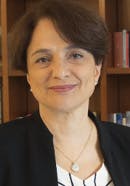
An Interview With Sonia Ronchey, MD
Dr. Ronchey discusses her research related to complex aortic pathologies, breakthroughs she’d like to see in management of thoracoabdominal aneurysms, developments in carotid artery stenting and aortoiliac disease, and her perspective of the value of live versus virtual meetings.
Much of your work has been focused on innovative endovascular treatments for complex aortic anatomy and disease—such as chimney/parallel graft endovascular aneurysm repair (EVAR) in the PERICLES registry or the recent Italian registry looking at fenestrated endografting for proximal necks unsuitable for standard EVAR.1,2 Can you give us a preview of any forthcoming research you’re working on regarding complex aortic pathologies?
We now have many different options to treat different pathologies, including supported or partially supported custom devices, off-the-shelf solutions with inner and outer branches, and chimneys, which can even be used in an emergent setting. However, we do not have any approved devices (within instructions for use) for fenestrations and side branches. At the moment, all the devices we use are not specifically created to stent target vessels, and results of ongoing studies are still pending. We are now evaluating patency and geometric modifications of different types of stents over time. Another field of research is the impact of different graft configurations (fenestrated/branches) on renal function over the long term.
What breakthroughs would you most like to see in the care of patients with thoracoabdominal aneurysms?
In the future, the possibility of having devices with precannulated fenestrations and branches without a significant increase in sheath diameter could be a great opportunity. It could be particularly useful during an emergency to reduce procedural time and in the case of type Ia endoleak when there is a previous stent graft with free flow that makes cannulation of the target vessels more complex. Smaller devices could be a good option, mainly in patients with associated distal vascular diseases to avoid complete occlusion of the iliac axes to maintain adequate distal flow during the procedure.
The STORAGE guidelines, for which you were an author, sought to standardize reporting for open and endovascular repair of the thoracic and thoracoabdominal aorta.3 What changes have you or other physicians made as a result of the guidelines’ publication? Are there other areas in your field where you would like to see more standardized reporting?
The purpose of the paper was to improve the quality of the research, starting with ours. As a reviewer, I can say that there is a lack of important details in many of the evaluated papers. This problem is particularly evident if we evaluate the current reviews—often, more than half of the papers analyzed cannot be totally or partially used because of the lack of details. I think it is fundamental in every field of research to have a standardized protocol, including parameters that should be used to present patients’ clinical profiles and outcomes to avoid mistakes and inaccuracies. In this era of sharing of ideas on a global level, it is important to harmonize reporting of results.
How do you see the role of carotid artery stenting evolving in the coming years?
The increasing skills of the operators and the development of new dedicated materials with better cerebral protection and consequent reduction in complications will certainly lead to a progressive increase in these procedures. Especially for asymptomatic stenosis, I think that the results coming soon from the ACST2 trial will demonstrate that carotid stenting and open surgery have similar results in patients with favorable anatomy. Patient preference is almost always toward less invasive interventions; therefore, it is likely that the number of these procedures will continue to increase.
What recent developments have made the biggest impact on the treatment of aortoiliac occlusive disease?
Endovascular treatment in the last decade has improved so much that it is now first-line therapy in most cases. Patency has significantly improved over time thanks to new stents, and recent studies demonstrated that covered stents have better results compared to bare-metal stents. Geometric configurations were evaluated and, when feasible, the combination of an aortic stent graft plus covered kissing stents (the covered endovascular reconstruction of aortic bifurcation, or CERAB, technique) showed great results, with fluid dynamics very close to that of a native aortic bifurcation; even the use of a standard aortic stent graft demonstrated good results.
With your experience as a clinical trial investigator, having several studies currently underway and many others published over the years, what are the most important insights you’ve gained about conducting trials? What advice would you give first-time trialists?
Whatever the trial, the first thing to establish is the feasibility in the center in terms of the number of patients to be enrolled, the time involved, and the number of physicians needed to collect data. If there are several ongoing trials, it is good to involve different people in each, both to positively motivate all colleagues and to avoid an excessive workload on a single person. Remember that sometimes lack of recruiting not only is the result of the lack of patients but also the lack of sharing in the group. Even if a single person is in charge for the study, all the physicians have to be involved to identify appropriate patients. Having different trials with different people involved improves teamwork.
As a frequent presenter at scientific symposia around the world, what value and experiences have presenting at and attending meetings added in your career?
Being a presenter is a great opportunity to share and positively discuss personal experiences with other colleagues. But what I love the most about meetings is that through other’s presentations, you continuously get all the most recent ideas, research, and techniques. There are several ways to achieve good results, and the more techniques you know, the higher your chance to succeed. I think that these occasions are a showcase of new devices and techniques that you must at least consider once you are back home with your patients.
How well do you feel that virtual congress experiences have approximated the in-person setting?
Virtual meetings during the COVID-19 pandemic have been a great opportunity to maintain communication between professionals and update young vascular surgeons. In the beginning, it was difficult for us to adapt to the meeting format, but certainly it works. What is lacking in this conference modality is the exchange of ideas that takes place between participants only during breaks, which often makes it possible to clarify aspects of daily practice between different centers. This can lead to positive changes in some local habits and encourages the introduction of new techniques that other colleagues have already validated in their centers. This is a reason why I think this type of meeting cannot completely replace the face-to-face congress but certainly can be used in parallel to involve an increasing number of participants and avoid long trips for a single speaker just to make a presentation.
1. Ronchey S, Fazzini S, Scali S, et al. Collected transatlantic experience from the PERICLES registry: use of chimney grafts to treat post-EVAR type Ia endoleaks shows good midterm results. J Endovasc Ther. 2018;25:492-498. doi: 10.1177/1526602818782941
2. Pini R, Giordano J, Ferri M, et al. The Italian multicentre registry of fenestrated Anaconda™ endografts for complex abdominal aortic aneurysms repair. Eur J Vasc Endovasc Surg. 2020;60:181-191. doi: 10.1016/j.ejvs.2020.04.032
3. Rylski B, Pacini D, Beyersdorf F, et al; EACTS Vascular Domain, EJCTS and ICVTS Editorial Committees. Standards of reporting in open and endovascular aortic surgery (STORAGE guidelines). Eur J Cardiothorac Surg. 2019;56:10-20. doi: 10.1093/ejcts/ezz145
Advertisement
Advertisement
Interested in reading more interviews?
To read more interviews with thought leaders in the vascular field, check out our Profiles & Perspectives hub.
Read More