Advertisement
Advertisement
October 2021
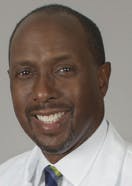
An Interview With Vincent L. Rowe, MD, FACS
Dr. Rowe discusses how to ensure diversity, equity, and inclusion within the Society for Vascular Surgery and generally as physicians, his volunteer dialysis access work in Honduras, the highlights of a multidisciplinary approach to limb salvage, and more.
As a session moderator, presenter, and attendee of the recent Vascular Annual Meeting (VAM), what are your biggest takeaways from the first in-person meeting with your vascular surgery colleagues since before the pandemic? Do you see future meetings continuing with hybrid approaches given the growing experience with virtual attendance throughout the pandemic?
Overall, I felt that VAM 2021 was a huge success. The energy and enthusiasm were very similar to past meetings, just on a smaller scale. Despite the daunting presence of the pandemic, the camaraderie of the attendees and quality of the meeting’s vascular-related science outshone most of the COVID concerns. For the future, I do think a hybrid component will remain. However, people now understand the importance of our in-person gatherings, and I anticipate that attendance will grow and exceed past meetings.
Serving as Chair of the Society for Vascular Surgery (SVS) Diversity, Equity, and Inclusion (DEI) Committee, you have spent much of the past year leading the charge on DEI efforts in your field—establishing areas of improvement in an SVS report and moderating a special DEI session at the annual VAM meeting to name just a few examples, along with more internal work within the society. What are your top priorities for your tenure as Chair?
The appointment to Chair of the SVS DEI committee has been a great honor and challenge. The past few years exposed some of the longstanding issues in our country, communities, and all the way down to our surgical societies. By formation of this committee, the SVS has shown their commitment to addressing any areas where improvements can be made regarding DEI. This move is admirable. As Chair of the committee, my number one priority is to complete and implement the tasks set forth by our year-long DEI task force. My second priority is to help increase awareness of SVS membership to areas where the society can improve and help provide an open format for dialogue where DEI pertains to vascular surgery. An example of the open format took place at our DEI session during VAM where views were expressed, vascular-related DEI issues discussed, and numerous abstracts presented identifying areas in vascular surgery where a particular health disparity was identified. Hopefully, we can build on that in the coming years.
What is your call to action for members who want to help ensure DEI, both within the specialty and generally as physicians?
Remain vocal, yet open minded. In my opinion, DEI means that all views are welcomed, not just the views of one person or one committee. It’s a process. The discussions surrounding DEI rarely have P values associated with them, so consideration for change can be much slower. Outside of the SVS, I am even more zealous with my efforts for DEI, especially as it concerns trainees and young surgeons. Together with about 20 founding members, we have formed our Society of Black Vascular Surgeons over the last year. Our goals for mentorship, peer support, recruitment, and research are tangible, and as a smaller, free-standing, more focused group we hope to make an impact.
Another leadership role you hold is President-Elect of the Western Vascular Society (WVS). What do you see as the role of the regional societies and Western Vascular in particular, and what are you looking forward to during your term as President?
Becoming the President of WVS is truly an honor and still somewhat surreal. Our regional society is spectacular, and I am hoping to maintain the quality in our presentations and membership that had already been established decades ago. Improving our mentorship program for medical students and early level trainees is one area I will work with the current framework of the society over my tenure as President.
For several years, you volunteered your surgical service in an underfunded hospital in Honduras, focusing on dialysis access for complex patients and revising poorly functioning accesses. What did you take away from and enjoy most about that time?
The work in Honduras was one of the best things I have done as a vascular surgeon. The people were amazing in so many ways and incredibly grateful. My work in Honduras is what started my interest in pediatric vascular access. In Honduras, many kids who developed renal failure were left without proper dialysis access due to the surgeons in the area not wanting to attempt their needed surgeries. In all honesty, I wasn’t used to operating on kids either. However, on each subsequent trip, there were more and more kids who needed dialysis access and it forced me (so to speak) to become more familiar with the differences in providing dialysis surgery in the pediatric population. Because of the initial work in Honduras, I was able to continue that work here in Los Angeles at our children’s hospital, which has grown to referrals for all types of vascular issues in children.
In Honduras and in Los Angeles, California, you’ve spent time focusing on pediatric dialysis access, and you coauthored a review in 2014 of arteriovenous fistulas (AVFs) in a pediatric end-stage renal disease population, noting a need for concerted efforts to improve the use of AVFs in these patients. How has progress been made toward this goal since then?
Locally at our children’s hospital, progress has been made in more timely fistula placements and less catheter usage with children with renal failure. Also, referrals for complex problems with dialysis access in this population occurs more expeditiously.
Also a focus of your work is peripheral vascular disease, and at this year’s Pacific Northwest Endovascular Conference, you spoke about the necessity of a multidisciplinary approach to limb salvage. At the University of Southern California, what have been the highlights and challenges since establishing such a program?
Forming the limb salvage team has been wonderful. The way that we have all bonded to solve critical patient issues in those afflicted with threatened limbs has been amazing. We first realized we needed to do this effort as our patients became more complex. The first collaboration took place with our cardiology group for a national trial on critical limb ischemia patients (the BEST-CLI trial). From there, our team just grew, and the final spark was the addition of our podiatrists. That made us much more complete. The major challenge remains funding and staffing for our growth and complexity of patient care, but the hospital and division have been supportive, and we are building at an incredible pace. In the end, the patients are the ones who are benefiting, which is why this team was created.
One of many articles you’ve coauthored on peripheral artery disease evaluated use of a functional ambulatory score as a potential adjunctive decision-making tool for limb salvage teams. What is needed to further validate this tool? What else would you include in a universal algorithm for guiding limb salvage teams?
This tool or measurement is something vascular surgeons have been doing for years. We were trying to give a simpler way of designating each type of patient to guide practitioners in the critical decisions we have to make for threatened limb patients. I think we are seeing just the beginning of more ways to assess patients. Frailty is another that is becoming more popular in recent years. In the end, I hope that we can just add more objectivity to the discussions with our patients and use these tools to help guide clinical treatment decisions.
It was recently announced that you’ll be an inaugural coach for SVS’s news surgical coaching program in support of burnout prevention and wellness. What can you tell us about this program and what ideas/practices do you hope to instill in those you coach?
This is a wonderful program instilled by the Wellness Committee of the SVS. I am still in the training process as a peer coach and hope to provide an environment where discussions on improving wellness with each specific member can be attained. I wish a resource like this was available years ago.
Advertisement
Advertisement
Interested in reading more interviews?
To read more interviews with thought leaders in the vascular field, check out our Profiles & Perspectives hub.
Read More