Advertisement
Advertisement
December 2022 Supplement
Sponsored by Surmodics™
Case Report: Treatment of Focal Arterial Embolus With Stand-Alone Mechanical Thrombectomy
Patient Presentation
An 82-year-old woman presented with symptoms of acute-onset pain and paresthesia. The patient’s initial vascular exam was abnormal. The patient had a complex prior medical history, including chronic kidney disease, atrial fibrillation, heart failure with preserved ejection fraction, type 2 diabetes, hypertension, and dyslipidemia.
Diagnostic Findings
After the abnormal vascular exam, an angiogram revealed a focal embolic occlusion of the right common femoral artery (CFA) (Figure 1). A noninvasive exam showed an ankle-brachial index (ABI) of 0 on the right leg and 1.26 on the left leg. A 5 Fr, 10 cm Pinnacle® Destination® Sheath was placed, and an arteriogram was obtained, which confirmed an atrial fibrillation embolus in the right leg CFA.
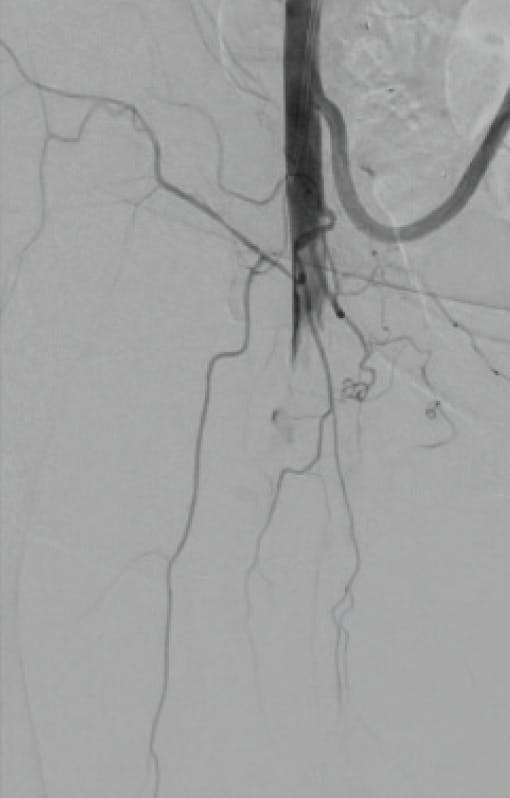
Figure 1. Pre-procedure angiogram of the right CFA.
Treatment
The patient was immediately started on heparin intravenously to prepare for an intervention. Left groin access was obtained by micropuncture, and a 7 Fr, 45 cm Flexor® Ansel Guiding Sheath was placed contralaterally into the right CFA.
The Pounce™ Thrombectomy System was prepared and a .035 Magic Torque™ Guidewire was used to cross the lesion. The Pounce™ delivery catheter was placed distal to the embolus, the Pounce™ basket wire was delivered through the delivery catheter into the mid superficial femoral artery (SFA), and the Pounce™ funnel catheter was advanced and deployed within the CFA with some draping into the bifurcation profunda SFA to clear the distal CFA.
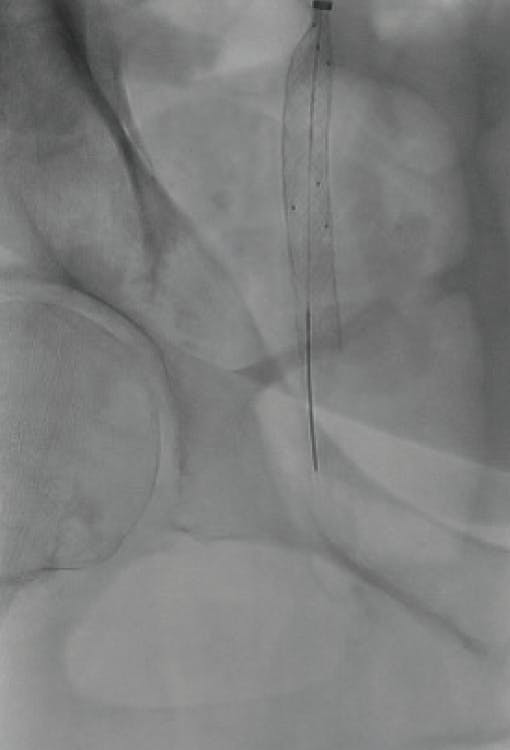
Figure 2. The Pounce™ Thrombectomy System basket retracted into funnel in the right CFA.
The baskets were then pulled back into the funnel (Figure 2), capturing the embolus, and the device was removed through the guiding sheath. After cleaning the Pounce™ System, the baskets and funnel were deployed again in similar positions and another pass was made. Another angiogram was obtained (Figure 3), showing complete removal of the embolus in the two passes (Figure 4). No ancillary treatments (additional thrombectomy device, drug-coated balloon, or stent) were used.
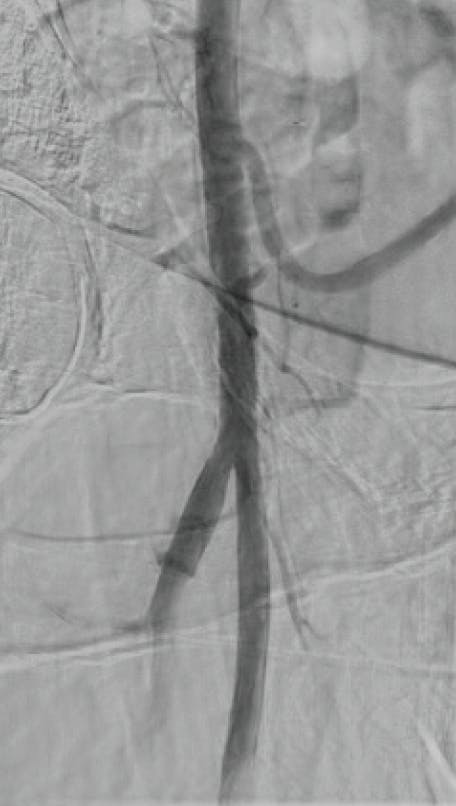
Figure 3. Post procedure angiogram of the right CFA.
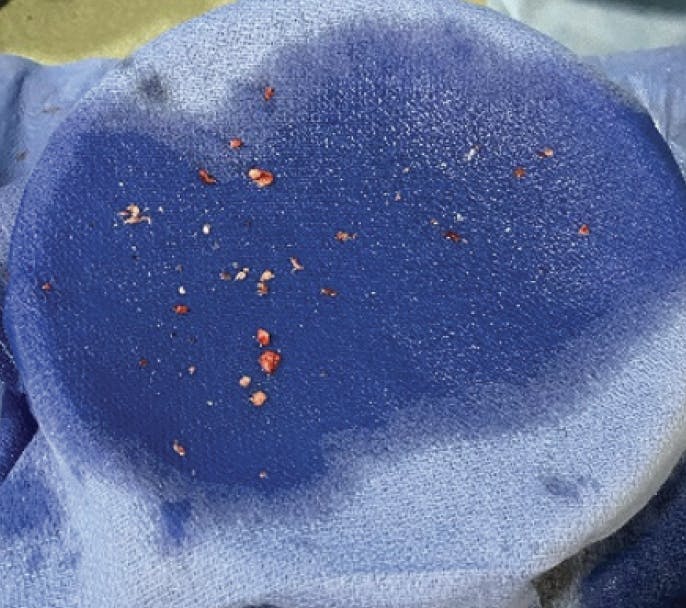
Figure 4. Embolus removed after two passes with the Pounce™ Thrombectomy System. (Used with permission of the author.)
Post Procedure Outcome
The patient was transferred back to the hospital floor symptom-free. Noninvasive studies performed after the procedure showed improvement of the ABI to 1.05 on the right leg and 1.36 on the left leg.
The Pounce™ Thrombectomy System provided prompt, on-table restoration of arterial flow for a patient with an embolic occlusion of the right CFA. No thrombolytics or other adjunctive therapies were used during the procedure.
I always worry about treating a thrombus in patients with underlying peripheral artery disease because their arteries may not be healthy. Having said that, I found the Pounce™ Thrombectomy System to be fairly atraumatic. With this device, I believe we now have an endovascular option for arterial thromboembolic phenomena that previously required surgical intervention.

Caution: Federal (US) law restricts the Pounce™ Thrombectomy System to sale by or on the order of a physician. Please refer to Instructions for Use for indications, contraindications, warnings, and precautions.
SURMODICS, POUNCE, and SURMODICS and POUNCE logos are trademarks of Surmodics Inc., and/or its affiliates. Third-party trademarks are the property of their respective owners.
Advertisement
Advertisement