Advertisement
Advertisement
February 2022
Expanding Treatment of Wide Neck Bifurcation Aneurysms
An interactive case discussion between Dr. Isil Saatci and Drs. Demi Dawkins and Adam Arthur on their approaches to treating wide neck bifurcation aneurysms in a variety of patient presentations.



CASE 1 PRESENTATION
A patient in his 60s presented with severe headache. He reported having headaches for 2 years, but they had become persistent and more pronounced. He had a history of hypertension and coronary artery disease with coronary artery stenting the previous year. He is a smoker. MRI revealed an anterior communicating artery (ACom) aneurysm. Digital subtraction angiography (DSA) was performed (Figure 1).
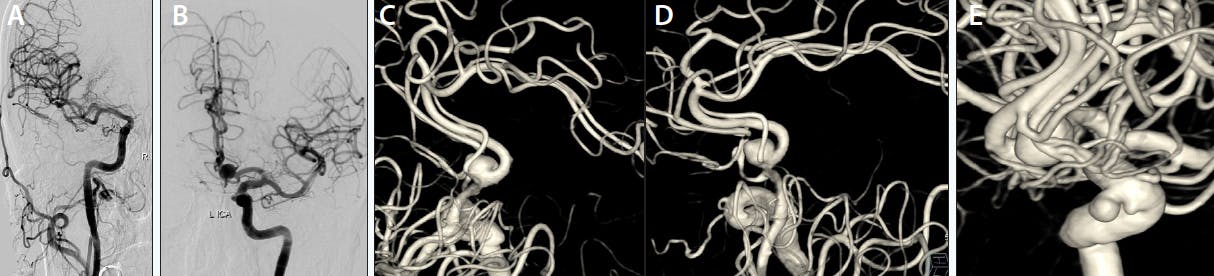
Figure 1. DSA showing ACom and left ICA supraclinoid aneurysms. Note that right A1 is aplastic (A); both A2s are filling from left ICA injection (B). The subcallosal artery is taking off from the ACom aneurysm as seen in the three-dimensional (3D) views (C, D). Additional two aneurysms are shown at the left supraclinoid ICA in 3D view (E).
How would you manage this patient?
- Follow-up with the patient and treat if the morphology of the aneurysm(s) changes
- Surgical treatment
- Endovascular treatment
Drs. Dawkins and Arthur: We would favor open surgical treatment of this aneurysm. He is relatively young and the aneurysm is large, so we would not follow this patient conservatively. We think most of the endovascular treatment strategies would place the subcallosal artery at risk, as it arises from the base of the aneurysm. Surgical clipping would give a durable treatment and allow for preservation of this branch. Given this patient’s recent coronary event, we would continue aspirin during the perioperative period.
If you were to choose an endovascular approach, what would be your choice of treatment for the ACom aneurysm and why?
- Primary coiling with/without balloon assistance
- Stent-assisted coiling
- Intrasaccular flow disrupter (eg, Woven EndoBridge [WEB] device, MicroVention Terumo)
- Flow diverter from left A2 to left A1
- Flow diverter from right A2 to left A1
Drs. Dawkins and Arthur: If we were to choose endovascular treatment, our treatment of choice would be stent-assisted coiling. Using a woven stent that is slightly oversized, it is usually possible to push the stent out over a branch at the neck to protect it from the coil mass. The three-dimensional projection on Figure 1D suggests that this might provide enough protection of the subcallosal branch, and if not, then we would undercoil and leave a remnant at the base of the aneurysm. The WEB device could be considered, but given the angle and orientation of the neck of the aneurysm to the A1/A2 junction, we would be concerned that it would be difficult to position the device properly within the dome of the aneurysm and would also place the subcallosal branch at risk. We would be concerned with using a flow diverter given that the right A1 is absent and the bilateral anterior cerebral artery (ACA) territories would be at risk. We think stent-assisted coiling with the stent extending from the left A2 to the left A1 might be a safer treatment.
Would you also treat the internal carotid artery (ICA) aneurysm? Why or why not?
Drs. Dawkins and Arthur: If the ACom aneurysm was treated surgically, then we would explore the ICA aneurysm as well and anticipate that it could be clipped. A clinoidectomy and opening of the falciform ligament would facilitate exposure. If, for whatever reason, the exposure was not favorable, then this could be left for later treatment with a flow diverter. The ICA aneurysm appears smaller and is in a slightly lower-risk location, so it is not mandatory that this aneurysm is treated unless there was a compelling reason (ie, significant familial history). We would instead favor a follow-up MRA at 6 months after treatment of the ACom aneurysm and only treat if it grew or changed in morphology.
Dr. Saatci’s Approach
We decided to use a flow diverter to save the subcallosal artery because any intrasaccular treatment would occlude it. We treated the ICA aneurysms in the same session as well because the patient would be taking antiaggregating medication, the aneurysm segment was intradural, and the aneurysms were irregular.
CASE 1 CONTINUED
A flow diverter was placed from the left A2 to left A1 in the ipsilateral position because the left A2 was larger. The right A2 had an acute angle, whereas the angle of the left A2 with A1 was obtuse (Figure 2). Follow-up imaging is shown in Figure 3.
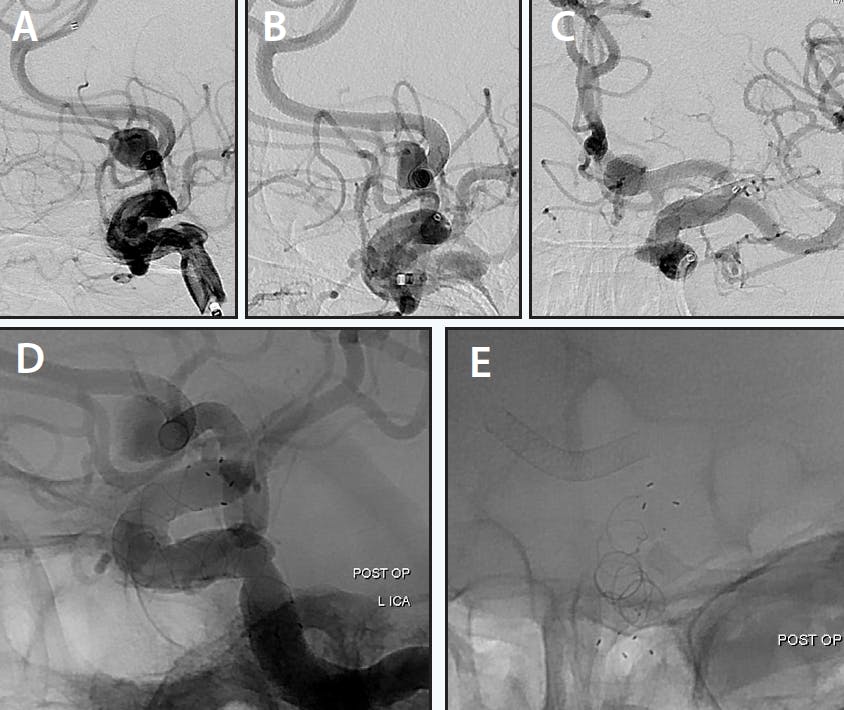
Figure 2. Left ICA DSA images (A-D) of the endovascular treatment and an anteroposterior (AP) plain view image (E) demonstrating the microcatheter navigated to the distal left ACA (A), followed by placement of the Pipeline Shield device (Medtronic) from left A2 to left A1 (B, C); nonsubtracted angiogram (D) and plain AP view (E) after placement of two flow diverters, namely the Pipeline Shield and the Flow Redirection Endoluminal Device (FRED; MicroVention Terumo), for the aneurysms in the two locations.
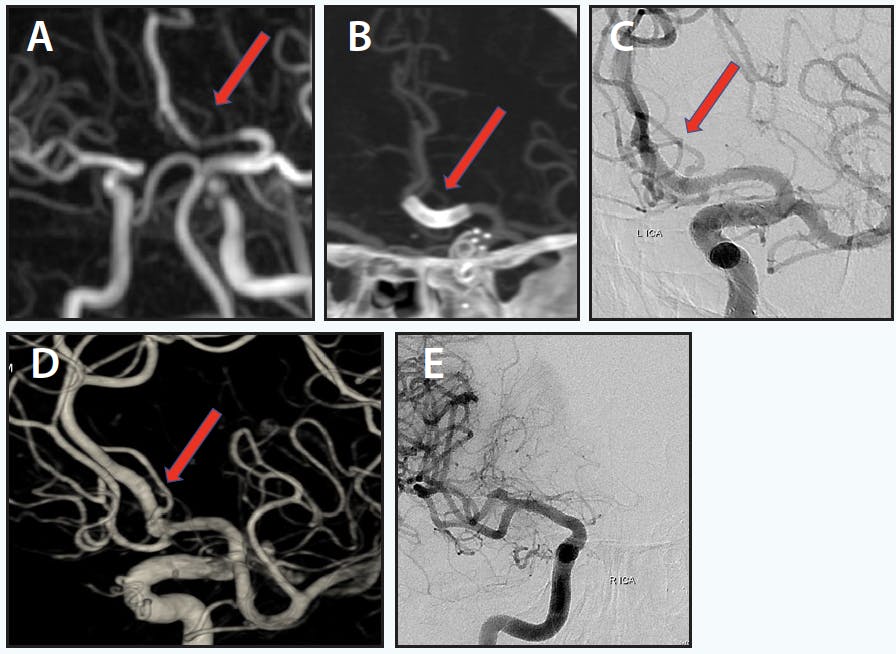
Figure 3. One-month contrast-enhanced MRA (A), 6-month CTA (B), and 1-year DSA (C-E) showing occlusion of the aneurysm, while patency of the right A2 and the subcallosal artery (arrows) is preserved. There was minimal enlargement of the subcallosal artery at its origin within the aneurysm sac due to flow remodeling (arrows; C, D). Note that the right A1 was not present despite the flow demand (E).
How would you medically manage this patient after treatment?
Drs. Dawkins and Arthur: If I had treated these aneurysms with flow diversion, then I would have continued dual antiplatelet therapy (DAPT) with aspirin and clopidogrel or ticagrelor for at least 6 months, making sure they were therapeutic with P2Y12 testing. Six-month posttreatment angiography would be performed to confirm complete obliteration of the aneurysms and to evaluate the anatomy prior to discontinuation of DAPT. From there, we would follow with serial MRA to make sure there is no regrowth or development of de novo aneurysms.
Dr. Saatci’s Approach
The patient was premedicated with prasugrel and tested for his response to the drug. Posttreatment medication is crucial in such treatments because the antiaggregation should be reliable to prevent any thrombus formation within the jailed branches, which were the right A2 and subcallosal artery in this patient.
The jailed branches (right A2 and subcallosal artery) might have delayed or even precluded the occlusion of the ACom aneurysm. Despite that, the aneurysm was occluded even at 1-month control (Figure 3A).
The patency of the right A2 and subcallosal artery was preserved, with minimal enlargement of the subcallosal artery at its origin within the aneurysm sac due to flow remodeling (Figure 3B-3D). Note that the right A1 is still not present despite the flow demand (ie, right A1 is truly aplastic) (Figure 3E). With flow diverter treatment of ACom aneurysms, on follow-up imaging, it is not unusual to see many so-called “aplastic” A1 segments start to fill from the ipsilateral ICA, when there is flow demand after flow diverter treatment because the ipsilateral A2 segments are jailed. The control MRI was unremarkable with no ischemic lesion (not shown).
CASE 2 PRESENTATION
A man in his mid-60s presented with a new large basilar apex aneurysm (Figure 4). He had a remote history of aneurysmal subarachnoid hemorrhage (SAH), for which he underwent clip ligation. He has a family history of SAH, is a current smoker, and has a history of hypertension.

Figure 4. Angiograms of the right vertebral artery in posteroanterior (PA) (A), lateral (B), and oblique views (C-F) demonstrating a superiorly projecting wide neck basilar apex aneurysm with incorporation of the left P1 posterior cerebral artery (PCA) into the base of the aneurysm.
How would you manage this patient?
Dr. Saatci: Treatment is definitely indicated in this patient with an aneurysm of this size and location. He has additional risks of having past personal and family history of SAH and hypertension.
What would be your treatment choice and why?
Dr. Saatci: The WEB device is not suitable for this patient. Even with the largest device size, it would likely result in device compression and recurrence. The aneurysm could be coiled with balloon protection; however, coil protrusion may still occur, the neck may not be packed densely due to the concern for coil protrusion/migration, and recurrence would not be unlikely with coiling only even with dense packing given the aneurysm size, location, and patient factors (hypertension, smoking).
I would prefer to treat this patient with stent-assisted coiling. The right P1 is separate from the aneurysm neck based on the available images, but the left P1 needs to be protected. I would do single stent-assisted coiling with the stent placement from the left P2 to the basilar artery. It is unlikely that there would be a need to switch to dual stent-assisted coiling in the course of treatment; therefore, small stent pore size would not be a disadvantage and may even be beneficial. Because the aneurysm is large and has a considerable depth, I would not worry about catheter kickback. Therefore, my strategy would be crossing the aneurysm neck with a microcatheter and leaving it in the left PCA, then jailing a microcatheter within the sac to coil. After placing a braided low-profile stent (LVIS EVO [MicroVention Terumo]) to benefit from its light flow diversion effect, I would coil the sac.
Dr. Dawkins/Arthur’s Approach
Given his personal and family history of SAH and the large size of this posterior circulation aneurysm, this aneurysm should be treated. We considered the WEB device, but given the aneurysm's size (poor lateral compression with the largest WEB) and the patient’s nicotine usage, we worried that it would be at high risk of compaction and recurrence. We decided to treat it with stent-assisted coiling with a stent extending from the left P1 into the basilar artery due to the incorporation of the left P1 into the neck/base of the aneurysm (Figure 5). We felt the right P1 would not be a risk during coiling. We used hydrogel-coated coils and a laser-cut stent, given the clinical trial evidence of benefit with hydrogel-coated coils.
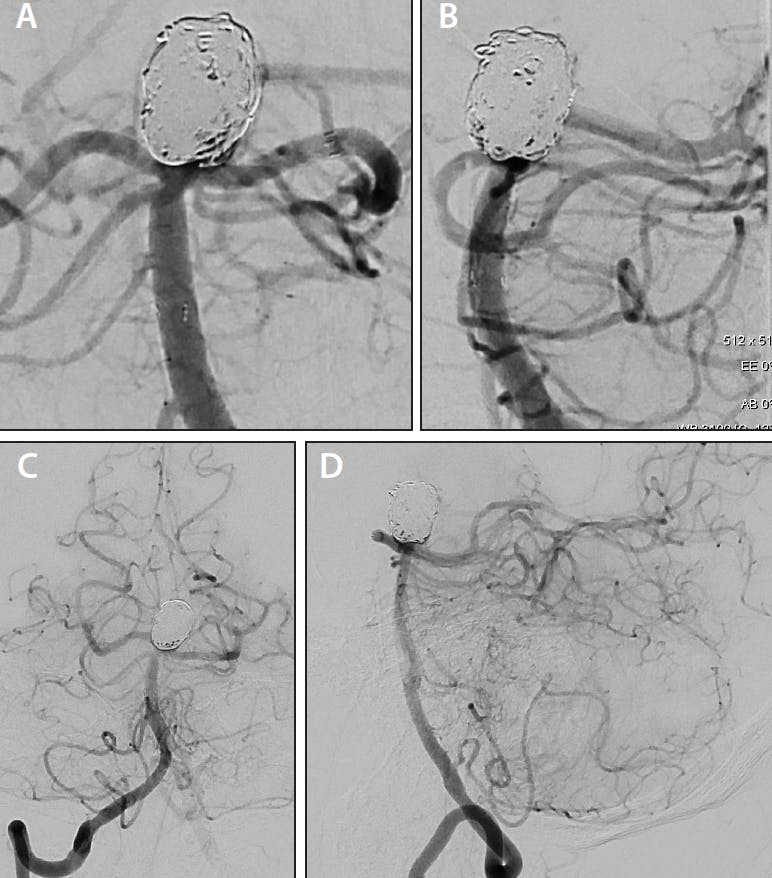
Figure 5. Posttreatment angiograms of the right vertebral artery in the treatment angles (A, B) and PA (C) and lateral (D) views demonstrating Raymond-Roy grade 1 aneurysm obliteration. The stent is also well apposed and preserves the left P1.
CASE 3 PRESENTATION
A woman in her 60s presented with severe headache that she had for 1 month. She had hypertension currently treated with medication and quit smoking several years ago. She did not have any associated medical conditions. One of her siblings suddenly died in middle age with no determined cause.
The patient was in good medical condition other than her hypertension and appeared robust. She is right-handed. Physical examination was unremarkable. MRI showed the right middle cerebral artery (MCA) aneurysm with no evidence of previous hemorrhage. MRA confirmed the right MCA aneurysm and also showed another smaller aneurysm at the ACom artery. DSA was performed to evaluate the risks of treatment options versus the natural course (Figure 6). The patient was informed about the natural course of her disease (ie, multiple unruptured aneurysms). Endovascular and surgical options were explained.
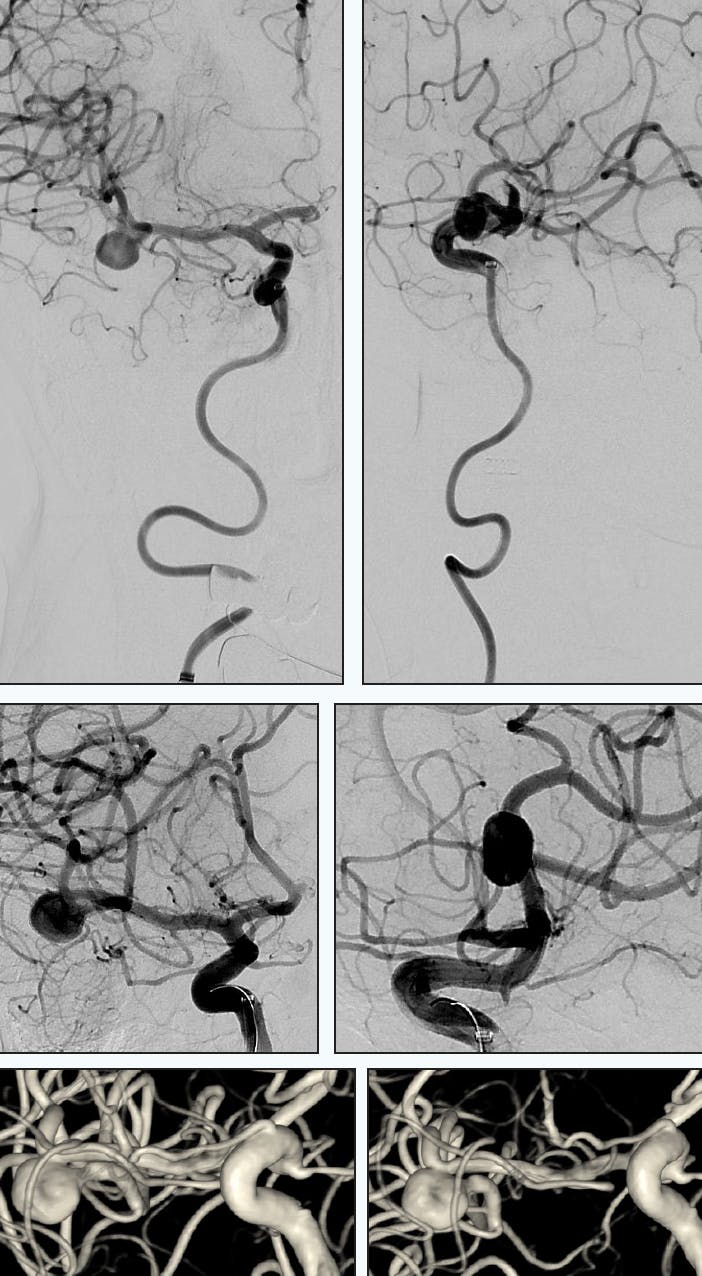
Figure 6. DSA of the right ICA showing the right MCA bifurcation aneurysm with the inferior trunk incorporated in the aneurysm sac. Note the tortuosity of the proximal ICA.
How would you proceed in this patient?
- Follow-up with noninvasive imaging (contrast-enhanced MRA, CTA)
- Surgical clipping
- Endovascular treatment
Drs. Dawkins and Arthur: For a right MCA bifurcation aneurysm in a relatively young and healthy patient, we would favor surgical clipping. The dissection and approach to the aneurysm surgically would be relatively straightforward, but given how the M2 branches are incorporated into the base of the aneurysm, you would have to be careful with the clip reconstruction of the neck of the aneurysm to avoid stenosis of the M2 origin.
What would be your choice of preference for endovascular treatment and why?
- Coiling with or without balloon assistance
- Stent-assisted coiling (single or dual)
- WEB device
- Flow diverter placement
Drs. Dawkins and Arthur: For endovascular treatment, this case would be good for intrasaccular flow disruption. This approach would make preservation of the M2 branches fairly straightforward. The device would need to be sized so that it lands short of the neck in order to preserve the M2 branches and would result in a neck remnant, but it would still be an adequate and durable treatment of the aneurysm.
Dr. Saatci’s Approach
The decision was made to treat the patient endovascularly given that she had multiple aneurysms, hypertension, and a family history of a sibling who died in middle age from an undetermined cause (rupture of a cerebral aneurysm could not be ruled out).
We decided to treat the index right MCA aneurysm with a flow diverter because the inferior trunk was incorporated in the aneurysm sac and had a very acute angle. We also noted the tortuosity of the proximal ICA (Figure 6), which may lessen the proximal support for distal microcatheter navigation.
Stent-assisted coiling was another option, but with the inferior trunk’s 180° turn on M1, catheterization could have been challenging, and the patient would have required effective antiaggregation for this treatment alternative as well. The WEB device could have been placed while leaving a neck portion perfusing so that the inferior trunk would not occlude; if necessary, a stent could have been placed from M1 to inferior trunk after placing the WEB device to secure the inferior trunk, which could be achieved more easily with the support of the WEB device.
Placing a flow diverter at the neck of the aneurysm was straightforward with no challenging catheterizations. Thus, a Pipeline Flex with Shield Technology (Medtronic) was placed with no difficulty from the superior trunkus to the M1 segment of the right MCA (Figure 7). We also treated the ACom aneurysm with a flow diverter (not shown). The patient was placed on prasugrel 10 mg daily for the first 6 months.
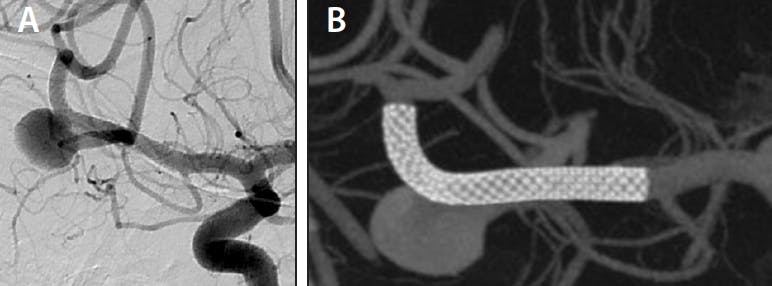
Figure 7. Placement of a Pipeline shield flow diverter from the superior trunkus to M1 segment of the right MCA.
The 6-month control CTA showed filling of the aneurysm and patency of both MCA trunks (Figure 8A). Prasugrel was discontinued and aspirin 300 mg daily was started, which would be continued lifelong. The 9-month control CTA showed that the aneurysm slightly decreased in size but was still perfusing (not shown). It must be emphasized that flow diverter treatment of bifurcation aneurysms or any aneurysms with incorporated branches may require a longer time to be effective than flow diverters used in side wall aneurysms because of the flow demand of the involved branches through the sac. Operators should not get frustrated and rush to retreat with a premature decision of treatment failure.
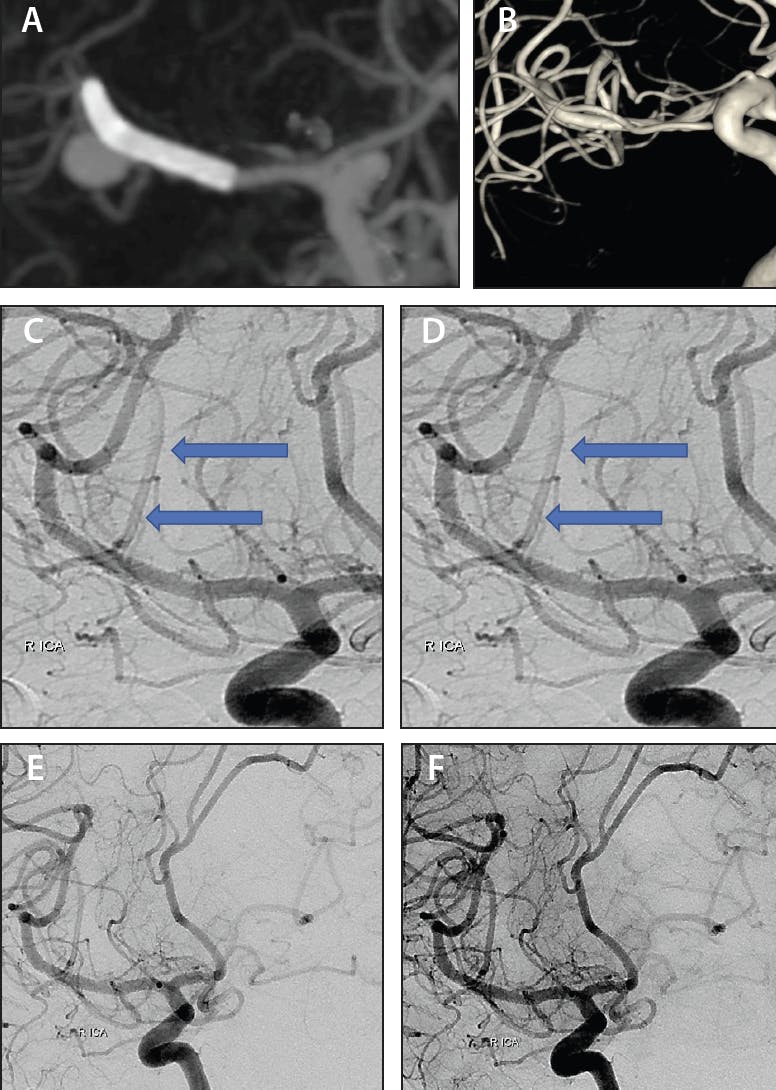
Figure 8. Six-month control CTA showing filling of the aneurysm with the patency of both MCA trunks (A). One-year control DSA (B-F) showing total occlusion of the MCA aneurysm, a patent superior trunk, and retrograde filling in the inferior trunk through pial anastomosis with only minimal delay (arrows; C, D).
The 1-year control DSA showed total occlusion of the MCA aneurysm, with flow in the flow diverter and a patent superior trunk (Figure 8B-8F). There was retrograde filling in the inferior trunk through pial anastomosis with only minimal delay (Figure 8C and 8D); the aneurysm occlusion is class 1C according to the Cekirge-Saatci aneurysm occlusion classification.1 DSA performed at 2 years postprocedure showed stable occlusion of the aneurysm with retrograde filling of the inferior trunk faster than that seen in the previous DSA. The patient did not have any clinical events during or after the treatment.
CASE 4 PRESENTATION
A 79-year-old woman presented with a Hunt and Hess grade 2 and modified Fisher grade 4 SAH. She was found to have a ruptured ACom aneurysm (Figure 9).

Figure 9. Angiograms of the right ICA in PA (A) and lateral (B) views demonstrating a superiorly and anteriorly projecting ACom aneurysm arising preferentially from the right A1/A2 junction. The left ICA in PA (C) and lateral (D) views illustrate there is a left A1, but the aneurysm does not opacify from this side. Treatment angles (E, F) better illustrate the aneurysm and its relationship to the ACom complex.
How would you manage this patient?
Dr. Saatci: I would treat this patient by endovascular means instead of clipping because endovascular treatment would confer no augmented risk. Moreover, endovascular treatment is faster and less invasive.
What endovascular method would be your treatment of choice and why?
Dr. Saatci: If I were to coil this aneurysm, I would prefer to have a balloon at the aneurysm neck during coiling because of the wide neck and the acute ruptured status. On the other hand, the aneurysm’s size and shape are favorable for the WEB device; the parent artery (ie, right A1) is in a suitable alignment with the aneurysm axis. Instead of having to use two microcatheters for coiling, WEB device placement would be instantaneous and use less contrast, and procedure time would be shorter in this elderly patient. Therefore, I would prefer WEB device placement, as it is straightforward, fast, and effective.
Dr. Dawkins/Arthur’s Approach
Given the patient’s age and significant burden of SAH, we favored endovascular treatment in order to reduce her time under anesthesia. With primary coiling, her ACom complex and subcallosal artery would have been at risk. We chose an intrasaccular flow disrupter for treatment due to the favorable configuration of the aneurysm and favorable angle of attack from the right A1 (Figure 10). On delayed angiograms on postoperative day 7 for vasospasm treatment, the ACom remained patent with thrombosis at the top of the device/dome of the aneurysm (Figure 11).
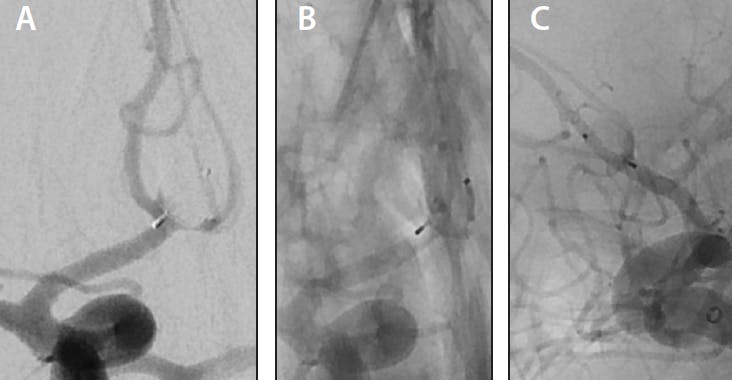
Figure 10. Posttreatment angiograms of the right ICA in the treatment angles (A-C) demonstrating that the device was placed in an adequate position to preserve the ACom complex. There was immediate lack of flow into the dome of the aneurysm.
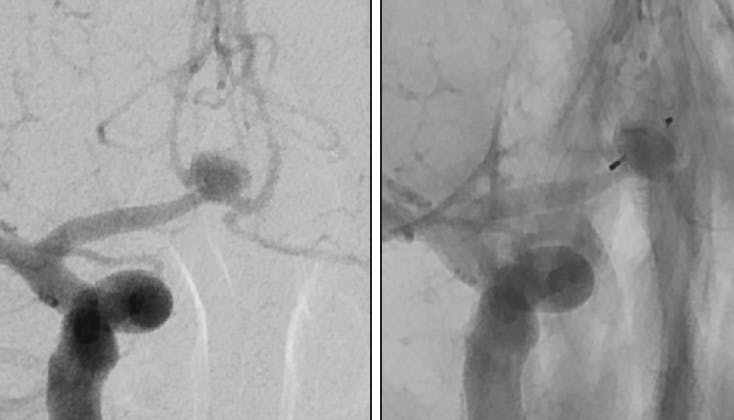
Figure 11. Delayed angiograms on postoperative day 7 demonstrating thrombosis at the top of the device/dome of the aneurysm and adequate protection of this ruptured aneurysm, with preservation of the ACom complex.
1. Cekirge HS, Saatci I. A new aneurysm occlusion classification after the impact of flow modification. AJNR Am J Neuroradiol. 2016;37:19-24. doi: 10.3174/ajnr.A4489.
Advertisement
Advertisement