Advertisement
Advertisement
January 2022 Supplement
Sponsored by Silk Road Medical
TCAR Limitations: Separating Fact From Fiction
With Rasesh M. Shah, MD, FACS, and Susan M. Shafii, MD, MHSA, FACS, FSVS

With the ROADSTER 1 and ROADSTER 2 trials demonstrating stellar outcomes that continue to be supported by the rapidly growing number of transcarotid artery revascularization (TCAR) procedures in the TCAR Surveillance Project/Vascular Quality Initiative (TSP/VQI) database,1-3 the role of TCAR in our carotid revascularization program is constantly being refined. As we are in the 9th year of offering TCAR as an alternative to carotid endarterectomy (CEA) and transfemoral carotid artery stenting (TF-CAS), there have been lessons learned that might be helpful to others who are just starting their TCAR programs. This is a hybrid procedure that combines the open surgical and advanced endovascular skills that are used every day in our carotid practices. However, just like any new procedure, adoption must be done appropriately and evolve continuously.
Offering TCAR to patients is currently limited by the mandate that they meet at least one high-risk criterion as outlined by the Centers for Medicare & Medicaid Services (CMS), documented to be approximately 70% of our clinic population. The remaining 30% of patients may be treated as standard risk with prior approval from their payor, but more likely will need to wait for standard risk approval by CMS. There are, however, a number of patients who should not be offered TCAR for a variety of reasons, to be discussed in this article.
In our large vascular practice, I have the privilege of being “the carotid guy.” Having been in practice for 28 years, I have seen the full evolution of carotid therapies—from CEA only when I started in 1993 to the introduction of TF-CAS in 2001, and finally starting TCAR in ROADSTER 1 in 2013. All three therapies clearly still have a role, but that role continues to be redefined as the technology evolves. There are indications and, perhaps more importantly, contraindications for all three therapies. Strict attention to these is mandatory for optimizing outcomes. The choice of which treatment to offer which patient is outlined in the Society for Vascular Surgery (SVS) implementation document.4 Interestingly, many of the considerations that may increase difficulty are actually CMS-approved indications for TCAR (Figure 1).

Figure 1. Treatment considerations that may increase difficulty. Reprinted with permission from AbuRahma AF, et al. J Vasc Surg. 2021;S0741-5214.
Neck irradiation causes a very wide variation in skin changes, which may or may not result in poor wound healing. The incision, however, for TCAR is very low and many times outside of the radiation field, resulting in no difficulty with healing. This indication for TCAR is a very good one for most patients with radiation unless they truly have severe skin changes.
Hostile neck with immobility, kyphosis, or obesity are also good indications for choosing TCAR over CEA. The incision, again, is in such a low position that even a frozen or kyphotic neck is amenable to the proximal common carotid exposure without too much difficulty. Obesity is a geometry problem, as a very deep and relatively short common carotid will make this difficult, whereas a very deep but very long common carotid will not be as difficult.
Medically high-risk patients are also another good indication for TCAR versus CEA as the data continue to support excellent results. Shorter operative times, optimal medical therapy with dual antiplatelet therapy/high-dose statin, and the ability to perform under local anesthesia all make TCAR favorable.
Heavily calcified lesions are an issue with any stent-based intervention (TF-CAS or TCAR) and are best treated at this time with CEA. There are calcium mitigation strategies that are being explored but these are not the best cases to undertake at the beginning of a TCAR program.
A short common carotid artery (CCA) (< 5 cm from access to lesion) and a small CCA (< 6 mm) are contraindications to TCAR, as stated in the instructions for use. There are ways to increase the CCA length being explored but, again, these cases are not the best ones to start a program with. A small CCA is an uncommonly encountered problem, and unless the size is due to a proximal lesion resulting in underfilling that can be corrected, these patients should not undergo TCAR.
Lastly, tracheal stomas are a problem only in the management of the incision and sterility. The TCAR incision is generally far enough away from the stoma that, with strict attention to isolating the two, these cases can be accomplished safely. Once again, these are not the best cases with which to begin a program.
The TSP/VQI database continues to document excellent results with even first cases being done by new operators/programs; this is testament to paying attention to the details of patient selection (Figure 2). Novice operators would be best served in choosing a patient that is 75 years old with a thin, nonradiated neck, a long CCA, and a not heavily calcified lesion. Intermediate/advanced operators may feel comfortable taking on more challenging cases, such as medically high risk or with challenging anatomy. Finally, expert operators may be willing to consider patients needing advanced strategies to deal with problems such as heavy calcium burden and short CCA lengths.
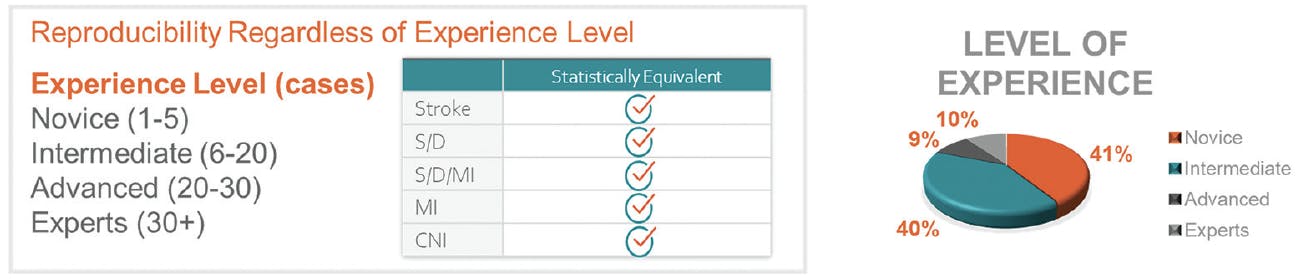
Figure 2. The learning curve for surgeons adopting TCAR based on the TSP/VQI project. Reprinted with permission from Kashyap VS, et al. J Am Coll Surg. 2020;230:113-120.
In summary, TCAR is a compelling procedure that must be in the toolkit for all comprehensive carotid therapy programs. CEA and TF-CAS must also be options for revascularization, and the indications/contraindications for each must be carefully adhered to for optimizing patient outcomes. As the technology continues to evolve, we must also evolve our protocols for which patients are offered which therapy to continue to provide the best care possible.
1. Kwolek CJ, Jaff MR, Leal JI, et al. Results of the ROADSTER multicenter trial of transcarotid stenting with dynamic flow reversal. J Vasc Surg. 2015;62:1227-1234. doi: 10.1016/j.jvs.2015.04.460
2. Kashyap VS, Schneider PA, Foteh M, et al. ROADSTER 2 Investigators. Early outcomes in the ROADSTER 2 study of transcarotid artery revascularization in patients with significant carotid artery disease. Stroke. 2020;51:2620-2629. doi: 10.1161/STROKEAHA.120.030550
3. Malas MB, Dakour-Aridi H, Kashyap VS, et al. Transcarotid artery revascularization with dynamic flow reversal versus carotid endarterectomy in the Vascular Quality Initiative Surveillance project [online ahead of print]. Ann Surg. 2020 Sep 15. doi: 10.1097/SLA.0000000000004496
4. AbuRahma AF, Avgerinos E(M), Chang RW, et al. The Society for Vascular Surgery implementation document for management of extracranial cerebrovascular disease. J Vasc Surg. 2021; doi: https://doi.org/10.1016/j.jvs.2021.04.074
Fact Versus Fiction: Why I Prefer TCAR Over CEA in My Practice

As all the surgical fields have been undergoing a minimally invasive revolution, new techniques and technologies have been developed and brought to market. They have provided equally or improved high-level, quality surgical care compared to more traditional open surgical techniques. The technology and less invasive surgical techniques have improved the quality of life by decreasing the morbidity and mortality for the entire spectrum of patients, but especially for our aging population. General surgery has adopted laparoscopic techniques, expanding beyond laparoscopic cholecystectomies to single-incision laparoscopic Heller myotomy, robotic or laparoscopic colon resection, and robotic Whipple procedures. Cardiothoracic surgery has also begun a transition from open valve replacements to transcatheter aortic valve replacement (TAVR) procedures, mitral leaflet clipping, and robotic valve surgery and robotic lung resections.
A little more than 10 years ago, when I was contemplating a career in vascular surgery, I weighed many pros and cons. One of the deciding factors in my choice to pursue the field was the ability to be adept in both open and endovascular surgery, as well as the upcoming technologic hybrid endovascular train that was on the horizon. Our field of vascular surgery has been at the forefront of innovation in minimally invasive techniques. We have been extremely successful in bringing endovascular aneurysm repair (EVAR) to the table, equating it to open aneurysm repair, and offering new and safe techniques for patients that may never have been offered surgery in the past. Thoracic endovascular aortic repair (TEVAR) has followed suit, providing decreased morbidity and mortality for a whole host of aortic pathology. Fenestrated endografts are now launching minimally invasive endovascular surgery to the next level, providing further options for patients who do not meet the standard indications for conventional EVAR. We have tackled transforming open aortic aneurysm surgery to minimally invasive endovascular aortic aneurysm surgery, and now are becoming successful in hybrid procedures for aortoiliac disease with the newer covered endovascular reconstruction of the aortic bifurcation (CERAB) techniques and advanced aortoiliac stenting + femoral endarterectomy. We have been and continue to be at the forefront of treating infrainguinal peripheral vascular disease with stenting, drug-coated technology, and atherectomy. The vascular surgery field has even begun to create minimally invasive permanent dialysis access options with the recent technology of percutaneous arteriovenous fistula creation. Carotid artery disease is also now undergoing surgical therapy transformation.
TF-CAS has not gained widespread acceptance within the vascular surgery community, nor within the payor mix, as an acceptable alternative to open CEA in the absence of high surgical risk factors. The periprocedural stroke risk varies within the literature enough to not seek this as an appropriate treatment option for asymptomatic patients. TCAR has been demonstrated to be safe and equal as an alternative to CEA in both asymptomatic and symptomatic high-surgical-risk patients in a propensity matched analysis.1 In fact, the procedure is best suited for these patient populations and now offers improved outcomes concerning morbidity and mortality in patients who may not have been offered therapy. The outcomes have been replicated across a variety of practices, from academic to community to rural hospitals.
1. Malas MB, Dakour-Aridi H, Kashyap VS, et al. Transcarotid artery revascularization with dynamic flow reversal versus carotid endarterectomy in the Vascular Quality Initiative Surveillance project [online ahead of print]. Ann Surg. 2020 Sep 15. doi: 10.1097/SLA.0000000000004496
Advertisement
Advertisement