Advertisement
Advertisement
January 2022
High-Risk Pulmonary Embolism in Pregnancy: What Every Interventionalist Should Know
An overview of diagnosis, management, and the role of advanced therapies for high- and intermediate-high–risk pulmonary embolism.
The risk of venous thromboembolism (VTE) in pregnant women is six times that of the nonpregnant age-matched population, with risk increasing throughout the pregnancy and peaking during the postpartum period.1 High-risk pulmonary embolism (PE), which is accompanied by hemodynamic instability or collapse, accounts for 10% to 15% of maternal deaths in Europe and North America.2 Given the magnitude and complexity of high-risk pregnancy-associated PE (PA-PE), this review intends to provide an overview of the diagnosis, risk stratification, and management of PA-PE. Particular attention will be paid to the management of high-risk and intermediate-high–risk PE given the potential for significant adverse maternal and fetal outcomes.
CASE STUDY: INITIAL PRESENTATION
A G2P1 woman in her late 30s who is at 37 weeks gestation presented with shortness of breath and a possible syncopal event. She has a history of preeclampsia but no prior personal or family history of VTE. At presentation, she was hypoxic to 88% on room air (100% on 6 L by nasal cannula), her blood pressure was 95/57 mm Hg with a heart rate of 123 bpm and respiratory rate of 24 breaths/min. The patient was started on a heparin drip while she awaited CT pulmonary angiography (CTPA) and echocardiography.
CTPA showed large main right and left pulmonary arterial emboli (Figure 1). CTPA demonstrated right ventricular (RV) dilatation (Figure 2). Echocardiography also showed McConnell’s sign and septal bounce. Lower extremity Doppler was negative for deep vein thrombosis. Her troponin level was elevated at 0.2 ng/mL, and B-type natriuretic peptide (BNP) and lactate level were within normal limits.
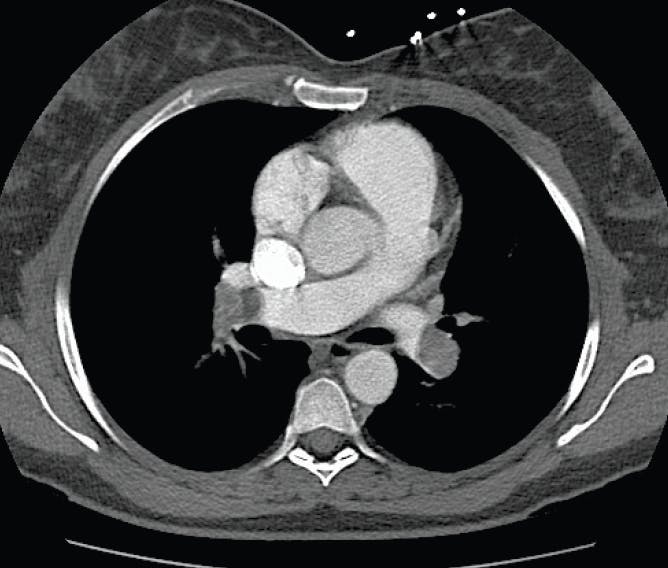
Figure 1. Large filling defects were seen within the main right and left pulmonary arteries.
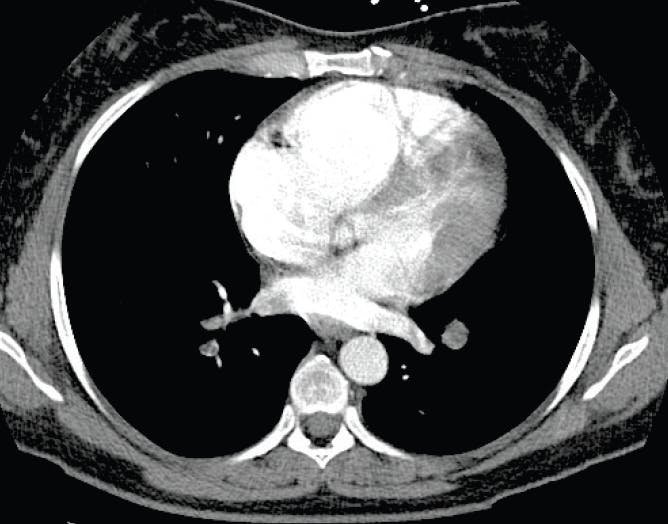
Figure 2. Right ventricle was noted to be dilated on CTPA.
DIAGNOSIS
Risk prediction strategies for VTE are not validated in the pregnant population. As a prothrombotic state in ultimate preparation for bleeding prevention during delivery, D-dimer levels increase physiologically with each trimester and are often above rule out limits by the second trimester, resulting in a low level of test specificity. Furthermore, many symptoms of a normal pregnancy such as shortness of breath and lower extremity swelling mimic those of VTE, requiring a high level of suspicion to make a prompt diagnosis. European Society of Cardiology (ESC) guidelines suggest that a modified Wells score alone or in combination with D-dimer may help stratify pregnant women for diagnostic imaging.
Improvements in modern techniques of radiation dose reduction mean that CTPA and pulmonary scintigraphy (ventilation/perfusion [V/Q] scan) remain the definitive diagnostic tests for PE detection.3 Both studies require radiation, which has been associated with increased maternal risk of cancer, particularly of the breast, although both tests are well below the suggested maternal maximal cumulative dose threshold. Although maternal radiation exposure is higher with CTPA than with V/Q scanning, current techniques have reduced breast radiation exposure to as low as 3 to 4 mGy, resulting in a negligible impact on maternal cancer risk. Fetal radiation doses are lower with CTPA than with V/Q scanning, but both modalities result in doses that are below accepted dose thresholds.1 CTPA requires the use of iodinated contrast media. Contrast can cross the placenta and enter the fetal circulation; however, no teratogenic or mutagenic effects have borne out of animal studies.4 The benefits of CTPA as the diagnostic tool of choice over V/Q scanning for PA-PE include broad availability, test speed, and excellent anatomic resolution for assessment of clot burden and location, RV/LV (right ventricular to left ventricular) ratio and other imaging predictors of PE severity.
RISK STRATIFICATION OF PA-PE
Risk stratification is critical to tailoring the treatment of acute PE and focuses on the physiologic impact of increased RV afterload, RV dysfunction, and circulatory failure as the primary cause of mortality from high-risk and intermediate-high–risk PE. Although such guidelines have not been validated in the pregnant population and do not incorporate fetal complications into the risk assessment, they likely still have applicability in stratifying maternal PA-PE risk.5
Blondon et al identified physiologic changes during pregnancy that could impact the relevance of risk stratification guidelines. They contend that these changes likely do not substantially alter the clinical assessment of hemodynamic instability used to define severe PE. Cardiac output increases with preload, modulated by an increase in total blood volume. Afterload diminishes through a decrease in systemic vascular resistance. Heart rate rises from the first to third trimester with > 10% of women having a heart rate > 100 bpm after 20 weeks of gestation. Blood pressure typically falls during early gestation with the lowest value occurring in the early third trimester. Still, hypotension is rare with < 3% having a systolic blood pressure < 95 mm Hg during the first and second trimester and < 102 mm Hg at term.
Similarly, the use of biomarkers and imaging criteria for RV dysfunction such as an RV/LV diameter ratio > 1 are likely still applicable in the risk assessment of PA-PE. Levels of troponin and BNP vary modestly and RV and LV size appear to enlarge proportionately during pregnancy.6,7 Blondon et al proposed incorporating fetal ultrasound and cardiotocography (CTG) into the clinical assessment of PA-PE severity in late pregnancy.5
CASE CONTINUED: APPROACH TO TREATMENT
The patient was admitted to the intensive care unit with intermediate-high–risk PE, and maternal fetal medicine and the PE response team were consulted. She had intermittent contractions without signs of active labor. CTG showed a normal basal rate with good variability. Systemic thrombolysis, catheter-directed therapy, and extracorporeal membrane oxygenation (ECMO) support were discussed. Venous and arterial sheaths were placed in case of emergent delivery and rapid need for maternal circulatory support with ECMO. The patient continued to have mild contractions, which subsided, and the CTG continued to be reassuring. The troponin peaked at 2.6 ng/mL, and a repeat echocardiogram on day 3 showed improved RV function. A hematologic workup was initiated. Vascular sheaths were removed with a plan for continued unfractionated heparin (UFH) until scheduled cesarean section delivery at 39 weeks to minimize strain on the maternal hemodynamic system.
ANTICOAGULATION THERAPY
Systemic anticoagulation with either low-molecular-weight heparin (LMWH) or UFH is the mainstay of PA-PE treatment. These anticoagulants have the most evidence supporting their use in this setting, reducing VTE mortality and recurrence.8 Neither of these anticoagulants cross the placenta and therefore carry no risk of fetal hemorrhage.9 In general, LMWH should be converted to UFH ≥ 36 hours prior to delivery. In high-bleeding-risk scenarios, UFH is recommended over LMWH. The UFH infusion should be stopped 4 to 6 hours prior to anticipated delivery and restarted 6 to 12 hours after a vaginal delivery, 12 to 24 hours after a cesarean section, and 24 hours after epidural removal.10 Recurrence risk peaks at 2 weeks postpartum. Anticoagulation should therefore extend at least through 6 weeks postpartum, if not out to 3 months, depending on underlying cause of VTE. A longer course should be considered in those with high-risk PE given the significant morbidity associated with a recurrence.
ADVANCED THERAPIES
Systemic Thrombolysis
Current guidelines including those from the American College of Obstetricians and Gynecologists and the ESC recommend treatment with systemic thrombolysis in the event of life-threatening PA-PE given the largest body of historical data to support its use.
Systemic thrombolysis consists of intravenous infusion of a fibrinolytic drug such as alteplase or tenecteplase, which have a very low potential for crossing the placenta given their molecular size. Human teratogenicity has not been reported with their use. Risk of fetal demise around the time of maternal systemic thrombolysis administration was 18.5% in one systematic review, although the severity of the mother’s illness confounds interpretation of these data.11 Although systemic thrombolysis rapidly improves hemodynamics and reduces the rate of PE recurrence, it carries a significant risk of major bleeding. Logically, this risk is disproportionately high around the peripartum and early postpartum period. In their systematic review of 127 patients with severe PA-PE treated with systemic thrombolysis, Martillotti et al reported a major bleeding risk of 58% within 72 hours of delivery versus 18% in the antepartum period. Postpartum vaginal hemorrhage and intra-abdominal bleeding after cesarean section accounted for the majority of events.11 Given the profoundly high bleeding risk associated with systemic thrombolysis administered around the time of delivery, preparation for massive transfusion and adjunctive interventions such as embolization should be in place. Depending on local expertise, strong consideration should be given to alternative therapies during this especially high-risk period.
Catheter-Directed Therapies
Despite a lower bleeding risk associated with the use of catheter-directed thrombolysis over systemic thrombolysis in the nonpregnant population, a lack of large-scale randomized data and pregnancy as an exclusion criteria for device trials means adoption of this therapy for PA-PE remains limited. In their systematic review including the RIETE registry through 2016, Martillotti et al report 16% of high- and intermediate-high–risk PA-PE treated with this modality. Use of catheter-based therapies that mechanically engage and extract thrombus without the use of fibrinolytics are limited to case reports, while adoption of this technology in the nonpregnant population has becoming more mainstream in recent years. Martillotti et al report seven of 127 severe PA-PE patients treated in this fashion. In all instances, there was no need for further treatment or the use of adjunctive fibrinolytics, highlighting the technical feasibility of a fibrinolytic-free reperfusion strategy. A misconception regarding fluoroscopically guided procedures relates to the associated radiation. If the uterus is positioned outside of the field of view, the fetus is primarily exposed to internal scatter radiation with minimal fetal dose.12 Furthermore, there is no absolute need for digital subtraction angiography or contrast administration for these interventions. The decision to use a catheter-directed therapy should largely be based on the bleeding risk of the patient and the center’s level of expertise with such therapies.
Surgical Embolectomy
In general, major guidelines for the treatment of life-threatening PE in the nonpregnant population reserve surgical embolectomy for those who have a contraindication to or have failed systemic thrombolysis. It is the least commonly used reperfusion therapy for high-risk PE, likely in part due to the high level of local expertise and availability of cardiopulmonary bypass needed. Case series of surgical embolectomy for severe PA-PE suggest an acceptable risk profile with a maternal survival of 84% and a fetal survival rate of 80%.11
ECMO
As a modified cardiopulmonary bypass circuit, ECMO can stabilize hemodynamics but is not itself a reperfusion therapy. The largest data for the use of ECMO in the pregnant population are for adult respiratory distress syndrome with a venovenous circuit. In their systematic review, Blondon et al identified 21 cases of venoarterial ECMO initiated for PA-PE through 2021. These were most often in the postpartum setting for refractory cardiac arrest and were combined with a reperfusion strategy in the majority of cases. Major bleeding was noted to be 55%, although all bleeding events occurred in those who were treated with venoarterial ECMO in combination with a reperfusion strategy.5
Vena Cava Filters
The indication for inferior vena cava (IVC) filter placement in the setting of PA-PE is the same as that for the general population and should be reserved for those who cannot tolerate or have failed anticoagulation. For life-threatening PA-PE, some physicians suggest more liberal adoption of IVC filters during the peripartum period when anticoagulation will be interrupted, particularly if PE is associated with extensive residual deep vein thrombosis.5 Complication rates of IVC filter placement in the PA-PE setting are comparable to the nonpregnant population.1 Suprarenal placement is often recommended, but it is unclear whether this position carries a lower risk for filter migration or other device-related complications over an infrarenal placement.
CASE SUMMARY AND DISCHARGE PLAN
The patient underwent planned cesarean section at 39 weeks. She had 1.8 L of blood loss and received 2 units of packed red blood cells on postoperative day 1. A plan for IVC filter was made in the instance that anticoagulation could not be restarted within 24 hours. Her hematocrit stabilized, and the patient tolerated reinitiation of the heparin drip. She was transitioned to LMWH at discharge.
CONCLUSION
High-risk and intermediate-high–risk PA-PE carry significant maternal and fetal morbidity and mortality. All patients should be started on LMWH or UFH. If a contraindication to anticoagulation exists, consideration should be given an IVC filter, possibly in a suprarenal position. In general, systemic thrombolysis is the preferred first-line therapy. During the complex peripartum and postpartum period, treatment with systemic thrombolysis carries an extremely high risk of bleeding. This should be taken into consideration when preparing for systemic thrombolysis, and for centers that are experienced in other advanced therapies, these options should also be given due weight.
1. Nichols KM, Henkin S, Creager MA. Venous thromboembolism associated with pregnancy: JACC Focus Seminar. J Am Coll Cardiol. 2020;76:2128-2141. doi: 10.1016/j.jacc.2020.06.090
2. Creanga AA, Syverson C, Seed K, Callaghan WM. Pregnancy-related mortality in the United States, 2011-2013. Obstet Gynecol. 2017;130:366-373. doi: 10.1097/AOG.0000000000002114
3. Regitz-Zagrosek V, Roos-Hesselink JW, Bauersachs J, et al. 2018 ESC guidelines for the management of cardiovascular diseases during pregnancy. Eur Heart J. 2018;39:3165-3241. doi: 10.1093/eurheartj/ehy340
4. Webb JAW, Thomsen HS, Morcos SK, Members of the Contrast Media Safety Committee of European Society of Urogenital Radiology (ESUR). The use of iodinated and gadolinium contrast media during pregnancy and lactation. Eur Radiol. 2005;15:1234-1240. doi: 10.1007/s00330-004-2583-y
5. Blondon M, Martinez de Tejada B, Glauser F, et al. Management of high-risk pulmonary embolism in pregnancy. Thromb Res. 2021;204:57-65. doi: 10.1016/j.thromres.2021.05.019
6. Furenäs E, Eriksson P, Wennerholm UB, Dellborg M. Pregnancy in a healthy population: dynamics of NTproBNP and hs-cTroponin T. Open Heart. 2020;7:e001293. doi: 10.1136/openhrt-2020-001293
7. Ducas RA, Elliott JE, Melnyk SF, et al. Cardiovascular magnetic resonance in pregnancy: insights from the cardiac hemodynamic imaging and remodeling in pregnancy (CHIRP) study. J Cardiovasc Magn Reson. 2014;16:1. doi: 10.1186/1532-429X-16-1
8. VillaSanta U. Thromboembolic disease in pregnancy. Am J Obstet Gynecol. 1965;93:142-160. doi: 10.1016/0002-9378(65)90308-x
9. Ginsberg JS, Kowalchuk G, Hirsh J, et al. Heparin therapy during pregnancy. Risks to the fetus and mother. Arch Intern Med. 1989;149:2233-2236.
10. Leffert L, Butwick A, Carvalho B, et al. The Society for Obstetric Anesthesia and Perinatology consensus statement on the anesthetic management of pregnant and postpartum women receiving thromboprophylaxis or higher dose anticoagulants. Anesth Analg. 2018;126:928-944. doi: 10.1213/ANE.0000000000002530
11. Martillotti G, Boehlen F, Robert-Ebadi H, et al. Treatment options for severe pulmonary embolism during pregnancy and the postpartum period: a systematic review. J Thromb Haemost. 2017;15:1942-1950. doi: 10.1111/jth.13802
12. McCollough CH, Schueler BA, Atwell TD, et al. Radiation exposure and pregnancy: when should we be concerned? Radiographics. 2007;27:909-917. doi: 10.1148/rg.274065149
Advertisement
Advertisement