Advertisement
Advertisement
July 2022
The Need for Comprehensive Venous Care
Outlining factors contributing to fragmented venous care.
The symptoms of chronic venous disease (CVD) range from telangiectasias to recalcitrant ulceration. Overall, approximately 25% of the United States population is living with CVD, with up to 1% to 2% aged > 70 living with the most advanced stages of debilitating ulceration.1
Although limb loss is not a threat in CVD as it is in severe peripheral artery disease (PAD), providers should be mindful not to underestimate the impact of venous disease on quality of life (QOL). Morbidity escalates with increasing disease burden. Studies have demonstrated that moderate to severe venous disease has QOL ratings comparable to those reported by patients with advanced medical comorbidities, including diabetes, chronic obstructive pulmonary disease, congestive heart failure, and chronic angina. The societal impact remains significant and accounts for up to 2% of national health care resources. Disability claims and missed work days are also common with CVD patients.
CAUSES OF VENOUS HYPERTENSION
The underlying causes of chronic venous hypertension include superficial valve disease, deep valve reflux, deep venous obstruction, calf muscle pump dysfunction, and central venous hypertension (Figure 1). Calf muscle pump dysfunction may be secondary to immobilization with a surgical boot, Charcot joint, paralysis, morbid obesity, and other conditions that limit ambulation. Causes of central venous hypertension are numerous (Table 1), but the most common factors include obesity and congestive heart failure.
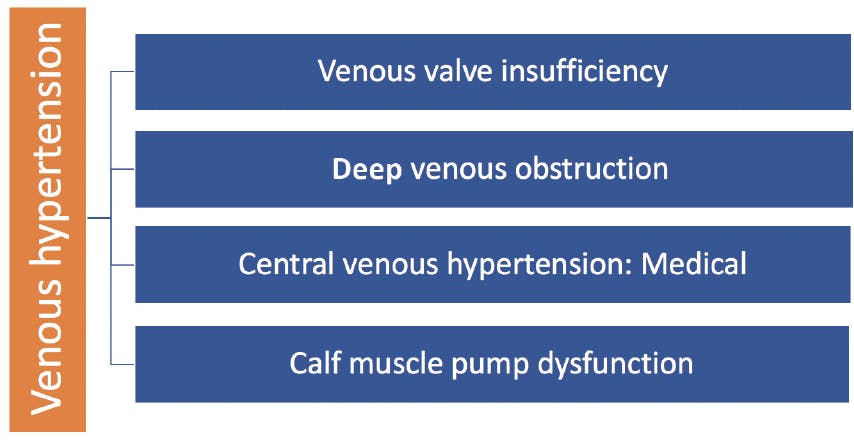
Figure 1. Causes of chronic venous hypertension.
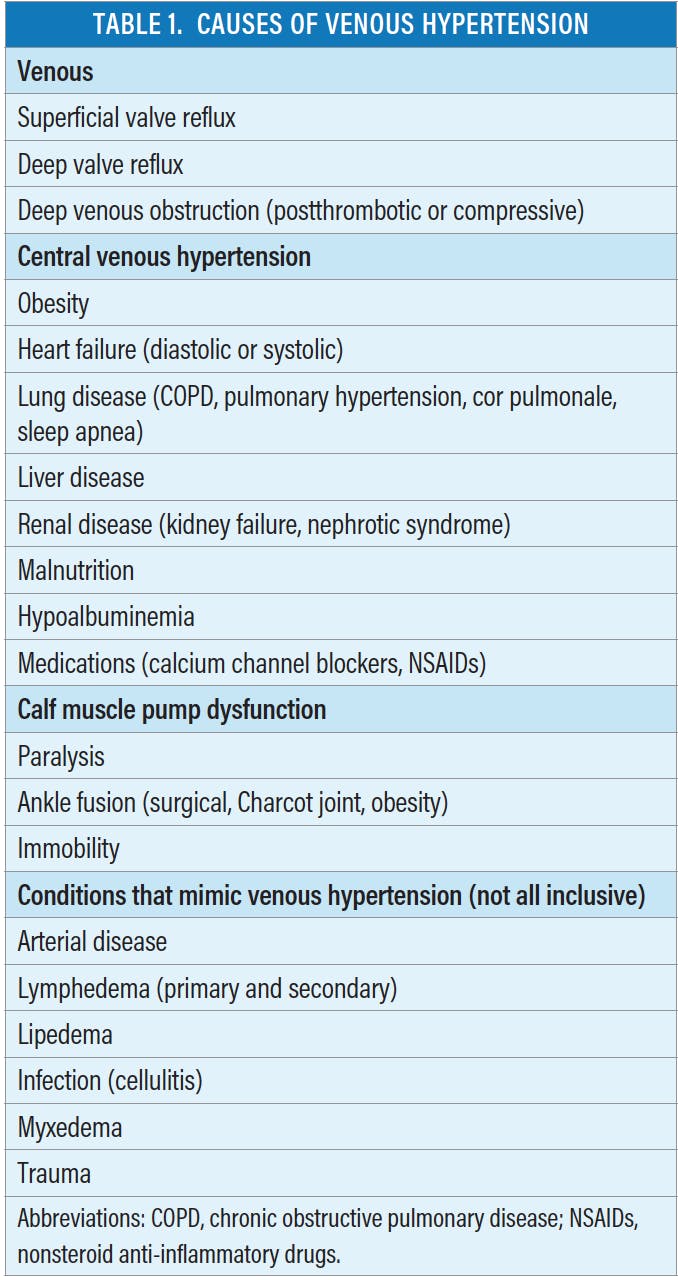
As the clinical CEAP (clinical, etiologic, anatomic, pathophysiologic) classification increases, the likelihood that a patient’s venous hypertension is multifactorial also increases. Each component of venous hypertension (ie, reflux, obstruction, pump dysfunction, contributing medical conditions) increases venous pressure, resulting in greater symptom severity. In addition, various contributing factors to increased venous pressure in the lower extremity can exacerbate each other, including:
- Deep venous obstruction elevates venous pressure, which in turn potentiates valve reflux.
- Chronic hypertension at the capillary level causes inflammation, which then causes inflammatory-mediated calf muscle pump dysfunction.
- Obesity contributes to further deep venous valve insufficiency.
CHALLENGES IN COMPREHENSIVE VENOUS CARE
Fragmented Practice Patterns
Despite the interwoven components of CVD, many practitioners and vein specialty clinics focus only on treating a single contributing element. The majority of vein centers throughout the United States focus on treating superficial reflux (varicose veins) to ameliorate leg pain, burning, aching, heaviness, and swelling. Facilities solely focused on varicose vein treatment may obtain accreditation as a “vein center” without a requisite plan to diagnose and manage other components of venous hypertension (ie, venous obstruction) or lymphedema. In contrast, many interventionalists whose practices include treating arterial disease predominantly focus on acute deep vein thrombosis and, to varying degrees, deep venous obstruction. Moreover, there are separate specialty centers managing lymphedema.
Fragmented practice patterns can lead to scenarios in which patients do not fully improve, or even worsen, due to incomplete or incorrect management strategies. Overtreatment can also occur. Not every physician who treats venous disease needs to treat every aspect of venous pathology, as we often subspecialize within our fields. However, venous providers should train in or be aware of all aspects of venous care to ensure they make the necessary diagnoses and judgments for their patients and treat or refer them appropriately.
Gaps in Venous Training
Inconsistency among venous physicians with regard to board certification, amount of venous-specific training, and overall experience levels can lead to gaps in comprehensive treatment. Virtually any specialty of physician can be a “vein” doctor, and in some varicose vein centers, providers lack formal vascular training, as no vascular board certification is required to treat varicose veins. Physicians treating patients in these settings may come from medical specialties including pediatrics, anesthesiology, and dermatology, among others.
However, gaps also exist within the specialties that do have vascular training, such as vascular surgery, cardiac surgery, cardiology, vascular medicine, and interventional radiology. Contrary to belief, there is a dearth of consistent training in venous disease, as it often takes a back seat to many arterial pathologies. Fellowship programs that invest in comprehensive venous training are historically not as common as those in PAD, aortic disease, and carotid disease. A survey of vascular residents attending a venous training course run by the American Venous Forum indicated that residents/fellows estimated they spent < 10% of their training on CVD.2 In the United States, a review of venous case logs revealed that venous cases represented 8.1% and 5.3%, respectively, for vascular surgery residents completing 0/5 and 5/2 programs.3 Thus, as trainees graduate, their comfort, judgment, and skill vary significantly.
Various efforts to explore and address these training gaps and variations have begun in recent years, with one such example being the American Vein & Lymphatic Society’s development of a Venous & Lymphatic Medicine Fellowship that currently has seven programs across the country. Further, there is a push to have the specialty of venous and lymphatic medicine recognized by the American Board of Medical Specialties, a road that may allow quicker progress toward cohesive and consistent quality education in the venous space. As is, the road to complete and appropriate education in this field remains long, and most venous education and experience for physicians continues to be postgraduate.
PRIORITIZING COMPREHENSIVE CARE
Optimal care for CVD includes a global view of the disease with a comprehensive evaluation and treatment plan. Although presenting signs that include uncomplicated varicose veins, medial malleolar skin changes, and ankle edema are most commonly associated with superficial venous disease, more complicated presentations require a more extensive evaluation and treatment plan. The presentation of leg swelling and/or circumferential skin changes should trigger an evaluation incorporating all sources of venous hypertension. A thorough history, including a review of medications, assessment of obesity, and comorbidities, and an inquiry into ambulatory status versus sedentary lifestyle is paramount to formulating successful treatment plans. Imaging studies should include duplex ultrasound evaluation of reflux in the deep and superficial systems and often requires additional specialized imaging, including CT and MR using proper venous phase timing. Lastly, contrast venography and intravenous ultrasound should be in the tool kit to further evaluate patients and identify occult disease.
After identifying all contributing factors, physicians must consider all contributing factors to determine the best treatment approach. Careful consideration as to the severity of each component to determine its role in symptomatology helps determine the order of treatment. Then, it can be determined which problem to tackle and optimize first. If superficial veins are small and the outflow obstruction is severe, the obstruction should be treated first. Patients with large, refluxing, superficial veins and only trace edema should have their superficial disease managed prior to treatment of moderate obstruction. Severe obesity limits the benefits of any procedure; thus, expectations should be set accordingly. Recognizing obesity as a contributing factor to a patient’s symptoms should trigger a referral for weight loss options.
Patients with the most advanced symptoms often require treatment of more than one contributory component of CVD (Figure 2). For example, it may be necessary to stent a severe postthrombotic obstruction and later treat varicose veins to obtain maximum symptom relief. Lawrence et al demonstrated that treatment of superficial veins, perforator veins, and deep venous obstruction contributed independently and additively to ulcer healing.4 Treatment of all disease components resulted in the highest ulcer healing rates. Care may require treatment of contributing medical conditions or other components of disease.
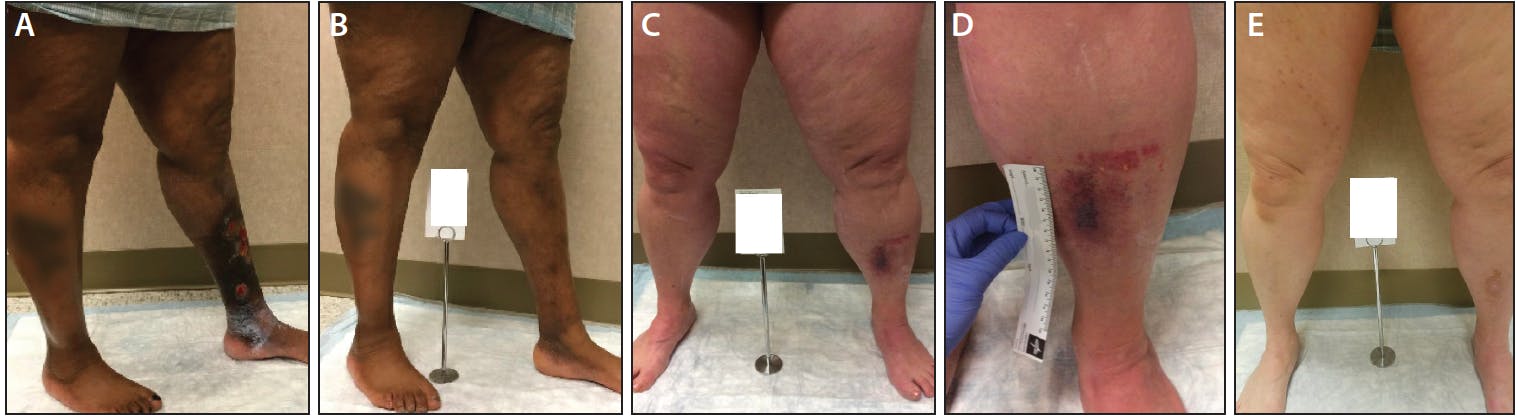
Figure 2. The patient in A and B presented with circumferential skin changes and ulceration (A) and benefited from treatment of both superficial reflux and deep venous obstruction (B). The patient in C-E presented with circumferential skin changes and ulceration (C, D) and benefited from treatment of both superficial reflux and deep venous obstruction (E).
Central venous hypertension secondary to medical factors remains a challenging problem. Patients may have symptoms of severe venous hypertension even in the absence of significant venous pathology. Understanding the underlying medical conditions that can cause or mimic venous hypertension is essential for proper therapy. Only in this manner can unnecessary procedures be avoided, along with the unrealistic patient and physician expectations that accompany them. Too often, providers dismiss patients who do not improve after a venous intervention. Instead, failure to improve or worsening symptoms should stimulate more investigation. Providers should be asking: What did we miss during the evaluation (Figure 3)?
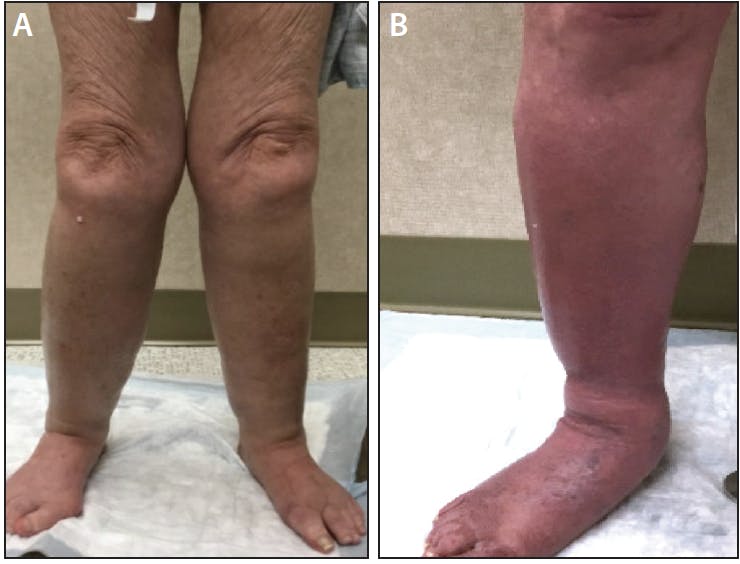
Figure 3. Bilateral equal edema is often related to medical conditions. The patient on the left had no underlying venous disease, and the edema was attributable to venous hypertension from medical comorbidities (A). The patient depicted on the right had venous hypertension and edema secondary to loss of calf muscle pump function due to polio and had no contributory venous disease (B).
Providers of CVD treatment also need to be familiar with differing lymphedema diagnoses and management. Like venous disease, different factors contribute to the cause of lymphedema. Studies have shown that with any type of edema, the lymphatic system can also be compromised. Thus, pneumatic pumps, leg elevation, massage, and compression can help with limb swelling attributable to primary or secondary lymphedema. In addition, the evaluation of lymphedema requires at least a one-time assessment for deep venous obstruction. Severe central venous stenosis or occlusion can be indistinguishable from the clinical presentation of lymphedema (Figure 4).
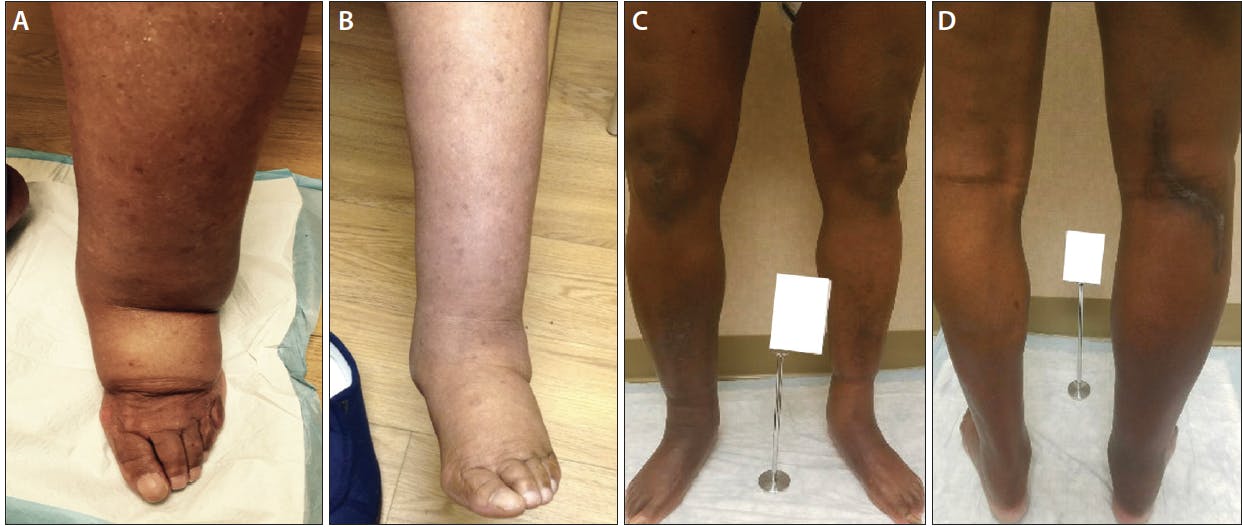
Figure 4. The physical examination cannot always distinguish between CVD and lymphedema. Although the patient to the left presented with very classic lymphedema symptoms (A), she had significant deep venous obstruction, which markedly improved after deep venous stenting (B). In contrast, the patient on the right (C, D) had no improvement with deep venous stenting because the primary problem was postsurgical secondary lymphedema.
CONCLUSION
Legitimate comprehensive care of CVD requires a global recognition of the value of all evaluation and treatment options. Understanding the diagnostic pathways combined with evidence-based judgment allows the best treatment options for patients, which can range from medical management to complex open operative vein surgeries to complex endovascular procedures. Training should progress to create experts in venous management with a complete understanding of venous hypertension and associated pathology. Treating physicians should be able to execute complete treatment plans. Centers not providing all venous services should partner with other centers to achieve comprehensive care. Siloed care does not provide the patients with the proper care they deserve.
1. O’Donnell TF, Passman MA, Marston WA, et al. Management of venous leg ulcers: clinical practice guidelines of the Society for Vascular Surgery and American Venous Forum. J Vasc Surg. 2014;60:3S-59S. doi: 10.1016/j.jvs.2014.04.049
2. Lohr JM, Dalsing MC, Wakefield TW, et al. PP24. Knowledge deficit in venous disease remarkable in current vascular trainees. J Vasc Surg. 2009;49(suppl):S21. https://doi.org/10.1016/j.jvs.2009.02.054
3. Siah M, Abramowitz S, Haser P, et al. Evaluating the venous experience in vascular surgery training. J Vasc Surg Venous Lymphat Disord. 2017;5:446-452. doi: 10.1016/j.jvsv.2017.01.015
4. Lawrence PF, Hager ES, Harlander-Locke MP, et al. Treatment of superficial and perforator reflux and deep venous obstruction improves healing of chronic venous ulcers. J Vasc Surg Venous Lymphat Disord. 2020;8:601-609. doi: 10.1016/j.jvsv.2019.09.016
Advertisement
Advertisement