Advertisement
Advertisement
March 2022
Use of the Intraoperative Positioning System for Aortic Interventions
An overview of the IOPS for complex aortic interventions and its limitations.
Over the last several decades, advances in endoluminal therapies of aortic aneurysms have been exponential. With these advances allowing the treatment of complicated aneurysms, including juxtarenal, pararenal, and thoracoabdominal pathologies, reduction of radiation exposure to both patients and health care practitioners has become increasingly important.1-3
The deleterious effects of radiation are well described. Using best practices in the operating suites, the radiation dosage to both patients and operators can be abrogated using the ALARA (as low as reasonably achievable) principles, which include but are not limited to decreasing the time and amount of radiation exposure (ie, limiting subtraction runs, using digital magnification, using fluoroscopy only when necessary), increasing the distance to the radiation source, and using appropriate lead shielding.4 Despite using these principles, exposure to radiation during endovascular cases is generally increasing due to the complexity of the cases, most notably in cases using fenestrated and branched devices.5 Operator-related factors including experience and annual case volume may play a role in final radiation exposure, but patient-related factors such as the anatomic area being imaged and body mass index also are contributors to amount of exposure.6 Recent advancements have sought to mitigate operator factors, including the development of whole-body lead shielding systems, as well as the development of suits that are weightless to the users, minimizing fatigue. In addition, new grafts built with prewired branches to help with cannulation also assist with decreasing procedural time.7,8
Imaging advances, such as low-dose fluoroscopy and three-dimensional (3D) fusion imaging, have arguably led to the most important reductions in radiation exposure to both the operator and patient in the last decade. Fusion of preoperative CTA with real-time fluoroscopy to identify anatomic and arterial landmarks in order to assist with the cannulation and completion of advanced endovascular therapies has been a great advancement seen in recent years. Although fusion imaging may decrease the overall time and exposure to the operator, there is an upfront radiation dose to the patient that is not insignificant if intraoperative cone-beam CT is utilized for the fusion process. Further reductions can be achieved by using a two-dimensional to two-dimensional fusion.9-11 The abrogation of fluoroscopic exposure in the current era has more than likely met its full potential.12 Despite these efforts, as complex endovascular treatments become more disseminated, we must find alternatives to radiation-focused imaging guidance. Several nonfluoroscopic guidance systems have been developed either as adjuncts or complete alternatives to fluoroscopy.13,14 This article provides an overview of the IOPS intraoperative positioning system (Centerline Biomedical) and its limitations.
IOPS: HOW IT WORKS
Centerline Biomedical emerged from research at Cleveland Clinic’s Heart, Vascular & Thoracic Institute. Beginning in 2001, Founder Vikash Goel worked with luminary Dr. Roy Greenberg, who long championed better imaging and image guidance to enable wider dissemination of complex aortic repair techniques and technologies. Together, they developed computerized mapping techniques that have now become part of IOPS, a 3D image guidance system marketed as an adjunct to fluoroscopy that uses structural mapping and electromagnetic tracking instead of ionizing radiation.
The IOPS device itself is a computerized mobile console that is positioned near the table. An electromagnetic field generator is attached to the underside of the table. This device contains an array of transmitters that create a low-level electromagnetic field around the patient. From certain positions, these transmitters can cause fluoroscopic imaging artifact, so the field generator is designed to be moved cephalad or caudad as needed. This system is intended to work with any angiography system capable of cone-beam CT, which allows fusion with IOPS (Figure 1).
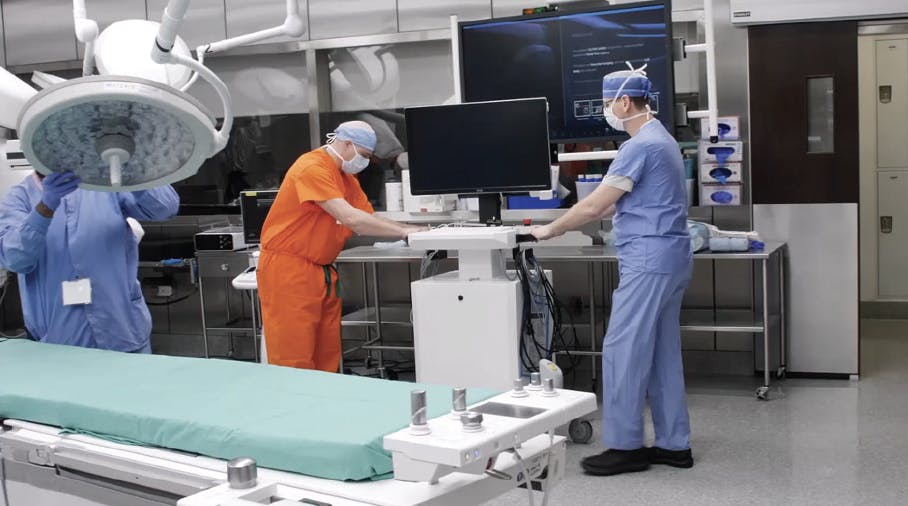
Figure 1. Separate mobile IOPS cart, which contains the interface and processor for guidance.
The company also produces catheters and guidewires with electromagnetic sensors that are embedded internally. The system tracks the position and orientation of these devices within the electromagnetic field. The hubs of the catheters have a sensor cable tether that connects to a manifold attached to the side of the table. The guidewires have a similar connector at the proximal end, which can be removed in order to pass a catheter, torque device, or straightener over the wire (Figure 2).
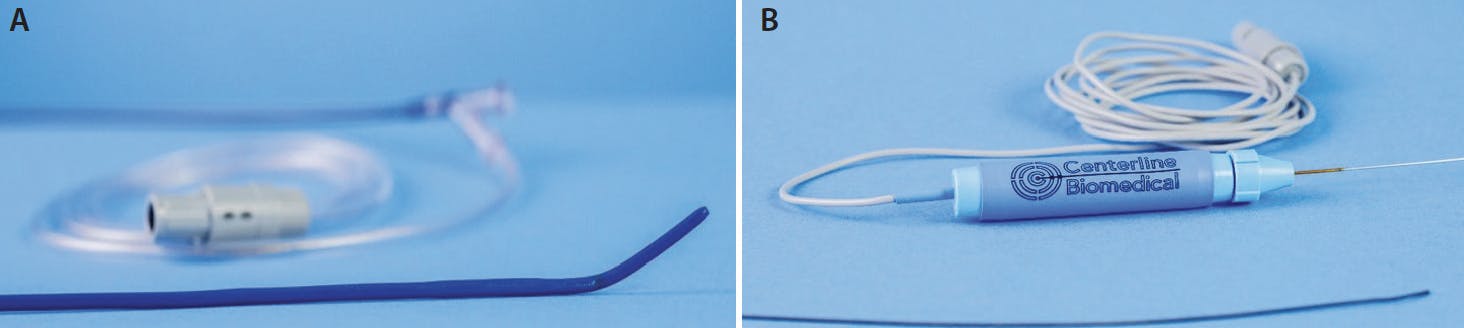
Figure 2. Sensorized catheter and hub (A). Sensorized wire and hub (B).
IOPS’ guidance uses a patient-specific structural map, or vessel model, generated from a preoperative CT arteriogram. At the beginning of the procedure, a fiducial patch is attached to the patient’s lumbar region, and a cone-beam CT scan is performed. After this scan is fused with preoperative imaging, the system displays the vascular anatomy, catheters, and guidewires in 3D from up to four viewing angles simultaneously. The virtual image guidance is based on the low-level electromagnetic tracking field and thus does not involve continuous ionizing radiation exposure (Figure 3).
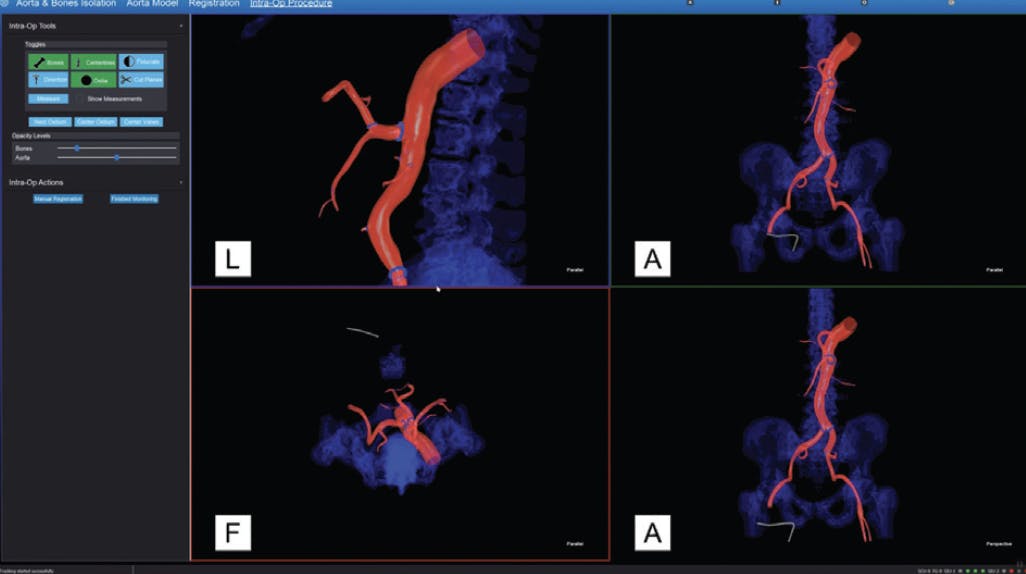
Figure 3. Screen interface in four projections with IOPS.
The overall workflow should be familiar to operators who have used fusion imaging, and the benefits are similar but more pronounced: more intuitive navigation informed by 3D information, reduction in radiation exposure, and improved procedural efficiency (Figure 4).
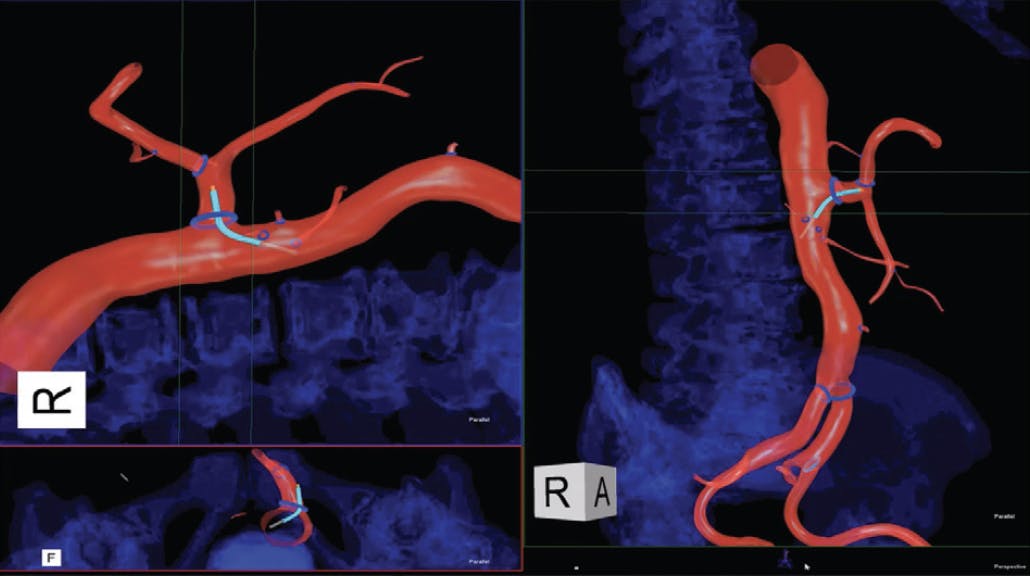
Figure 4. Displaying the interface between the catheter and image.
Limitations
Because this technology is in its infancy, there are several expected limitations to the IOPS. The transmitters do not completely obstruct fluoroscopy; however, they occasionally receive interference from the image intensifier. Additionally, even though the technology and image guidance are on par with that of fluoroscopy, the actual catheters and wires will require significant future development. Variable catheter shapes are currently not available. This can be overcome by the use of steerable sheaths, but both catheter and sheath length need to be considered. Although the wire and its associated imaging are extremely sensitive and accurate, wires are not currently available in exchange length and are too short, so stenting or other intervention over the wire is not possible.
The biggest limiting factor of the IOPS is the lack of sensorized endografts or the ability to locate the graft intracorporeally. This is a mandatory step for any nonfluoroscopic imaging guidance. Deployment of the graft, cannulating gates, and fenestrations without radiation while maintaining patient and provider safety is the holy grail of nonradiation endovascular aortic repair.
SUMMARY
IOPS is FDA cleared and currently available in the United States. In the early market experience, it has been a useful tool to improve navigation and radiation safety, with several case studies having been presented and published.15-17 A clinical study, dubbed MOTION, is currently underway to help the company obtain market clearance in the European Union as well.
Centerline Biomedical is continuing to work to advance the technology, addressing some of the limitations identified in this article and taking into account feedback from early users. The second generation of IOPS catheters is expected to be on the market within a year, with improved performance and lower profile. An exchange-length guidewire is on the horizon, and the company is also developing a steerable catheter to build on the results of combining their current catheters with steerable sheaths.
Additionally, the National Institutes of Health National Heart, Lung, and Blood Institute has provided scientific funding to advance this new modality further, and Centerline is working with Cleveland Clinic as a subawardee on one of the these grants to make the first clinical inroads to an endograft marked with sensors to allow radiation-free endovascular aneurysm repair. The company also has plans to partner with its early adopters on rigorous scientific study.
1. Tenorio ER, Dias-Neto MF, Lima GBB, et al. Endovascular repair for thoracoabdominal aortic aneurysms: current status and future challenges. Ann Cardiothorac Surg. 2021;10:744-767. doi: 10.21037/acs-2021-taes-24
2. Tenorio ER, Oderich GS, Farber MA, et al. Outcomes of endovascular repair of chronic a compared with degenerative thoracoabdominal aortic aneurysms using fenestrated-branched stent grafts. J Vasc Surg. 2020;72:822-836.e9. doi: 10.1016/j.jvs.2019.10.091
3. Oderich GS, Farber MA, Schneider D, et al. Final 5-year results of the United States Zenith Fenestrated prospective multicenter study for juxtarenal abdominal aortic aneurysms. J Vasc Surg. 2021;73:1128-1138. doi: 10.1016/j.jvs.2020.08.128
4. Kirkwood ML, Arbique GM, Guild JB, et al. Radiation-induced skin injury after complex endovascular procedures. J Vasc Surg. 2014;60:742-748. doi: 10.1016/j.jvs.2014.03.236
5. Kirkwood ML, Arbique GM, Guild JB, et al. Deterministic effects after fenestrated endovascular aortic aneurysm repair. J Vasc Surg. 2015;61:902-906. doi: 10.1016/j.jvs.2014.11.044
6. Sen I, Tenorio ER, Pitcher G, et al. Effect of obesity on radiation exposure, quality of life scores, and outcomes of fenestrated-branched endovascular aortic repair of pararenal and thoracoabdominal aortic aneurysms. J Vasc Surg. 2021;73:1156-1166.e2. doi: 10.1016/j.jvs.2020.07.088
7. Salcido-Rios J, McNamara DA, VanOosterhout S, et al. Suspended lead suit and physician radiation doses during coronary angiography. Catheter Cardiovasc Interv. Published online December 30, 2021. doi:10.1002/ccd.30047
8. Marichal DA, Anwar T, Kirsch D, et al. Comparison of a suspended radiation protection system versus standard lead apron for radiation exposure of a simulated interventionalist. J Vasc Interv Radiol. 2011;22:437-442. doi: 10.1016/j.jvir.2010.12.016
9. Rolls AE, Maurel B, Davis M, et al. A comparison of accuracy of image- versus hardware-based tracking technologies in 3D fusion in aortic endografting. Eur J Vasc Endovasc. 2016;52:323-331. doi: 10.1016/j.ejvs.2016.05.001
10. Goudeketting SR, Heinen SGH, Unlu C, et al. Pros and cons of 3D image fusion in endovascular aortic repair: a systematic review and meta-analysis. J Endovasc Ther. 2017;24:595-603. doi: 10.1177/1526602817708196
11. Edsfeldt A, Sonesson B, Rosen H, et al. Validation of a new method for 2D fusion imaging registration in a system prepared only for 3D. J Endovasc Ther. 2020;27:468-472. doi: 10.1177/1526602820912223
12. Klein A, Guild J, Xi Y, et al. Use of a 2 dimensional vessel navigator roadmap decreases patient radiation dose compared to standard 3D mapping for fenestrated endovascular aneurysm repair. Ann Vasc Surg. Published online November 5, 2021. doi: 10.1016/j.avsg.2021.08.042
13. Jansen MA, Khandige A, Kobeiter H, et al. Three dimensional visualisation of endovascular guidewires and catheters based on laser light instead of fluoroscopy with fiber optic RealShape technology: preclinical results. Eur J Vasc Endovasc Surg. 2020;60:135-143. doi: 10.1016/j.ejvs.2020.02.035
14. Herwaarden H, Jansen MA, Vonken E, et al. First in human clinical feasibility study of endovascular navigation with fiber optic RealShape (FORS) technology. Eur J Vasc Endovasc Surg. 2021;61:317-325. doi: 10.1016/j.ejvs.2020.10.016
15. Caputo FJ. Radiation-Free Catheter and Guidewire Manipulations. Presented at: CX Symposium 2021; April 19, 2021; London, United Kingdom.
16. Muluk SC, Elrakhawy M, Chess B, et al. Successful endovascular treatment of severe chronic mesenteric ischemia facilitated by intraoperative positioning system image guidance. J Vasc Surg Cases Innov Tech. 2021;8:60-65. doi: 10.1016/j.jvscit.2021.11.001
17. Farivar BS. Technical Approach to Mesenteric and Renal Vessel Selective Catheterization without Using Ionizing Radiation. Presented at: Southern Association for Vascular Surgery 46th Annual Meeting; January 19, 2022; Manalapan, Florida.
Advertisement
Advertisement