Advertisement
Advertisement
August 2023
An Interview With Jenny P. Tsai, MDCM, FRCP(C)
Dr. Tsai discusses research initiatives at Cleveland Clinic, mechanical thrombectomy for large strokes and MeVOs, public awareness of stroke, and improving diversity in the neurointerventional workforce.
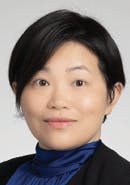
You recently moved from Spectrum Health to the Cerebrovascular Center at Cleveland Clinic—can you tell us about any projects you have in store there?
The Cerebrovascular Center is very active in clinical research, with many opportunities for collaboration with other institutes within the Cleveland Clinic. Some of the work I am involved in includes a joint study with the Cole Eye Institute and the Imaging Institute on the neuro-ophthalmologist effects of neuroendovascular treatment for idiopathic intracranial hypertension and a partnership with the Lerner Research Institute’s biomedical engineering team to further develop and refine the role of augmented reality in the neuroendovascular space. In addition, we have some other neuroimaging projects in the pipeline.
You and colleagues recently published results from the SELECT2 trial, which demonstrated better functional outcomes for patients with large ischemic strokes treated with endovascular thrombectomy than with medical care.1 How will these findings advise clinical practice—for the field in general and your team specifically?
I had the fortunate opportunity as site Principal Investigator to work alongside many field leaders to complete the SELECT2 trial, which sought to study the effectiveness of mechanical thrombectomy for stroke patients presenting with suspected large infarcts. It is another key step in our community’s continuous effort to expand the indication of a highly effective therapy to more patients. SELECT2’s results, along with other studies on the same topic, support the treatment for patients who would otherwise face very limited options and almost certain severe disability or death. At Cleveland Clinic, since the study was published, our cerebrovascular team has updated our institutional protocol to include patients who meet SELECT2’s eligibility criteria to be imaged and triaged as potential candidates for mechanical thrombectomy. I think the greater impact on the practice within the stroke community is yet to be seen. It will be better appreciated as the remaining trials on this topic are completed and published and as practice guidelines are updated.
What is your current decision-making algorithm when approaching medium vessel occlusion (MeVO), and how has it changed in recent years?
I still approach treatment decisions for patients with MeVO and distal vessel occlusion strokes with caution. The rapidly growing devices at our disposal designed for smaller and more distal vessels did slightly lower my threshold for treatment, particularly for secondary MeVO and distal vessel occlusions. Even though retrospective data suggest some clinical benefit, it is important to remember that these same data also suggest a higher risk of hemorrhage when performing mechanical thrombectomy in smaller and distal vessels. The eloquence of the ischemic region and the severity, the impact of the deficits to the patient, and how challenging the anatomy is leading up to the occlusion, are key in decision-making.
Along with your clinical and research work, you are also the Diversity, Equity, and Inclusion (DEI) Chair for the Society of NeuroInterventional Surgery (SNIS). What are the most significant issues to be addressed concerning DEI in the specialty? And, what particular projects/initiatives are you most proud of (or looking forward to)?
Neurointervention has come a long way in recent years in diversifying its workforce. Alongside my colleagues in the SNIS DEI Committee, we set out to highlight our diversity and carry forward the message that this highly rewarding career can be for everyone. I am most proud of the successful #WeAreNeurointervention social media campaign, which ran for 2 consecutive years. The campaign has allowed us to add other dimensions to the neurointerventionalist’s identity. It is intended to remind ourselves, our colleagues, our trainees, and our community of our shared humanity, which is an important part of being a physician. As our diversity continues to expand, equity in opportunities and inclusion in leadership are major areas of growth we aim to address. Diversity without equity and inclusion is ineffective in driving real and positive changes, so there is still much work to be done.
How can the neurointerventional field attract more female physicians?
Mentorship and sponsorship played a key role in the gradual increase in female trainees entering the neurointerventional field in recent years. It is important to recognize that for many women in our field, their mentors and sponsors were senior male colleagues who supported them and guided them in establishing a successful and fulfilling career. A sense of uncertainty is inevitable when entering a field where you belong to a visible minority that, in this case, is gender-based. Mentors, allies, sponsors, and role models will continue to go a long way to dispel the fear of exclusion. As will the message to current and future colleagues that we care about their possible desire to start a family, to bear a child safely, and to be present for their growing family. Neurointerventional societies have dedicated efforts and resources to increase diversity both systematically and purposefully, which is the most likely way to drive changes in workforce representation and diversification.
Also with SNIS, you published a position statement on pregnancy and parental leave for physicians in neurointerventional surgery, specifically outlining radiation safety and parental leave.2 What were the origins of the project? What are some practical steps institutional leadership and fellow physicians can take to support parents and families?
The position statement was an important step forward. Many female colleagues have carried through pregnancy and the peripartum period with minimal time away from our fast-paced and often demanding work. I appreciated the opportunity to be part of this important effort and hope that it is only a first step in the right direction.
Although there are labor laws outlining the possible durations and reasons for leave, it is important for us to recognize that there are still unmet needs. Other more nuanced approaches may also be vastly helpful to new parents and all of us caring for our families. To think about the challenges of the first-time mother or father or the parents with a chronically sick child; the lactating mother needing to pump during the day; or colleagues undergoing an adoption or needing to care for an ill parent, there are a few ways to find the flexibility to help us support each other. These can include a period of modified schedules, with changes such as alleviating call frequency, providing short-term increased clinical support by nonphysician providers, building in more frequent and longer break times, or allowing leniency in cutoff time to request paid time off when needed. I hope to see our workplaces grow into more supportive environments as these conversations carry on.
From sharing stories of stroke intervention on local radio shows to promoting #SurviveStroke on The Today Show, you have been very engaged in public stroke awareness and outreach campaigns. What changes have you seen as a result of these efforts? What do you think should be a physician’s role in public stroke awareness, and what are the opportunities for cross-specialty collaboration in these efforts?
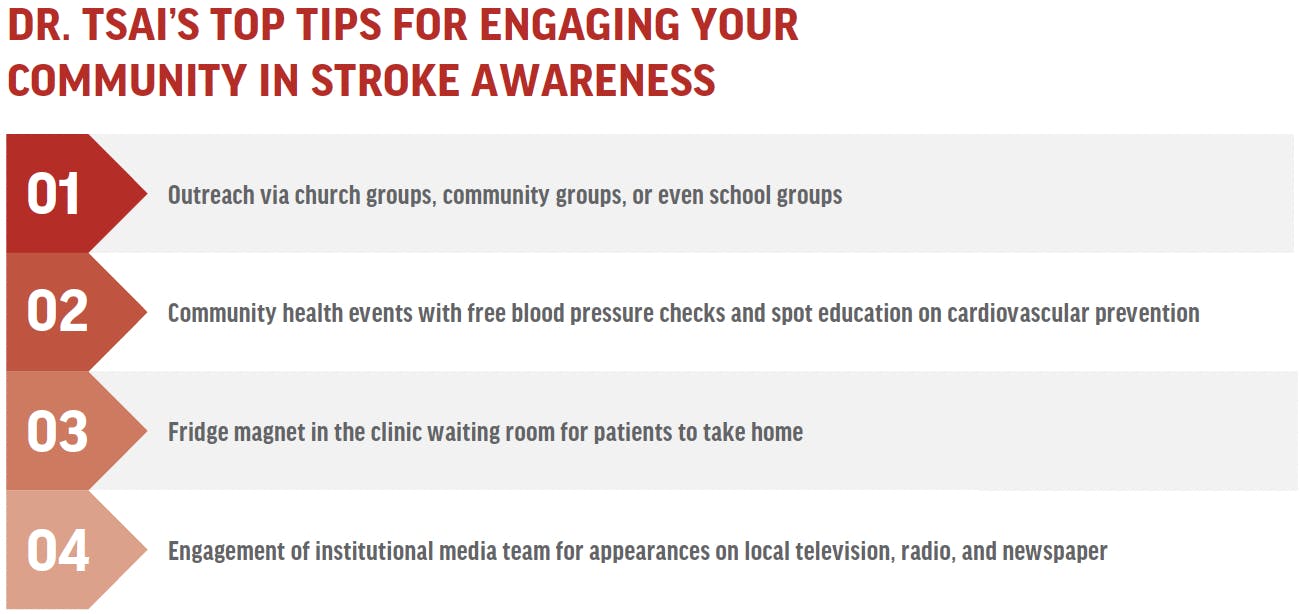
As we build the emergency response and treatment systems in communities and hospitals around the country, the very first step in activating these systems is the recognition of stroke signs and symptoms. Every day, patients are brought in to receive care because someone noticed that they were having a stroke. Public stroke awareness allows us to share the knowledge that may one day be the key in getting them, their loved ones, a colleague, or even a stranger, the timely treatment that may save a life. For most of our patients and their families, an acute stroke is an unexpected, life-altering, and frightening journey. As a physician, we have the privilege and ability to guide them through this experience, starting from the first step. Stroke care and education involves health care providers and physicians across many specialties. We range from first responders and primary care or emergency medicine physicians and nurses to vascular neurologists, neurointerventionalists and neurosurgeons, and physiatrists. We all play an important role in educating our patients in various settings and in increasing public stroke awareness.
What are your favorite pastimes after a busy day in the office? Or, is there a particular hobby you would love to pursue?
Living near the Cuyahoga Valley comes with the perks of accessible outdoors activities. Hiking and exploring new trails with my two Westies are among my favorite activities. I also enjoy biking and playing tennis. When time allows, I am both an amateur artist and a new collector of contemporary art pieces.
1. Sarraj A, Hassan AE, Abraham MG, et al; SELECT2 investigators. Trial of endovascular thrombectomy for large ischemic strokes. N Engl J Med. 2023;388:1259-1271. doi: 10.1056/NEJMoa2214403
2. Baker A, Narayanan S, Tsai JP, et al; SNIS Standards and Guidelines Committee; SNIS Board of Directors. Society of NeuroInterventional Surgery: position statement on pregnancy and parental leave for physicians practicing neurointerventional surgery. J Neurointerv Surg. 2023;15:5-7. doi: 10.1136/jnis-2022-019613
Advertisement
Advertisement
Interested in reading more interviews?
To read more interviews with thought leaders in the vascular field, check out our Profiles & Perspectives hub.
Read More