Advertisement
Advertisement
August 2023
Sponsored by Endologix
Revascularizing Complex SFA Lesions and CTOs: Is It PTAB with the DETOUR™ System Time?
Exploring the role of percutaneous transmural arterial bypass (PTAB) in the treatment of superficial femoral artery stenotic and occlusive disease.
Peripheral artery disease (PAD) affects more than 200 million people worldwide with an increasing prevalence.1 The femoropopliteal arterial segment is the most common site of atherosclerotic disease, as well as the most revascularized vessel. Medical management is the first line of treatment for intermittent claudication; however, revascularization may be appropriate for patients with lifestyle-limiting symptoms. Patients with advanced and complex PAD (ie, chronic limb-threatening ischemia [CLTI]), who often have multilevel disease, require revascularization with options including endovascular, open surgical, or hybrid approaches.2

Interview with the Authors
COMPLEX AND LONG SFA STENOSES AND CTOs
The optimal revascularization strategy for TASC C and D lesions, which may present as severe claudication and CLTI, remains controversial even after the long-awaited recent publications for BEST-CLI and BASIL-2. Independent of their strengths and limitations, which are beyond the scope of this article, both trials reiterated an increased need for repeat interventions following endovascular treatment.3,4 Even though technical advances have enabled an “endovascular first” strategy for long and complex superficial femoral artery (SFA) lesions, durable patency remains limited by high rates of restenosis.5-8 Technical success at the end of an endovascular procedure does not always translate into a durable result with longer-term patency. This is especially true in complex femoropopliteal disease such as long lesions (> 20 cm), chronic total occlusions (CTOs), in-stent restenosis (ISR), and severe calcified lesions. These complex, real-world lesions are associated with higher rates of restenosis and are typically excluded from device trials.
Open femoropopliteal bypass remains an excellent treatment option for patients with an adequate great saphenous vein who are good surgical candidates. However, in the absence of an adequate vein, an open bypass is less appealing because prosthetic and venous allografts have inferior patency rates.3,9 Open surgical revascularization is also less desirable in higher-risk surgical patients with a perioperative mortality > 5%.9 Bypass surgery carries an inherent increased risk of complications ranging from myocardial infarction to infection. One must balance the perioperative risk of open surgery against the patency of endovascular intervention. When deciding a revascularization strategy, each patient should be individually assessed, and risks and benefits carefully weighed.
For those patients who are suboptimal for an open surgical bypass, emerging technologies aim to improve endovascular solutions. One such therapy that should be incorporated into the endovascular armamentarium for long, complex femoropopliteal disease is the newly FDA-approved percutaneous transmural arterial bypass (PTAB) using the DETOUR System (Endologix; Figure 1). PTAB allows for the creation of a fully percutaneous femoropopliteal bypass by routing its covered stent grafts through the femoral vein. Under fluoroscopic guidance, the ENDOCROSS™ Device (Endologix) allows placement of the TORUS™ Stent Grafts (Endologix) from the SFA to the popliteal artery. The diseased SFA is bypassed, by way of the femoral vein, allowing perfusion to the lower extremity distal to the obstruction.
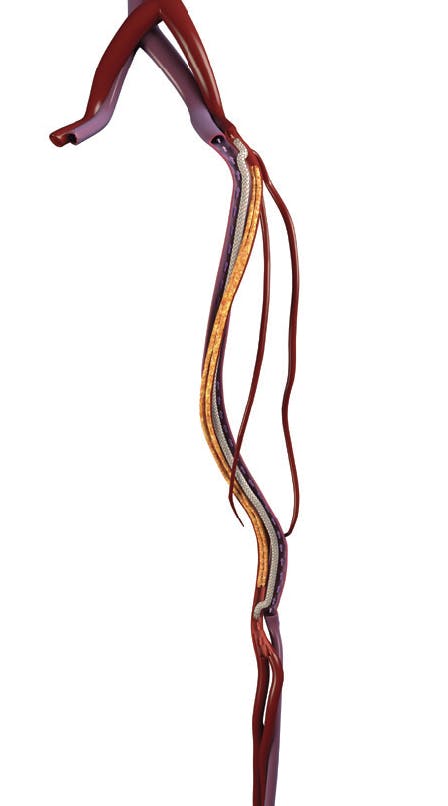
Figure 1. PTAB with the DETOUR System.
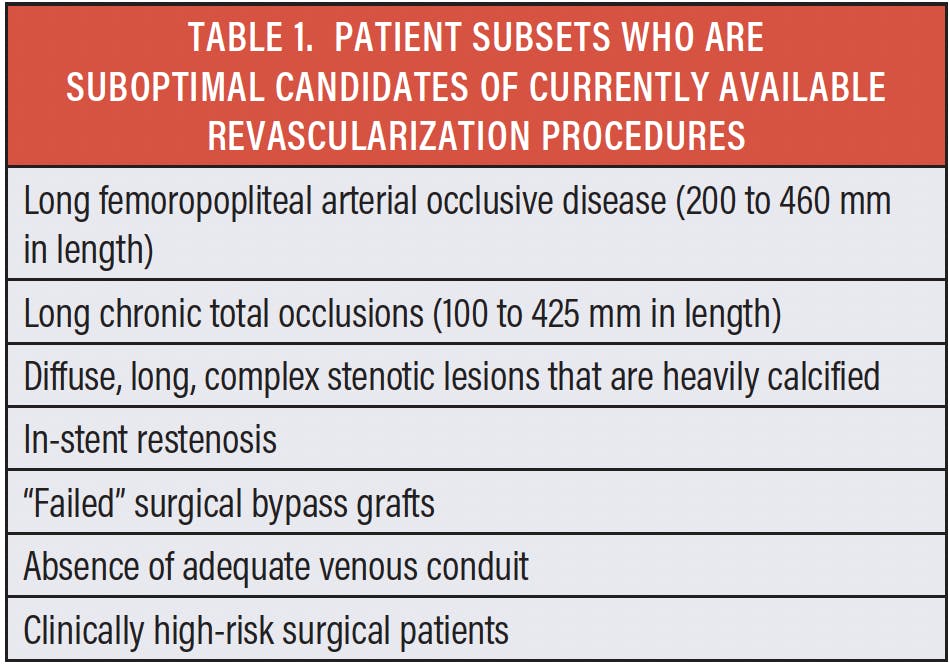
Initially receiving Breakthrough Device designation from the FDA in 2020, the Detour System received FDA approval in June 2023. It is indicated for percutaneous endovascular revascularization in patients with symptomatic femoropopliteal lesions from 200 to 460 mm, including CTOs of 100 to 425 mm in length or diffuse stenosis > 70%, who may be considered suboptimal candidates for surgical or alternative endovascular treatments. Table 1 outlines the subsets of patients who may be considered suboptimal candidates for currently available revascularization procedures.
PTAB PROCEDURE
A male patient in his mid-70s with bilateral lower extremity peripheral arterial occlusive disease with prior endovascular interventions presented to our center with claudication. He had undergone stenting of his right SFA 4 years prior and was clinically doing well until recent months. Medical comorbidities included hypertension, type 2 diabetes mellitus, hyperlipidemia, and chronic renal insufficiency. He quit cigarette smoking at age 69 when he was diagnosed to have left lung carcinoma, which was in remission after radiation and chemotherapy. The patient had developed recurrent symptoms of Rutherford class 3 intermittent claudication with ankle-brachial index of 0.57. He was symptomatic after walking for only 100 yards and experienced significant pain walking up an incline. Peripheral angiography revealed complex SFA disease. This included ISR and severely calcified lesions throughout the right SFA. The disease segment measured 330 mm in length. Additionally, there was a 160-mm-long CTO in the proximal segment of the right popliteal artery. The reconstituted mid P2 segment of the right popliteal artery fills the two-vessel runoff to the periphery (right peroneal artery and right posterior tibial artery).
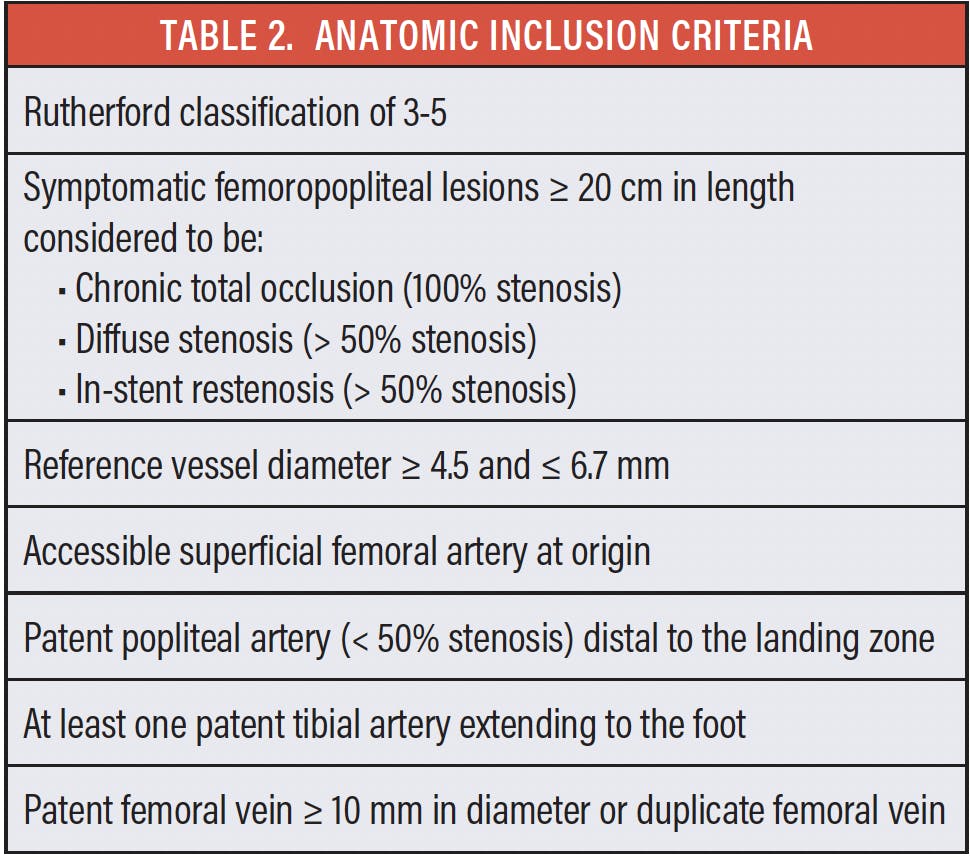
The patient was referred for enrollment in the DETOUR2 Investigational Device Exemption (IDE) Study to bypass the 490-cm-long diseased and occluded right femoropopliteal artery. A preprocedural CTA was performed verifying anatomic inclusion criteria for inclusion in the DETOUR2 Study (Table 2).
Vascular Access
Contralateral left femoral artery access was obtained with the insertion of an 8-F, 45-cm-length crossover sheath into the distal right common femoral artery. Angiography of the proximal segment of the right SFA and the reconstituted right popliteal artery segment were noted (Figure 2). Under direct transcutaneous ultrasound guidance, ipsilateral distal venous access via the distal right posterior tibial vein was obtained. This was followed by the insertion of a 4-F, 45-cm-length sheath into the right popliteal vein. Baseline venography was performed. A 10-mm gooseneck snare was then advanced into the proximal segment of the right femoral vein at the level where the proximal anastomosis was to be created.
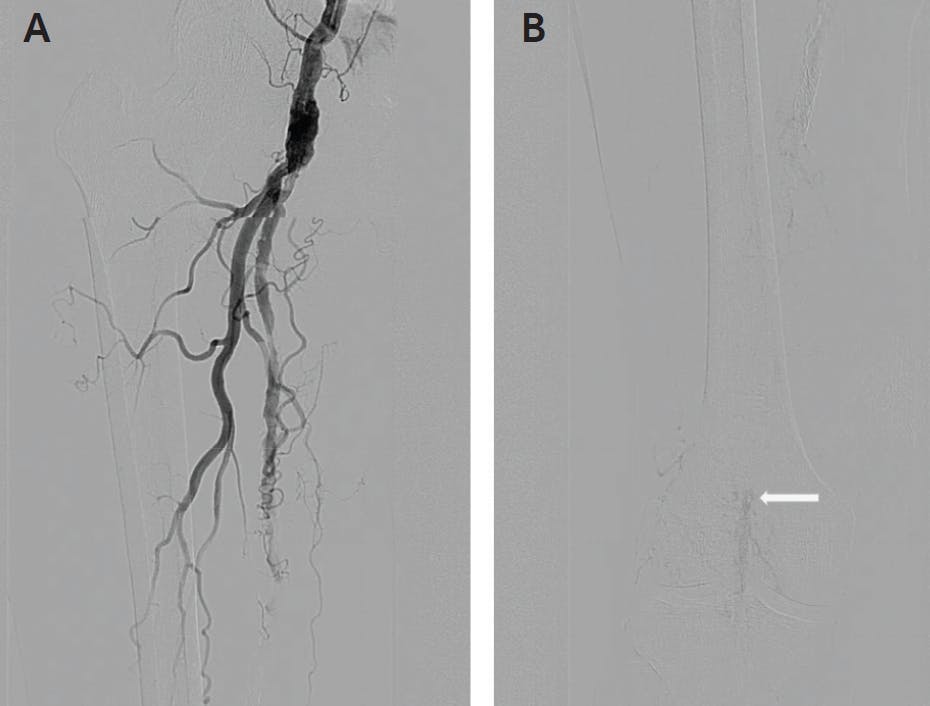
Figure 2. Baseline angiography of right SFA (A) and reconstituted right popliteal artery (B, white arrow).
Anastomoses Creation
The ENDOCROSS Device was advanced into the proximal segment of the SFA (proximal 3-4 cm of the vessel). Once positioned, the needle was fired into the femoral vein. A 0.014-inch guidewire was then advanced into the lumen of the femoral vein and into the snare that is situated in the proximal femoral vein segment to create the proximal anastomosis (ie, creation of an arteriovenous fistula [AVF]; Figure 3). Once snared, the guidewire was exteriorized out of the distal venous sheath. Balloon angioplasty using a 4-mm-diameter balloon catheter to dilate the tract of the AVF was then performed to optimize the proximal anastomosis. The ENDOCROSS Device was then readvanced through the proximal anastomosis from the SFA into the femoral vein and distally positioned at the ipsilateral popliteal vein adjacent to the reconstituted segment of the ipsilateral popliteal artery. With the deployment of the ENDOCROSS Device needle through the wall of the popliteal vein and across the wall of the reconstituted popliteal artery segment, a second 0.014-inch guidewire was advanced into the popliteal artery and positioned distally (Figure 4A). Balloon angioplasty over the second guidewire across the AVF created the distal anastomosis (Figure 4B).
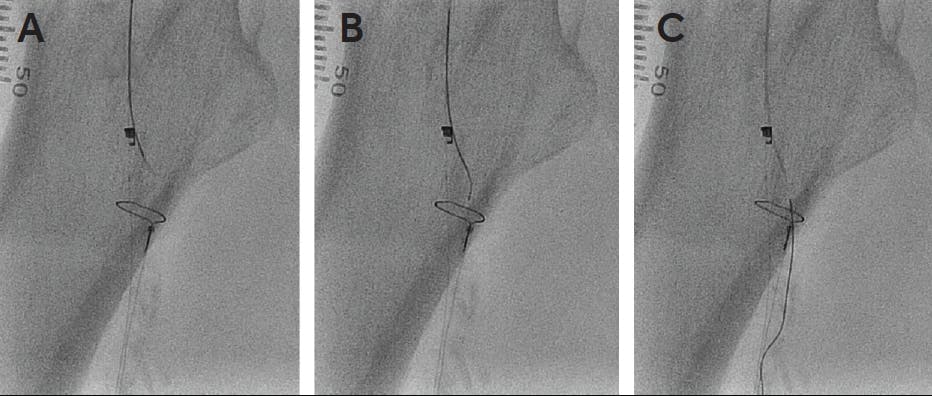
Figure 3. ENDOCROSS Device deployment with advancement of the guidewire from the right SFA (A) to the right femoral vein (B) and into the snare positioned at the proximal segment of the right femoral vein (C).
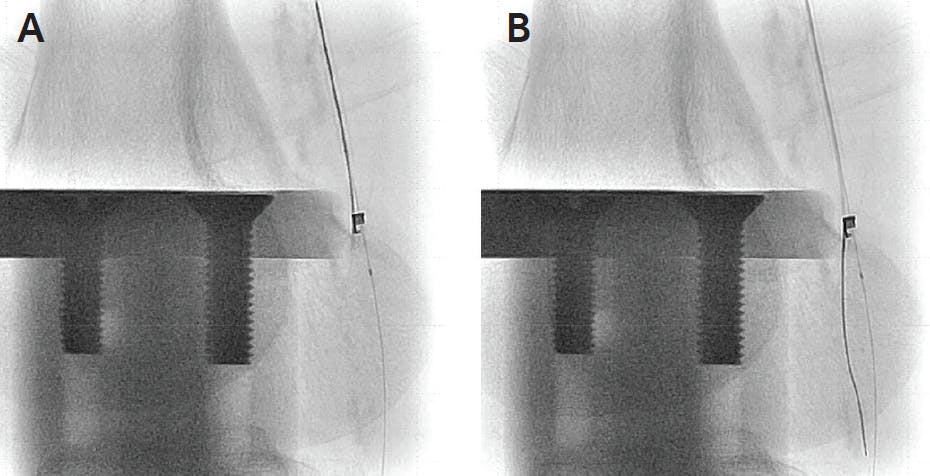
Figure 4. ENDOCROSS Device deployment with advancement of a second guidewire from the right popliteal vein (A) into the reconstituted segment of the right popliteal artery (B).
Stent Graft Deployment
The second 0.014-inch guidewire was exchanged for a 0.035-inch exchanged-length guidewire. Sequential deployment of three TORUS Stent Grafts was then performed from the distal right popliteal artery segment, through the femoral vein and proximally to the ostium of the right SFA. The first TORUS Stent Graft (6 X 200 mm) was deployed across the distal anastomosis with at least 3 cm into the reconstituted popliteal artery segment. A 6.7- X 200-mm TORUS Stent Graft was then deployed with at least 6 cm of overlap into the first TORUS Stent Graft. The final TORUS Stent Graft (6.7 X 150 mm) was implanted across the proximal anastomosis with the proximal edge positioned at the ostium of the right SFA. Following the completion of PTAB, post-stenting balloon dilatation was then performed along the entire length of the implanted stent grafts. Along with the completion angiogram (Figure 5), a final venogram was performed to assess the flow in the femoral vein throughout the course of the bypass (Figure 6).
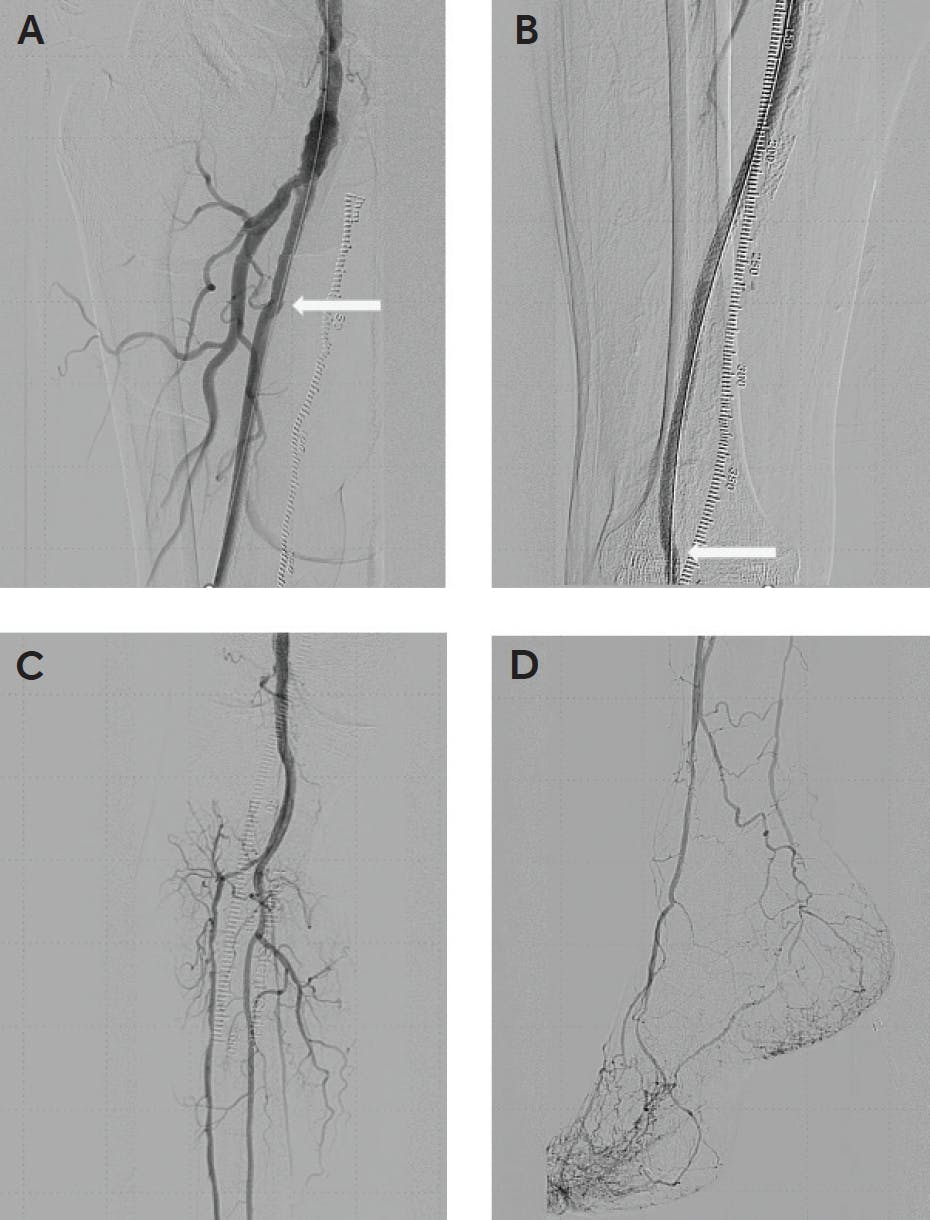
Figure 5. Post-PTAB angiography of the revascularized right lower extremity. The widely patent TORUS Stent Grafts implanted from the ostium of the right SFA and across the proximal anastomosis (white arrow) into the right femoral vein (A). The TORUS Stent Grafts traversing through the right femoral vein and through the distal anastomosis (white arrow) into the right popliteal artery (B). The revascularized right popliteal artery filling the right anterior tibial artery, right tibioperoneal trunk, and right peroneal artery (C). Right anterior tibial artery filling the dorsalis pedis artery of the right foot (D).
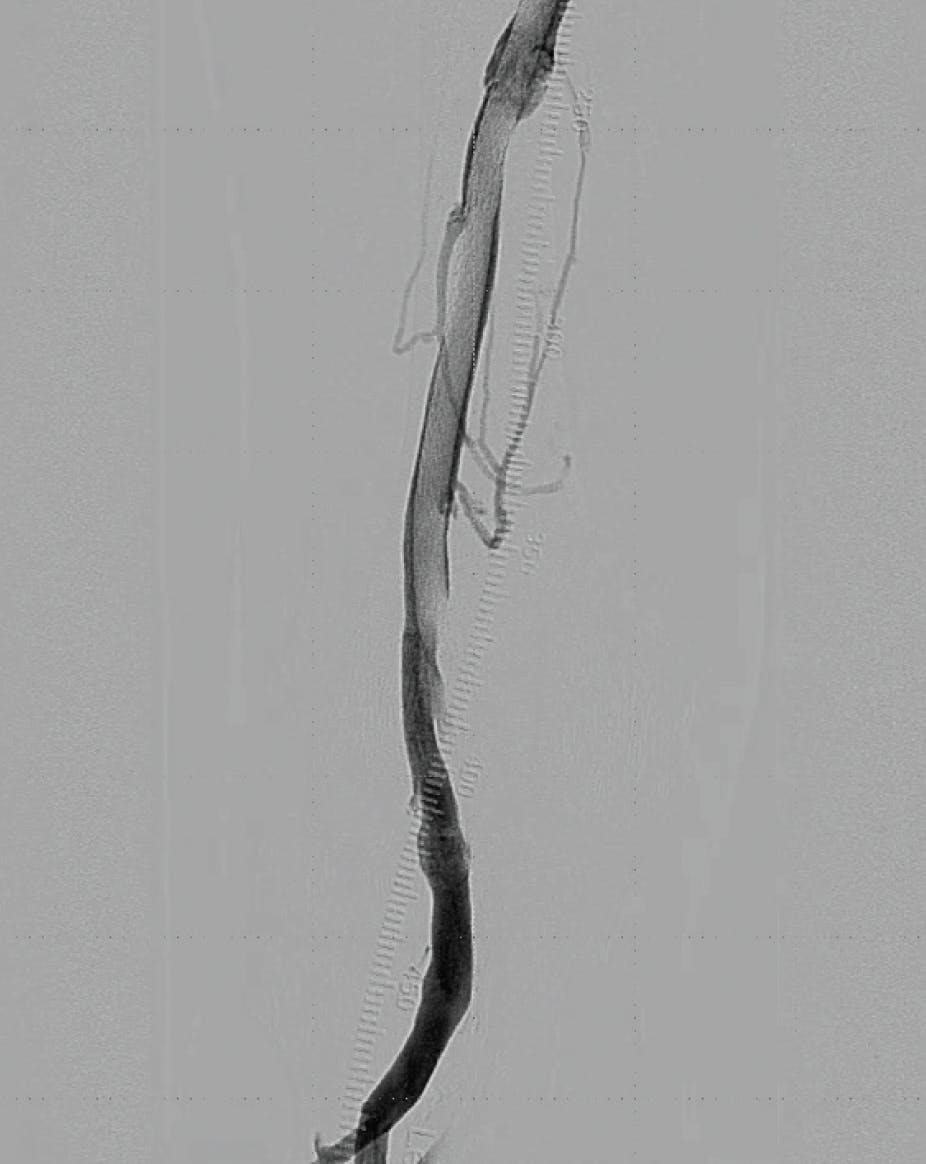
Figure 6. Post-PTAB venography of the ipsilateral venous system.
DETOUR2 STUDY
Results are promising from the DETOUR2 Study, a prospective, single-arm, multicenter, United States IDE trial across 36 sites for lesions > 20 cm long in the femoropopliteal segment with Rutherford class 3 to 5 disease. Of the 202 patients who were enrolled and treated, 96% had CTOs, with a mean lesion length of 327 mm. Of note, 60% of patients had previous vascular interventions and 17% had ISR.
At 1 year, freedom from clinically driven target lesion revascularization (CD-TLR) was 87.7% and freedom from 100% occlusion was 92.4%.10 Deep vein thrombosis rates were 2.5% at 30 days and 4.1% at 1 year. No pulmonary embolism events were reported.
PTAB with the DETOUR System is designed to combine the benefits of surgical bypass with those of an endovascular approach. This is very appealing from a patient perspective, particularly with respect to quality of life. Compared to the reported 3- to 9-day length of stay with open surgical bypass, PTAB averaged a length of stay of 1.1 days.11,12
As part of the study, patients were on dual antiplatelet therapy (DAPT) of aspirin and P2Y12 inhibitor, clopidogrel (or a similar P2Y12 receptor antagonist). If the patients were not on aspirin and clopidogrel prior to the procedure, they received a loading dose within 24 hours prior to procedure.
With data acknowledging how social determinants of health affect clinical outcomes, the DETOUR System could have a significant effect, as it enables tailoring patients’ treatment to their diverse needs and not just their pathology. The potential for same-day surgery along with the ability to return to normal activity in a shorter period impacts the patient in ways we in health care may not fully appreciate. For example, a patient may have delayed care due to social reasons such as being the primary caretaker of a loved one, childcare, or not wanting to miss work to avoid the financial impact on their household.
Along with comorbidities, social situations such as transitional housing can increase the risk for complications (eg, infection) in a patient with new incisions and worse, with a prosthetic graft. Infection rates are reportedly as high as 14% in patients who underwent open bypass and are significantly lower at 0.5% in the group of patients who underwent PTAB with the DETOUR System.11,13-15
CONCLUSION
PTAB with the DETOUR System now provides a unique option in the endovascular toolbox to treat long-segment, complex SFA disease without “burning your bridge” for a future, infrageniculate bypass target with longer durability than balloon angioplasty or intravascular stenting alone. It allows for an endovascular option to manage complex real-world SFA lesions such as densely calcified or long-segment lesions that are known to have low patency rates with existing endovascular treatment options. It also offers a minimally invasive alternative for surgical bypass in patients who have already failed other endovascular interventions, failed previous open bypass surgeries, do not have adequate vein conduit, and are not suitable surgical candidates.
1. Fowkes FGR, Rudan D, Rudan I, et al. Comparison of global estimates of prevalence and risk factors for peripheral artery disease in 2000 and 2010: a systematic review and analysis. Lancet. 2013;382:1329-1340. doi: 10.1016/S0140-6736(13)61249-0
2. Allan RB, Puckridge PJ, Spark JI, Delaney CL. The impact of intravascular ultrasound on femoropopliteal artery endovascular interventions: a randomized controlled trial. JACC Cardiovasc Interv. 2022;15:536-546. doi: 10.1016/j.jcin.2022.01.001
3. Farber A, Menard MT, Conte MS, et al. Surgery or endovascular therapy for chronic limb-threatening ischemia. N Engl J Med. 2022;387:2305-2316. doi: 10.1056/NEJMoa2207899
4. Bradbury AW, Moakes CA, Popplewell M, et al. A vein bypass first versus a best endovascular treatment first revascularisation strategy for patients with chronic limb-threatening ischemia who required an infra-popliteal, with or without an additional more proximal infrra-inguinal revascularisation procedure to restore limb perfusion (BASIL-2): an open-label, randomised, multicentre, phase 3 trial. Lancet. 2023;401:1798-1809. doi: 10.1016/S0140-6736(23)00462-2
5. Davaine JM, Azéma L, Guyomarch B, et al. One-year clinical outcome after primary stenting for Trans-Atlantic Inter-Society Consensus (TASC) C and D femoropopliteal lesions (the STELLA “STEnting Long de L’Artère fémorale superficielle” cohort). Eur J Vasc Endovasc Surg. 2012;44:432-441. doi: 10.1016/j.ejvs.2012.07.015
6. Kluckner M, Nierlich P, Hitzl W, et al. Long-Term results of endovascular treatment with nitinol stents for femoropopliteal TASC II C and D lesions. Medicina (Kaunas). 2022;58:1225. doi: 10.3390/medicina58091225
7. Okuno S, Iida O, Iida T, et al. Comparison of clinical outcomes between endovascular therapy with self-expandable nitinol stent and femoral-popliteal bypass for Trans-Atlantic inter-society consensus II C and D femoropopliteal lesions. Ann Vasc Surg. 2019;57:137-143. doi: 10.1016/j.avsg.2018.09.024
8. Brouillet J, Deloose K, Goueffic Y, et al. Primary stenting for TASC C and D femoropopliteal lesions: one-year results from a multicentric trial on 203 patients. J Cardiovasc Surg (Torino). 2018;59:392-404. doi: 10.23736/S0021-9509.16.09282-X
9. Conte MS, Bradbury AW, Kolh P, et al. Global vascular guidelines on the management of chronic limb-threatening ischemia. J Vasc Surg. 2019;69:3S–125S.e40. doi: 10.1016/j.jvs.2019.02.016
10. Lyden S. Durability of percutaneous bypass for treatment of femoropopliteal disease: two-year outcomes of the DETOUR-2 study. Presented at: Vascular Annual Meeting (VAM); June 14-17, 2023; National Harbor, MD.
11. Lyden SP. Percutaneous bypass for the treatment of long-segment femoropopliteal disease: results from the DETOUR2 trial. J Vasc Surg. 2022;75:E337-E338. doi: 10.1016/j.jvs.2022.03.780
12. LEB Systematic Review & Claims Data Analysis including MedPAR (2021); March 1, 2022.
13. Shah, T, Tirziu, D, Ghare MI, et al. Surgical bypass of femoral-popliteal arterial disease: a meta-analysis of randomized and prospective trials. J Crit Limb Ischem. 2022;2:E122-E130. doi: 10.25270/jcli/CLIG22-00014
14. Voicu S, Trooboff SW, Goodney PP, et al. Medicare reimbursement of lower extremity bypass does not cover cost of care for most patients with critical limb ischemia. J Vasc Surg. 2020;72:1068-1074. doi: 10.1016/j.jvs.2020.01.062
15. Kim TI, Zhang Y, Cardella JA, et al. Outcomes of bypass and endovascular interventions for advanced femoropopliteal disease in patients with premature peripheral artery disease. J Vasc Surg. 2021;74:1968-1977.e3. doi: 10.1016/j.jvs.2021.05.034
INDICATIONS FOR USE:
The DETOUR™ System is indicated for use for percutaneous revascularization in patients with symptomatic femoropopliteal lesions from 200mm to 460mm in length with chronic total occlusions (100mm to 425mm) or diffuse stenosis >70% who may be considered suboptimal candidates for surgical or alternative endovascular treatments. The DETOUR™ System, or any of its components, is not for use in the coronary and cerebral vasculature.
CONTRAINDICATIONS:
The DETOUR™ System is contraindicated in patients with:
- A distal common femoral artery (CFA) <7 mm in diameter.
- Increased risk of deep vein thrombosis (DVT), such as patients with a recent history of DVT, thrombophilia, and disseminated malignancy.
- Untreated flow-limiting aortoiliac occlusive disease.
- Lack of patent single vessel tibial runoff to ankle.
- Known coagulopathy, bleeding diathesis, or thrombocytopenia that cannot be medically managed.
- Known hypersensitivities, allergies or contraindications to: Nitinol; PTFE; aspirin; heparin; antiplatelet; anticoagulant or thrombolytic therapy; or contrast media that cannot otherwise be medically managed.
Refer to Instructions for Use for more information concerning Indications, Contraindications, Specific Anatomic Considerations, Warnings, Precautions, and Adverse Events.
CAUTION: Federal (USA) law restricts this device to sale by or on the order of a physician.
NOTE: Not all product components are available in every country. Please consult with your Endologix representative to confirm product availability.
Endologix® is a registered trademark of Endologix LLC in the United States, Europe and Japan. All other trademarks are the property of their respective owners.
©2023 Endologix LLC. All rights reserved. MM2716-US Rev 01
Advertisement
Advertisement