Advertisement
Advertisement
January 2023
A Rapid Multidisciplinary Hybrid Approach to Stroke Care at University at Buffalo Neurosurgery
A collaborative team effort between the emergency department, neurosurgeons, interventionalists, and radiologists to improve patient experience and outcomes.
By Justin M. Cappuzzo, MD; Muhammed Waqas, MD; Steven B. Housley, MD; Adnan H. Siddiqui, MD, PhD; and Elad I. Levy, MD, MBA
Stroke is the leading cause of long-term disability in the United States, with almost 800,000 cases every year in the United States.1 Now more than ever, stroke is managed in a multidisciplinary fashion. The relationship between emergency department (ED) physicians, neurology, neurosurgeons, interventionalists, and radiology has only become more solidified over time. Further, nursing, physical therapy, occupational therapy, pharmacy, emergency medical services (EMS), speech-language pathology (SLP), social work (SW), and discharge planning (DP) all have unique and critical roles in improving outcomes after stroke. At the University at Buffalo Neurosurgery, we have worked tirelessly with our colleagues and the surrounding hospital systems to create a collaboration that can best serve the western New York community. Our practice patterns have changed over time, and in this article, we describe our traditional workflow followed by our hybrid model to demonstrate this change. We hope that our experiences can aid other centers in optimizing their practice patterns for the betterment of patient care.
TRADITIONAL WORKFLOW
Historically, when a patient experienced stroke-like symptoms in the community, EMS was called to evaluate and screen the patient on the scene for stroke symptoms.2 The patient was typically transported to the closest stroke center, regardless of the stroke center designation.3
The New York State Advisory Group, which started its work in 2017 under the aegis of the Department of Health has created a few changes in this historical workflow. Stroke centers are now designated as primary stroke centers (PSCs), thrombectomy-capable centers (TSCs), and comprehensive stroke centers (CSCs). EMS makes the determination of a possible stroke and will bypass a lower-level center if a higher-level center is ≤ 30 minutes away and has specific scores on the LAMS (Los Angeles Motor Scale) with speech assessment or FAST-ED (Field Assessment Stroke Triage for Emergency Destination). EMS mandatorily informs the ED of the symptoms (prehospital stroke alert), time of symptom onset, and time of arrival, allowing the ED time to prepare for triage and neuroimaging. The New York State prehospital notification metrics outline the process as follows4:
- Prenotification
- Last known well communicated
- Stroke scale finding communicated
- Stroke team activated based on prenotification
The initial goal of transport is to the nearest stroke center. There are two CSCs covering the Buffalo Niagara region, as well as several satellite hospitals with PSC capabilities to perform neuroimaging and administer intravenous thrombolysis (IVT). The CSCs act as hubs for the PSCs. New York State also mandated that PSCs are linked and coordinate all stroke activities with a center of a higher level of care to facilitate rapid triage (Table 1).4
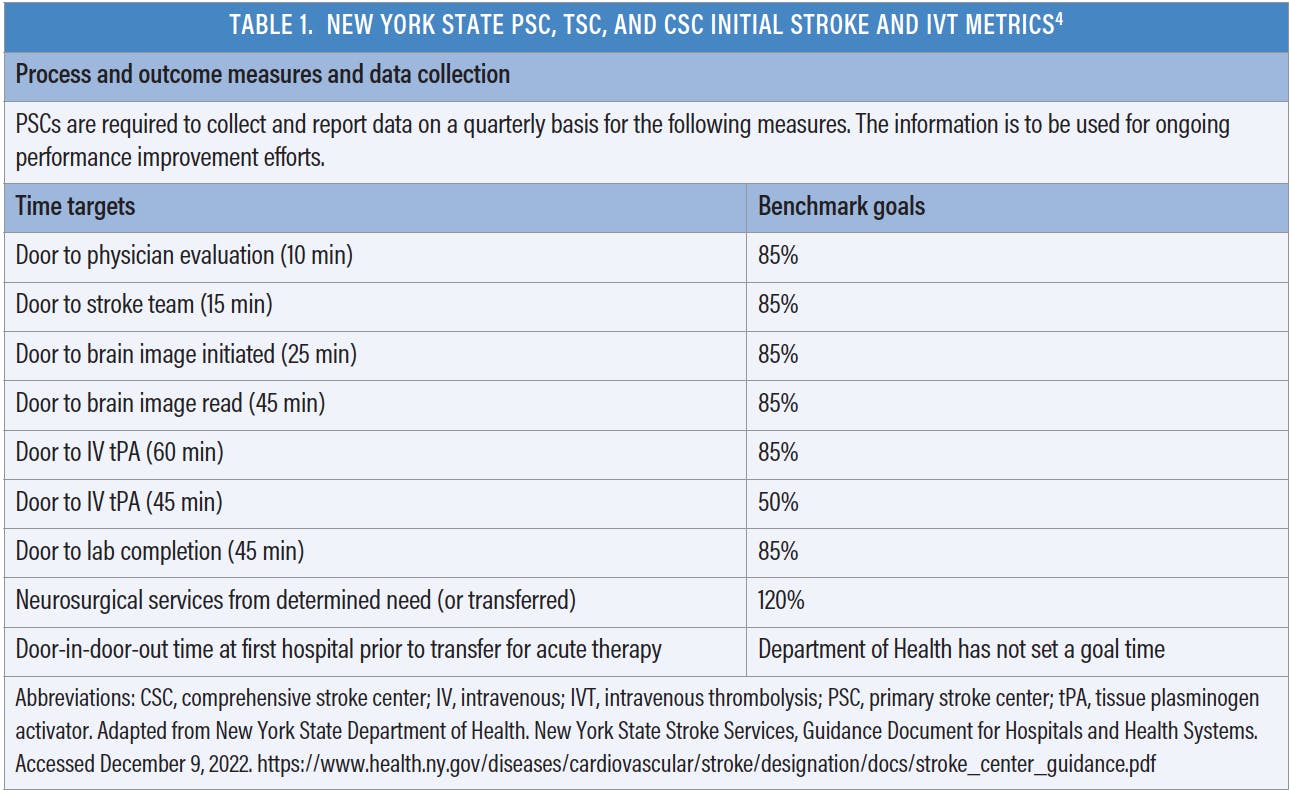
Because of these mandates, all hospitals in the region are connected with the hubs through the Viz.ai mobile app (Viz.ai), which allows for rapid communication between stroke team members and helps with automatic upload of neuroimaging studies immediately after they are acquired on scanners. Viz.ai also allows for prenotification and access to the on-call endovascular team at the CSC. If a large vessel occlusion (LVO) or distal LVO (DLVO) is detected at a non-CSC, efforts are made for an immediate transfer directly to the CSC. Frequently, the CSC team receives the LVO alert prior to the PSC on-site ED physician. All patients who are eligible for IVT receive it, whether presenting at a PSC or CSC, under the guidance of the linked team at the CSC by Viz.ai or by local stroke neurologists. If the patient is found to have an LVO, they are transported to a CSC for endovascular therapy (EVT) evaluation. New York State guidelines mandate triage agreements to facilitate rapid triage of appropriate patients. They have also strengthened the metrics, which are collected in due course of stroke patient workflow to improve outcomes; New York State thrombectomy time target metrics for PSCs, TSCs, and CSCs are as follows4:
- Arrival time to skin puncture (60-140 minutes)
- Imaging to skin puncture (50-110 minutes)
- Time of request to neurointerventional physician phone contact (10 minutes)
- Activation of the endovascular team to on site (30 minutes)
Once the patient arrives at our CSC with a potential stroke, a code stroke is called. The ED physicians then evaluate the patient and assign a National Institutes of Health Stroke Scale (NIHSS) score.5 This score is paged out by the operator to all members involved in stroke care at Buffalo General Hospital, including the endovascular, neurosurgery, vascular neurology, ED, and CT departments. This page also includes key information, including age, symptoms, anticoagulation use, and any other information deemed important by the ED. This page will specifically be the first alert to the endovascular team to make them aware of a potential intervention. The patient is triaged in the ED to undergo peripheral IV access with labs drawn and then transferred to the CT scanner adjacent to the ED for diagnostic imaging. If the patient underwent imaging at an outside institution, it may be repeated depending on the time the initial imaging was performed and the patient’s clinical course.
The performed diagnostic imaging comprises a complete CT stroke study, which includes a noncontrast CT (NCCT) of the head, followed by a CT perfusion (CTP) and a CTA of the head and neck. The neurology team reviews the NCCT of the head, which is performed first, and determines IVT eligibility. If given, IVT is dosed by the pharmacist and neurology team that is with the patient. IV tissue plasminogen activator (tPA) is administered while the patient is on the table, prior to initiation of CTP if possible. Next, the CTP is completed and sent to Viz.ai and our local picture archiving and communication system (PACS) for interpretation by both the endovascular neurosurgery and vascular neurology teams. The CTP is used to demonstrate the presence of an LVO or DLVO and provides a four-dimensional (4D) reconstruction of the intracranial vasculature in our PACS to identify the precise location of occlusion. Furthermore, the 4D CTA obtained through the perfusion algorithm can easily show the difference between a cervical carotid occlusion and an internal carotid artery terminus occlusion, which is harder to assess on a traditional CTA. CTP is also the principal means to identify smaller, more distal occlusions secondary to a perfusion deficit, which is readily evident and easier to spot than a traditional CTA. The computer algorithm via Viz.ai also provides an initial simultaneous, automated alert of the presence of a suspected LVO/DLVO to any of the endovascular team who may not be in house at the time. Finally, the CTA from the arch to vertex is performed, which allows the endovascular team to assess the arch and cervical vasculature for procedural planning and evaluation.
Once an LVO/DLVO is identified, the imaging, clinical history, and physical examination are reviewed by the endovascular neurosurgery team to determine whether the patient is a candidate for EVT. If the patient is a candidate, then they are screened for eligible clinical trials and planned for an intervention customized to their anatomy. Each patient’s anatomy is reviewed to determine the optimal location for arterial access and device selection. This includes evaluating the site for occlusion, such as posterior circulation versus type 3 arch or bovine origin for primary radial access versus traditional femoral access. The CTP images can also demonstrate salvageable penumbra and core infarct using internal algorithms, which is outside the scope of this article. We primarily use perfusion maps for selecting patients presenting after 6 hours from onset, although we perform CTP on all patients unless there is a contraindication, such as history of anaphylaxis with iodine-based contrast agents. The on-call endovascular fellow then calls the paging operator and has the endovascular team paged, which includes two endovascular registered nurses (RNs) and one endovascular radiology technician (RT). The attending endovascular neurosurgeon is also alerted by the endovascular on-call fellow.
SNIS-RECOMMENDED STROKE PROCESS TIME METRICS5,6
Assuming prenotification by EMS:
- Door to physician = on arrival
- Door to noncontrast CT and/or CTA = on arrival
- Door to stroke team < 10 min
- Door to noncontrast CT interpretation < 15 min
- Door to CTA interpretation < 20 min
- Door to IV tPA < 30 min
- Door to CTP imaging or MR perfusion imaging interpretation < 30 min
- Door to puncture (at CSC) < 60 min
- Door to recanalization < 90 min
- PSC picture to CSC puncture < 90 min
Adapted from McTaggart RA, Ansari SA, Goyal M, et al; Standards and Guidelines Committee of the Society of NeuroInterventional Surgery (SNIS). Initial hospital management of patients with emergent large vessel occlusion (ELVO): report of the Standards and Guidelines Committee of the Society of NeuroInterventional Surgery. J Neurointerv Surg. 2017;9:316-323.
The in-house neurosurgery resident then obtains consent from the patient or the patient’s family for the procedure and helps transport the patient to the angiographic suite with the ED RN. At this point, care is transitioned from ED RNs to endovascular RNs. Our stroke interventions are primarily performed under moderate conscious sedation, alleviating the need for an anesthesia team as well as any delays due to intubating the patient. Patients are only intubated for airway protection or if they are deemed to be too agitated to tolerate moderate conscious sedation or cooperate for a safe procedure. The anesthesia team is available 24/7 for emergent intubations, and when required, patients are intubated in the ED. Following intubation, the endovascular RNs, who are all trained in critical care, maintain hemodynamic and respiratory parameters under the supervision of the attending interventionalist.
The endovascular RNs, RTs, and fellows prepare by opening devices and pulling medications while the patient is being transported to the interventional radiology (IR) suite. Interventional covered sterile tables are already in place for emergency use and include standard syringes, micropuncture kits, etc. When the patient arrives, the team helps transfer the patient from the gurney to the IR table. The patient is connected to the hemodynamic monitors by the endovascular RNs, while the RT (who has already entered patient data on the imaging fluoroscopy system) shaves and prepares the groin. The neurosurgery resident or endovascular fellow achieves 8-F arterial access in the femoral artery or 8-F sheathless access in the radial artery.
When the procedure is complete, a cone-beam CT is performed on the IR suite table prior to removing the cervical guide. After removal of the guide, arterial access closure is performed as appropriate. If there is any concern for a major hemorrhagic event, the angio nurses transport the patient for a formal CT scan prior to transfer to the neurosurgical intensive care unit (ICU). After formal transfer with the neurocritical care team, care is transitioned to the ICU nurses.
Target metrics for procedure times per the Society of NeuroInterventional Surgery (SNIS) recommendations, assuming prenotification by EMS, are listed in the Sidebar.5,6
HYBRID WORKFLOW
When we reviewed our work algorithm over many years, we noted tremendous success in the initial time metrics (ie, door to triage, door to CT, door to IVT). However, we noted the longest delays were caused by multiple transfers between the ED, imaging department, and interventional suite. Essentially, the longest delays were between imaging and arterial access for thrombectomy. In our traditional model, we transport the patient from the ED to the CT scanner, back to the ED, and then to the interventional suite (the patient cannot be kept in the CT scanner as it holds up other scans). Other delays include intubation, which is why we only intubate for severe agitation that would preclude a safe endovascular intervention or for airway protection. The care of the patient is transitioned between the ED, imaging, neurology, endovascular, and ICU teams for optimal care of the patient. The solution was to limit transfers, and we worked with these various teams to set up the hybrid suite in the ED, as described below. This was developed to further streamline stroke care.
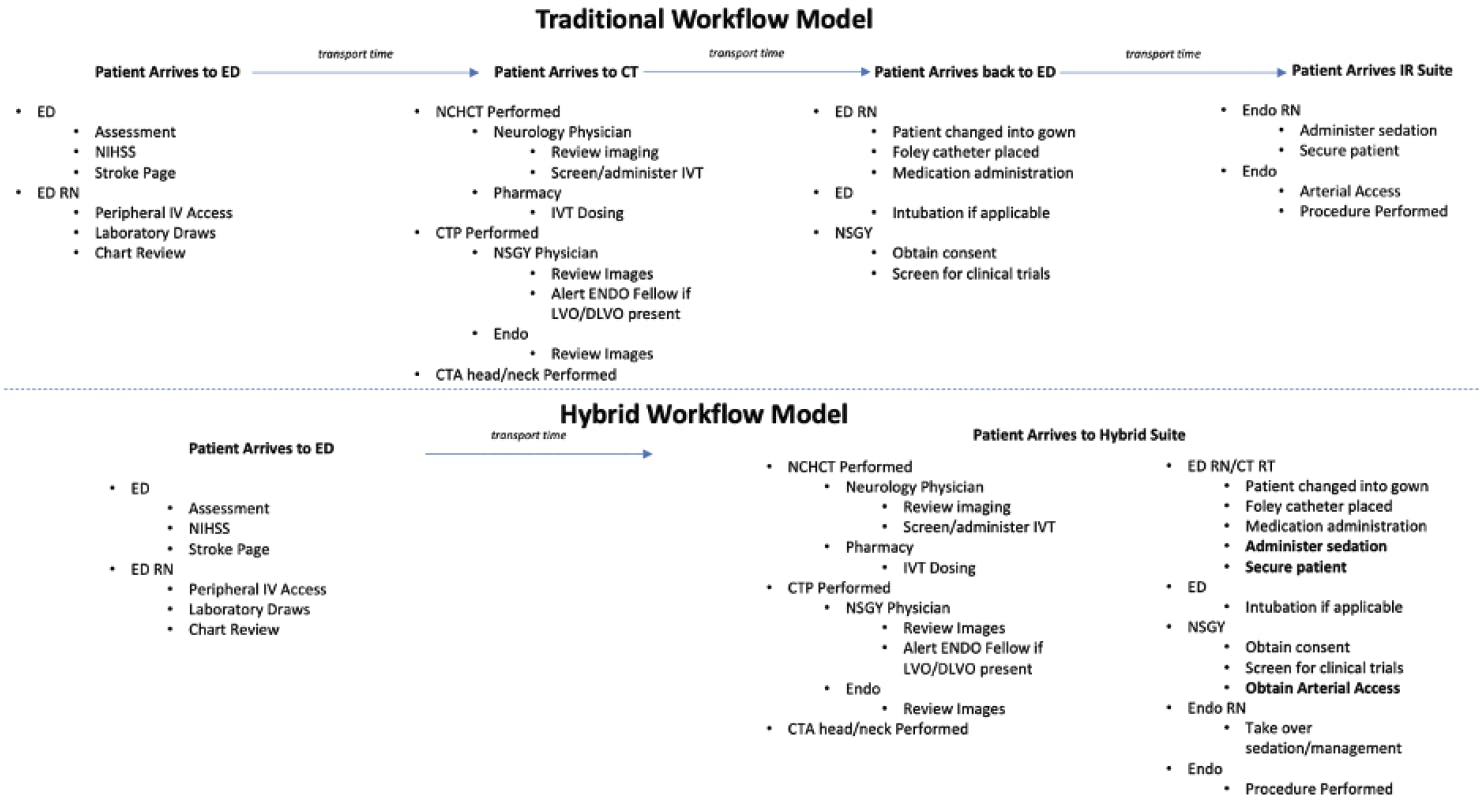
Figure 1. Traditional workflow model at our institution (top) compared to our hybrid model (bottom). Key elements are that the ED RNs and CT RTs managing the patient until the endovascular RNs arrive and that the neurosurgery team achieves arterial access. NCHCT, noncontrast head CT; NSGY, neurosurgery.
When we realized that the greatest delay was transport, we investigated options for streamlining this process. What came about as the most ideal way to decrease transport time was to investigate developing a hybrid suite. Figure 1 demonstrates a comparison between our traditional workflow and our hybrid model. There were early reports in the literature about improved door-to-perfusion times and improved workflow,7 which meant that the patient could have their diagnostic imaging and intervention performed in the same location (Figure 2 and Figure 3). This also meant that the workflow had to change and that individual roles would shift. We would come to rely on our CT technicians and ED nurses to take a more hands-on role in taking care of these patients.
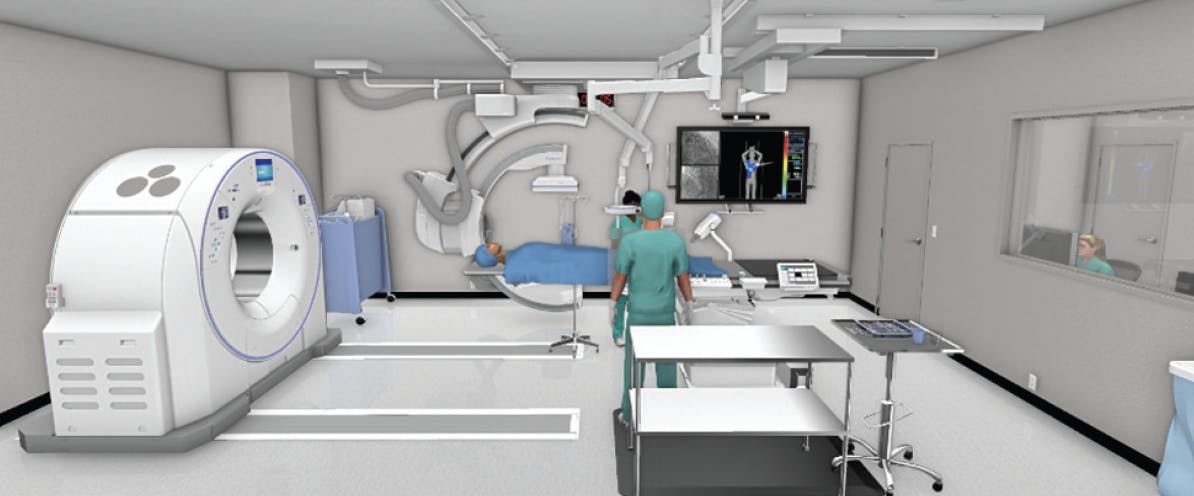
Figure 2. Schematic representation of the hybrid CT scanner suite. Used with permission from Canon Medical Systems.
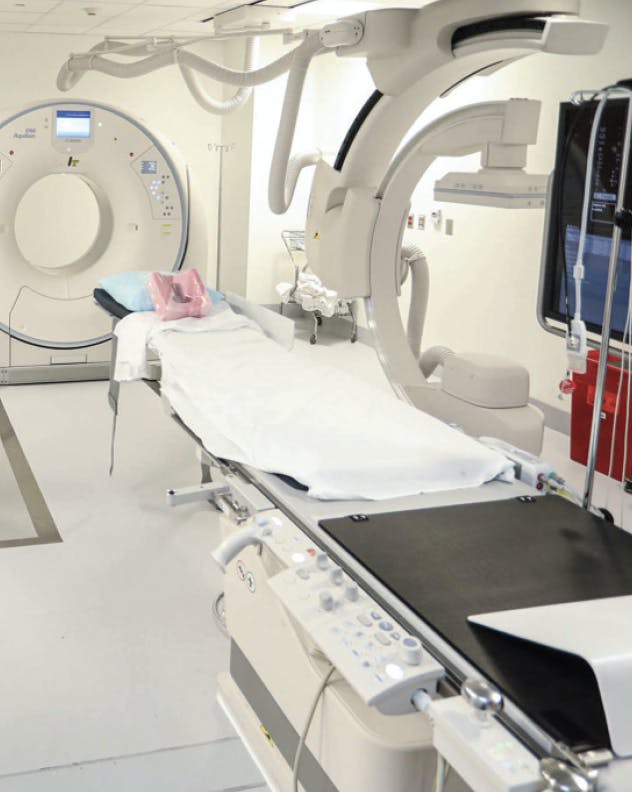
Figure 3. Hybrid suite IR table and CT scanner, which allow for both the diagnostic portion of the stroke management and intervention to be performed on the same table, decreasing revascularization time. Used with permission from Canon Medical Systems/Kaleida Health.
The algorithm in this process starts off the same as the traditional pathway. The patient arrives, is evaluated, and is paged out in a similar fashion as the traditional pathway. However, instead of going to the traditional CT scanner, we transport the patient to the hybrid CT scanner/IR suite. In this room (Figure 1), we have a CT scanner for our diagnostic imaging. If the patient is a candidate for IVT, it is delivered as was done traditionally after the NCCT of the head while on the scanner. After that, the CTP is performed, and the peak arterial volume of the scan is uploaded via Viz.ai to detect an LVO. The patient is then kept on the table if an LVO/DLVO is identified and EVT is planned. The ED RNs, CT RTs, neurology resident, and neurosurgery resident all manage the patient until the endovascular team arrives. Their management until that transition includes placement of a foley catheter, peripheral IVs, and arterial access. Once the endovascular team arrives, EVT is performed in a similar fashion to the traditional model, except that it is performed on a monoplane instead of the usual biplane fluoroscopy.
A few things we had to address in the new workflow were which group of RNs would monitor and prepare the patient for EVT and what would happen if there were simultaneous stroke alerts. After review, we determined the most effective way to manage the workflow was to have the ED RNs and CT RTs manage the patient until the endovascular RNs and RTs arrive. We found that minimizing handoffs and transport was key in limiting treatment delays. We also determined that if two patients presented with stroke-like symptoms at the same time, then the patient with the higher NIHSS score would be transported to the hybrid suite while the patient with the lower NIHSS score would be managed via the traditional route.
CONCLUSION
Overall, we have had tremendous success with this hybrid model; however, there is always room for improvement. We have frequently been able to achieve door-to-recanalization times in < 30 minutes, which is impossible in the traditional model. We are constantly working with our large multidisciplinary team to determine if there are ways to improve our workflow for our patients. Additionally, once the initial management and EVT is completed, our other departments (including physical therapy, occupational therapy, SLP, DP, and SW) all provide key services to ensure that our patients have the best possible outcomes.
Acknowledgments: We would like to thank the following groups, without whom the team effort of managing stroke would not be possible: Kaleida Health (including administration, physicians, RNs, RTs, advanced practice providers, pharmacists, physical therapists, occupational therapists, SLPs, emergency medical transport, discharge planners, social workers), Canon Medical Systems, and all our employees at University at Buffalo Neurosurgery.
1. Centers for Disease Control and Prevention. Stroke facts. Accessed December 8, 2022. https://www.cdc.gov/stroke/facts.htm
2. Nguyen TTM, van den Wijngaard IR, Bosch J, et al. Comparison of prehospital scales for predicting large anterior vessel occlusion in the ambulance setting. JAMA Neurol. 2021;78:157-64. doi: 10.1001/jamaneurol.2020.4418
3. Aldstadt J, Waqas M, Yasumiishi M, et al. Mapping access to endovascular stroke care in the USA and implications for transport models. J Neurointerv Surg. Published online February 16, 2021. doi: 10.1136/neurintsurg-2020-016942
4. New York State Department of Health. New York State stroke services, guidance document for hospitals and health systems. Accessed December 9, 2022. https://www.health.ny.gov/diseases/cardiovascular/stroke/designation/docs/stroke_center_guidance.pdf
5. Waqas M, Vakharia K, Munich SA, et al. Initial emergency room triage of acute ischemic stroke. Neurosurgery. 2019;85(suppl 1):S38-S46. doi: 10.1093/neuros/nyz067
6. McTaggart RA, Ansari SA, Goyal M, et al. Initial hospital management of patients with emergent large vessel occlusion (ELVO): report of the standards and guidelines committee of the Society of NeuroInterventional Surgery. J Neurointerv Surg. 2017;9:316-23. doi: 10.1136/neurintsurg-2015-011984
7. Kashiura M, Amagasa S, Tamura H, et al. Reperfusion therapy of acute ischemic stroke in an all-in-one resuscitation room called a hybrid emergency room. Oxf Med Case Reports. Published online June 8, 2019. doi: 10.1093/omcr/omz042
Justin M. Cappuzzo, MD
Chief Resident
Graduated Cerebrovascular Fellow
Department of Neurosurgery
University at Buffalo Neurosurgery
Buffalo, New York
jcappuzzo@ubns.com
Disclosures: Consultant for and receives honorarium from Canon Medical Systems, Cerenovus, Elsevier, Gore & Associates, Integra Lifesciences, Jacob’s Institute, Medtronic, MicroVention, MIVI Neuroscience, Penumbra, and Stryker; receives grants from Penumbra.
Muhammed Waqas, MD
Department of Neurosurgery
University at Buffalo Neurosurgery
Buffalo, New York
Disclosures: None.
Steven B. Housley, MD
Department of Neurosurgery
University at Buffalo Neurosurgery
Buffalo, New York
Disclosures: None.
Adnan H. Siddiqui, MD, PhD
Chair, Joint Cerebrovascular Surgery Section of American Association of Neurological Surgeons/Congress of Neurological Surgeons
Secretary, Society of NeuroInterventional Surgery
Professor and Vice Chairman
Department of Neurosurgery
Director, Canon Stroke & Vascular Research Center
Jacobs School of Medicine and Biomedical Sciences
CEO & CMO, Jacobs Institute
Gates Vascular Institute
Buffalo, New York
Disclosures: Receives consulting fees from Amnis Therapeutics, Apellis Pharmaceuticals, Inc., Boston Scientific, Canon Medical Systems USA, Inc., Cardinal Health 200, LLC, Cerebrotech Medical Systems, Inc., Cerenovus, Cerevatech Medical, Inc., Cordis, Corindus, Inc., Endostream Medical, Ltd, Imperative Care, Integra, IRRAS AB, Medtronic, MicroVention, Minnetronix Neuro, Inc., Penumbra, Q’Apel Medical, Inc., Rapid Medical, Serenity Medical, Inc., Silk Road Medical, StimMed, LLC, Stryker Neurovascular, Three Rivers Medical, Inc., VasSol, Viz.ai, Inc., and W.L. Gore & Associates; secretary, Board of Society of NeuroInterventional Surgery; Chair, Cerebrovascular Section of AANS/CNS; receives stock or stock options for Adona Medical, Inc., Amnis Therapeutics, Bend IT Technologies, Ltd., BlinkTBI, Inc, Buffalo Technology Partners, Inc., Cardinal Consultants, LLC, Cerebrotech Medical Systems, Inc, Cerevatech Medical, Inc., Cognition Medical, CVAID Ltd., E8, Inc., Endostream Medical, Ltd, Imperative Care, Inc., Instylla, Inc., International Medical Distribution Partners, Launch NY, Inc., NeuroRadial Technologies, Inc., Neurotechnology Investors, Neurovascular Diagnostics, Inc., PerFlow Medical, Ltd., Q’Apel Medical, Inc., QAS.ai, Inc., Radical Catheter Technologies, Inc., Rebound Therapeutics Corp. (purchased 2019 by Integra Lifesciences, Corp), Rist Neurovascular, Inc. (purchased 2020 by Medtronic), Sense Diagnostics, Inc., Serenity Medical, Inc., Silk Road Medical, SongBird Therapy, Spinnaker Medical, Inc., StimMed, LLC, Synchron, Inc., Three Rivers Medical, Inc., Truvic Medical, Inc., Tulavi Therapeutics, Inc., Vastrax, LLC, VICIS, Inc., Viseon, Inc; National Principal Investigator/steering committees for Cerenovus EXCELLENT and ARISE II; Medtronic SWIFT PRIME, VANTAGE, EMBOLISE, and SWIFT DIRECT; MicroVention FRED trial & CONFIDENCE study; MUSC POSITIVE; Penumbra 3D Separator trial, COMPASS, INVEST, MIVI neuroscience EVAQ trial; Rapid Medical SUCCESS; InspireMD C-GUARDIANS IDE pivotal trial.
Elad I. Levy, MD, MBA
L. Nelson Hopkins Chair of Neurological Surgery
Professor and Chair, Department of Neurosurgery
SUNY Distinguished Professor
University at Buffalo Neurosurgery
Director of Stroke Services
Kaleida Health
Buffalo, New York
elevy@ubns.com
Disclosures: Shareholder/ownership interest in NeXtGen Biologics, Rapid Medical, Claret Medical, Cognition Medical, Imperative Care, Rebound Therapeutics, StimMed, and Three Rivers Medical; patent owner for Bone Scalpel; receives honorarium for training and lectures from Medtronic, Penumbra, MicroVention, and Integra; consultant for Clarion, GLG Consulting, Guidepoint Global, Imperative Care, Medtronic, StimMed, Misionix, and Mosiac; Chief Medical Officer for Haniva Technology; National Principal Investigator: Medtronic steering committees for SWIFT Prime and SWIFT Direct, Site Principal Investigator for MicroVention CONFIDENCE study and Medtronic STRATIS study-sub 1; advisory board member for Stryker (AIS clinical advisory board), NeXtGen Biologics, MEDX, Cognition Medical; consultant/advisory board, medical legal review, render medical/legal opinions as an expert witness for Endostream Medical and IRRAS AB; leadership or fiduciary roles in other board society, committee, or advocacy group (paid and unpaid) for CNS, ABNS, and UBNS.
Advertisement
Advertisement