Advertisement
Advertisement
January 2023
Creative, Collaborative Approaches
By Anahita Dua, MD, MBA, MSc, and Eric A. Secemsky, MD, MSc, RPVI, FACC, FAHA, FSCAI, FSVM


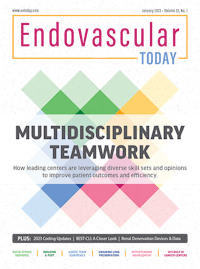
Although the concept of collaborative multidisciplinary approaches to patient care is neither new nor specific to vascular disease, the trend toward building dedicated teams across our specialties continues to gain traction in the field, with good reason. The benefits of team-based approaches are countless, most notably the diversity of expertise and skill sets they provide.
To be effective enough to meet its promise, a team must achieve a balance that takes time, patience, humility, and empathy. This process begins with understanding that a patient’s unique needs are likely to exceed any single physician’s own knowledge and abilities and seeking out colleagues who can fill the voids to ensure optimal, durable outcomes.
Barriers to a team’s effective formation and function include resource availability and allocation (human and otherwise), as well as a natural learning curve. Fortunately, some elements of this curve can be substantially reduced via shared experiences with established teams and exposure to how a predicate group is built and operates.
With this in mind, we’ve asked members of leading teams from the head to the toe of vascular conditions to share best practices, insights into their dynamics, and unique opportunities for next-generation collaborations. Even if we do not personally treat the conditions discussed, each contains valuable insights applicable to other teams.
Opening our feature, the esteemed group from University at Buffalo Neurosurgery shares its hybrid approach to stroke care in detail. Continuing the thread of emergent conditions, Dr. Rachel Rosovsky leads a panel of early adopters to the PERT (pulmonary embolism response team) concept, with insights into clearing administrative hurdles, finding willing partners, and what they wish they’d known at the outset.
Next, Dr. Patrick Geraghty describes the unique composition of the multidisciplinary Limb Preservation Program at Washington University in St. Louis, taking a protocol-driven, longitudinal approach to patients throughout the spectrum of chronic limb-threatening ischemia (CLTI) care.
Comprehensive aortic teams are essential in a region’s ability to treat a variety of pathologies, including dissection, rupture, and complex aneurysms. We’ve asked a panel of experts to discuss the training needed, importance of maintaining facility with open and endovascular approaches, and how to keep radiation exposure to a minimum in long and complicated cases.
The profile of interventional oncology (IO) continues to rise within the dynamic and wide-ranging field of cancer treatment. Dr. Alda Tam describes how IO teams can work with oncologic colleagues and others to ensure their capabilities are understood and utilized.
Finally, Dr. Florian Rader explores new opportunities for interventionalists in the field of hypertension management, as clinical trials continue to evaluate renal denervation and other potential approaches to uncontrolled hypertension.
Elsewhere in this edition is a focus on the emergence of renal denervation for resistant hypertension, with contributions focusing on modern device platforms by Dr. Tai Kobayashi and summaries of recent data by Drs. Anna Krawicz and Eric Secemsky.
In addition to the cover stories on Team Approaches, the Endovascular Today editors have assembled features on the BEST-CLI trial, including new insights from the principal investigators, as well as critiques from key vascular and endovascular specialists, each of which carry the theme of multidisciplinary collaboration.
The turn of each calendar year brings with it new reimbursement codes for United States-based procedures. Coding expert Kathy Krol, MD, once again shares her practical insights into how best to apply those being introduced or modified in 2023.
An interview with vascular surgeon Katharine McGinigle, MD, closes this edition, with discussion centered on the potential for precision medicine in CLTI, tailored approaches to reaching and treating more patients across populations, and the importance of personal support systems.
Working within a variety of dedicated care teams has been among the most productive and rewarding parts of each of our careers to date. We encourage every reader to build partnerships both within and outside their specialties and continue this trend toward patient-centered care, and we look forward to learning from each of your progress.
Anahita Dua, MD, MBA, MSc
Eric A. Secemsky, MD, MSc, RPVI, FACC, FAHA, FSCAI, FSVM
Guest Chief Medical Editors
Advertisement
Advertisement