Advertisement
Advertisement
July 2023 Supplement
Sponsored by The PERT Consortium™
Artificial Intelligence and Acute Pulmonary Embolism
Is AI a transformative game-changer or just a lot of hype?
By Kenneth Rosenfield, MD, MHCDS, and Patrick E. Muck, MD, RVT, FACS
Artificial Intelligence (AI) has exploded into our world over the recent past, with applications in industry, commerce, education, finance, and government that are poised to change the landscape in every one of these areas. Virtually every sector of our economy and social systems will be impacted, and medicine is no exception. Although AI platforms are among the most rapidly developing technologies worldwide, one of its major challenges—aside from that of developing the technology itself—is determining the ideal way to integrate it into the fabric of our existing systems.
The role of AI in medicine is extremely promising. Medicine is in many ways far behind the corporate community in its ability to streamline systems, optimize efficiency, reduce waste, eliminate errors (human and otherwise), ensure consistency (eg, reduce unnecessary variation), collect data and utilize those data to alter/improve processes and behaviors, and obtain “feedback” from consumers. AI holds promise to dramatically improve our capability and performance of all of these operational and informational spheres.
SPECIFIC CHALLENGES OF PE AND UNIQUE ABILITY OF AI TO ADDRESS THEM
Pulmonary embolism (PE) is a pervasive, life-threatening condition. Despite its ubiquity, the evidence-based guiding management of PE lags far behind that of acute myocardial infarction (MI) and stroke, which are two conditions with similar, if not higher, prevalence and mortality. The evidence gap and dire outcomes from PE are attributable in part to the unique challenges presented by PE (Table 1). Application of AI, with its machine learning (ML) and associated automation and applications, offers opportunity to address each of these unique challenges.1-3
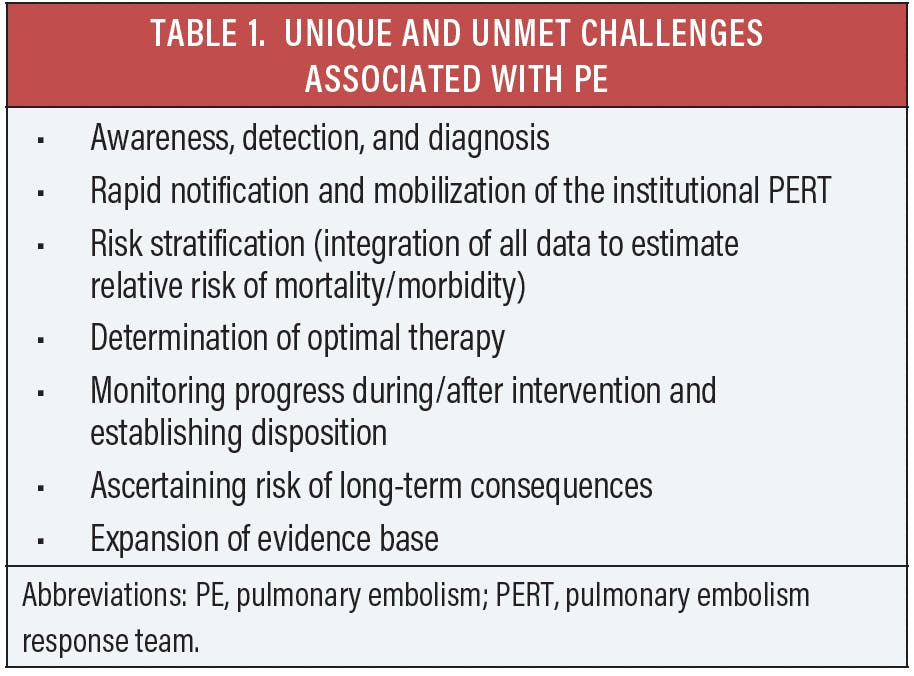
Awareness, Detection, and Diagnosis
Known as the “great masquerader,” PE can be extremely challenging to recognize and diagnose. Patients with PE can present with symptoms that mimic acute MI, heart failure, syncope from arrhythmia, pneumonia, flu, asthma, panic attack, depression, or any other number of medical conditions. Establishing the diagnosis of PE first requires that the clinician include it in the differential diagnosis, yet often clinicians do not even consider PE as a potential cause of a patient’s symptoms.
AI can play a tremendous role in facilitating diagnosis. AI programs can integrate clinical and historical information obtained from the chart and the clinician, and algorithms enhanced by ML can rapidly assess the probability of PE as a diagnosis. Imaging algorithms for CT pulmonary angiography (CTPA) scans, perfected and validated by AI companies, are remarkably accurate in establishing the presence of a PE. What’s more, the analysis that establishes the diagnosis occurs in the background, virtually simultaneously with image acquisition. AI algorithms provide information regarding the size, location, and other aspects of the embolus. They also hold the potential to define the various components and age of the thrombus and the overall thrombus burden. FDA-approved AI programs also can quantify CT-derived right ventricular/left ventricular (RV/LV) ratio more accurately and consistently than measurements made by individual physicians. Integration of echocardiographic findings, interpreted by AI algorithms based on ML, can further enhance diagnostic accuracy for detecting PE. Parameters from the echocardiogram include RV/LV ratio, RV overload/strain, underfilling of the left ventricle, presence of a dilated pulmonary artery, patent foramen ovale, and other relevant cardiac pathology, all of which can influence therapeutic decision-making. By rapidly identifying PE, the decision-making clinicians and/or the PE response team (PERT) can be quickly notified, even before a radiologist interprets the scan.
Equally important to the role of AI in “facilitating” the diagnosis is the avoidance of “missing” the diagnosis. AI algorithms have been shown to be more sensitive and accurate than humans in detecting PE. This is a reflection of the consistency and systematic nature of the automated interpretations based on ML.
Rapid Notification and Mobilization of Institutional PERT
Early and automated identification of a PE, accomplished through AI-powered analysis of both images and certain clinical data, enables rapid notification of the institutional PERT. Speedy mobilization driven by these AI solutions can facilitate prompt evaluation and decision-making, potentially improving outcomes and saving lives. To optimize the utility of AI-based detection of PE, companies have developed mobile phone apps to work in conjunction with their AI programs (Figure 1). These apps further enhance communication among medical team members. Practical features of these apps include instantaneous notification of selected team members who are on call, a platform for communication between clinicians, and the capability to share images and other clinical information in a HIPAA-compliant environment. Combining early detection, rapid PERT alert, speedy dissemination of information, and a ready communication tool can lead to significant reduction in time to treatment. One recent study demonstrated reduction in “time to procedure” from 202 to 55 minutes after implementing an acute stroke AI program.4 Similar reductions can be expected with AI for PE.
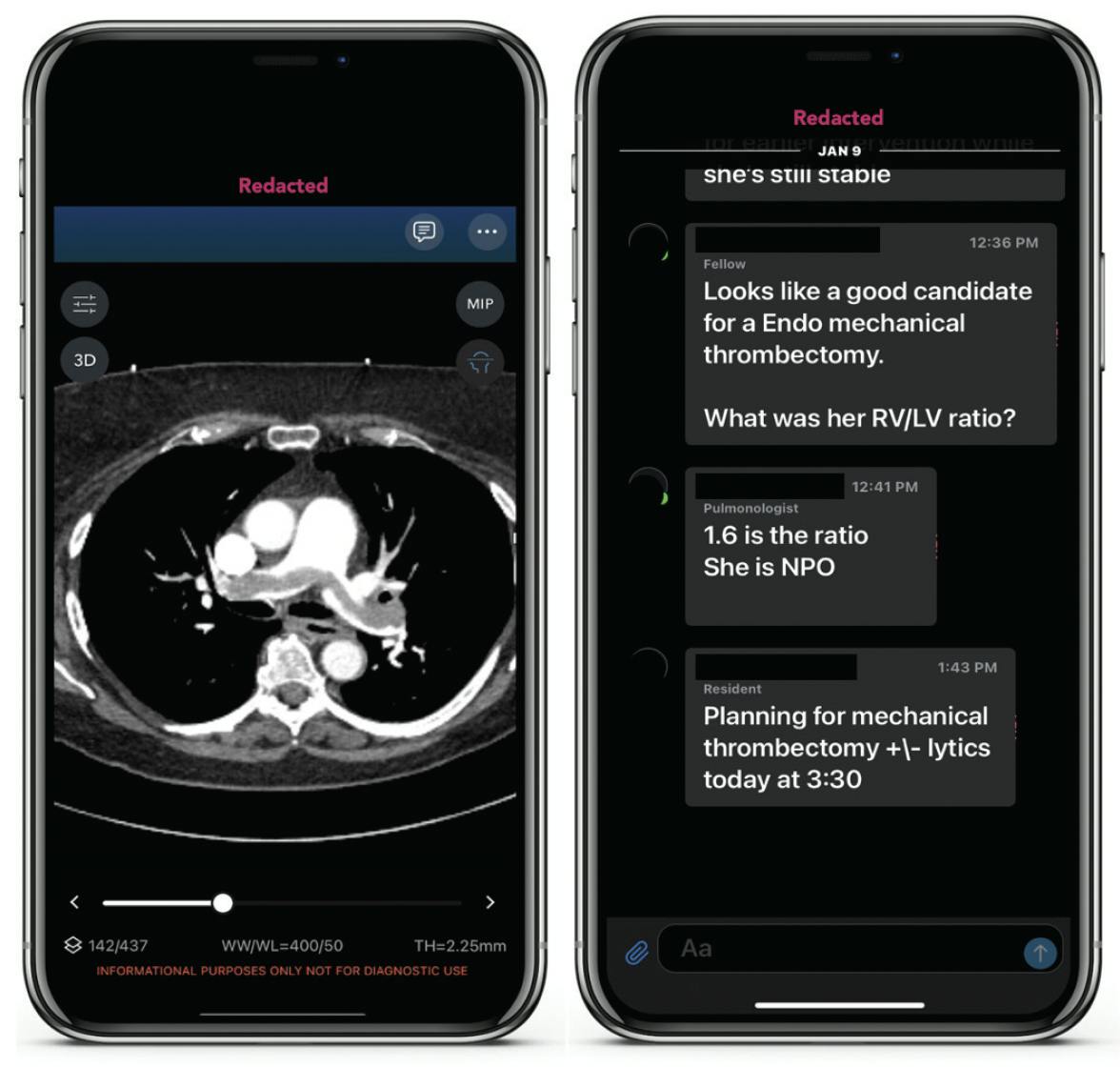
Figure 1. Case example showing an academic PERT utilizing AI PE technology and phone app to coordinate care.
Risk Stratification
Risk stratification is the integration of all data to estimate relative risk of mortality/morbidity. Making sense out of the multiple predictors and risk calculators for acute PE, such as the Pulmonary Embolism Severity Index (PESI), simplified PESI (sPESI), PERC rule, Wells criteria, Geneva score, and Hestia criteria, and using them to triage patients appropriately is one of the more controversial and challenging aspects of PE care. The multiple different approaches lead to variability in the care of acute PE. AI programs can integrate all potentially relevant data (even parameters not ordinarily considered to be relevant) and—with application of ML and analysis of treatment and outcomes—inform the “precision” management of individual patients. Ultimately, collection of data and outcomes will allow for establishment of better risk stratification tools.
Determination of Optimal Therapy
Which acute PE patients require escalation of therapy (eg, catheter-based or surgical intervention)? On this issue, there is tremendous variation among practitioners. By utilizing ML to process all available data, AI promises to ultimately identify which patients should have advanced therapy and which advanced therapy is most likely to lead to a good outcome.
Monitoring Progress During/After Intervention and Establishing Disposition
Certain programs may enable intercalation and ongoing automated analysis of clinical data “in the background” throughout the entire hospital course. Such programs are already in use for intensive care unit (ICU) patients, helping to determine whether and when care can be safely deescalated and, conversely, when patients are deteriorating and, for example, require early intubation or other intervention. These programs are more accurate, consistent, and timely than physician assessment. Similarly, through ML, AI algorithms can recognize patterns in patients with acute PE that might indicate either expected improvement or worrisome deterioration requiring additional measures. The same ongoing automated analytics may assist in establishing personalized disposition for each patient with PE.
Ascertaining Risk of Long-Term Consequences
The long-term consequences of acute PE are not well understood. Although the incidence of chronic thromboembolic pulmonary hypertension (CTEPH) is said to be approximately 5%, a substantial percentage of patients develops chronic thromboembolic disease (CTED) and remains partially disabled. Each individual patient’s “PE journey” is unique. That said, by acquiring information regarding the clinical course of tens of thousands of acute PE patients, AI and associated ML can provide insight into each individual’s likelihood of developing longer-term consequences. We also may glean information about the prevention of CTEPH or CTED.
Expansion of Evidence Base
One of the most important aspects of AI programs is the promise to assimilate data in an ongoing fashion and subsequently coalesce those data to expand the evidence base for PE to inform the field. The resulting data analyses will result in better care standardization and more informed decision-making in the management of PE. The data gleaned will be automatically entered into the PERT Consortium™ PE Registry and utilized to inform the next wave of guidelines.
CONCLUSION
There exists great synergy between AI technology and their associated apps and the PERT multidisciplinary team-based approach to PE management. Along with PERTs, AI platforms will clearly change the paradigm of care for PE in the very short term. Just as is the case with stroke care, institutions caring for patients with acute PE will need to be outfitted with AI technology. Given the ability to analyze CTPAs, echocardiograms, and electrocardiograms in a matter of seconds, AI will play a vital role in PE care to identify critical cases and facilitate timely review by the appropriate specialists. The seamless integration provided by AI programs and mobile phone apps will enable clinicians to streamline communication, optimize resource allocation, and provide targeted and individualized care to patients in need. AI also offers the potential to optimize risk stratification algorithms, therapy selection, monitoring, and outcome assessment. Finally, as AI technology continues to advance, the synergy between AI and PERTs promises even more substantive advancements in PE care. ML, deep learning, and natural language processing are expected to refine AI algorithms further, enhancing accuracy, efficiency, and personalized care.
As we continue to explore the frontiers of AI in medicine, it will be imperative to foster collaborations among industry leaders, researchers, and health care institutions. By combining this collective expertise, we can collectively harness the full potential of AI to transform patient care, improve outcomes, and shape the future of health care.
1. Mustafa K. Real-world validation of a deep learning AI-based detection algorithm for suspected pulmonary embolism. Presented at: American Roentgen Ray Society (ARRS) Annual Meeting; April 16-20, 2023; Honolulu, Hawaii.
2. Li X, Wang X, Yang X, et al. Preliminary study on artificial intelligence diagnosis of pulmonary embolism based on computer in-depth study. Ann Transl Med. 2021;9:838. doi: 10.21037/atm-21-975
3. Wildman-Tobriner B, Ngo L, Mammarappallil JG, et al. Missed incidental pulmonary embolism: harnessing artificial intelligence to assess prevalence and improve quality improvement opportunities. J Am Coll Radiol. 2021;18:992-999. doi: 10.1016/j.jacr.2021.01.014
4. Froehler MT, Saver JL, Zaidat OO, et al. Interhospital transfer before thrombectomy is associated with delayed treatment and worse outcome in the STRATIS registry (systematic evaluation of patients treated with neurothrombectomy devices for acute ischemic stroke). Circulation. 2017;136:2311-2321. doi: 10.1161/CIRCULATIONAHA.117.028920
IMPLEMENTING AI INTO THE PERT WORKFLOW: ONE INSTITUTION’S EXPERIENCE
Dr. Patrick Muck, Section Chief of Vascular Surgery at Good Samaritan Hospital in Cincinnati, Ohio, answers questions regarding his personal and institutional experience with PERT and AI.
Dr. Rosenfield: Can you tell us about the institutional PERT at Good Samaritan? How long has the team-based approach to PE been in place, which specialties are involved, and who is leading the initiative? On a monthly basis, approximately how many PEs does the Good Samaritan PERT evaluate and manage? What percentage of your intermediate- to high-risk PE patients do you estimate receive advanced therapy (ie, intervention or lytic therapy)?
Dr. Muck: Our Good Samaritan PERT was created in December 2012. Our vascular surgery team met with Dr. Christopher Hayner, our Director of the Medical Surgical ICU. We collaborated then as we do now, and here we are over a decade later! PERTs are different all across the country. Our team consists of pulmonologists, critical care physicians, cardiac intensivists, radiologists, cardiothoracic surgeons, internal medicine, cardiologists, and vascular surgeons. Our trainees from all disciplines are involved with every patient. On average, our institution sees a total of 50 to 60 PEs per month, and our PERT evaluates and manages over 25 intermediate- to high-risk PE cases per month. Approximately 75% of our intermediate- to high-risk PE patients per month receive advanced therapies, such as catheter-based interventions or lytic therapy.
Dr. Rosenfield: When did you acquire your AI program for PE, and what compelled you and your colleagues to pursue this?
Dr. Muck: We implemented Viz PE (Viz.ai) for PE patients at Good Samaritan in 2022. Dr. Chris Hayner, an incredible pulmonary/critical care physician, led the AI movement for us here at Good Samaritan. We were motivated to pursue this technology due to its potential to enhance our communication, improve treatment decision-making, and enhance risk stratification.
Prior to that time, the process was decent but not ideal. We worked with multiple different service lines in series, rather than in parallel. This resulted in us relying on the luck of the draw—whoever happened to be available got to chime in. The communication was poor, as it was hard to coordinate call schedules, cell phone numbers, pagers, etc. We realized that we needed a change.
The impact of the AI technology was almost immediate. Within the first week, we saw our time-to-treatment decision drop considerably. The first message sent on the app started at 7:52 PM and the last message was at 7:58 PM. In < 10 minutes, we had a pulmonologist, an intensivist, a vascular fellow, and a vascular attending reaching consensus. It was the first time that had ever happened so quickly, and we were hooked. All this information on your phone—quick, easy, and with incredible CT imaging resolution.
Dr. Rosenfield: How did you and your colleagues go about implementing the AI program and integrating it into your existing PERT processes?
Dr. Muck: We worked closely with the vendor to integrate the software seamlessly into our PERT workflow. The implementation of the AI program involved a collaborative effort among our team members, our hospital administration, and our radiology administrators.
Implementation included training our staff, configuring the system to align with our workflow, ensuring that the right members of the team were added to the app, and the data exchange between the cloud-based data storage and our computer system.
Dr. Rosenfield: What is the general impression of the PE-AI program at Good Samaritan?
Dr. Muck: Overall, the general impression of the program at Good Samaritan has been very positive. Our team members have found it to be a valuable tool in aiding diagnosis, facilitating prompt decision-making, and improving the overall efficiency of our PERT.
In fact, my partner, Dr. Adam Richard, and Dr. Jake Shapiro, our integrated vascular surgery chief resident, will be showcasing “The Use of Artificial Intelligence Technology in the Detection and Treatment of Pulmonary Embolism” at an upcoming podium presentation at the Midwestern Vascular Surgical Society (MVSS) meeting. We found a nearly 50-minute improvement in the time to diagnosis with AI compared to pre-AI. This results in quicker triage and quicker time to anticoagulation for our patients. We know from PERT Consortium™ data that mortality is related to delay in anticoagulation.
Dr. Rosenfield: Has AI changed the PERT process at Good Samaritan? In what ways?
Dr. Muck: Yes, incorporating AI has brought significant improvements to the PERT process at Good Samaritan. It has expedited the diagnostic phase by providing the important patient data such as vitals and laboratory work. In addition, the program rapidly analyzes imaging studies—including RV/LV ratio and embolus location—and then allows for real-time collaboration. All team members can communicate seamlessly. Those of us on call for the day log on and we participate in a HIPAA-compliant group text for each individual PE patient. This has allowed us to initiate appropriate interventions and treatment plans more efficiently, resulting in improved patient care and outcomes.
Just last week, there was a patient in her mid 90s who presented to the emergency department with shortness of breath. The AI app showed that she had a bilateral PE. Within minutes, pulmonology, intensive care, and internal medicine were all on the same page on pursuing anticoagulation alone because they had her clinical record, her history, and her wishes.
Recently, we had a patient in her early 70s who presented with a saddle PE. The AI app allowed for quick risk stratification, communication, and triage, all on my iPhone. No longer do I to run home or have to bring my laptop wherever I go. In just 1 or 2 minutes I can look on my phone and communicate with Dr. Hayner and our PERT. This patient had a high-intermediate–risk PE with elevated biomarkers, a RV/LV ratio of 1.6, and contrast refluxing into the hepatic veins. We treated her in < 1 hour with the Indigo aspiration thrombectomy system (Penumbra, Inc.). She went home 48 hours later. We were able to risk stratify, communicate as a team, and offer fast-tracked treatment because of AI.
Dr. Rosenfield: Although it may be too early to assess, what is your impression of the specific impact of PE-AI to date on the following: (1) speed of diagnosis, (2) accuracy of diagnosis, and (3) time to PERT activation?
Dr. Muck: We have observed positive impacts in multiple areas. Firstly, it has notably accelerated the speed of diagnosis by rapidly identifying PE cases. Second, it has enhanced the team’s ability to communicate and collaborate from anywhere. Finally, it has contributed to reduced time to PERT activation, allowing us to initiate interventions promptly when necessary.
Dr. Rosenfield: How has the PE-AI phone app impacted the following: (1) activation process, (2) communication among team members, (3) transfer of images and other information, and (4) time to intervention and coordination of care?
Dr. Muck: The PE phone app has significantly impacted various aspects of our PERT. First, it has streamlined the activation process by providing immediate access to imaging and patient clinical information, enabling faster decision-making. Second, it has improved communication among team members through real-time information sharing and collaboration within the app. Last, it has contributed to shorter time to intervention when appropriate and improved coordination of care.
Dr. Rosenfield: How has PE-AI affected accuracy of diagnosis, efficiency of response, and overall quality and/or safety?
Dr. Muck: PE-AI has positively influenced the accuracy of diagnosis, as it assists our team in detecting subtle signs of PE and provides valuable diagnostic information. It also allows us to automate and review the RV/LV ratio in real time. It has improved the efficiency of our response by reducing the time taken for diagnosis and treatment planning. Overall, the integration of AI has enhanced the quality and safety of our PE care.
Dr. Rosenfield: What do you see as other potential benefits of AI in PE?
Dr. Muck: “AI triage” is just one step in the process. The real change-maker is the ability to communicate with the team in real time on the same platform. Cross-functional collaboration is key to optimizing treatment strategies.
Additionally, AI has the potential to contribute to clinical research trial screening, ultimately improving our overall understanding of PE and future therapies.
Dr. Rosenfield: Are there any concerns you have about PE-AI? How might you further improve the programs… is there anything you would like to see altered?
Dr. Muck: Although PE-AI has shown great promise, we acknowledge the need for ongoing evaluation and refinement. Feedback from our team and continued collaboration with the AI provider are crucial to improving the program and ensuring its optimal use in our PERT. I’d like to see risk scores integrated into the app. We’ve found the AI vendor to be incredibly responsive and collaborative in these efforts.
Dr. Rosenfield: Overall, are you and your colleagues and administrators happy with your decision to implement PE-AI at Good Samaritan?
Dr. Muck: Both our team members and administrators are extremely pleased with the decision. We witnessed an immediate positive impact on our PE care and believe it has significantly improved our patient outcomes.
Dr. Rosenfield: What advice do you have for other institutions… is there a value to having a PERT? Does PE-AI augment the effectiveness of PE care?
Dr. Muck: Our strong advice to other institutions would be to establish a PERT, as it brings together multidisciplinary expertise and improves coordination of care in PE cases. Furthermore, the integration of PE-AI can augment the effectiveness of PE care by providing timely and accurate insights, enabling faster decision-making and optimized patient management.
Dr. Rosenfield: What excites you most about PE-AI? What is the biggest potential advantage, in your opinion?
Dr. Muck: The most exciting aspect of PE-AI its ability to establish the right level of urgency for the patient’s need. This speed and accuracy can significantly impact patient outcomes by ensuring timely interventions and appropriate treatment plans.
Dr. Rosenfield: What do you see as the future for PE care, and does it include PE-AI?
Dr. Muck: The future of PE care is very promising, and we strongly believe that AI will play a crucial role. With further advancements, we anticipate AI to become an integral part of diagnostic and treatment strategies, revolutionizing how we manage PE and improving patient care on a broader scale. The American Heart Association recently came out with a guideline recommending that all stroke centers include an AI triage platform. I think the same will soon be said for PE. AI triage and care coordination for PE will become standard of care.


Advertisement
Advertisement