Advertisement
Advertisement
July 2023
An Interview With Naseer Ahmad, BSc(Hons), MBChB, FRCS, MD, PgD
Dr. Ahmad shares the setup and current projects of the Manchester Amputation Reduction Strategy and its role in addressing health care inequities, thoughts on unmet needs in diabetic foot ulcers, his work with the Greater Manchester Aneurysm Screening Programme, and more.
A defining aspect of your career is an interest in health inequities, particularly surrounding lower limb amputation. What experiences directed your path to this focus?
Before I went into medicine, I worked in academic public health, where tackling inequalities was the core of our work. I worked on a couple of national projects that showed me the potential of change and working at the strategic level. This initial passion continued after I entered into medicine. I decided to look into amputation inequalities because lower limb peripheral artery disease was my area of specialty. I did a large data analysis of 100,000 amputations and 350,000 revascularizations over a 10-year period across England. Here, I analyzed the data myself (my database had > 1,000 columns and 90 million rows) and published on the regional, gender, ethnic, and diabetes inequalities.1
The culmination of your work in this area is the Manchester Amputation Reduction Strategy (MARS). How do you introduce MARS to other physicians/stakeholders (ie, what is your “elevator pitch”)?
This depends on who I’m talking to! When I speak to clinicians, I talk about the clinical benefits of amputation reduction; when I talk to finance, I talk about the financial benefits; when I talk to strategy, I speak about how reducing amputations plays into wider system changes; when I speak to commissioners, I speak about inequality.
For vascular surgeons, I would say something like, “MARS is a ‘whole-systems’ approach to reducing amputations—working across public health, community, and hospital services to harmonize lower limb ulcer pathways to support and reduce patient flow into the vascular hub.”
Tell us more about the “whole-systems” analysis that informs MARS. What does this approach entail, and how has it helped address health inequities?
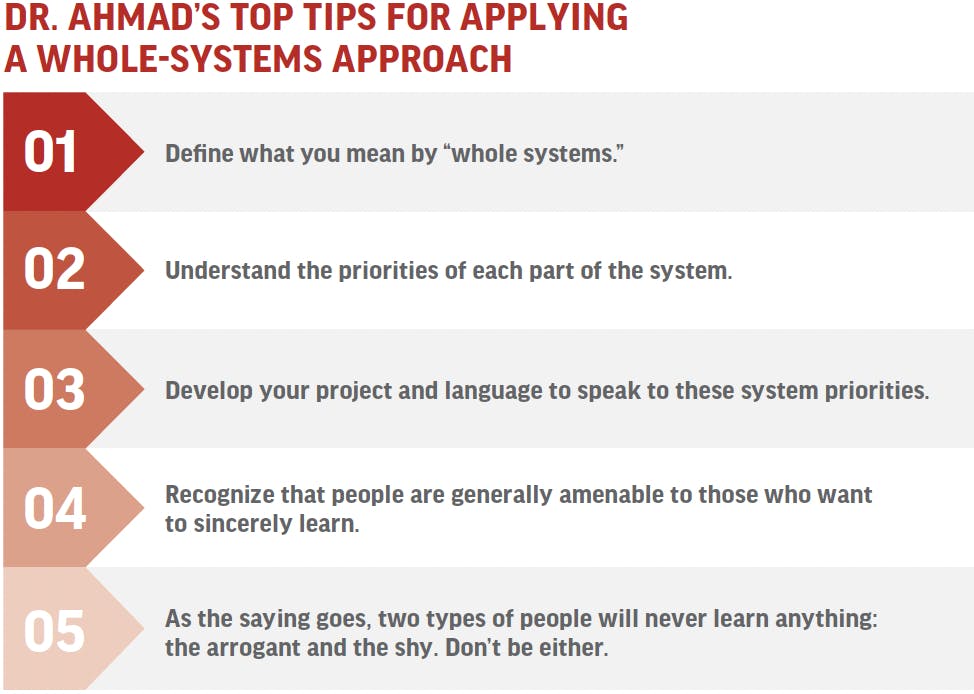
My definition of “whole systems” is working across public health, community, hospital, finance, digital, and academia. A key idea is that sustainable clinical change is only possible with cultural change, and both must go hand in hand. As change occurs through the “aggregation of marginal gains,” every person and every system has a part to play. My role is to bring everyone onto the same page so they understand the clinical problem and potential solutions and then let the magic happen.
Bringing everyone on the same page means I had to learn to speak the language of commissioning, finance, nursing, podiatry, strategy, and digital. I already knew how to “speak” vascular and academia but had to learn about a whole new area of implementation science. I think what is unique about MARS is that it does the hard thing of bringing disparate people together to solve a common problem they understand (ie, amputation).
Can you give us a preview of any in-progress MARS projects and next steps?
The headline MARS output is that in our main pilot area, which has a population of 220,000, we reduced lower limb amputations by 42%, with a population rise of 15.4%. This is in contrast to a regional reduction in amputations by 21% and a 6.9% population rise. We have therefore outperformed the region by doubling the amputation reduction with a doubling of the population, without employing a single extra person.
MARS is now four projects:
- Move more—linking public health services to clinical pathways
- Reduce inequality more—removing variation in provision, access, and outcome of community podiatry and leg ulcer services
- Diagnose more—improving capacity and confidence of community nursing and podiatry teams to perform noninvasive vascular diagnostics
- Make every contact count more—using existing infrastructure to diagnose more conditions of public health concern
The MARS program involves not only team members from other specialties but also collaboration with public health and community representatives. How do you foster collaboration and communication among these distinct groups?
I’m often asked this question: How do you bring so many people together and sing from the same hymn sheet? The answer is always far simpler than people realize.
You just go and make an appointment to speak to them, listen to their priorities, and challenges, and then work out the “win-win” for everyone. There’s no magic formula. It’s all about having a chat over a cup of tea. It really is as simple as that!
What role can technology and/or artificial intelligence (AI) play in your amputation reduction strategy?
There is no single “widget” that will reduce amputations magically. It’s about the aggregation of marginal gains—a thousand little things that need to happen to allow the big clinical measure to change. The secret to sustainable change is having people who are motivated and dedicated. Get this right and any tool will improve things.
That said, AI and technology are crucial for communication and guiding decision-making; this is an important step in the middle of a hundred little steps.
What are the biggest unmet needs related to diabetic foot ulcers, which you specialize in?
One of the biggest unmet needs is foot ulcers in patients who do not have diabetes. Half of all major amputations and one-third of minor amputations are in people who do not have diabetes. This inequality is because podiatry services are set up for people with diabetes and often deny access to these patients without. This equality of access must be addressed or we will only have half a solution to reducing amputations. We currently have a system where podiatrists are wishing diabetes on their patients so that they can get access to services. How can this be right?
You are also Clinical Director of the Greater Manchester Aneurysm Screening Programme. What efforts have you found to be successful in getting the word out about the screening? And, what results have you seen since implementing the program?
We are lucky in that the program has an uptake of around 80% participation, and this increases to around 90% if you engage with the community and nonattenders. What we find is that in areas of high deprivation or with a high proportion of ethnic minorities, response rates are much lower. We are therefore developing community-based programs to raise awareness of the aneurysm screening program to increase attendance. We will know the results over the next year or two, but preliminary data are very promising.
On top of these leadership roles, you also have a robust clinical practice. How do you balance your clinical work with your managerial work?
My working week is split into approximately 3 days of clinical practice and 2 days of managerial work. The only way I am able to balance my numerous roles is by having incredible teams, both in aneurysm screening and MARS, that are fiercely passionate and incredibly talented. My role with these teams is generally to get out the way and let them to do their work. I think it is important for a clinician and leader to have a foot in both worlds because both provide stimuli and balance to life.
If you weren’t a physician, what profession could you see yourself enjoying?
This is a really difficult question, and I love where I am in my life right now! My path into medicine was not normal. I did not learn to speak until I was 5 years old, I got a grade U in General Certificate of Secondary Education maths, and a DEE at A Level! I generally didn’t do well in any of my exams, and there are many reasons for this. However, by becoming focused, I went on to do medicine and become a surgeon with three degrees! If I lost it all tomorrow, I would still want to do a job that brought people together around a common cause and hope for a better tomorrow. What that would exactly be, I don’t know right now!
1. Ahmad N, Thomas GN, Gill P, Torella F. The prevalence of major lower limb amputation in the diabetic and non-diabetic population of England 2003-2013. Diab Vasc Dis Res. 2016;13:348-53. doi: 10.1177/1479164116651390
Advertisement
Advertisement
Interested in reading more interviews?
To read more interviews with thought leaders in the vascular field, check out our Profiles & Perspectives hub.
Read More