Advertisement
Advertisement

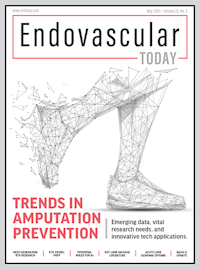
In spring, a regular fixture in Endovascular Today for more than a decade has been a May issue with specific attention to critical limb ischemia (CLI)/chronic limb-threatening ischemia (CLTI), and I am honored to be the Chief Medical Editor of this year’s issue once again.
We start off with a literature review of the BASIL-2 results recently published in The Lancet. Anahita Dua, MD; Eric A. Secemsky, MD; Ramon L. Varcoe, MBBS; and the undersigned then comment on the biggest takeaways from the study, how to apply the results of BEST-CLI and BASIL-2 studies to real-world practice, important differences between the two studies, and key remaining questions.
One of the main topics of discussion over previous years has been the use of vessel preparation. This has become more important with the advent of drug-coated balloon therapy and a continuous effort to avoid stenting, especially in the femoropopliteal segment. We continue our cover focus with a roundtable discussion in which Michel Bosiers, MD; John H. Rundback, MD; Sabine Steiner, MD; and Daniel A.F. van den Heuvel, MD, provide their views on vessel preparation for below-the-knee (BTK) procedures and how this differs from their approach in the superficial femoral and popliteal arteries.
Then, a contribution by the undersigned provides an update on new endovascular options for the treatment of acute limb ischemia (ALI), as well as a brief recap of the 2020 European Society for Vascular Surgery guidelines for ALI. Although this is not a CLI/CLTI-related topic in the strict sense, it is a worthwhile discussion in this issue because ALI is still a major cause of amputation.
Recently, big advancements have been achieved in the management of CLI/CLTI patients and wound care. Despite this, too many amputations still occur and therefore the field must be advanced even further. In a second roundtable, Carlos Mena-Hurtado, MD; Kim G. Smolderen, PhD; Mark J. Portou, PhD; and Samantha D. Minc, MD, share insights into what is needed in BTK disease research, as well as what the future may (and should) bring.
It is well known that the prevalence and natural history of CLI/CLTI as well as outcomes of treatment are characterized by the presence of significant racial and gender disparities. A less known factor is the existence of a difference in response to antiplatelet therapy in women with peripheral artery disease (PAD). In a literature review of her recent study in Annals of Vascular Surgery, Anahita Dua, MD, and Monica Majumdar, MD, explore this topic and provide some indications of more intense monitoring of antiplatelet therapy efficacy to tailor pharmacotherapy after revascularization for PAD and CLI/CLTI.
The role of artificial intelligence (AI) in medicine is rapidly increasing. Early applications have focused more on diagnosis and less on implementation in the therapeutic field. Given the complexity of CLI/CLTI patients—with a highly variable clinical status, presence of comorbidities, wound status, etc—it seems logical to look for possibilities to augment the quality of care for CLI/CLTI patients and thus improve outcomes by using AI. We close out our cover focus with an overview by Elsie Gyang Ross, MD, of the current status and future potential (and pitfalls) of AI in CLI/CLTI.
An interview with F.A. Klok, MD, concludes this issue, in which he offers insights into the necessity for routine use of patient-centered outcome measures for venous thromboembolism and how that ties into post–pulmonary embolism syndrome, research into cancer-associated thrombosis, and more.
Jos C. van den Berg, MD, PhD
Guest Chief Medical Editor
Advertisement
Advertisement