Advertisement
Advertisement
November 2023 Supplement
Sponsored by Surmodics, Inc.
A Meeting of Radial Revolutionaries
For a select group of radial-to-peripheral pioneers, September 11-12 marked a turning point.
From 2007 to 2018, United States coronary procedures via radial access surged from 1% to 50%,1,2 driven by evidence demonstrating greater patient safety compared with the femoral approach.3 Now, devoted “radial revolutionaries,” equipped with a growing toolkit, are poised to drive rapid adoption for radial-to-peripheral procedures on behalf of their patients. But first, they need to band together and spark a movement.
That was the message from the course directors and guests at the first Radial Revolution conference, held September 11-12, 2023, in Minneapolis, Minnesota. The event, sponsored by Surmodics, brought together radialists from across the country for 2 days of case sharing (including live cases, next page) and intensive interaction on best practices.
Underlying the informal meeting was a tangible sense of urgency.
“There are few technologies out there that save lives,” said Dr. Imraan Ansaarie of St. Augustine, Florida. “We all know that groin complications can result in mortality. That, to me, means the world—if one life is saved because we did a radial case rather than a groin case.”
Addressing fellow radialists, he said, “We are a community and we have to stick together.”
MAKING HISTORY
In opening remarks, Course Co-Director Dr. Paul Michael of Boynton Beach, Florida, urged physicians to make history together by taking ownership of the radial-to-peripheral movement to benefit patients and advance the field of peripheral vascular interventions.
“How many of you remember controversies in spaces like carotid, bypass, PCI, ultrasound versus fluoro guidance, to do CTO intervention or not?” Dr. Michael said. “Do you know what these controversies were really about? Not being able to have a conversation. That’s what this movement is about.”
JOIN THE MOVEMENT
Surmodics is dedicated to supporting the Radial Revolution for peripheral interventions. Visit www.radialrev.com to register for upcoming #RadRev case-presentation webinars, regional peer-to-peer training, #RadRev regional meetings, and the September 2024 Radial Revolution event. Physicians, nurses, technicians, and all others interested in learning about radial-to-peripheral advancements and best practices are encouraged to participate.
GOING BELOW THE KNEE—WITH CONFIDENCE
The event’s live cases demonstrated the capabilities of today’s radial-to-peripheral toolkit for successful treatment above and below the knee.
In the first live case, broadcast from the Cardiovascular Institute of the South (Houma, Louisiana), Course Co-Director Dr. Pradeep Nair performed a transradial case—from access to closure—involving delivery of a radial cocktail followed by revascularization of the mid-superficial femoral artery using intravascular ultrasound imaging, laser atherectomy, and balloon angioplasty.
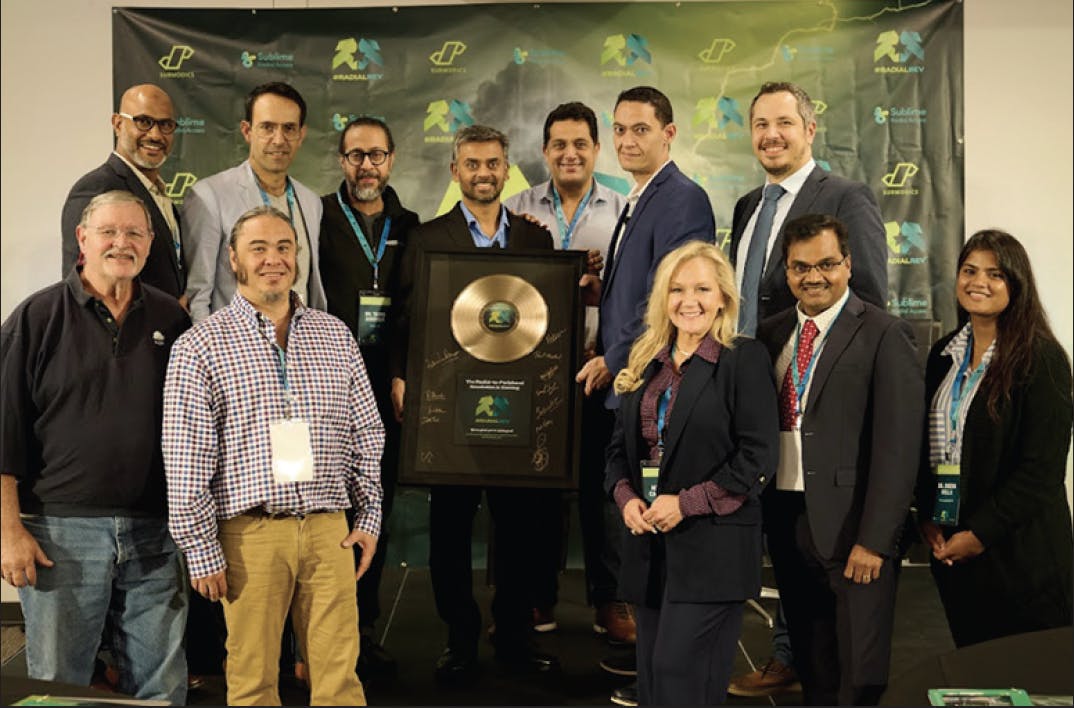
Sparking a movement. Radial-to-peripheral revolutionaries in attendance included (back row, left to right) Dr. Imraan Ansaarie, Dr. Babar Ali, Dr. Tariq Siddiqui, Dr. Ankur Lodha, Dr. Abdul Saadi; Dr. Paul Michael, Dr. Sameh Sayfo; (front row, left to right) Bob Kelly, David Cook, Merikay Campbell, Dr. Rakesh Shah, Dr. Sneha Kolla. Not pictured: Dr. Pradeep Nair, Dr. Ramzan Zakir, Dr. Mac Ansari.
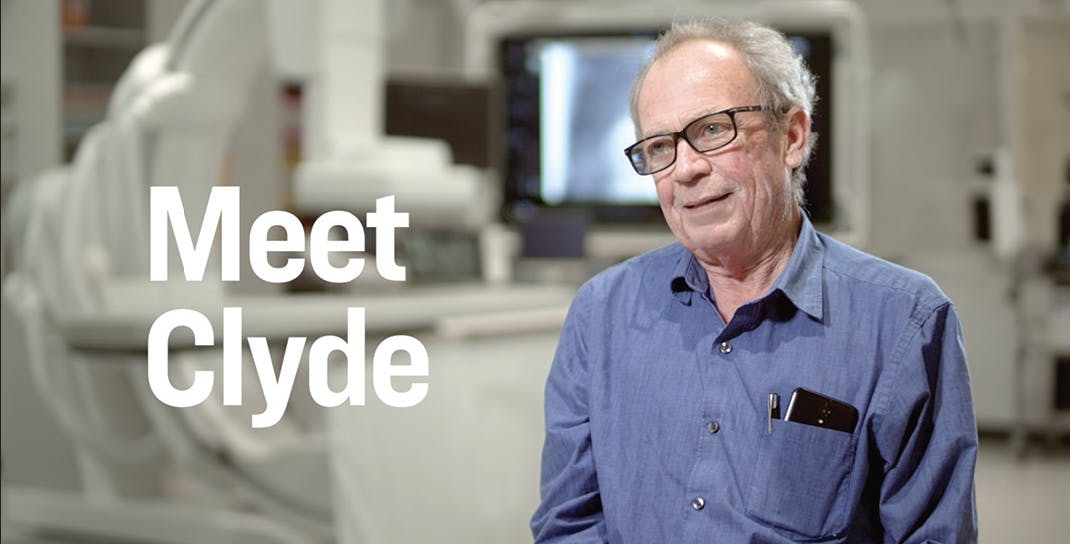
Patients have their say. The Radial Revolution event kicked off with a video of patients who had experienced femoral access advocating for the radial approach.
The second, more challenging case demonstrated successful tibial revascularization from a radial-only approach. The patient was a 67-year-old woman (diabetic) with ischemic rest pain and healed foot ulceration. After experiencing femoral access for a prior coronary procedure, the patient requested that radial intervention be attempted for her lower extremity procedure.
Diagnostic imaging from the radial approach revealed patent superficial femoral, popliteal, and peroneal arteries with total occlusion of the anterior tibial (AT) artery and tight stenosis of the posterior tibial (PT) artery (Figure 1). Dr. Nair used a Sublime™ .018, 200 cm RX Microcatheter (Surmodics, Inc.) to facilitate guidewire placement through the stenosed PT to the foot (Figure 2), with subsequent PT balloon angioplasty using a Sublime™ .018, 220 cm RX Balloon Catheter (Figure 3) to restore PT blood flow (Figure 4). Dr. Nair later used a .014, 250 cm Sublime™ RX Balloon Catheter to perform angioplasty in the occluded AT artery (Figure 5). The postprocedure angiogram revealed widely patent three-vessel runoff to the foot (Figure 6).
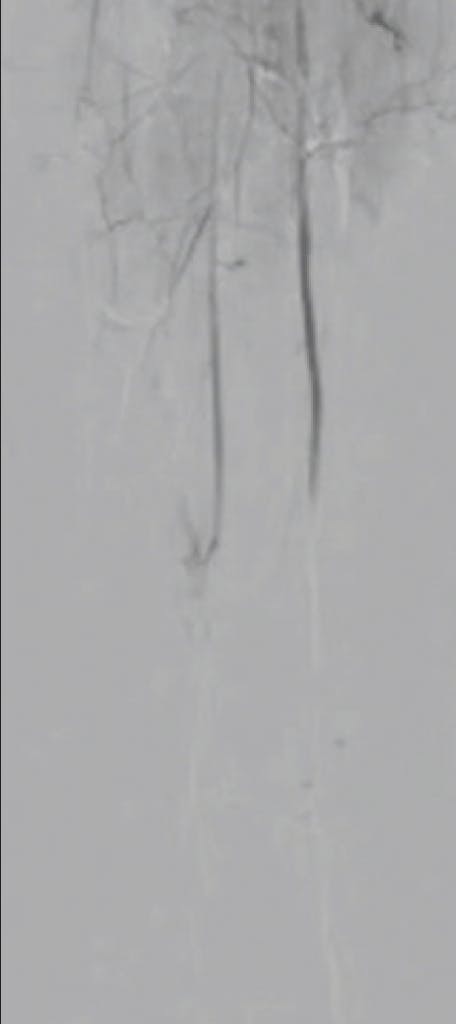
Figure 1. Diagnostic imaging from the radial approach revealed patent superficial femoral, popliteal, and peroneal arteries with total occlusion of the AT artery and tight stenosis of the PT artery.
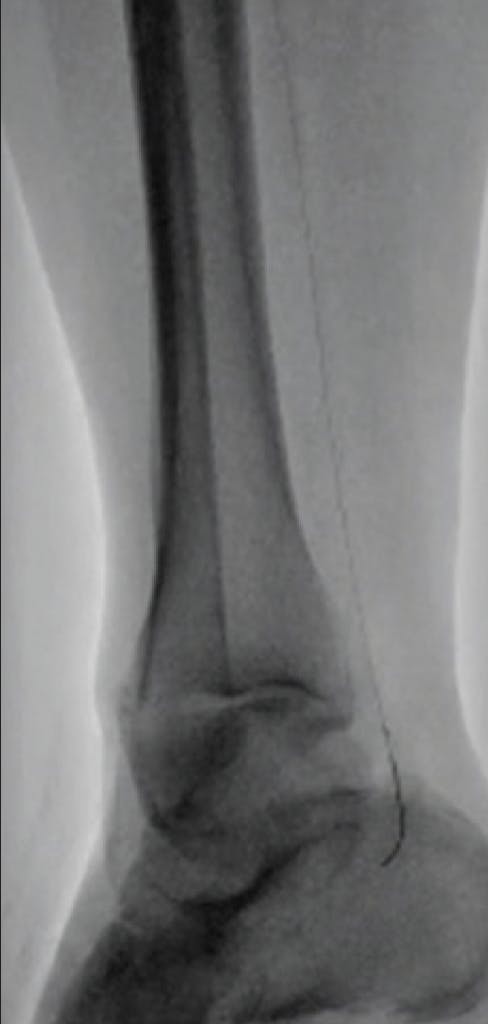
Figure 2. The Sublime™ .018, 200 cm RX Microcatheter facilitates guidewire placement through the stenosed PT to the foot.
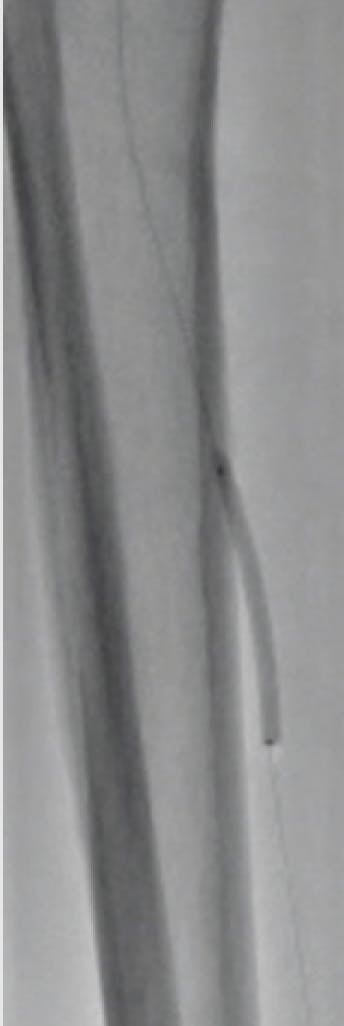
Figure 3. PT balloon angioplasty using a Sublime™ .018, 220 cm RX Balloon Catheter.
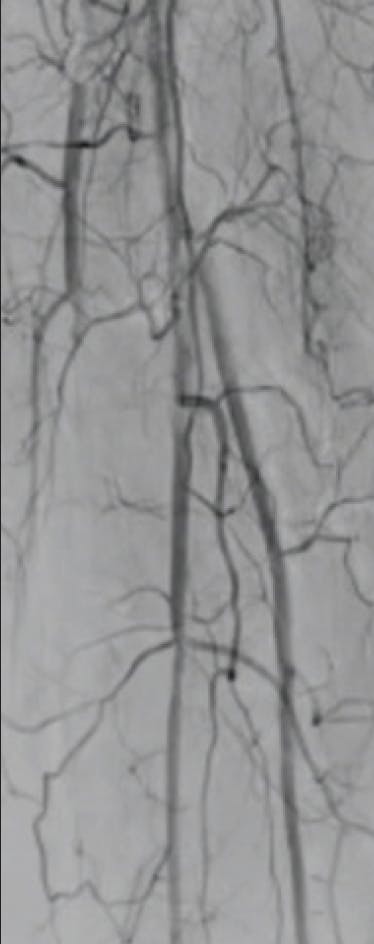
Figure 4. PT blood flow restored.
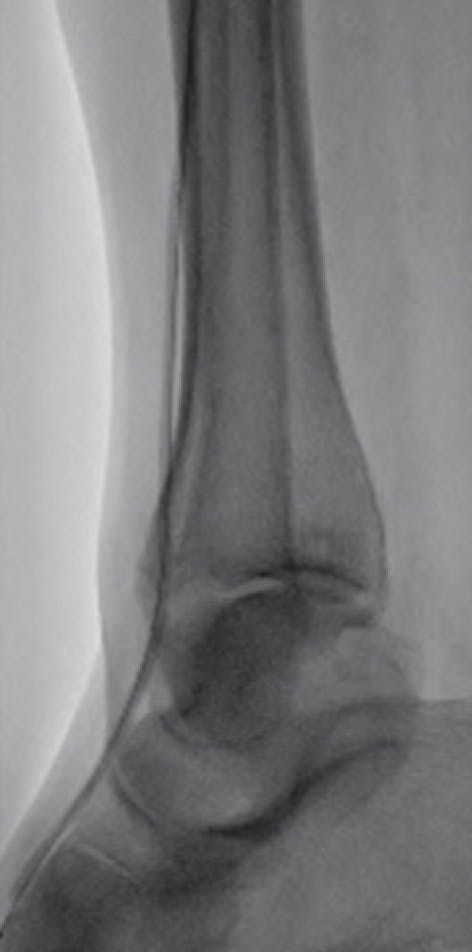
Figure 5. Angioplasty performed with a .014, 250 cm Sublime™ RX Balloon Catheter in the occluded AT artery.
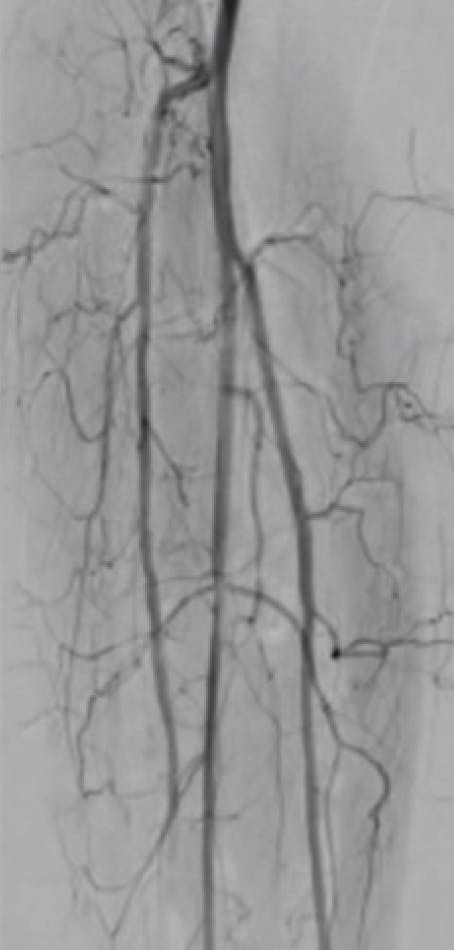
Figure 6. Postprocedure angiogram revealed widely patent three-vessel runoff to the foot.
Commenting on the case, Dr. Sameh Sayfo of Plano, Texas, said, “This patient has a complex history and the best option for this patient, or maybe the only option for this patient, was radial to peripheral.”
“The crossing catheter is a game changer,” said Dr. Babar Ali of Washington, DC. “Before we had it we couldn’t do these total occlusions from above.”
Caution: Federal (US) law restricts the Sublime™ Radial Access Guide Sheath, the Sublime™ Radial Access .014 and .018 RX PTA Dilatation Catheters, and the Sublime™ Radial Access .014, .018, and .035 Microcatheters to sale by or on the order of a physician. Please refer to each product’s Instructions for Use for indications, contraindications, warnings, and precautions. SURMODICS, SUBLIME, and RADIALREV and SURMODICS, SUBLIME, and RADIALREV logos are trademarks of Surmodics, Inc. and/or its affiliates. Third-party trademarks are the property of their respective owners.
1. Fornell D. Radial access nearing 50 percent of PCI volume in U.S. Diagnostic and Interventional Cardiology. February 14, 2020. Accessed October 23, 2023. https://www.dicardiology.com/article/radial-access-nearing-50-percent-pci-volume-us
2. O’Riordon M. Radial Access for Angiography and PCI on the Rise in US. tctMD. March 16, 2022. Accessed October 23, 2023. https://www.tctmd.com/news/radial-access-angiography-and-pci-rise-us
3. Mason PJ, Shah B, Tamis-Holland JE, et al. An update on radial artery access and best practices for transradial coronary angiography and intervention in acute coronary syndrome: a scientific statement from the American Heart Association. Circ Cardiovasc Interv
Advertisement
Advertisement