Advertisement
Advertisement
November 2023 Supplement
Sponsored by Surmodics, Inc.
Expanding the Limits of Radial-to-Peripheral Intervention
A conversation with Ramzan M. Zakir, MD.
Dr. Ramzan M. Zakir has been a radial-first operator for coronary interventions since 2009, when he trained under transradial pioneer Dr. John Coppola. Dr. Zakir developed and led the radial access program at Robert Wood Johnson University Hospital in New Jersey and has conducted hands-on radial access training for interventionalists from across the United States. Today, he serves as Director of High-Risk PCI and Research at Robert Wood Johnson while performing a large volume of peripheral cases at Cardiac and Vascular Interventions, a highly equipped office-based laboratory (OBL). We spoke with Dr. Zakir about the benefits of the radial approach and the state of the art for radial-to-peripheral procedures.
What was it like spearheading radial access for coronary interventions?
I had to overcome a lot of hurdles. At first, when I mentioned that I wanted to access the arm from the radial artery, I was told to stick to the brachial. I said, you’ve got to be kidding! So, we were starting from scratch. After I started the radial program and put the protocols in place, it wasn’t long before everyone embraced it.
What drove adoption?
No matter how good you are at femoral access, there will still be times when the groin is just too calcified or too diseased to use that approach. Assuming the groin is available, you never know when you’re going to have problems with a closure device, even if you’re proficient at using them. Any obese patient, when you have that deep skin tract, will increase your chance of having issues. Then, you’re left holding pressure on a fully heparinized patient. That’s going to set back your whole day—your staff will be fully occupied. With radial access, you snap on a compression band and take it off in an hour. Patients are ambulatory, and they get out quickly with fewer complications.
That difference goes a long way, especially in the OBL, where we strive for rapid turnover. You don’t have to deal with groin issues late in the day, sending patients to the hospital for observation. So, if you can do radial, why not?
When did you begin performing peripheral cases from the wrist?
The turning point for us was when radial-length sheaths and atherectomy devices became available about 5 years ago. Before then, we didn’t have equipment specifically designed to perform peripheral cases safely. When we would try to put in sheaths that weren’t designed for radial-to-peripheral procedures, they would cause a lot of radial artery spasm. I would use radial access for some iliac occlusions, but only if there was no other option.
How do you select peripheral patients for radial access?
When I’m deciding on case selection, I think about which approach will have better long-term results for the patient. Right now, we’re very well positioned to do above-the-knee cases, but still somewhat limited in the equipment we need to treat below the knee from the wrist. We have good self-expanding stents that can easily get down to the popliteal artery, but they may not be the best stents for severely calcified lesions and across the knee. We don’t have drug-eluting stents, but we do have the In.Pact™ 018, 200 cm drug-coated balloon (Medtronic). You have to balance the benefits of going radial with the possibility that patients may do better in the long term with equipment that’s not yet available in radial lengths.
With that in mind, I’d say that we’re now able to use radial as the primary approach for the overwhelming majority of our claudicants, with tibial artery access as a backup. The number of complex CLI (critical limb ischemia) cases we can do from a purely radial approach is significantly lower. For these, we may complement radial with tibial access. Fortunately, it’s just a matter of time before we see more tools. Industry is now committed to expanding the radial-to-peripheral platform.
Can you describe some of the ways you optimize success in radial-to-peripheral interventions?
Knowing the anatomy really helps. If you can get a CTA first, you know exactly what you’re going after and have a game plan in place. Knowing the height of the patient and understanding where devices will reach from the right versus left radial artery is important. Obtaining access with ultrasound leads to more efficient access and can minimize complications.
After obtaining access, there are only a few things you really have to know to get your sheath in place. I advance a pigtail and once you’re in the chest, you rotate it and advance the wire down the descending aorta. With the pigtail above the iliac arteries, I like to perform a roadmap separating the internal and external iliac arteries so you don’t inadvertently wire the internal iliac artery.
Once you have the stiff, angled Glidewire® (Terumo Interventional Systems) in the superficial femoral artery (SFA), you can use the radial-length sheaths we have now, which are great. The hydrophilic coating can minimize vessel damage and spasm while optimizing trackability, while the braided shaft technology can maximize kink resistance. Before you know it, you’re right down in the common femoral artery if you’re using a 120 cm sheath, or the SFA if you’re using a 150 cm sheath. From there, you can complete the procedures very quickly and treat complex lesions from a radial approach. Then, the best thing is you’re just putting a compression band on the patient’s wrist and you’re done.
What limitations remain in the radial-to-peripheral toolkit?
I’m glad Surmodics has come out with 250 cm Sublime™ RX PTA Balloons (Surmodics, Inc.) that can reach to the foot (≤ 250 cm). But the issue remains that we don’t have long enough wires that are designed to cross complex lesions and support catheters. I still do antegrade access for complicated below-the-knee cases.
Surmodics recently introduced Sublime™ .014, .018, and .035 torqueable microcatheters (≤ 200 cm) designed for the periphery. You’re among the first physicians to use them. Do you think they help fill a gap in the radial-to-peripheral toolkit?
One of the limitations when using radial access to the periphery is that the tools aren’t quite there. So, with that, we’re excited to have a 200 cm microcatheter from Surmodics. Prior to this option, the only support catheter available was the 200 cm ViperCath™ XC (Abbott) available on a .035 platform and it’s quite bulky. Having this 200 cm crossing catheter is a real game-changer for radial-to-peripheral equipment.
Can you describe your experience using other Sublime™ Radial Access products? Let’s begin with Sublime™ RX Balloon Catheters.
I think these RX balloons were designed very well. They definitely have advantages. To begin with, the Sublime™ portfolio currently has the only 250 cm length available. These balloons also have a longer RX portion, which makes them perform more like a traditional over-the-wire balloon. I think their pushability and crossability is superior to other balloons (Figure 1).
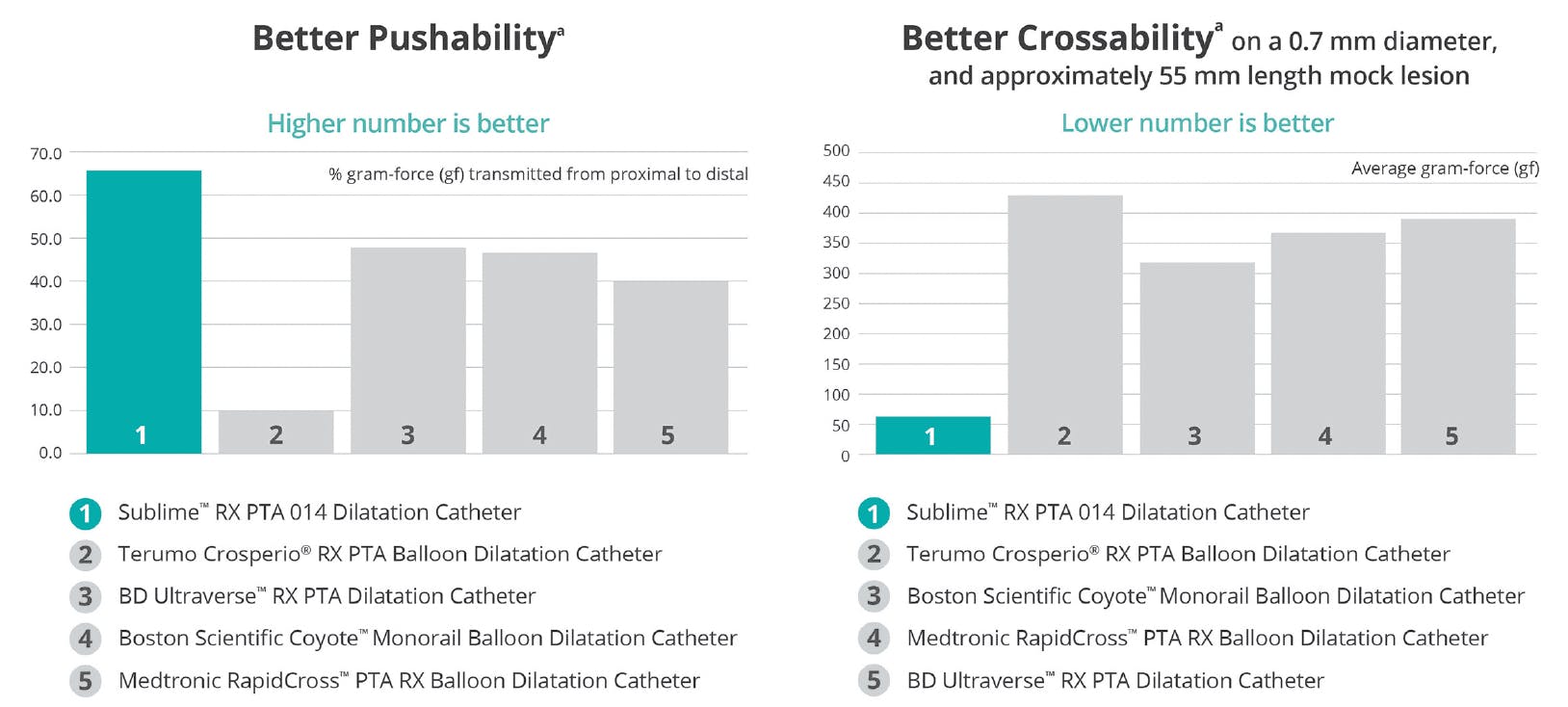
Figure 1. Sublime™ Radial Access .014 RX PTA Catheter versus competition. Third-party trademarks are property of their respective owners.
I’ve used Sublime™ RX Balloons in tough cases where other balloons were not able to cross, including non-radial cases. I’ve been in up-and-over cases where it’s like, “Okay, that didn’t cross, let me try the Sublime™ balloon.” Boom. Before you know it, the balloon has crossed the lesion into the distal areas or the pedal arch. It just tracks so well.
How about the Sublime™ Radial Guide Sheaths?
I think Surmodics has an advantage with the 5 Fr sheath. We get a lot of older patients that are frail and have thin wrists with small radial arteries. Having this option increases the number of patients you can treat from a radial approach, especially below the knee. The current limitation for the 5 Fr is stenting, but many cases only require percutaneous transluminal angioplasty (PTA) and atherectomy. In terms of performance, I haven’t had any spasm issues with either the Sublime™ 5 or 6 Fr sheaths. They track very smoothly.
Any closing thoughts?
I think we’re at the start of a radial revolution in the peripherals. As the toolbox continues to expand, we’ll be able to treat more patients. This will lead to overall increased efficiency, fewer complications, happier patients, and happier hospitals and OBLs.1 It’s very exciting.
Caution: Federal (US) law restricts the Sublime™ Radial Access Guide Sheath, the Sublime™ Radial Access .014 and .018 RX PTA Dilatation Catheters, and the Sublime™ Radial Access .014, .018, and .035 Microcatheters to sale by or on the order of a physician. Please refer to each product’s Instructions for Use for indications, contraindications, warnings, and precautions. SURMODICS, SUBLIME, and SURMODICS and SUBLIME logos are trademarks of Surmodics, Inc. and/or its affiliates. Third-party trademarks are the property of their respective owners.
See Dr. Zakir perform a successful revascularization of the foot from the radial approach using the Sublime™ Platform here.
Case Report:
Successful Revascularization of the Foot From the Radial Approach Using the Sublime™ Platform: Guide Sheath, Microcatheter, and RX PTA Catheters
By Ramzan M. Zakir, MD
PATIENT PRESENTATION
A 75-year-old female with a medical history of diabetes, hypertension, smoking (former), and anemia presented with multiple nonhealing wounds of the left foot.
DIAGNOSTIC FINDINGS
Diagnostic angiography of the left lower extremity revealed significant tortuosity in the iliac arteries and severe multilevel disease in the SFA, distal popliteal artery, and anterior tibial (AT) artery (Figure 1).
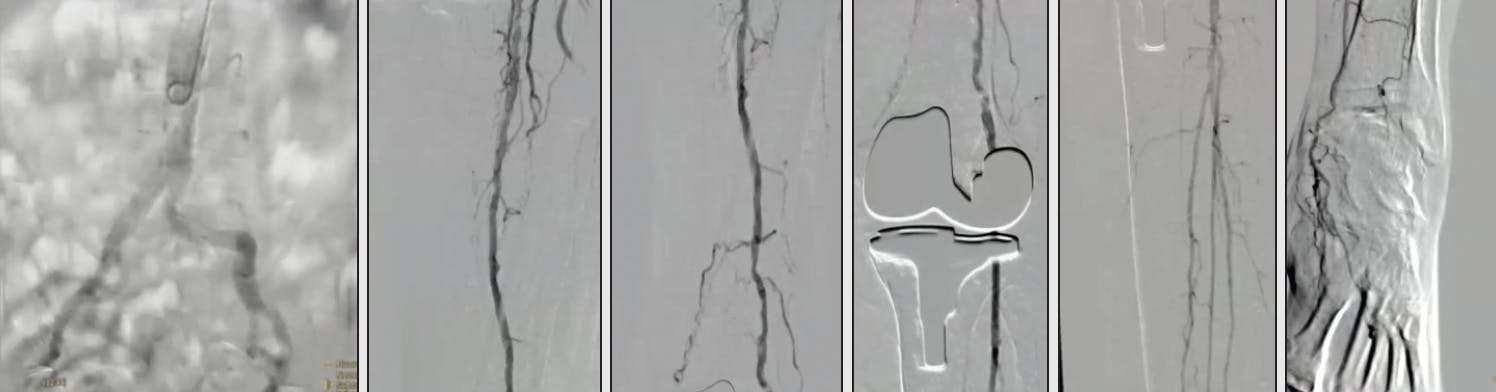
Figure 1. Angiography revealed (left to right) tortuous iliac arteries and severe multilevel disease in the SFA, popliteal artery, and AT artery.
TREATMENT
Access was obtained through the patient’s left radial artery using ultrasound guidance. A 5 Fr introducer sheath was inserted, and a radial cocktail was administered. A pigtail catheter was inserted over a guidewire and placed in the descending aorta, where the angiogram showed significant tortuosity in the left common femoral and external iliac arteries. The radial access introducer sheath was exchanged for a 6 Fr, 150 cm Sublime™ Radial Access Guide Sheath, which was advanced to the SFA. A .018, 200 cm Sublime™ Microcatheter was inserted over a .018 guidewire and advanced to the distal popliteal artery (Figure 2). The guidewire was then able to cross the distal AT occlusion and was advanced through the pedal arch. Due to heavy calcification, orbital atherectomy was performed using the Diamondback 360® system (1.75 mm; Abbott) in the SFA and popliteal artery, followed by PTA. Because of an occlusion in the distal AT artery and incomplete pedal arch, a .014, 250 cm Sublime™ RX PTA Catheter (2.0 X 150 mm) was advanced to the pedal arch and inflated, followed by inflation of a .014, 250 cm Sublime™ RX PTA Catheter (2.5 X 150 mm) in the distal AT artery (Figure 3).
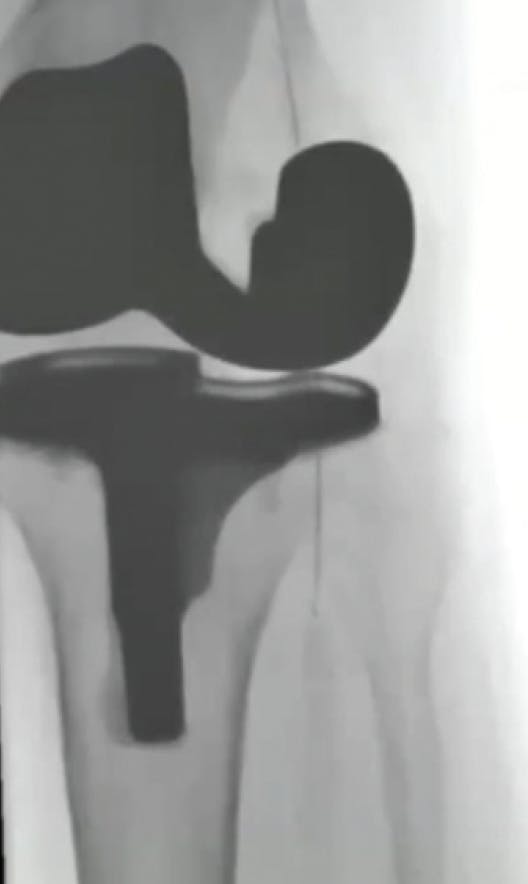
Figure 2. 200 cm Sublime™ Microcatheter utilized to assist wire crossing of popliteal and AT artery lesions.
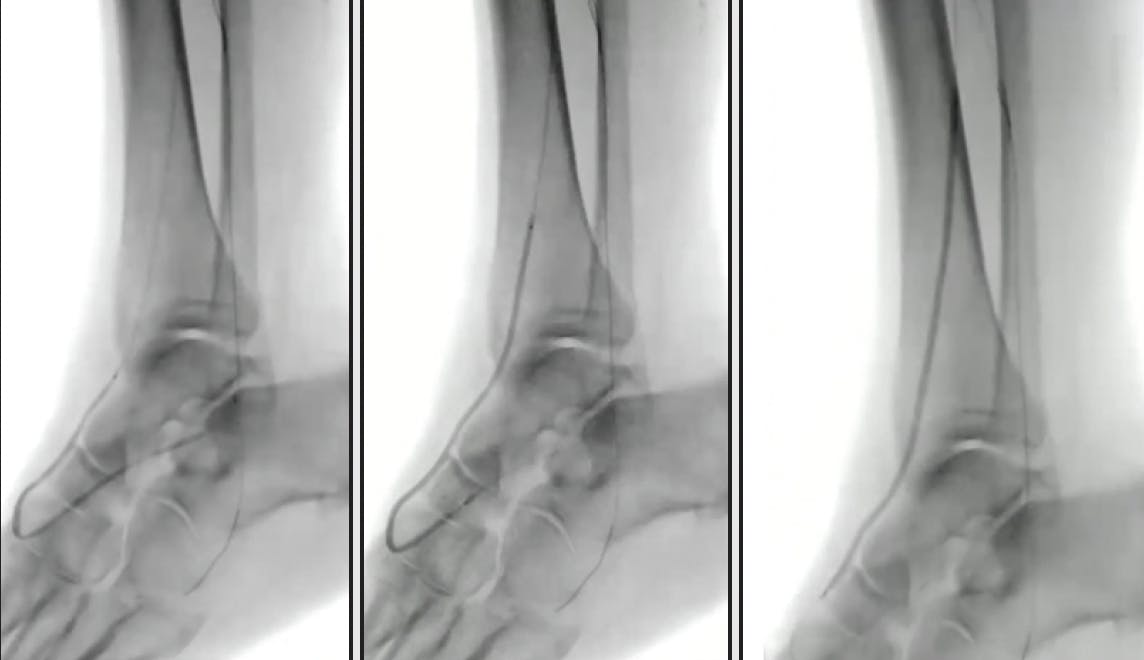
Figure 3. Sublime™ Radial Access .014 RX PTA Dilatation Catheter inflation in the pedal arch and distal AT artery.
POSTPROCEDURE OUTCOME
Following the successful intervention, arteriography showed revascularization into the pedal arch with good flow into the heel and blush flow into the toes (Figure 4).
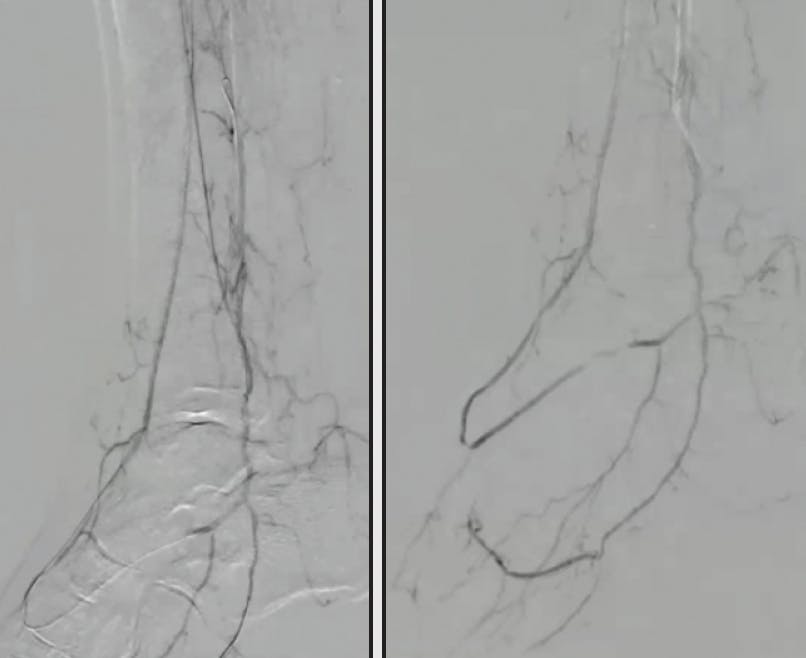
Figure 4. Arteriogram demonstrating successful revascularization of the foot.
Caution: Federal (US) law restricts the Sublime™ Radial Access Guide Sheath, the Sublime™ Radial Access .014 and .018 RX PTA Dilatation Catheters, and the Sublime™ Radial Access .014, .018, and .035 Microcatheters to sale by or on the order of a physician. Please refer to each product’s Instructions for Use for indications, contraindications, warnings, and precautions. SURMODICS, SUBLIME, and SURMODICS and SUBLIME logos are trademarks of Surmodics, Inc. and/or its affiliates. Third-party trademarks are the property of their respective owners.
1. Mason PJ, Shah B, Tamis-Holland JE, et al. An update on radial artery access and best practices for transradial coronary angiography and intervention in acute coronary syndrome: a scientific statement from the American Heart Association. Circ Cardiovasc Interv. 2018;11:e000035. doi: 10.1161/HCV.0000000000000035

Advertisement
Advertisement