Advertisement
Advertisement
November 2023 Supplement
Sponsored by Surmodics, Inc.
Reducing the Radial-to-Peripheral Gender Gap With 5 Fr Guide Sheaths
A conversation with Robert Minor, MD.
Dr. Robert Minor, an interventional cardiologist with Billings Clinic Heart and Vascular in Missoula, Montana, worked with a multidisciplinary team to launch the state’s first “Limb Preservation Program.” He has spent his career educating cardiologists, radiologists, and vascular surgeons in the United States and abroad on endovascular techniques. Dr. Minor can be considered a true radial-to-peripheral pioneer, having adopted the approach more than 10 years ago, before the advent of purpose-built radial-to-peripheral tools.
He and his team serve a patient population that includes many women of smaller stature with diminutive radial arteries. Although women have higher rates of bleeding and other femoral access complications than men, and transradial access (TRA) reduces this risk, women have been less likely to receive TRA.1,2 This may be due to an increased risk of spasm presented by their smaller radial arteries—a challenge mitigated by smaller-diameter sheaths.2 The Sublime™ Radial Access Platform (Surmodics, Inc.), which includes the first 5 Fr radial-length guide sheath (Figure 1), has enabled Dr. Minor to offer radial-to-peripheral procedures to more female patients and optimize their rates of same-day discharge.3 We spoke with Dr. Minor about implementing a successful radial-to-peripheral program in his hospital.
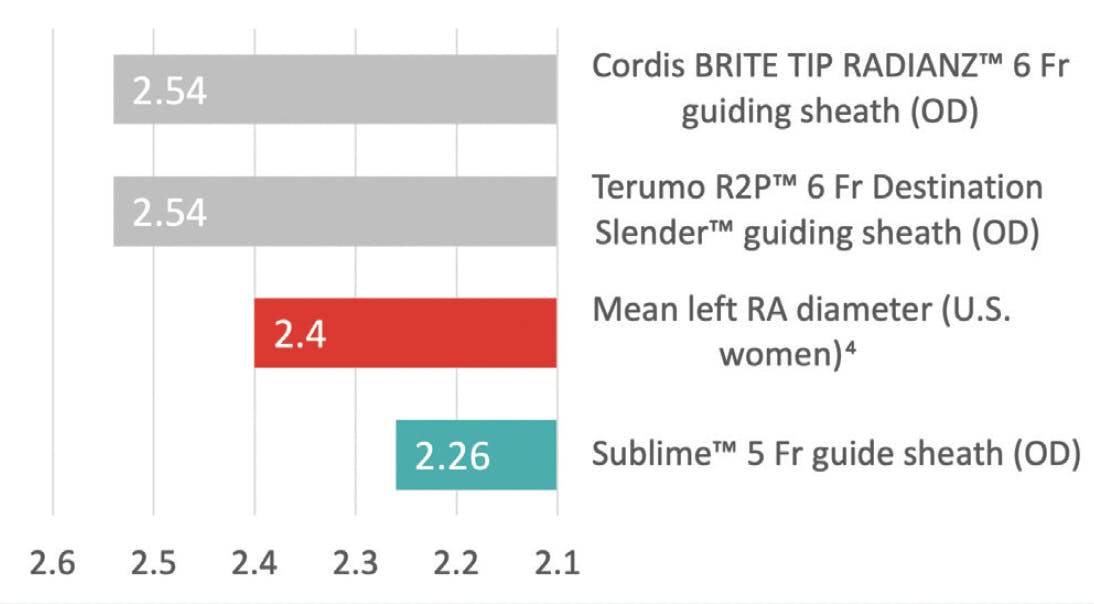
Figure 1. Smallest currently available outer diameter (OD) guide sheath in the United States (mm). RA, radial artery.
What drove you to adopt radial access?
Beginning in 2010, my cardiology group began watching the growth of radial access closely and began speaking with others who had already embraced the technique for coronary procedures. We had a colleague come in who had radial experience to help train our team. It was a true epiphany for me. I had thought it was a marketing tool attached to a bait-and-switch, you know, “We’re going to do your heart procedure through the wrist. Oh, we're sorry. It's too small. We're going to go through the groin.”
But I learned immediately that radial was much safer than femoral access. Patients really preferred it. And of course, with increasing cost-containment pressures, the growing nursing shortage, and limited inpatient beds, radial access was very attractive. I wanted to get people home the same day and began to routinely allow same-day discharge immediately after implementing radial access for my interventional procedures. It just worked out perfectly. To offer all patients these benefits, I began using radial access for both coronary and peripheral interventions at about the same time.
By 2014, I was giving presentations at meetings on my belief that all future diagnostic and interventional procedures for vascular disease would be performed using radial access. Large studies have shown significant cost savings and mortality benefits when treating heart attack patients using radial as compared with femoral access.5
Can you describe your use of radial access?
Our group in Missoula does more than 95% of our elective and emergent coronary interventions through radial access and occasionally ulnar access. We plan same-day hospital discharge for all patients undergoing elective cath lab procedures.
I perform 100% of my peripheral angiograms using 5 Fr radial access, including advancement of 150 cm microcatheters selectively into each superficial femoral artery (SFA) for angiography. This allows me to complete digital subtraction imaging below the knee into the pedal arch and tibial circulation with excellent detail of disease and collateral circulation. This is an area you cannot accurately assess with standard CTA or MRA imaging. At present, catheter-based angiography is considered the gold standard for diagnosing infrapopliteal artery disease and designing endovascular treatment strategies for critical limb ischemia patients.6
What about radial access for peripheral interventions?
Since converting to radial access, I have treated patients with peripheral disease from a radial approach—anything I can reach. Moving from femoral to radial has been fun, rewarding, and in many cases easier technically, not to mention how beneficial it is for patients. If I plan to reach into the distal iliac and SFA from radial access, often I will go left radial instead of right radial. Left radial access reduces the distance from radial access to target lesions by 10 to 15 cm by avoiding the tortuosity of the right subclavian artery and the need to traverse the transverse thoracic aorta.
Until I had longer products from Surmodics, it was difficult to reach beyond the proximal SFA. Now we're reaching into the distal SFA and popliteal. I think we'll be able to reach into the tibial circulation in the near future with longer equipment and guidewires.
Do you still use femoral access for peripheral cases?
Yes, I often use combined pedal and femoral access for critical limb ischemia patients with multilevel disease, including chronic total occlusions (CTOs) and heavily calcified disease. With these procedures, which include femoral puncture, patients remain in our cath lab recovery area for 4 to 6 hours before discharge. This does slow down throughput through the lab and consumes a lot of nursing resources.
It’s totally different with radial-to-peripheral procedures. These patients ambulate immediately, walking to the bathroom if they need to with their wrist compression bands on. The bands are routinely removed within 2 hours, and within an hour later these patients are being discharged. Not only is the throughput of those patients much faster, but we can also recover several of these patients with one or two nurses.
You’re a strong proponent of using a 5 Fr radial access guide sheath. Why?
I think a 5 Fr sheath addresses a big issue with patients of smaller stature, particularly women. Many Native American, Asian, Hispanic, and elderly women have very small radial arteries. A lot of operators are reluctant to advance larger 6 Fr guide sheaths through these small radial arteries. They go femoral instead. I’ve really enjoyed the ability to treat these types of patients from a radial approach using the 5 Fr Sublime™ Guide Sheath. Honestly, I think the Sublime™ Guide Sheath is the best on the market right now in terms of comfort and safety for these patients.* In my opinion, Sublime™ sheaths also provide the most support and backup needed for reaching through tortuous anatomy to get to more distal disease in the leg (Figure 2).
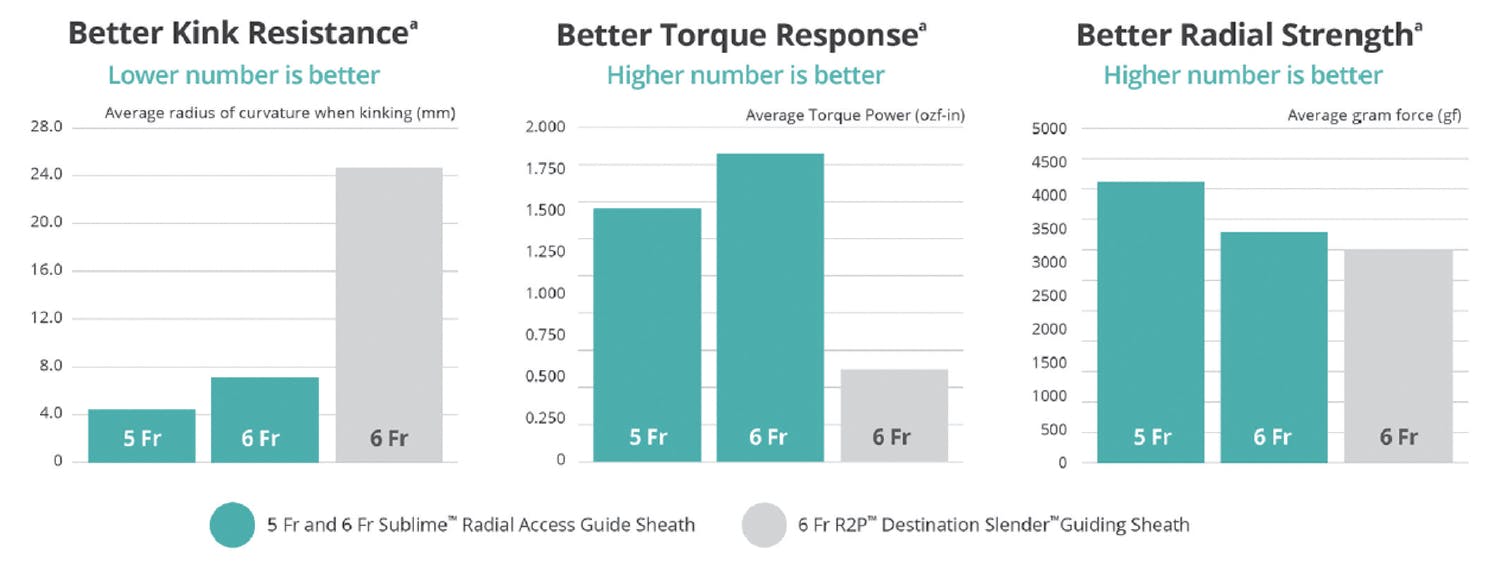
Figure 2. Sublime™ Radial Access Guide Sheath versus competition. Third-party trademarks property of their respective owners.
In your opinion, how big is the need for the Sublime™ 5 Fr sheath?
I think that if you are in a practice where you treat women and elderly patients who are small in stature and you want to avoid risks of femoral access, you’re going to want to use the 5 Fr guide sheath in a large number of patients, I would say in a range between 25% and 40%. I’d prefer to do everything 5 Fr with the Sublime™ sheath because it's much more supportive than even the 6 Fr R2P™ Destination Slender™ guiding sheaths (Terumo Interventional Systems) (Figure 2). And I think that using 5 Fr as opposed to 6 Fr does lower radial access site complications.7
In addition, the Sublime™ 5 Fr Guide Sheath has a hydrophilic coating along the entire length of the sheath, which makes it very easy to slide through tortuous and calcified anatomy, and dramatically improves the comfort for the patient when you're advancing and removing the sheath.
You mentioned more support with the Sublime™ 5 Fr Guide Sheath compared with the 6 Fr R2P™ Destination Slender™ guide sheath. Can you expand on this?
In my experience, the Terumo 6 Fr R2P™ Destination Slender™ sheath is quite flexible. That makes sense—after all, you need to traverse the tortuous brachiocephalic circulation if you're doing radial to peripheral. But I’ve found that tortuosity can work against you, as the sheath tends to favor the greater curves of tortuous anatomy, and even accordions sometimes. That leaves you having to navigate more bends in the brachiocephalic and aortic anatomy to get to your target lesions, which takes away your pushability, your deliverability, and actually increases the length of the distance you have to traverse. The Sublime™ Guide Sheath is stiffer and provides better support through tortuous anatomy, so it tends to follow the lesser curves in tortuous aortas and iliac arteries. That's a big plus in my mind.
Do you have any experience with Sublime™ RX PTA Catheters?
I have, yes. They performed excellently. I've already used them for a case where I was treating distal popliteal disease from radial access in a shorter patient.
How do you feel about using a rapid-exchange versus an over-the-wire balloon?
As an interventional cardiologist, I'm mainly using rapid-exchange technology for everything I treat in the coronaries. I think with the Sublime™ sheath being so supportive, the rapid exchange technology makes sense and works well. It does alleviate some of the difficulties you have with over-the-wire technology when you're going from radial access because, frankly, we just don't have long enough wires.
Do you have any tips for new radial operators?
Many operators have embraced the use of ultrasound of the wrist before making access, given the fact that it speeds time to access, reduces the number of punctures made (single puncture), and reduces risk of spasm and access site crossover.8 In our lab, I use ultrasound guidance for radial access in 100% of patients. I can easily image and see the diameter of both the radial and ulnar arteries. It allows identification of diffuse radial artery vascular disease or calcification, as we frequently discover in chronic dialysis patients or patients with type 1 diabetes. We can make an immediate determination from that measurement if 5 or 6 Fr size would be best for the patient.
But I'd like to add something to that. After delivering the radial cocktail through the side arm of a 5 Fr access sheath—a combination of nitroglycerin (200 µg), verapamil (2.5 mg), and heparin (5,000 units)—I immediately do a digital subtraction angiogram of the forearm with 3 to 5 mL of contrast. That's one way to make sure you know the anatomy completely. I was trained to do that, and I've continued to do that routinely for all my patients. There are three things you learn from your forearm angiogram. Number one, you confirm the size of the radial artery, as demonstrated by what your ultrasound showed you. Number two, you exclude any unusual anatomic features of the radial artery, including aberrant takeoffs and radial loops, and confirm you've got three-vessel runoff into the hand through the radial, interosseous, and ulnar arteries. And finally, if there is an access site complication, and these are extremely rare, you know the anatomy, so you know exactly what you're getting into if you have to go brachial or femoral to enter that wrist circulation to address a problem.
Any final thoughts for physicians who are holding back on transitioning to radial access?
At our practice, we always tell patients who are having femoral access procedures that there is a 10% to 15% risk of an access site complication, even with routine use of ultrasound guidance. It may be rebleeding, hematoma, femoral artery pseudoaneurysm, prolonged bedrest, or overnight hospital stay. And of course, there's always that very small but important risk of retroperitoneal hemorrhage and fatalities that may result. In my career, since I started doing endovascular procedures in 1992, most of the complication courses that I have attended or spoken at have featured femoral access complications leading to death or other very serious morbidity. I think that using radial access routinely for endovascular procedures really takes away the risk of the majority of access-related complications that all physicians and interventional specialists fear the most.
*Sublime™ sheaths feature full-length Serene™ hydrophilic coatings designed to minimize vessel damage and spasm while optimizing trackability through distal tortuosity.
Caution: Federal (US) law restricts the Sublime™ Radial Access Guide Sheath, the Sublime™ Radial Access .014 and .018 RX PTA Dilatation Catheters, and the Sublime™ Radial Access .014, .018, and .035 Microcatheters to sale by or on the order of a physician. Please refer to each product’s Instructions for Use for indications, contraindications, warnings, and precautions. SURMODICS, SUBLIME, and SURMODICS and SUBLIME logos are trademarks of Surmodics, Inc. and/or its affiliates. Third-party trademarks are the property of their respective owners.
Case Report:
5 Fr Radial Access for Bilateral Iliac Artery Stenting Using the Sublime™ 120 cm Guide Sheath
By Robert Minor, MD
PATIENT PRESENTATION
A woman in her early 60s with a medical history of smoking (former), statin intolerance, and coronary artery disease presented with severe right-greater-than-left buttock and thigh claudication and inability to walk one block. Ankle-brachial index (ABI) showed right ABI of 0.73 falling to 0.59 with exercise, and left ABI of 1.0 falling to 0.85 with exercise.
DIAGNOSTIC FINDINGS
Left radial arterial access was achieved using ultrasound guidance, confirming a small radial artery and necessitating use of 5 Fr catheters. Diagnostic angiography demonstrated isolated and severely calcified bilateral common iliac artery (CIA) disease (Figure 1).
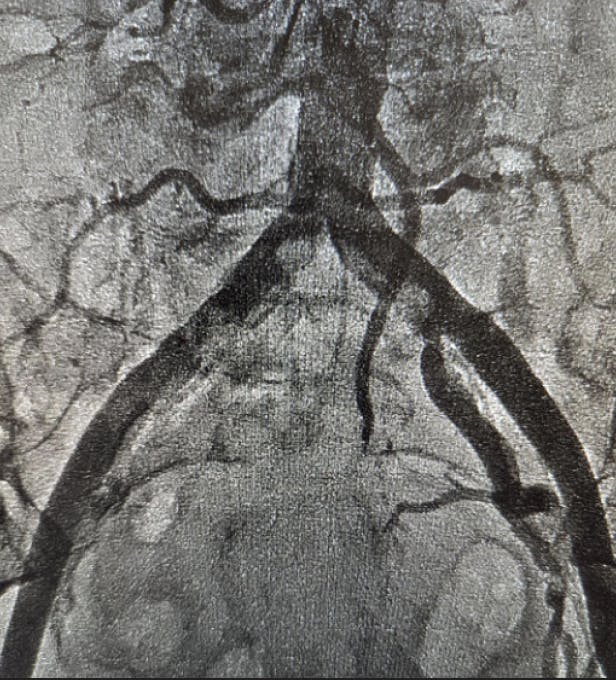
Figure 1. Abdominal aortogram demonstrating calcified bilateral CIA stenosis.
TREATMENT
Using a .035, 300 cm Wholey™ guidewire (Medtronic) advanced into the distal abdominal aorta, the radial access sheath was exchanged for a 5 Fr, 120 cm Sublime™ Guide Sheath that was positioned above the aortoiliac bifurcation. Using a 4.3 Fr, .035, 150 cm Trailblazer™ support catheter (Medtronic), a .014, 300 cm Grand Slam® guidewire (Asahi Intecc) was advanced across the right CIA disease into the superficial femoral artery. A .014, 135 cm Viatrac™ 14 Plus RX 7 X 20 mm PTA balloon (Abbott) was used for predilation of the right CIA disease. Three overlapping .014, 135 cm Herculink Elite® RX balloon-expandable (BE) stents (Abbott; 18 X 7 mm, 18 X 7 mm, and 15 X 7 mm) were deployed to treat the right CIA disease using high pressure inflations to 14 atm (Figure 2). The .014 guidewire was then redirected across the left CIA disease, and predilation was performed with a new Viatrac™ 14 Plus RX 7 X 20 mm PTA balloon, followed by use of a 5 Fr-compatible .035, 150 cm OTW Everflex™ 8 X 40 mm self-expanding (SE) stent with Entrust™ delivery system (Medtronic). Final stent deployment was then performed using a Viatrac™ 14 Plus RX 7 X 40 mm PTA balloon at 14 atm (Figure 3). Completion angiography demonstrated excellent results (Figure 4).
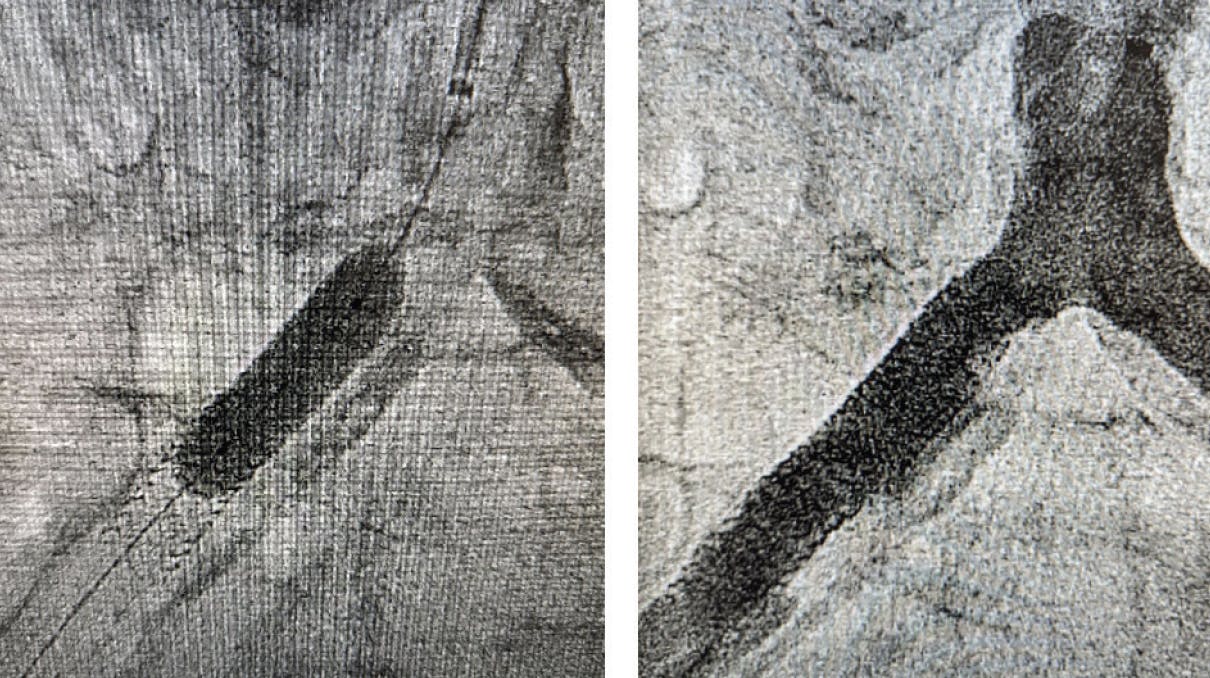
Figure 2. Deployment of overlapping right CIA Herculink Elite® RX BE stent using a .014 guidewire, with subsequent angiogram, through the 5 Fr, 120 cm Sublime™ Guide Sheath.
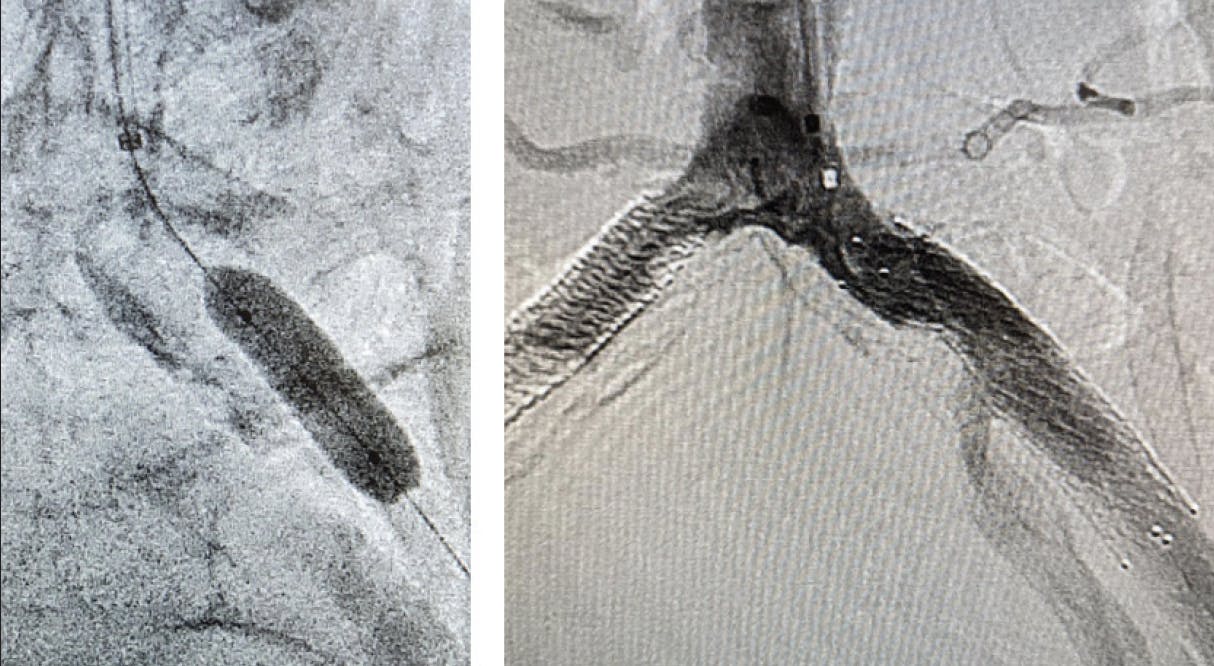
Figure 3. Predilatation using Viatrac™ 14 Plus RX balloon in the left CIA, with subsequent angiogram after Everflex™ with Entrust™ SE stent deployment using a .014 guidewire, through the 5 Fr, 120 cm Sublime™ Guide Sheath.
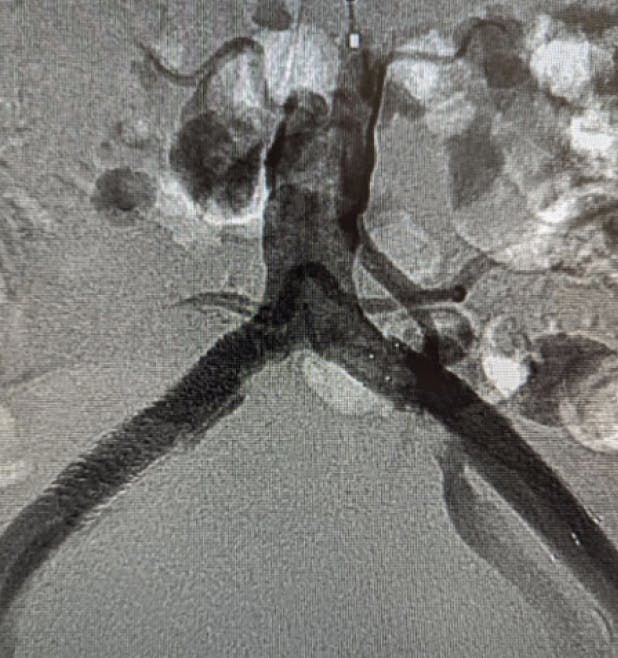
Figure 4. Completion angiogram after bilateral iliac artery stenting using 5 Fr left radial access.
POSTPROCEDURE OUTCOME
A TR Band® radial compression device (Terumo Interventional Systems) was used to achieve hemostasis at the radial access site. The patient was discharged 2 hours later. At 3-month follow-up, she reported resolution of claudication symptoms with the ability to walk more than 1 mile.
Caution: Federal (US) law restricts the Sublime™ Radial Access Guide Sheath, the Sublime™ Radial Access .014 and .018 RX PTA Dilatation Catheters, and the Sublime™ Radial Access .014, .018, and .035 Microcatheters to sale by or on the order of a physician. Please refer to each product’s Instructions for Use for indications, contraindications, warnings, and precautions. SURMODICS, SUBLIME, and SURMODICS and SUBLIME logos are trademarks of Surmodics, Inc. and/or its affiliates. Third-party trademarks are the property of their respective owners.
1. Hess CN, Rao SV, Kong DF, et al. Embedding a randomized clinical trial into an ongoing registry infrastructure: unique opportunities for efficiency in design of the Study of Access site For Enhancement of Percutaneous Coronary Intervention for Women (SAFE-PCI for Women). Am Heart J. 2013;166:421-428. doi: 10.1016/j.ahj.2013.06.013
2. Chester RC, Mina SA, Lewis B, et al. Radial artery access is under‐utilized in women undergoing PCI despite potential benefits: Mayo Clinic PCI Registry. Catheter Cardiovasc Interv. 2020;95:675-683. doi: 10.1002/ccd.28341
3. Minor R. Radial to peripheral in women with small radial arteries: 5 French access for endovascular therapy in femoral, iliac, renal, subclavian and carotid artery disease. Cath Lab Digest. Accessed September 8, 2023. https://www.hmpgloballearningnetwork.com/site/cathlab/radial-access-technique/radial-peripheral-women-small-radial-arteries-5-french-access
4. Roberts JS, Niu J. An ultrasound survey of the radial and ulnar arteries in an American population: implications for transradial access. J Invasive Cardiol. 2023;35:E143-E150.
5. Mason PJ, Shah B, Tamis-Holland JE, et al. An update on radial artery access and best practices for transradial coronary angiography and intervention in acute coronary syndrome: a scientific statement from the American Heart Association. Circ Cardiovasc Interv. 2018;11:e000035. doi: 10.1161/HCV.0000000000000035
6. Ahmed O, Hanley M, Bennett SJ, et al. ACR appropriateness criteria® vascular claudication—assessment for revascularization. J Am Coll Radiol. 2017;14:S372-S379. doi: 10.1016/j.jacr.2017.02.037
7. Aminian A, Saito S, Takahashi A, et al. Comparison of a new slender 6 Fr sheath with a standard 5 Fr sheath for transradial coronary angiography and intervention: RAP and BEAT (Radial Artery Patency and Bleeding, Efficacy, Adverse evenT), a randomised multicentre trial. EuroIntervention. 2017;13:e549-556. doi: 10.4244/EIJ-D-16-00816
8. Shroff AR, Gulati R, Drachman DE, et al. SCAI expert consensus statement update on best practices for transradial angiography and intervention. Catheter Cardiovasc Interv. 2020;95:245-252. doi: 10.1002/ccd.28672

Advertisement
Advertisement