Advertisement
Advertisement
November 2023 Supplement
Sponsored by Surmodics, Inc.
Scaling to 70% Radial-to-Peripheral in a Hospital Setting
A conversation with Sameh Sayfo, MD.
Dr. Sameh Sayfo, an interventional cardiologist at Baylor Scott & White The Heart Hospital—Plano (Texas), earned an MBA while practicing medicine at the height of the COVID-19 pandemic. Schooled in operational efficiency, he sees radial-first vascular intervention as a major opportunity to improve patient care while optimizing hospital processes and cost containment. Today, he performs mainly peripheral interventions, most of them in patients with complex disease and multiple comorbidities. Despite this challenge, he performs about 70% of peripheral interventions from the wrist.
In general, what are your patient selection criteria for radial-to-peripheral interventions?
Anatomically, I use radial access for nearly all my subclavian, vertebral, renal, and mesenteric artery cases. For lower extremity, I use radial access for the majority of iliac artery, common femoral artery (CFA), superficial femoral artery (SFA), and popliteal artery disease. Radial access has become my standard approach, especially since Medtronic came out with their 200 cm drug-coated balloon (DCB; In.Pact™ 018).
I’ll typically go radial for SFA occlusions regardless of whether the lesion is 100% calcified, short, or long. We have calcium modification tools available (orbital atherectomy and lithotripsy). If I have a chronic total occlusion (CTO) in the SFA, I’ll typically use a combined radial-pedal approach. For me, that works just as well as a femoral-pedal approach. If you know how to set up the radial-pedal combination from the get-go, you’ll have a higher success rate.
You’ve said that acceptance of radial access for peripheral interventions is at the same stage now as radial for coronary interventions was in the past. What do you see as the biggest obstacles to radial-to-peripheral adoption today?
I think it will be challenging to persuade people who have been using femoral access for 20-plus years to change to radial. If you’ve read about the history of percutaneous coronary intervention (PCI), people thought it was crazy to use radial access 15 years ago. Their answer was always, “I’ve been going femoral for 20 years, why would I go radial?” But now, if you do not provide your patient with a radial access for the coronary intervention, your patient will go somewhere else. Patient satisfaction is important. Patients hate getting a groin stick.
You can perform a complex intervention very well from femoral access, but the patient is not going to remember all the good work you’ve done if there’s a groin bleed. They’ll remember when the nurse put on a sandbag, or when someone pushed on their groin and it hurt a lot. We’re in the infancy of radial-to-peripheral, but more and more people graduating from fellowships are doing it. Trends are starting to change.
When do you still choose femoral over radial access for peripheral cases?
I would not go radial if I needed a stent that can’t pass through a 6 or 5 Fr sheath. Patients with certain iliac artery diameters may require femoral access due to device availability in the size they require. I’ll go femoral because I have to use a 7 or 8 Fr sheath. If I see the need for the Shockwave L6 (intravascular lithotripsy catheter, Shockwave Medical) with a vessel that’s 9, 10, or 11 mm, I‘ll go femoral because, again, I need a 7 or 8 Fr sheath to accommodate the device.
I’ll usually go femoral for below-the-knee (BTK) disease, unless I cannot go femoral—for example, in patients who have undergone an endovascular aneurysm repair, aortic bifemoral bypass, or have an occluded iliac artery. I believe we’re still somewhat limited in the equipment available for BTK interventions. Having said that, I’m excited about using Sublime™ RX Balloon Catheters (Surmodics, Inc.) because they’re longer (≤ 250 cm). Hopefully I can start doing more BTK work from the radial approach now. The first time I used a Sublime™ RX Balloon Catheter (.018, 5.0 X 150 mm), it crossed a 300 mm total occlusion in the SFA (page 10). I kept expecting to feel resistance and never felt any.
One pushback against radial-to-peripheral is a perceived lack of bailout options. What’s your take?
Yes, some physician operators are worried that they can’t use a Viabahn® covered stent (Gore & Associates) for bailout if they need to. That’s understandable. Most interventionalists have used these stents for many years and love having them on hand. But right now, the sheath size and shaft length for these stents isn’t suited for radial access. So, the question is how to manage a perforation if you’re using radial access. That’s a valid concern. But if you’ve done a lot of radial cases, I believe you’ll find that radial is actually safer for a perforation than femoral access.
Let me explain. Let’s say you’re doing a common iliac or external iliac artery revascularization via radial access, you balloon and stent, and suddenly you have a perforation. The easiest thing for you to do is just inflate a balloon, stop the flow from the top, get access from the unilateral CFA with an 8 Fr sheath, and deploy your covered stent. You’ll have no problem. On the other hand, if you’re using CFA access and you perforate, you only have one access site. You’re going to have to put a balloon in distal to the perforation to stop the bleeding. The question is how to put in your Viabahn® stent.
You have two options. If you’re using a 6 Fr sheath, which is typical, you can deflate the balloon and switch to an 8 Fr sheath to put in a Viabahn® stent. But, that takes 2 to 3 minutes, and the patient could die by that time—the bleeding from an iliac artery rupture is unbelievable. The other option is to go up and over from the contralateral CFA. For me, that’s a more complicated way to manage this patient. With radial access, if you have a perforation, you just inflate the balloon in the common iliac artery, stop the flow, and the patient is stabilized.
Radial-to-peripheral skeptics also question the ability of current tools, not so much to reach lower extremity lesions, but to cross them.
I tend to disagree with that. Often, it’s just a matter of choosing the right sheath length. If you’re working on a mid-SFA occlusion and you use a 105 cm sheath, you’re landing in the distal aorta and you have no support. If you use a 120 cm sheath, you’re in the CFA, and you’ll have the support and pushability you need. In this case, there’s really no difference between femoral or radial access in terms of pushability.
What we have been missing are long microcatheters. In this respect, I think Surmodics is ahead of the curve.* The only long (> 150 cm) microcatheters we have had are .035 and they don’t cross well if at all. I think the torqueability of Sublime™ .014, .018, and .035 Microcatheters (Surmodics, Inc.) will be very helpful in expanding crossability. In the case I referred to previously (page 10), I had been planning to use a pedal-radial approach, but the Sublime™ .035 Microcatheter allowed my wire to cross that long CTO. This device is different from what is currently on the market.
Admittedly, we still lack the re-entry devices that are available for femoral access because of shaft length limitations. So, whenever I have a SFA CTO or popliteal occlusion, I always prep both radial and pedal. I’ll try radial, and if I need to supplement my approach with pedal access, I have it ready. I might need to do that 10% to 20% of the time with SFA CTOs. I think that’s very similar to what you do in femoral access situations.
Your group recently completed a retrospective review comparing radial access to femoral access for iliac artery interventions.1 Can you describe the major findings?
Certainly. We looked at 138 patients, split between radial and femoral access. Statistically, the rates of procedural success, procedure time, and contrast use were the same in each group. Three of 68 radial patients crossed over to femoral because of radial artery spasm or because we couldn’t cross the lesion. The big difference was in length of stay, which was shorter in the radial arm (P = .044).
Our results are consistent with what we’ve seen in the coronary intervention literature. Amin et al published a nice paper in 2017 that looked at Medicare patients who underwent PCI from either the radial or femoral approach.2 There were major cost advantages for radial, mainly due to same-day discharge. He estimated that increasing the rate of transradial access with same-day discharge by 30%, while reducing transfemoral with overnight stays by that same amount, would save hundreds of millions of dollars at the national level. The problem with radial-to-peripheral is that we don’t yet have enough patients to run those numbers. I think in 5 years we will, and we’ll see the same kind of strong financial benefit.
Remember, a hospital bed is the most expensive thing in the health care system, so same-day discharge is extremely important. We’ve seen fewer access site bleeding complications for radial versus femoral access in PCI. If a patient bleeds from the radial artery, you apply pressure and then wrap their arm and that usually solves the problem. On the other hand, a groin site bleed may lead to catastrophic consequences, which may lead to the patient going in for open surgery, require transfusion, or require thrombin injection for a pseudoaneurysm.
What has been your experience with other Sublime™ Radial Access products?
I really like the Sublime™ Radial Guide Sheath. It is very slick and goes in easily. I used it in a patient who had a lot of problems with radial spasm, and it went very well. It has an advantage over other companies’ sheaths in the availability of a 5 Fr size, which is helpful in small-size arteries. I’ve done hundreds of radial-to-peripheral interventions and have found that the Sublime™ Guide Sheath has two other distinct advantages. For one, even with its extremely smooth pushability, the Sublime™ Guide Sheath doesn’t have the tendency to back up when crossing complex lesions. The other positive thing about the sheath is its valve. The valve on the Sublime™ Guide Sheath is amazing. I’ve seen zero bleed in all my cases, even with the use of a stiff wire or while inserting a microcatheter.
*Surmodics has introduced a suite of torqueable .014, .018, and .035 microcatheters in lengths up to 200 cm.
Caution: Federal (US) law restricts the Sublime™ Radial Access Guide Sheath, the Sublime™ Radial Access .014 and .018 RX PTA Dilatation Catheters, and the Sublime™ Radial Access .014, .018, and .035 Microcatheters to sale by or on the order of a physician. Please refer to each product’s Instructions for Use for indications, contraindications, warnings, and precautions. SURMODICS, SUBLIME, and SURMODICS and SUBLIME logos are trademarks of Surmodics, Inc. and/or its affiliates. Third-party trademarks are the property of their respective owners.
Case Report:
Successful Revascularization of Superficial Femoral Artery Total Occlusion Using the Sublime™ Radial Access Platform
By Sameh Sayfo, MD
PATIENT PRESENTATION
A 77-year-old male with a medical history of coronary artery disease, carotid artery disease, type 2 diabetes mellitus, hypertension, and renal artery stenosis presented with worsening right lower extremity claudication (Rutherford class 3) and an abnormal ankle-brachial index of 0.23 on the right side.
DIAGNOSTIC FINDINGS
Diagnostic angiography of the right lower extremity revealed a total occlusion of the right SFA (Figure 1).
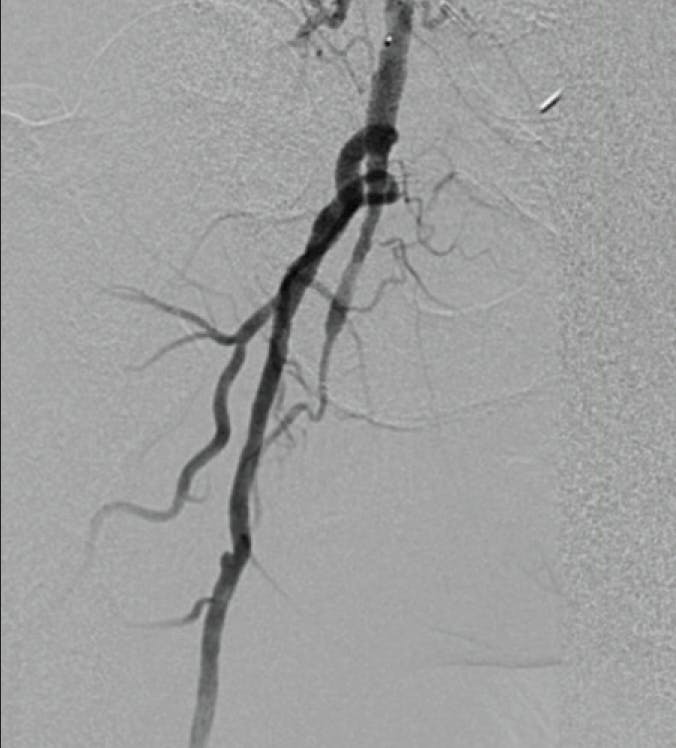
Figure 1. Diagnostic angiogram of the right lower extremity revealed a total occlusion of the right SFA.
TREATMENT
Access was achieved through the right radial artery using ultrasound guidance and a radial cocktail was delivered. The radial access introducer sheath was exchanged for a 6 Fr, 120 cm Sublime™ Guide Sheath, which was advanced to the right iliac artery. A .035, 200 cm Sublime™ Microcatheter was inserted over a .018 Command™ guidewire (Boston Scientific Corporation) and was advanced to the distal segment of the occluded SFA (Figure 2). The .018 guidewire was then exchanged for a .035 Glidewire Advantage® guidewire (Terumo Interventional Systems) to cross the popliteal artery. The Sublime™ Microcatheter was advanced to the popliteal artery and the .035 guidewire was exchanged for a .014, 475 cm ViperWire® guidewire (Abbott). The Sublime™ Microcatheter was removed and balloon angioplasty was performed using a 5.0 X 150 mm Sublime™ .018 RX PTA catheter (Figure 3). Subsequently, a radial-length .018, 6.0 X 150 mm In.Pact™ drug-coated balloon (DCB; Medtronic) was delivered and then inflated (Figure 4).
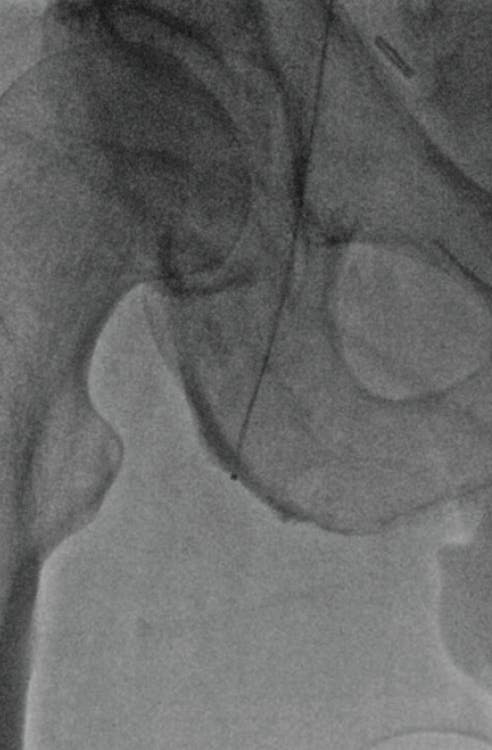
Figure 2. Sublime™ Microcatheter advanced to the distal segment of occluded SFA.
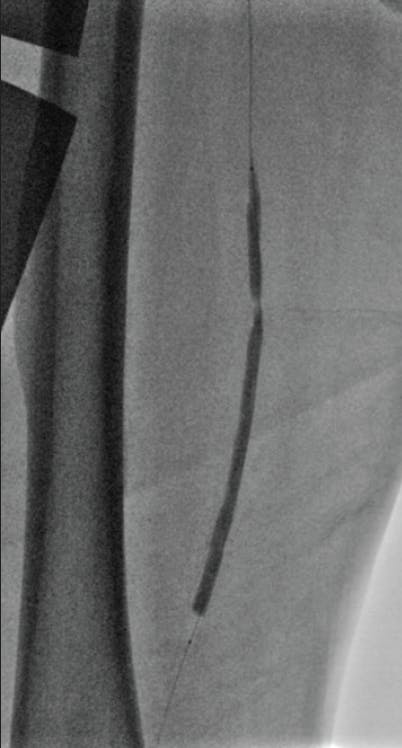
Figure 3. Balloon angioplasty performed using 150 mm Sublime™ .018 RX PTA catheter.
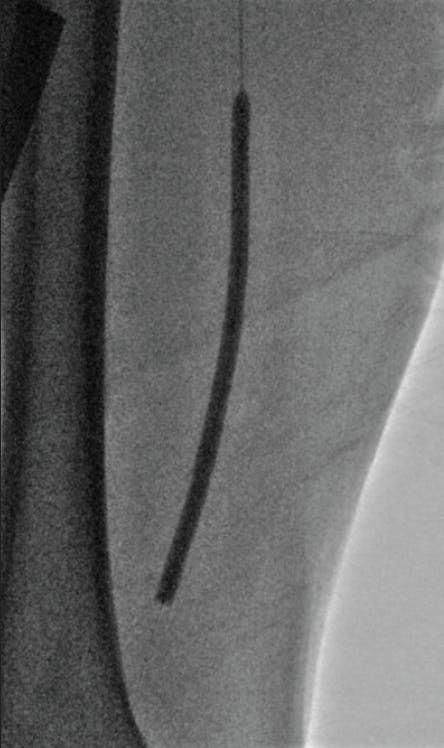
Figure 4. Inflation of radial-length .018 In.Pact™ DCB.
POSTPROCEDURE OUTCOME
A final angiogram revealed < 10% residual stenosis with a type B dissection (Figure 5). The physician elected to not stent at this point.
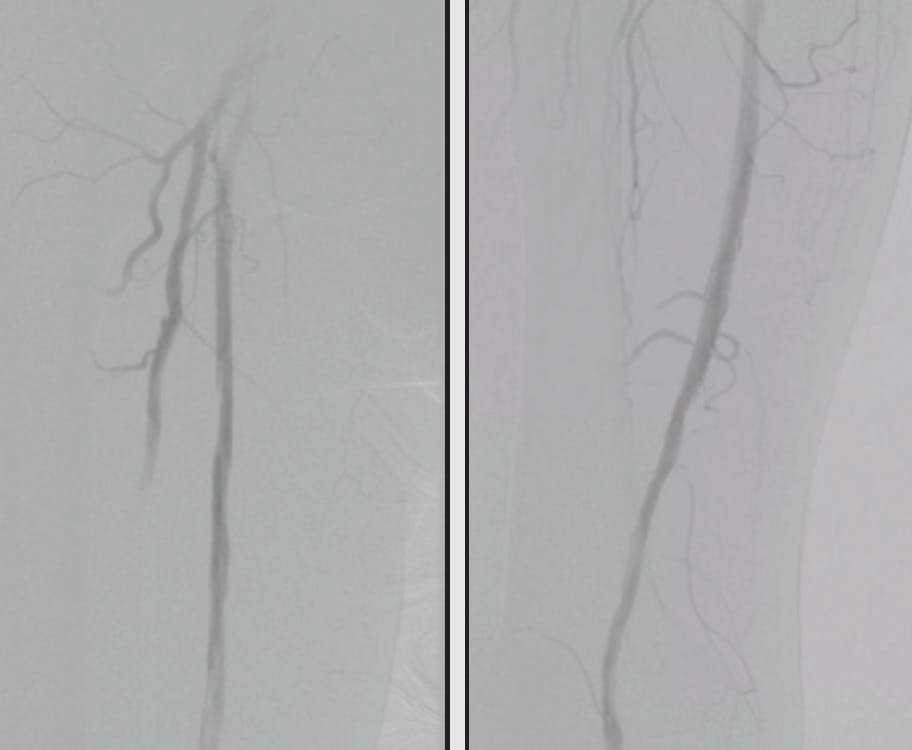
Figure 5. Final angiogram revealed < 10% residual stenosis with type B dissection.
Caution: Federal (US) law restricts the Sublime™ Radial Access Guide Sheath, the Sublime™ Radial Access .014 and .018 RX PTA Dilatation Catheters, and the Sublime™ Radial Access .014, .018, and .035 Microcatheters to sale by or on the order of a physician. Please refer to each product’s Instructions for Use for indications, contraindications, warnings, and precautions. SURMODICS, SUBLIME, and SURMODICS and SUBLIME logos are trademarks of Surmodics, Inc. and/or its affiliates. Third-party trademarks are the property of their respective owners.
1. Sayfo S. Radial to peripheral: what is possible. Presented at: Cardiovascular Innovations Foundation (CVI) Annual Meeting; July 20-22, 2023; Austin, Texas.
2. Amin AP, Patterson M, House JA, et al. Costs associated with access site and same-day discharge among Medicare beneficiaries undergoing percutaneous coronary intervention: an evaluation of the current percutaneous coronary intervention care pathways in the United States. JACC Cardiovasc Interv. 2017;10:342-351. doi: 10.1016/j.jcin.2016.11.049

Advertisement
Advertisement