Advertisement
Advertisement
November 2023 Supplement
Sponsored by Surmodics, Inc.
Tackling CLTI From Alternative Access Sites
A conversation with Imraan Ansaarie, MD.
Dr. Imraan Ansaarie, an interventional cardiologist in St. Augustine, Florida, embraced radial access in 2016 after one of his femoral patients experienced a retroperitoneal bleed. This event inspired him to develop radial techniques even before the introduction of specialized tools designed for radial-to-peripheral procedures. Today, he performs > 95% of his lower extremity arterial and venous cases via radial, ulnar, pedal, or combined forearm-pedal access—an approach he has dubbed minimal alternative access lower extremity intervention, or MáLEI.1 Dr. Ansaarie’s passion is treating chronic limb-threatening ischemia (CLTI) while trying to reduce the risk of femoral complications associated with these challenging interventions. We spoke with him about his radial journey and the MáLEI approach.
How do you select lower extremity patients for radial, ulnar, pedal, or a combined radial-pedal approach?
I'm very comfortable doing radial or ulnar access when contrast use is of less concern and I do not have to rely upon intravascular ultrasound (IVUS) completely. However, I also treat many patients with advanced kidney disease, where contrast must be strictly limited. I use mainly IVUS imaging in these patients via pedal access because most CLTI patients need treatment at the popliteal artery or below, and IVUS does not yet reach this far from the wrist. About 30% of our cases are radial only, 35% are combined transradial and transpedal, and 35% are pedal only.
In terms of transradial access (TRA) case complexity, at this point, I’ve been blessed to have been allowed to perform everything from the wrist—literally. My first TRA intervention was a completely occluded, severely calcified (TASC D) superficial femoral artery (SFA) in a patient with end-stage chronic obstructive pulmonary disease.
Could you describe the hybrid radial-pedal approach?
These tend to be cases with 100% occlusions at the SFA, popliteal, or tibial levels. Let’s say I come down from the radial and try to cross a popliteal occlusion. The proximal cap may be less favorable to cross (CTOP type III and IV) from above with the tools currently available. I can’t get through the true lumen and would like to avoid subintimal dissection at this stage of the procedure. In these cases, I upsize my 4/5 Fr Glidesheath Slender® introducer sheath (Terumo Interventional Systems) to a 5 Fr Sublime™ Radial Access Guide Sheath (Surmodics, Inc.), and then get secondary artery access in the pedal artery, again using a 4/5 Fr Glidesheath Slender® sheath. I cross the lesion from the retrograde approach, and now I'm able to floss the vessel. I can perform an intervention from either direction.
Which patients are not candidates for the radial access (MáLEI) approach?
You may not have a radial or ulnar artery (surgical resection). You could have an asymptomatic radial artery occlusion from a previous TRA procedure with single-vessel runoff to the hand. This is about 5% of our patients. In our practice, I generally avoid TRA in these patients unless the vessel is > 4.0 mm.
We also frequently do tibial-to-tibial interventions in our practice, either from one leg to the contralateral leg or in the same limb from anterior tibial artery to posterior tibial artery or any of the four combinations. One limitation is anomalous anatomy, which can preclude this approach. Like the hybrid radial technique, this approach can be done safely with 4 and 5 Fr access.
Finally, it’s possible to have extreme tortuosity of the thoracic aorta or the aortic arch (right radial approach) that precludes you from coming down from above. You may have tried TRA in these situations and have been unable to cross, especially in a thickly calcified lesion that won’t give, and the entire system is prolapsing in the ascending aorta. So, you may need closer contact with the chronic total occlusion (CTO), afforded by either antegrade femoral access or by using a contralateral access site.
You’ve integrated the Sublime™ 5 Fr Radial Access Guide Sheath into your practice. Can you describe how you use it?
When doing infrapopliteal work, I typically don't need a 6 Fr sheath because everything I need to use can go through a 5 Fr system. There’s no reason to upsize and put a 6 Fr sheath into a patient. Through the retrograde approach, you can floss the vessel and place your stents if the case is complex. So, the 5 Fr Sublime™ Sheath is my go-to for most infrapopliteal work.
The 5 Fr sheath can be useful even for highly complex cases. For example, for an occlusion in the anterior tibial artery, you insert a Sublime™ 5 Fr Sheath and try to cross the lesion. If it’s a heavily calcified lesion, you may want to perform an orbital atherectomy and prolonged balloon angioplasty. Even so, the result may not be desirable due to dissection or suboptimal balloon expansion. In that case, I would put in a 5 Fr sheath from the pedal access site and place a small coronary stent. Then I’m done, with two small 5 Fr holes—nothing to get upset about and very easily manageable.
Has the Sublime™ 5 Fr Radial Access Guide Sheath allowed you to expand the range of patients you feel comfortable treating from the radial approach?
Yes, absolutely. It’s made things safer for my elderly female patients with smaller access sites. With every French size increase, irrespective of whether you're in the radial, pedal, or femoral artery, you're increasing the risk of a complication2—my mentors, Drs. Tanvir Bajwa and Suhail Allaqaband, always reminded me that smaller French sizes improve procedural outcomes. So, why not follow this advice if I can do all my work through a 5 Fr system?
I have many female patients who have smaller-size radial arteries. For example, instead of having a 2.7 mm radial artery, it may be 2.5 mm. In that case, I'm a little nervous about using a 6 Fr sheath. With a 5 Fr sheath, I’m not as worried. Female patients are already at a higher risk of major vascular complications.3 It is paramount to keep your access size as small as possible.
In a study you published in 2021,1 you found considerable cost savings associated with using TRA compared with transfemoral access (TFA) in a hospital setting. What were the main drivers of those savings?
My intent with that paper was to clear up some misunderstandings that may have stood in the way of adopting the MáLEI approach. Some felt this approach consumed more resources than the standard femoral approach or might lead to worse outcomes, either access site complications or strokes. But the most important misunderstanding was crossover, the perception that > 70% of cases needed to be changed over to femoral access.
We felt that if you manually remove a 6 Fr sheath after a TFA procedure, there are 6 hours of bed rest followed by 1 to 2 hours of ambulation before you can consider discharging the patient. In our experience, with TRA, patients walk right from the table, even after full anticoagulation, and most can be discharged within 2.5 hours.
In the study, our reported median time to discharge for TRA was longer than 3 hours, but it was still 5 hours less than for TFA (6.6 hours [IQR, 5.3-7.2 hours] vs 11.6 hours [IQR, 6.9-28.3 hours]; P = .43). The equipment cost was higher for TRA, but savings in total hospital duration more than made up for this. However, the most important finding was that 100% of the patients could be treated with single or dual access without femoral access. In an outpatient setting, given the need for discharge efficiency, this could be reduced to under 2.5 hours with no groin precautions. And no concern or worry about post-procedure hypotension due to femoral access complications. The peace of mind this brings is priceless.
You mentioned long discharge times for TFA patients. Don’t vascular closure devices significantly reduce time to ambulation?
Yes, and we use these when we need to use femoral access in an antegrade fashion; it does help facilitate early ambulation. But it’s important to remember that patients undergoing endovascular procedures typically have had prior procedures, sometimes repeatedly. Their arteries are often smaller and calcified, and there can be a lot of scar tissue and pathology in their groins. Vascular closure devices still have about an 8% to 9% risk of failure,4 and some of these failures can be catastrophic. You can manage these severe complications on an outpatient basis with additional procedures and resources, but at times these patients may need surgical rescue.
How do you train new operators in the MáLEI approach?
First, I would focus on radial access instead of tibial access. For me, there's no question that if the radial or ulnar artery is appropriate, it is much easier to access and an easier procedure than tibial access. Tibial access has its nuances. Radial access is preferable to ulnar, especially if the size of the vessels is the same.
For TRA, I advise beginning with 4 Fr peripheral angiograms. First, you need to be comfortable using ultrasound for all your access—as Dr. Jihad Mustapha says, it’s one of your most important tools. If the radial artery is > 2.8 mm on ultrasound assessment, you can be very comfortable doing a peripheral angiogram and intervention of the lower extremity. In my experience with 450 cases, the risk of sheath-related complications is under 0.5%. Then, you achieve access using ultrasound guidance, a 21 gauge needle, a .018 wire, and a short 5 Fr, 11 cm access sheath. With your sheath in, give heparin and get a radial and brachial artery angiogram. This will help you if you have an anomalous radial artery takeoff. Next, place a 4 Fr pigtail catheter over the .035 Bentson wire and go down into the descending aorta. A 125 cm catheter will get you halfway into each of the iliac arteries, and then you can image the runoff to the legs individually. About 95% of the time, these few things will get you through the first few steps of MáLEI.
We advise people to begin by first obtaining about 30 peripheral angiograms of the lower extremity using the radial artery. Your staff will become comfortable knowing how to set up the room, how to help you get access, remove the sheath, and so on.
Peer-to-peer training is essential for getting a radial program started. An excellent example is the radial program headed by Dr. Babar Ali in Washington, DC. Dr. Ali was very interested in learning the MáLEI technique, so 4 years ago I traveled to DC and proctored him and his staff. Today he’s proficient with radial and pedal access and is a dedicated minimal-alternative-access practitioner.
How do you advise moving on to interventions?
You should start with your “chip shot” cases. For me, the chip shot would not be a long CTO (failed multiple times), calcified and long type B or C lesions, or one-vessel runoff. It's a matter of learning how to finagle your wires and catheters, which are longer than normal. We have now been fortunate enough to have completed 450 cases over 5 years, using all kinds of wires and catheters, so we have developed our own best practices.
For mid-to-distal occlusions in the SFA, particularly in a taller patient (> 6 ft 2 inches) with a very heavily calcified lesion, there’s no question that there are limitations as to the tools available today, as Dr. Craig Walker will attest. For example, due to length limitations, IVUS and certain atherectomy and laser systems cannot be used; however, you can utilize orbital atherectomy, stents, and drug-coated balloons.
Can you tell us about your experience with Sublime™ Radial Access Platform?
I’m a huge fan of the Sublime™ 5 Fr longer sheaths (120 or 150 cm). At this point, they’re the only commercially available 5 Fr radial-length sheaths. I can safely use the Sublime™ 5 Fr Guide Sheath for most infrapopliteal work. If you have extreme tortuosity (ie, the aorta is tortuous and it is a difficult lesion), and you suspect you need a system with heavier body, a 6 Fr system might be necessary to give you steadier engagement, but the 5 Fr sheath works just fine most of the time. I believe a lot more patients would get treatment via TRA if the 5 Fr sheath were being used more widely and in a safe fashion.
We have also done a lot of work from the wrist using the 250 cm Sublime™ RX PTA Dilatation Catheter, especially in the dorsalis pedis and the common plantar or the lateral plantar branch. That 250 cm is a great length for me. I love it because it’s long enough to reach into the foot, but it’s not so long that half of the device is hanging off the back of the table. Using this balloon, I’ve been able to go down into the lateral or the medial plantar artery at the bottom of the foot or close to the digital branches.
Caution: Federal (US) law restricts the Sublime™ Radial Access Guide Sheath, the Sublime™ Radial Access .014 and .018 RX PTA Dilatation Catheters, and the Sublime™ Radial Access .014, .018, and .035 Microcatheters to sale by or on the order of a physician. Please refer to each product’s Instructions for Use for indications, contraindications, warnings, and precautions. SURMODICS, SUBLIME, and SURMODICS and SUBLIME logos are trademarks of Surmodics, Inc. and/or its affiliates. Third-party trademarks are the property of their respective owners.
Case Report:
Successful Three-Vessel Below-the-Knee Intervention From the Left Radial Artery Using a 5 Fr, 150 cm Sublime™ Guide Sheath
By Imraan Ansaarie, MD
PATIENT PRESENTATION
An 82-year-old female was admitted to the hospital for chronic nonhealing wounds on both heels.
DIAGNOSTIC FINDINGS
Bilateral lower extremity angiogram showed a subtotal occlusion of the tibioperoneal trunk (TPT) and a completely occluded posterior tibial (PT) artery (Figure 1).
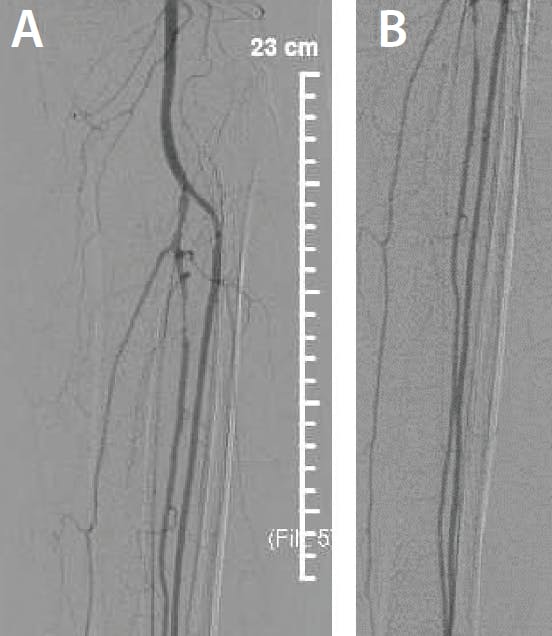
Figure 1. Diagnostic angiogram revealed subtotal occlusion of the TPT (A) and a completely occluded PT artery (B).
TREATMENT
A 5 Fr introducer sheath was placed in the left radial artery using ultrasound guidance and a radial cocktail was delivered. A pigtail catheter was then inserted and advanced to the iliac bifurcation via a .035 wire. Bilateral lower extremity runoff was performed, whereupon the decision was made to treat the left lower extremity because ulceration of the left heel appeared slightly worse than on the right. Using a .035 guidewire placed in the popliteal artery, the 5 Fr introducer sheath was exchanged for a 5 Fr, 150 cm Sublime™ Guide Sheath (Figure 2), which was advanced into the left mid SFA. A .014 guidewire and a 2.5 X 150 mm PTA balloon catheter on a 200 cm shaft were used to cross the lesion in the TPT and were placed in the distal peroneal artery. Orbital atherectomy using a 1.25 mm device was performed in the TPT and peroneal artery (Figure 3), followed by balloon angioplasty. Using the same technique, the lesion was crossed in the anterior tibial (AT) artery and the PT artery, and angioplasty was performed in the proximal, mid, and mid-to-distal sections (Figure 4). The procedure required 50 minutes of fluoroscopy.
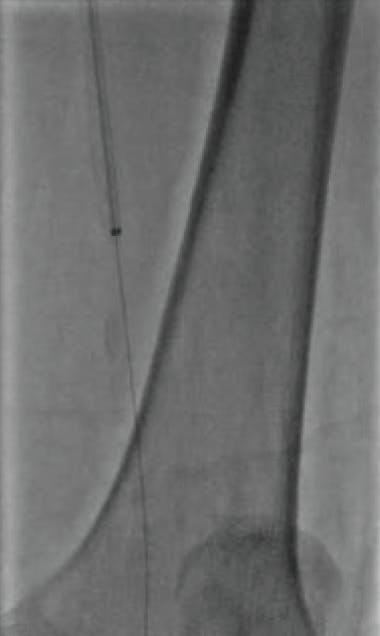
Figure 2. 5 Fr, 150 cm Sublime™ Guide Sheath.
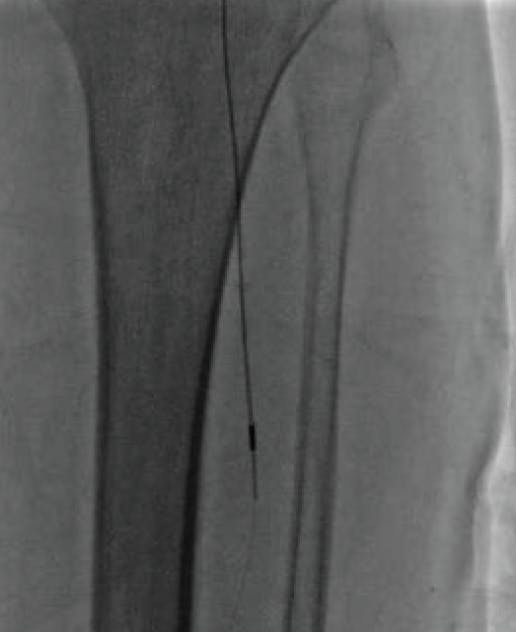
Figure 3. Orbital atherectomy of TPT and peroneal artery.
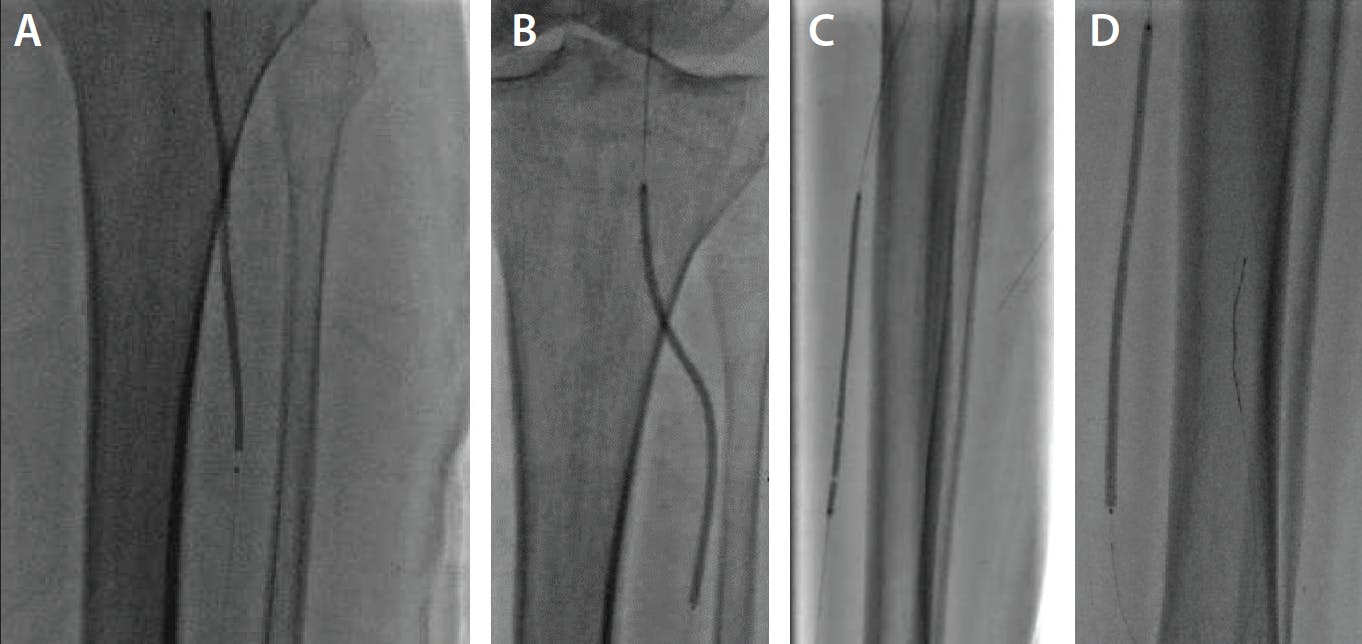
Figure 4. Balloon angioplasty of TPT and peroneal artery (A, B), AT artery (C), and PT artery (D).
POSTPROCEDURE OUTCOME
The final arteriogram revealed 2.5-vessel runoff to the left foot with adequate perfusion of the heel (Figure 5).
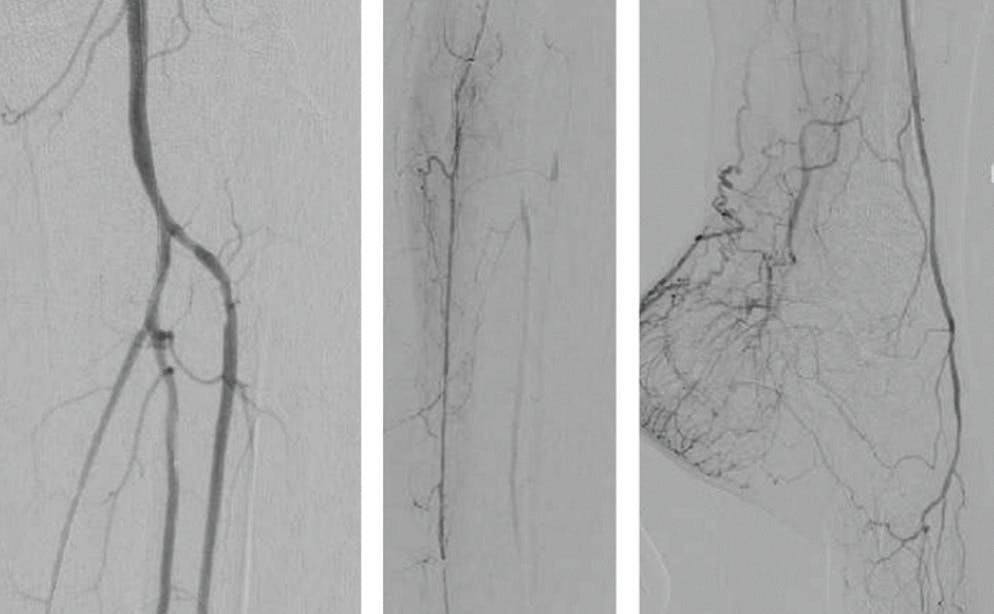
Figure 5. Final arteriogram revealed adequate perfusion of the heel.
Caution: Federal (US) law restricts the Sublime™ Radial Access Guide Sheath to sale by or on the order of a physician. Please refer to the product's Instructions for Use for indications, contraindications, warnings, and precautions. SURMODICS, SUBLIME, and SURMODICS and SUBLIME logos are trademarks of Surmodics, Inc. and/or its affiliates. Third-party trademarks are the property of their respective owners.
1. Ansaarie I, Goldfaden RF, Choksi R. A retrospective cohort study to evaluate the efficacy and safety of minimal arterial access lower-extremity intervention via peripheral orbital atherectomy. Vasc Dis Manag. 2021;18(6). Accessed August 31, 2023. https://www.hmpgloballearningnetwork.com/site/vdm/original-contribution/retrospective-cohort-study-evaluate-efficacy-and-safety-minimal
2. Aminian A, Saito S, Takahashi A, et al. Comparison of a new slender 6 Fr sheath with a standard 5 Fr sheath for transradial coronary angiography and intervention: RAP and BEAT (Radial Artery Patency and Bleeding, Efficacy, Adverse evenT), a randomised multicentre trial. EuroIntervention. 2017;13:e549-556. doi: 10.4244/EIJ-D-16-00816
3. Pandie S, Mehta SR, Cantor WJ, et al. Radial versus femoral access for coronary angiography/intervention in women with acute coronary syndromes: insights from the RIVAL trial (Radial Vs femorAL access for coronary intervention). JACC Cardiovasc Interv. 2015;8:505-512. doi: 10.1016/j.jcin.2014.11.017
4. Noori VJ, Eldrup-Jørgensen J. A systematic review of vascular closure devices for femoral artery puncture sites. J Vasc Surg. 2018;68:887-899. doi: 10.1016/j.jvs.2018.05.019

Advertisement
Advertisement