Advertisement
Advertisement
April 2024
Sponsored by FastWave Medical
The Next Wave of Intravascular Lithotripsy: A Panel Interview on Advances in Treating Calcific PAD
With Arthur Lee, MD; Amir Kaki, MD; Miguel Montero-Baker, MD; Venkatesh Ramaiah, MD, FACS; and Peter Schneider, MD
Peripheral artery disease (PAD) has no shortage of plaque modification tools. However, as catheter-based tools and techniques have improved, the complexity of disease has also increased. When faced with vascular calcification and its associated complexity and potential complications, each of the traditional approaches falls short in some critical way—often leaving physicians to contend with suboptimal revascularization efforts and poorer long-term outcomes.
In 2016, intravascular lithotripsy (IVL) emerged as a disruptive technology, offering a novel, safe, and effective approach to calcium modification built on the principles of lithotripsy in urology. Using sonic pressure waves—or shock waves—IVL selectively targets and fractures intimal and deeper medial calcium deposits while preserving vessel integrity.
Although IVL marks a significant advancement in treating calcified lesions, existing technology is not without its limitations. To extend the benefits of IVL to a broader patient population with more diverse lesion characteristics, new devices must simultaneously solve several key challenges, including greater deliverability and crossability, longer balloon lengths, shorter procedural time, more and faster pulses, and improved balloon rupture resistance.
A next-generation IVL device designed to meet these challenges recently completed first-in-human (FIH) use. The following panel discussion provides expert perspectives on the impact of early IVL therapies and the exciting potential for this latest innovation in IVL technology to advance the therapy to more patients and lesion types.
MODERATOR

PANELISTS




Dr. Lee: Managing calcium in PAD is challenging and impacts outcomes. Although multiple tools exist to address calcium, each has a unique mechanism of action. Which do you prefer and why?
Dr. Schneider: My impression is that calcification has worsened, becoming both more prevalent and more diffuse. This is true for patients with chronic limb-threatening ischemia and those with claudication. The calcific process crosses TransAtlantic Inter-Society Consensus classifications and confounds all the guideline systems. What might be a straightforward procedure to manage a short occlusion or a longer stenosis of the femoropopliteal segment becomes a challenge when calcified. Calcification affects arteries of all calibers but especially from the infrarenal aorta to the feet. Although standard angioplasty was the norm for a long time, we are now confronting more complex disease morphologies and have higher expectations for the acute results and durability of our treatment plans. A plain balloon faces significant limitations in a calcified lesion, and this ushers in a valuable role for IVL.
Dr. Montero-Baker: I agree. To take that a step further, I find IVL to be particularly valuable due to its ability to selectively target and fracture both intimal and medial calcium. This technique minimizes vascular tissue damage and enhances vessel flexibility, thereby facilitating optimal stent expansion and reducing the likelihood of vessel dissection or perforation. Atherectomy complements IVL by physically debulking calcified plaque through directional, rotational, or orbital mechanisms. This reduction in plaque burden augments vessel compliance and creates a more favorable environment for subsequent interventions.
Together, IVL and atherectomy not only optimize vessel compliance but also theoretically improve the delivery of antirestenosis drugs. By effectively preparing the vessel and removing calcification barriers, these technologies can improve the efficacy of drug-coated balloons and stents, which require direct vessel wall contact for drug delivery. This synergistic approach to vessel preparation has the potential to achieve better luminal gain, minimize procedural complications, and decrease the rate of restenosis, offering a significant advancement in the treatment of PAD patients with calcified lesions.
Dr. Lee: Let’s focus on peripheral IVL. How has it impacted your practice since it received FDA clearance? Where do you see it going in the future?
Dr. Ramaiah: In a relatively short time, IVL has become essential in my atherectomy toolkit. With IVL, I’m now addressing calcified lesions that, half a decade ago, might have gone untreated. I have used IVL with great results in calcified iliac arteries all the way down to the ankle, with good and consistent intraluminal gain. As a result of the positive outcomes I’ve experienced with IVL, I’ve found a reduced need for stents, bailout stenting, and embolic protection. This has been particularly beneficial in regions where the use of a stent is suboptimal, such as in the popliteal and below-the-knee arteries, offering durable results when used as a standalone therapy.
But more broadly, IVL has really democratized the treatment of peripheral calcium by simplifying what has historically been a complex and specialized procedure. The streamlined learning curve allows a wider range of clinicians to bring this advanced technology into clinical practice relatively quickly. As a result, optimal treatment of peripheral PAD is no longer confined to a few specialized centers and operators but can be accessible to patients no matter where they receive care.
Dr. Kaki: Dr. Ramaiah nicely summarized the impact of IVL on the PAD calcium, and I agree that it has significantly impacted how many of us approach peripheral and coronary artery procedures. However, there are several improvements I would like to see in next-generation IVL technology. Deliverability is critical, particularly in chronic total occlusions (CTOs) and highly stenosed lesions that are severely calcified. In these cases, ancillary crossing devices are needed to get the IVL device across the lesion, which can increase the risk of complications and, of course, cost. Second, expanding the pulse count limit would be highly beneficial when treating extensive or multiple blockages. Finally, a more durable balloon would both save time and reduce potential complications.
Dr. Lee: Innovation is a constant in our field—what’s on the horizon for next-generation IVL devices?
Dr. Schneider: I’m particularly excited about what we’re seeing from FastWave Medical, a company making rapid progress toward the advancements Dr. Kaki outlined. Their electric-IVL system promises improved deliverability, more pulses per catheter, a faster pulse rate, and a more rupture-resistant balloon material with a nice rewrap, enabling the treatment of multiple lesions with the same device (Figure 1). Plus, the system’s emitter is designed to deliver more uniform circumferential cavitation and consistent sonic pressure. Beyond this, FastWave is also developing a laser-based IVL system with a coronary application. Perhaps Dr. Kaki could update us on that later in our discussion.
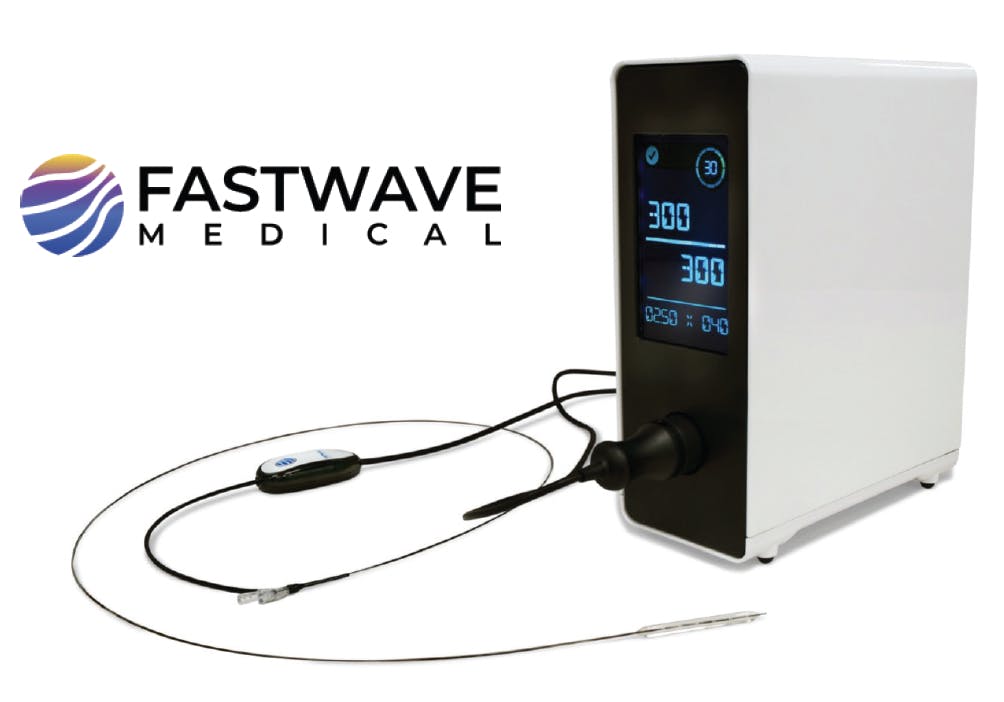
Figure 1. FastWave Medical’s IVL Peripheral System.
Dr. Ramaiah: In January 2024, I had the privilege of being part of the FIH trial of the FastWave electric-IVL, which enrolled eight patients and nine limbs (Figure 2). Within this group, three individuals had presented with CTOs. My experience with the FastWave catheter was extremely positive; it proved to be highly deliverable and crossable in the first CTO. Due to its handling in that case, I felt comfortable attempting to cross the other two CTOs without predilatation. The balloon delivered successfully on both lesions. Outcomes were uniformly successful across the board with minimal residual diameter stenoses.
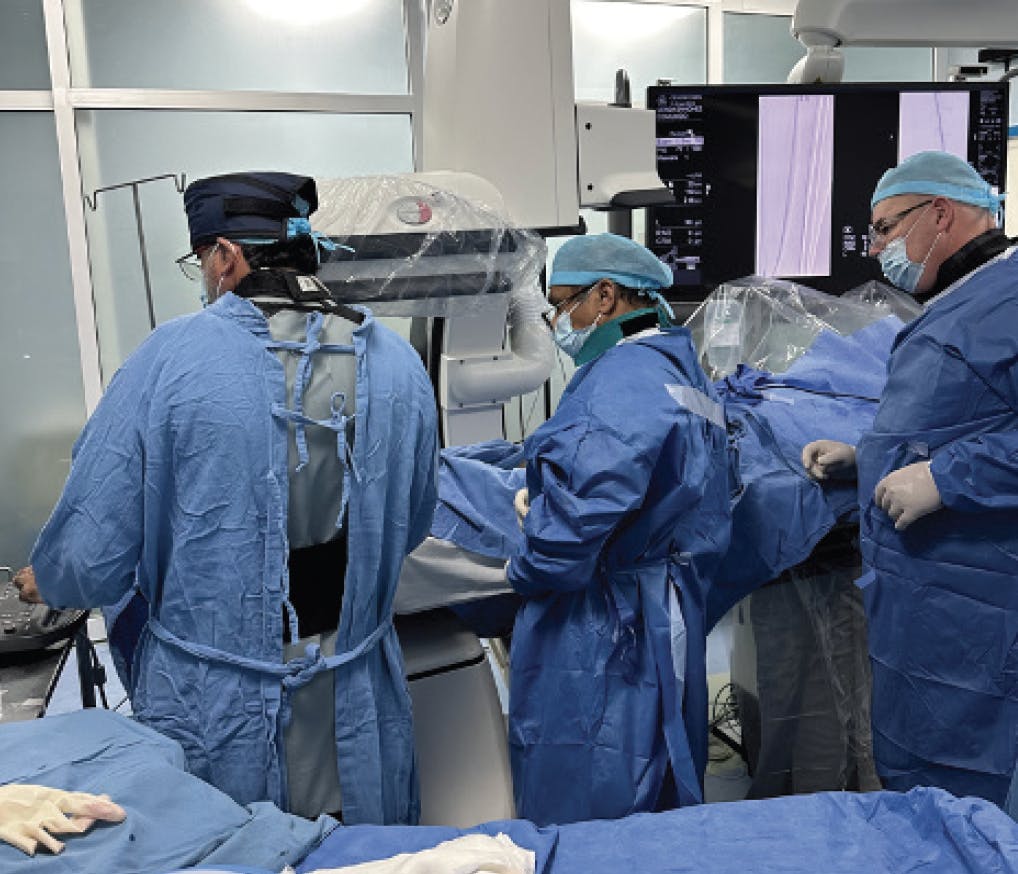
Figure 2. Dr. Ramaiah treating one of eight patients with the FastWave Peripheral IVL system in the FIH study.
Dr. Lee: As Dr. Ramaiah mentioned, FastWave completed a FIH study in Mexico in early 2024. Dr. Montero-Baker, as one of the study’s primary investigators, what results can you share?
Dr. Montero-Baker: In short, there were no adverse events reported and the postprocedural results were remarkable. We achieved a 100% success rate in crossing all treated lesions (fempop), including the three CTOs Dr. Ramaiah mentioned. This led to the restoration of blood flow in all affected limbs, marking a significant milestone in treatment outcomes. Prior to treatment, the average diameter stenosis in the lesions was > 80%, reflecting severe arterial blockages. After FastWave electric-IVL treatment, the mean diameter stenosis was nearly 5.5%, or a 93% reduction from baseline, indicating an almost complete resolution of the blockages. This not only showcases the efficacy of FastWave electric-IVL in treating PAD but also its potential to transform patient care by improving blood flow and reducing the risk of future interventions.
FIH CASE EXAMPLES
Figure 3. A man in his late 80s with diabetes, hypertension, Rutherford clinical classification 4, ankle-brachial index of 1.96, and severe calcification of his left distal femoropopliteal artery, which was totally occluded, was treated with a 6 X 60 mm FastWave Peripheral IVL device delivering 90 pulses.
Figure 4. A woman in her mid-80s with hypertension, Rutherford clinical classification 5, ankle-brachial index of 0.54, and severe calcification of her left popliteal artery with > 70% diameter stenosis was treated with a 5 X 60 mm FastWave Peripheral IVL device delivering 120 pulses.
Dr. Lee: Dr. Schneider mentioned that FastWave is also developing a next-generation laser-IVL platform. Dr. Kaki, what has been your early experience with this system?
Dr. Kaki: The FastWave laser-based system is a potential IVL game-changer for several reasons. To start, its improved deliverability via an ultra-low crossing profile will allow us to safely access and effectively treat even more types of lesions. Secondly, the laser-based system is designed to deliver significantly more energy pulses with faster pulsing cycles than its electric predecessors—this is especially important in the coronary space where balloon uptime is a concern—while providing more precise and consistent sonic pressure. Lastly, the system’s longer balloons will remove the limitations we see with current size matrices.
I experienced each of these improvements firsthand during a recent cadaver lab, along with the laser-based system’s impressive calcium modification capabilities (Figure 5). No question—FastWave is deserving of close attention as a groundbreaking player in IVL technology.
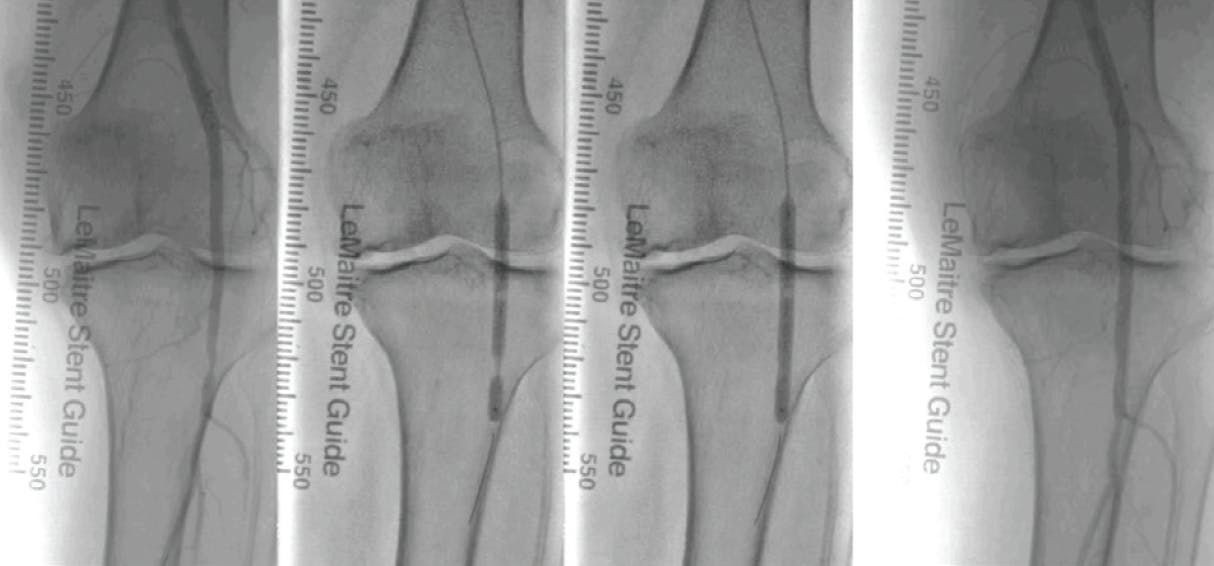
Figure 5. Dr. Kaki leading a cadaver study testing FastWave’s Laser-IVL system.
Dr. Lee: Thank you all for sharing your time and perspectives. It’s clear from our conversation that the current IVL technology has been a monumental step forward in treating increasingly prevalent severe calcific disease. But its limitations can’t be ignored. Next-generation IVL technologies like FastWave are anticipated to further redefine the treatment paradigm with greater deliverability, increased pulses, and improved durability. With these enhancements, IVL is poised to deliver an even more versatile, efficient, and effective solution for managing complex calcific peripheral arterial and coronary disease.
Disclosures
Dr. Lee: Consultant to FastWave Medical.
Dr. Kaki: Consultant to FastWave Medical.
Dr. Montero-Baker: Consultant to FastWave Medical.
Dr. Ramaiah: Consultant to FastWave Medical.
Dr. Schneider: Consultant to FastWave Medical.
Advertisement
Advertisement