Advertisement
Advertisement
August 2024
Sponsored by Medtronic
Dialysis Highway: Paving the Way to Maturation of Percutaneous Arteriovenous Fistulas
Physicians share their approaches to pAVF maturation, highlighting key considerations for technical success and patient satisfaction.
By Rashid Sharaf, MD, FASDIN, and Dalia Zaky Dawoud, MD, MSc, FASDIN


The creation of a percutaneous arteriovenous fistula (pAVF) for hemodialysis access with the Ellipsys™ vascular access system (Medtronic) has several advantages over surgery. These include improved cumulative and functional patency, reduced secondary procedures, and, as a result, cost savings.1,2 This is also an appealing alternative for patients who are unwilling or unable to have surgery.3 The ability of dialysis centers to have a comprehensive strategy around the maturation and cannulation phases of the process is essential. Physiologic maturation is characterized by vein thickening, postoperative increase in vessel diameter, and increase in blood flow, generally occurring by 3 weeks.4 Clinical maturation means the AVF can be reproducibly cannulated with two large-bore needles and provide sufficient blood flow for adequate hemodialysis. Rapid maturation of pAVFs has been demonstrated when maturation procedures are performed as necessary in a timely manner.5 Today, two leaders in the field share their approach to maturation that ensures pAVF success and patient satisfaction.
Dr. Rashid Sharaf and his team, including Timoteo Cabrera, MD, and Jemma Reinhardt, RPA, have created > 1,000 pAVFs and believe that creating the fistula is the easiest part of the process. According to Dr. Sharaf, the focus needs to be shifted to the maturation process and cannulation; over time, he and his team have created an algorithm for this (see bullets and Figure 1). Patients return to the office 1 week after pAVF creation to check blood flow and waveforms using ultrasound. If brachial artery flow is ≥ 900 mL/min, waveforms are good, and target vein flow is > 500 mL/min, the patient is cleared for cannulation by week 3. If blood flow is not sufficient and/or waveforms demonstrate resistance, other steps are taken to facilitate maturation (Figure 1).
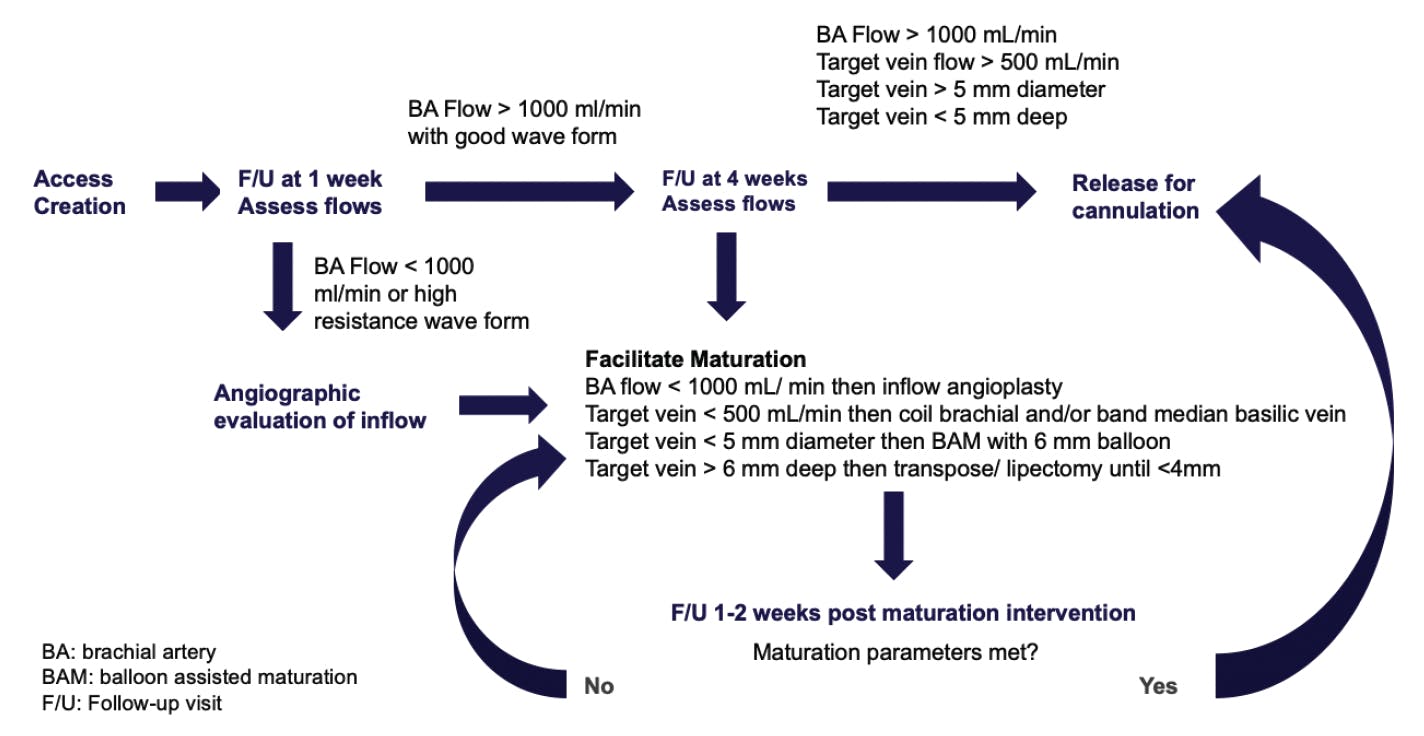
Figure 1. Follow-up algorithm for pAVF patients at Star Vascular Access Center.
- If brachial artery flow is < 1,000 mL/min, perform an inflow angioplasty. Notably, Dr. Sharaf has found that good waveform and a flow of approximately 900 mL/min is sufficient, and no intervention is needed.
- If the target vein flow is < 500 mL/min, determine where the blood is going:
- If flow is shunting to the deep veins, coil the brachial and ulnar veins.
- If the cephalic is the target vein and flow is shunting through the basilic vein, check if split cannulation is possible. If so, map it that way. If not, ligate the basilic vein.
- If the basilic is the target vein, check if cannulation is possible. If so, map it that way. If not, send the patient for transposition.
- If the target vein is < 5 mm in diameter, perform angioplasty in the target vein with a 6-mm balloon to ease cannulation.
- If the target vein is > 6 mm deep, wait until 3 to 5 weeks postcreation and then perform liposuction to make it more superficial (within 4 mm). If liposuction is inadequate, send the patient for superficialization. It is essential that the fistula is palpable.
MANAGING EXPECTATIONS
Dr. Sharaf approaches his patients with full transparency. He tells them to prepare for several procedures (perhaps surgery) to prepare the fistula and expect it will take 2 to 3 months. Often, it takes less time than that, and patients are pleasantly surprised.
Cannulators have become more familiar with endovascular fistulas; the field is becoming more experienced and sharing knowledge across centers. Although cannulation can be a challenge, successful cannulation rates are about the same as surgical fistulas.
New users should expect a learning curve of 15 to 20 cases and remember they are not creating a surgical fistula—pAVFs will look different. It is essential that operators understand that the process to create a functional pAVF extends beyond the initial procedure. Monitoring and assisting with maturation are critical parts of the process. With experience and their algorithm, Dr. Sharaf’s center has decreased the typical number of interventions to achieve maturation from approximately three to one per patient, freeing up valuable cath lab time and resources.
A NEW USER’S PERSPECTIVE
Dr. Dawoud, also an interventional nephrologist, has been particularly focused on adding a pAVF option for her patients for the last 2 years. She’s found a few factors that were particularly helpful in making this program a success.
Education and Outreach
Dr. Dawoud has taken the time to visit local dialysis centers and educate on them on pAVFs and good cannulation techniques. She will even bring a portable ultrasound machine so cannulators can see how close the vessel is to the surface. She also welcomes dialysis center staff to come see pAVF creation and/or maturation procedures.
In addition, twice per year she hosts a symposium for administrators and access care coordinators at the surrounding dialysis centers and provides education on access care and pAVFs.
Leveraging Ultrasound
Dr. Dawoud’s team has two full-time sonographers. This has increased the quality of the images, which enables careful and accurate patient selection. Her patients also build a relationship with their sonographer, who becomes a familiar face and partner through the process (Figure 2).
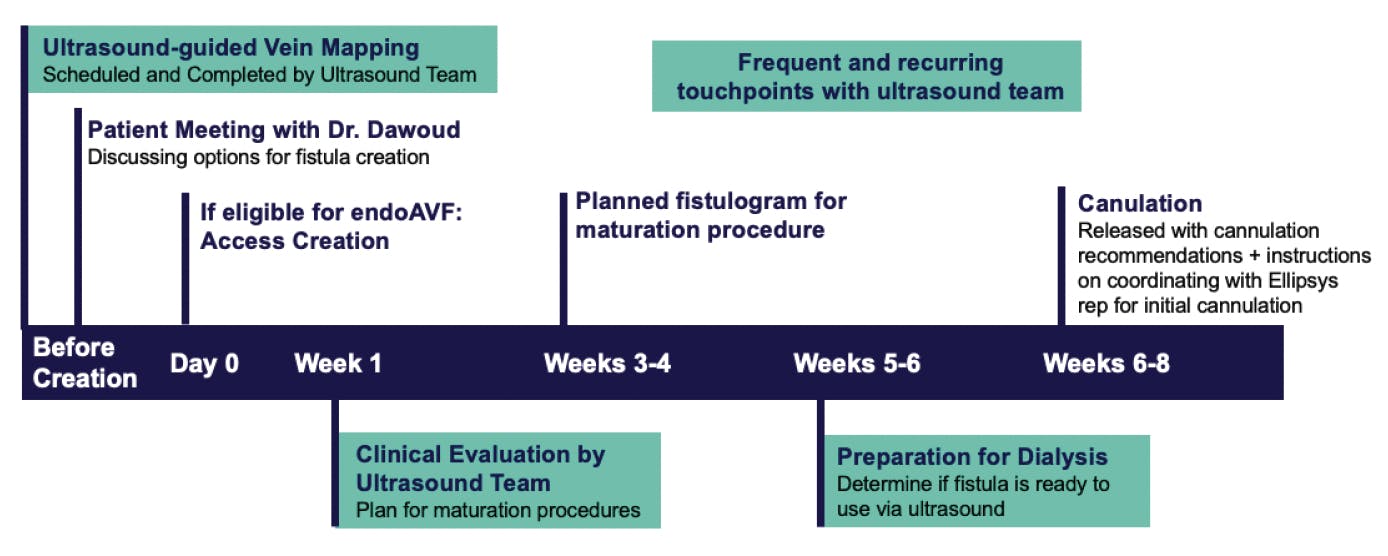
Figure 2. Follow-up schedule for end-stage kidney disease patients at Dr. Dawoud’s center.
Building Relationships
Personalized care and building a relationship with each patient and, ideally, a family member/caregiver really matters. The patients trust Dr. Dawoud and her team, and this improves their adherence and follow-up.
SIGNS OF SUCCESS
Patients are provided with helpful postoperative instructions, including clopidogrel, daily exercises, and fistula care instructions. They have very few issues once maturation is achieved, and this makes everyone from the patients to the nephrologists and dialysis center staff happy. The cannulation rate is approximately 90% for patients who adhere to the follow-up schedule and their fistula care.
Read a companion Medical Affairs Corner piece on CPT coding tips for Ellipsys™ vascular access system pAVF creation here.
1. Hull JE, Jennings WC, Cooper RI, et al. Long-term results from the pivotal multicenter trial of ultrasound-guided percutaneous arteriovenous fistula creation for hemodialysis access. J Vasc Interv Radiol. 2022;33:1143-1150. doi: 10.1016/j.jvir.2022.05.016
2. Yang S, Lok C, Arnold R, et al. Comparison of post-creation procedures and costs between surgical and an endovascular approach to arteriovenous fistula creation. J Vasc Access. 2017;18(suppl 2):8-14. doi: 10.5301/jva.5000723
3. Pisoni RL, Zepel L, Port FK, Robinson BM. Trends in US vascular access use, patient preferences, and related practices: an update from the US DOPPS practice monitor with international comparisons. Am J Kidney Dis. 2015;65:905-15. doi: 10.1053/j.ajkd.2014.12.014
4. Langer S, Heiss C, Paulus N, et al. Functional and structural response of arterialized femoral veins in a rodent AV fistula model. Nephrol Dial Transplant; 2009;24:2201-2206. doi: 10.1093/ndt/gfp033
5. Hull J, Deitrick J, Groome K. Maturation for hemodialysis in the Ellipsys post-market registry. J Vasc Interv Radiol. 2020;31:1373-1381. doi: 10.1016/j.jvir.2020.03.001
Disclosures
Dr. Sharaf: Consultant to Medtronic.
Dr. Dawoud: Consultant to Medtronic.
Ellipsys vascular access system
Indications
The Ellipsys™ system is indicated for the creation of a proximal radial artery to perforating vein anastomosis via a retrograde venous access approach in patients with a minimum vessel diameter of 2.0 mm and less than 1.5 mm of separation between the artery and vein at the fistula creation site who have chronic kidney disease requiring dialysis.
Contraindications
The Ellipsys™ system is contraindicated for use in patients with target vessels that are <2 mm in diameter. The Ellipsys™ System is contraindicated for use in patients who have a distance between the target artery and vein > 1.5 mm.
Potential Adverse Events
Potential complications that may be associated with creation and maintenance of an arteriovenous fistula include, but may not be limited to, the following:
- Total occlusion, partial occlusion or stenosis of the anastomosis or adjacent outflow vein
- Stenosis of the central AVF outflow requiring treatment per the treatment center’s standard of care
- Failure to achieve fistula maturation
- Incomplete vessel ligation when using embolization coil to direct flow
- Steal Syndrome
- Hematoma
- Infection or other complications
- Need for vessel superficialization or other maturation assistance procedures.
CAUTION: Federal (USA) law restricts this device to sale by or on the order of a physician.
Important Information: Indications, contraindications, warnings, and instructions for use can be found in the product labelling supplied with each device.
501523, UC202502149EN©2024 Medtronic. Medtronic and Medtronic logo are trademarks of Medtronic. All other brands are trademarks of Medtronic. For global distribution. 08/2024
Advertisement
Advertisement