Advertisement
Advertisement
January 2024
Intensive Care Management of the Patient With Hemodynamically Significant Pulmonary Embolism
An exploration of pharmacologic and mechanical circulatory support, respiratory management, and emergent reperfusion for managing acute PE.
With an in-hospital mortality rate in excess of 25%, high-risk pulmonary embolism (PE) warrants emergent reperfusion and critical care management1,2; however, intermediate-risk PE represents a broad spectrum of disease, with a mortality range of approximately 2% to 17%.3 Accordingly, both cohorts may have significant right ventricular (RV) dysfunction requiring hemodynamic monitoring and support, emergent reperfusion, and attention to the consequences of critical care interventions such as volume administration and positive pressure ventilation. As RV failure garners more attention and as data in support of catheter-based therapies evolve, therapeutic options for patients with hemodynamically significant PE broaden. Given the complexity and nuance surrounding this patient population, a multidisciplinary PE response team (PERT) discussion is paramount. In this article, we consider pharmacologic and mechanical circulatory support, respiratory management, and emergent reperfusion in a critically ill patient with acute PE.
PATHOPHYSIOLOGY
The right ventricle is a compliant high-volume, low-pressure pump exquisitely sensitive to acute changes in afterload.4 Existing within the pericardial cavity with a shared interventricular septum and myocardial fibers, RV and left ventricular (LV) function are inextricably linked. Ventricular interdependence is an integral feature in the pathophysiology of acute circulatory failure in PE.5 Mechanical pulmonary artery (PA) obstruction and the release of chemical mediators of vasoconstriction increase the impedance to RV ejection. As the right ventricle dilates in an attempt to maintain stroke volume, leftward interventricular septal shift decreases LV filling and output. The resultant increase in RV wall tension and systemic hypotension further drives RV ischemia. The interplay of these mechanisms, known as autoaggravation or the “RV death spiral,” culminates in cardiogenic shock (Figure 1).6 Given the paucity of clinical data, management of the critically ill patient with acute PE demands a keen understanding of RV failure and interventions with potential to both ameliorate and provoke hemodynamic derangement.
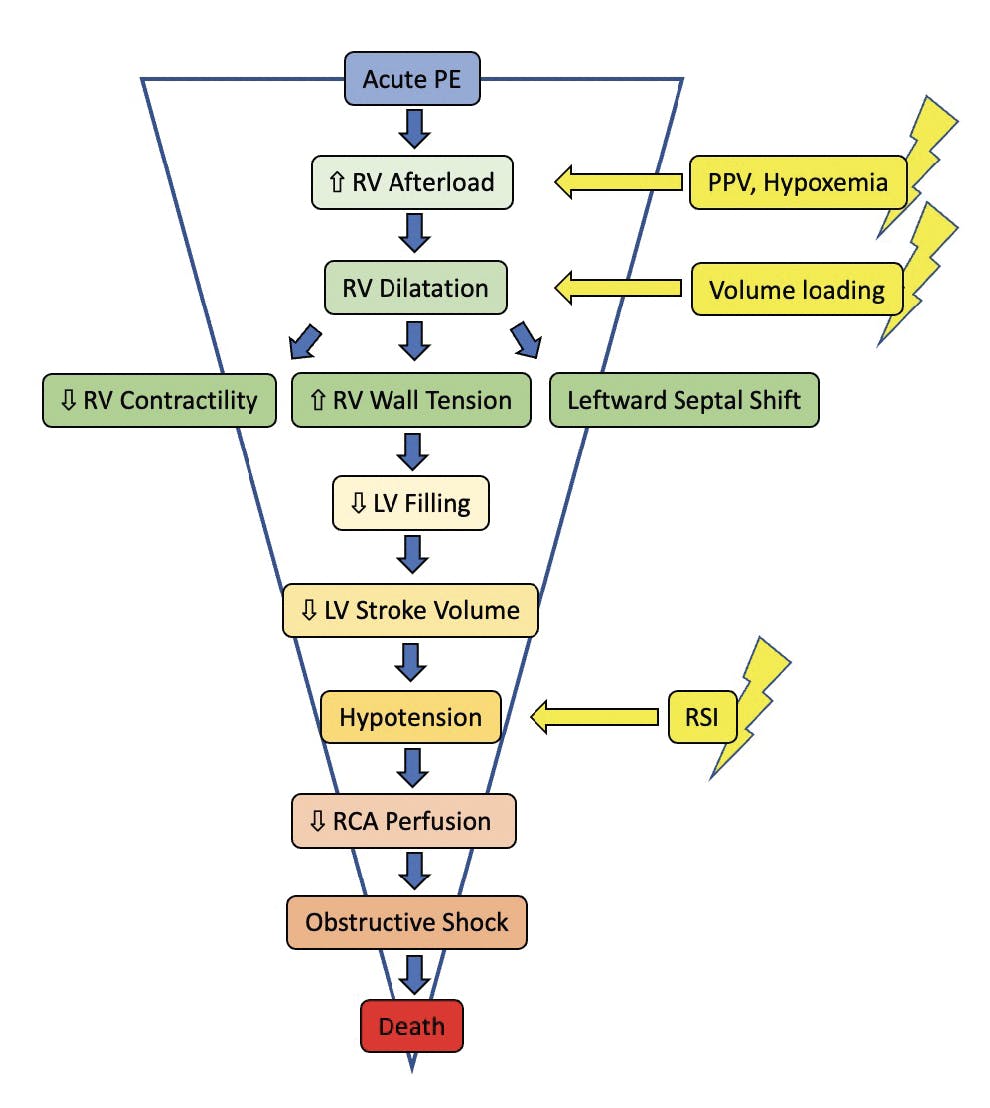
Figure 1. The pathophysiology of RV failure: Select pathophysiologic factors contributing to RV failure culminating in obstructive shock. In this cycle of autoaggravation, mechanisms are not linear but have a complex interplay. PPV, positive pressure ventilation; RCA, right coronary artery.
RISK STRATIFICATION
Despite a high negative predictive value, current risk scores are limited in their ability to identify those most likely to suffer hemodynamic decompensation or death.7,8 This limitation is most germane to the heterogeneous intermediate-risk patients who, despite apparent normotension, may have masked hemodynamic derangements. In a cohort of normotensive patients with acute PE, echocardiographic studies have demonstrated that a significant percentage have reduced RV and LV outflow tract velocity time integral—a stroke volume surrogate. These patients are more likely to experience adverse short-term clinical outcomes.9,10 Similarly, a third of intermediate-risk patients undergoing mechanical thrombectomy and invasive hemodynamic monitoring were found to have normotensive shock.11 Beyond a set blood pressure cutoff, attention to clinical and laboratory markers of circulatory failure is essential to identifying those more likely to benefit from critical care monitoring and reperfusion.
HEMODYNAMIC SUPPORT
Pharmacologic Strategies
Pharmacologic goals in the restoration of physiologic homeostasis include the optimization of preload, systemic and coronary perfusion pressure, RV contractility, and pulmonary vascular resistance (PVR; Figure 2). The administration of small volumes of crystalloid with central venous pressure targets of 8 to 12 mm Hg is endorsed by some experts, but the evidence base is weak.12 Mechanistically, elevated right atrial pressures may impede venous return, and RV distension may worsen LV filling, therefore worsening stroke volume via leftward interventricular septal shift.13 More recent literature suggests an improvement in hemodynamic parameters with the administration of diuretics among patients with PE and RV dilatation.14 Therefore, volume administration should be empirical, individualized, and guided by physical examination and hemodynamics. More often, this volume administration is unnecessary.
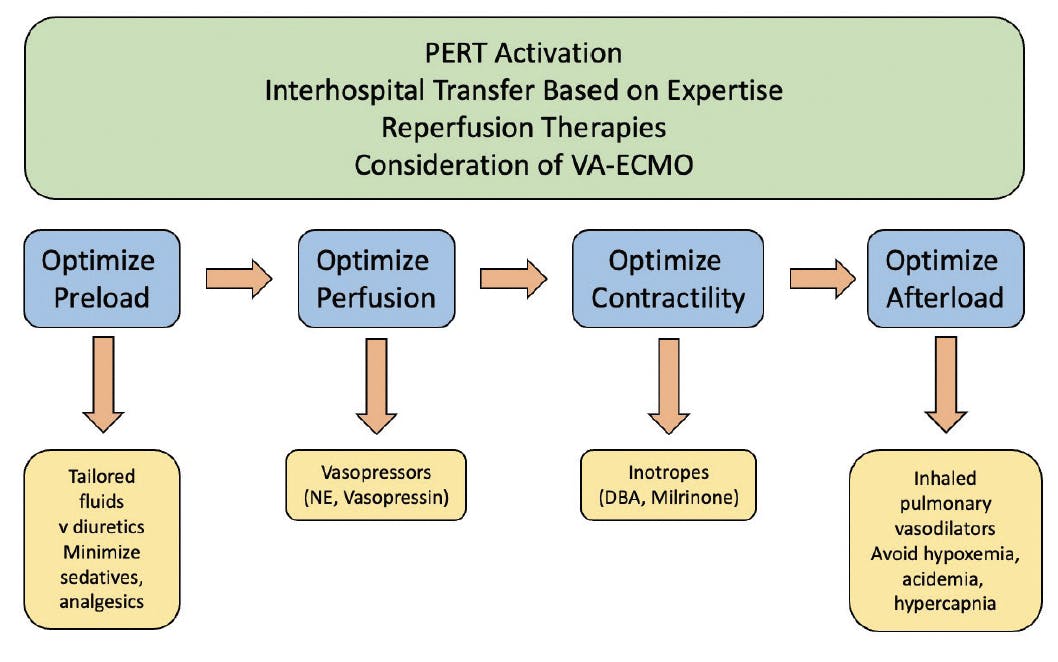
Figure 2. Management of hemodynamically unstable PE. DBA, dobutamine; NE, norepinephrine.
RV myocardial ischemia mediated in part by systemic hypotension and reduced right coronary artery perfusion pressure precipitates hemodynamic collapse. Consequently, the optimization of mean arterial pressure is a cornerstone in the management of patients with RV shock.15 Given its positive inotropic properties and favorable effects on RV-PA coupling, norepinephrine is the first-line agent.16 However, tachyarrhythmias and myocardial ischemia may ensue with high doses of catecholamine vasopressors. Although experimental models have demonstrated vasopressin to have relatively neutral effects on PVR, the lack of titratability and absence of inotropy render it a second-line vasoconstrictor in this setting.16
After the restoration of systemic arterial pressure with vasopressors, inotropes may be instituted if cardiac output and perfusion remain low. At low-moderate doses, dobutamine increases myocardial contractility and reduces PVR. Milrinone, a phosphodiesterase-3 inhibitor, enhances myocardial contractility and vasodilates systemic and pulmonary vasculature. Despite the favorable effects on PVR, systemic arterial hypotension may limit its use and require the addition of vasopressors.15,16
Partially selective pulmonary vasodilators such as inhaled nitric oxide or prostacyclins may be adjuncts after the restoration of systemic arterial pressure and perfusion.17 The use of inhaled agents is preferable because ventilation/perfusion matching and systemic arterial pressure will be less affected than with the use intravenous therapies.16,18 However, the evidence base in support of their use is generally limited to experimental models, case reports, and small studies.18 Accordingly, these agents are often reserved after the provision of the aforementioned pharmacologic therapies.
Mechanical Circulatory Support
Venoarterial extracorporeal membrane oxygenation (VA-ECMO) is a temporary form of mechanical circulatory support and simultaneous gas exchange. Venous blood is diverted to the circuit, the right ventricle is decompressed, and oxygenated blood is returned to the systemic arterial circulation.19 A peripheral cannulation strategy whereby the venous drainage cannula is inserted into the femoral vein with the arterial return cannula positioned in the femoral artery is often selected in the emergent setting.20
Virtually all patients treated with VA-ECMO have high-risk PE, with cardiac arrest accounting for > 60% of cases.21 Although data are largely nonrandomized, survival with the implementation of this modality is approximately 30% to 40%.19,21 Adjunctive reperfusion therapies are implemented in > 50% of cases.21 The European Society of Cardiology guidelines advise ECMO may be considered in combination with surgical embolectomy or catheter-based therapies in patients with PE and circulatory collapse or cardiac arrest.12 Bleeding and systemic or circuit thrombosis are major complications, and thromboembolic events may occur in > 25% of patients.20
Peripherally inserted RV assist devices (RVADs) are emerging RV support modalities in the management of PE. The ProtekDuo (LivaNova) RVAD uses a dual-lumen cannula, allowing for single internal jugular venous site access. A centrifugal pump withdraws blood from the right atrial ports with return to the PA.19,22 The Impella RP (Abiomed) is a microaxial continuous flow pump on an 11-F catheter inserted via the femoral vein. Fluoroscopic positioning places the outflow port within the proximal PA and the inflow within the inferior vena cava,22 although diverting blood to the PA may increase RV afterload and interfere with RV recovery. As with VA-ECMO, RVADs are not a means of reperfusion but rather an instrument for support for the failing RV. Data on the use of RVADs in the setting of PE are limited.19
RESPIRATORY SUPPORT
Airway Management
Endotracheal intubation and invasive mechanical ventilation (IMV) should be avoided whenever possible given the risk for hemodynamic collapse,23 but the need for IMV is relatively uncommon in acute PE.24 Induction agents can reduce systemic vascular resistance and cause RV ischemia, hypotension, and shock.25 Additionally, hypoxemia, hypercapnia, and atelectasis during rapid sequence intubation (RSI) in the supine patient contribute to acute elevations in PVR and accelerate RV failure. Although literature is scant, expert opinion favors the use of etomidate or ketamine as induction agents when RSI is selected, with the procedure being performed by an expert operator with careful hemodynamic monitoring.25,26 The prophylactic administration of catecholamines preceding induction is prudent.26 Avoiding induction agents entirely with an awake bronchoscopic technique has been used successfully in cases of RV failure. In this technique, the spontaneously breathing patient is supported with a noninvasive oxygen modality, topicalization of the oropharynx and vocal cords is accomplished with lidocaine, and an endotracheal tube is advanced over a bronchoscope into the trachea.23
Ventilation
Positive pressure ventilation impedes venous return to the right heart and may elevate PVR precipitating hemodynamic collapse in the patient with RV failure.27 Large changes in pleural and transpulmonary pressures may worsen shock. Accordingly, maintenance of spontaneous respiration is advised. However, heart-lung interactions are complex and the relationship between PVR and lung volumes is a U-shaped curve. Therefore, the provision of some positive end-expiratory pressure (PEEP) is often necessary to prevent atelectasis and resultant collapse of extraalveolar vasculature.28 Interventions aimed at mitigating hypoxemia, acidemia, and hypercapnia are favorable with respect to RV afterload.15 Low levels of PEEP to relieve atelectasis while avoiding alveolar overdistension with the use of low tidal volumes and driving pressures is most appropriate.15,27 If awake intubation is performed, low pressure support settings (eg, 0/0 cm H20) may be instituted, with gradual titration to the aforementioned goals.29
EMERGENT REPERFUSION
One randomized controlled trial evaluated thrombolysis in patients with massive PE. Four patients received streptokinase and survived while the four treated with unfractionated heparin died.30 Compared to heparin alone, thrombolytic therapy leads to faster improvements in PA pressures, PVR, and reduction in RV dilatation.12,31 However, major hemorrhage and fatal or intracranial bleeding are significantly higher among patients treated with thrombolytic therapy.32 Among intermediate-risk patients treated with tenecteplase, the reduction in hemodynamic decompensation was counterbalanced by an increased risk of severe bleeding or intracranial hemorrhage.33 Consequently, systemic thrombolysis is limited to a select group of patients, with several important contraindications limiting its use.
The proliferation of catheter-based therapies is changing the landscape of PE care.34 Catheter-directed thrombolysis allows for the direct delivery of thrombolytic into the PA at lower than a systemic dose, whereas mechanical thrombectomy via suction or thrombus maceration entirely obviates the need for thrombolytic administration.34,35 Although randomized controlled trials demonstrating mortality benefit are lacking, recent prospective observational data are compelling.2,36,37
The FLAME study (FlowTriever, Inari Medical), a prospective trial of patients with high-risk PE, reported a 1.9% in-hospital all-cause mortality among 53 patients treated with mechanical thrombectomy compared to a 29.5% mortality in the context arm that was primarily treated with systemic thrombolysis.2 In this study, the majority of patients were classified as Society for Cardiovascular Angiography and Interventions Shock stage C, and approximately 20% were resuscitated from cardiopulmonary arrest. Among 63 high-risk patients enrolled in the FLASH registry (also FlowTriever), all who were treated with mechanical thrombectomy survived to 48 hours, with no patient experiencing major adverse events.37 Immediate hemodynamic improvement included a significant decrease in PVR and mean PA pressure and an increase in cardiac index. Given rapid hemodynamic improvement and excellent clinical outcomes, mechanical thrombectomy may be an appropriate frontline therapy in high-risk PE.
Subsets of intermediate-risk patients may have similar hemodynamics and clinical risk as high-risk PE and possibly benefit from emergent reperfusion. More than one-third of intermediate-risk patients enrolled in the FLASH registry had invasive hemodynamics compatible with normotensive cardiogenic shock, with a median cardiac index of 1.9 L/min/m2 (IQR, 1.56-2.08) in this subset.11 Comparatively, high-risk patients enrolled in this registry had a mean cardiac index of 1.54 L/min/m2 (SD ± 0.21).37 Whether invasive hemodynamics are predictors of clinical outcomes is unknown, but current risk scores are limited in their power to capture those most likely to experience decompensation or benefit from emergent reperfusion.7
Several prospective trials are underway that may lend understanding to the most appropriate use of interventional therapies. Beyond short-term mortality and hemodynamic improvement, trials aim to elucidate the effect of interventions on long-term outcomes such as functional class and quality of life.34 For instance, the HI-PEITHO study will compare ultrasound-facilitated catheter-directed thrombolysis to anticoagulation alone among intermediate-high–risk patients, evaluating several short- and long-term outcomes, while PE-TRACT is powered to examine long-term outcomes with this approach.38 The Lightning Flash system (Penumbra, Inc.) is being evaluated compared to anticoagulation alone in the STORM-PE trial, using RV/LV ratio as the primary endpoint.39 In addition, the FlowTriever system will be the focus of two randomized trials: PEERLESS and PEERLESS II, with the former randomizing FlowTriever against catheter-directed lysis and the latter against anticoagulation alone. As multiple randomized trials are underway, we may gain better understanding surrounding the safety and efficacy of specific devices.34
CONCLUSION
The proliferation of advanced therapies for patients with hemodynamically significant PE has greatly expanded therapeutic options. How best to identify those with occult circulatory derangements and select the patients most likely to benefit from reperfusion therapies remains a central question. The failing right ventricle is vulnerable to interventions that include volume administration, vasoactive therapies, and positive pressure ventilation. An understanding of RV physiology is therefore requisite to managing the critically ill patient with acute PE. Given the complexity of these patients, a PERT discussion is most conducive to therapeutic decision-making. As the field continues to evolve, we hope to better understand risk stratification and appropriate selection of patients for novel therapies.
1. Pérez-Nieto OR, Gómez-Oropeza I, Quintero-Leyra A, et al. Hemodynamic and respiratory support in pulmonary embolism: a narrative review. Front Med (Lausanne). 2023;10:1123793. doi: 10.3389/fmed.2023.1123793
2. Silver MJ, Gibson CM, Giri J, et al. Outcomes in high-risk pulmonary embolism patients undergoing FlowTriever mechanical thrombectomy or other contemporary therapies: results from the FLAME study. Circ Cardiovasc Interv. 2023;16:e013406. doi: 10.1161/circinterventions.123.013406
3. Furfaro D, Stephens RS, Streiff MB, Brower R. Catheter-directed thrombolysis for intermediate-risk pulmonary embolism. Ann Am Thorac Soc. 2018;15:134-144. doi: 10.1513/AnnalsATS.201706-467FR
4. Haddad F, Hunt SA, Rosenthal DN, Murphy DJ. Right ventricular function in cardiovascular disease, part I: anatomy, physiology, aging, and functional assessment of the right ventricle. Circulation. 2008;117:1436-1448. doi: 10.1161/circulationaha.107.653576
5. Pinsky MR. The right ventricle: interaction with the pulmonary circulation. Crit Care. 2016;20:266. doi: 10.1186/s13054-016-1440-0
6. Greyson CR. Pathophysiology of right ventricular failure. Crit Care Med. 2008;36(1 suppl):S57-65. doi: 10.1097/01.Ccm.0000296265.52518.70
7. Barnes GD, Muzikansky A, Cameron S, et al. Comparison of 4 acute pulmonary embolism mortality risk scores in patients evaluated by pulmonary embolism response teams. JAMA Network Open. 2020;3:e2010779-e2010779. doi: 10.1001/jamanetworkopen.2020.10779
8. Leidi A, Bex S, Righini M, et al. Risk stratification in patients with acute pulmonary embolism: current evidence and perspectives. J Clin Med. 2022;11:2533. doi: 10.3390/jcm11092533
9. Yuriditsky E, Mitchell OJ, Sibley RA, et al. Low left ventricular outflow tract velocity time integral is associated with poor outcomes in acute pulmonary embolism. Vasc Med. 2020;25:133-140. doi: 10.1177/1358863x19880268
10. Yuriditsky E, Mitchell OJL, Sista AK, et al. Right ventricular stroke distance predicts death and clinical deterioration in patients with pulmonary embolism. Thromb Res. 2020;195:29-34. doi: 10.1016/j.thromres.2020.06.049
11. Bangalore S, Horowitz JM, Beam D, et al. Prevalence and predictors of cardiogenic shock in intermediate-risk pulmonary embolism: insights from the FLASH registry. JACC Cardiovasc Interv. 2023;16:958-972. doi: 10.1016/j.jcin.2023.02.004
12. Konstantinides SV, Meyer G, Becattini C, et al. 2019 ESC guidelines for the diagnosis and management of acute pulmonary embolism developed in collaboration with the European Respiratory Society (ERS). Eur Heart J. 2020;41:543-603. doi: 10.1093/eurheartj/ehz405
13. Mercat A, Diehl JL, Meyer G, et al. Hemodynamic effects of fluid loading in acute massive pulmonary embolism. Crit Care Med. 1999;27:540-544. doi: 10.1097/00003246-199903000-00032
14. Ternacle J, Gallet R, Mekontso-Dessap A, et al. Diuretics in normotensive patients with acute pulmonary embolism and right ventricular dilatation. Circ J. 2013;77:2612-2618. doi: 10.1253/circj.cj-13-0404
15. Ventetuolo CE, Klinger JR. Management of acute right ventricular failure in the intensive care unit. Ann Am Thorac Soc. 2014;11:811-822. doi: 10.1513/AnnalsATS.201312-446FR
16. Price LC, Wort SJ, Finney SJ, et al. Pulmonary vascular and right ventricular dysfunction in adult critical care: current and emerging options for management: a systematic literature review. Crit Care. 2010;14:R169. doi: 10.1186/cc9264
17. Konstam MA, Kiernan MS, Bernstein D, et al. Evaluation and management of right-sided heart failure: a scientific statement from the American Heart Association. Circulation. 2018;137:e578-e622. doi: 10.1161/cir.0000000000000560
18. Lyhne MD, Kline JA, Nielsen-Kudsk JE, Andersen A. Pulmonary vasodilation in acute pulmonary embolism - a systematic review. Pulm Circ. 2020;10:2045894019899775. doi: 10.1177/2045894019899775
19. Goldberg JB, Giri J, Kobayashi T, et al. Surgical management and mechanical circulatory support in high-risk pulmonary embolisms: historical context, current status, and future directions: a scientific statement from the American Heart Association. Circulation. 2023;147:e628-e647. doi: 10.1161/cir.0000000000001117
20. Lorusso R, Shekar K, MacLaren G, et al. ELSO interim guidelines for venoarterial extracorporeal membrane oxygenation in adult cardiac patients. ASAIO J. 2021;67:827-844. doi: 10.1097/MAT.0000000000001510
21. Baldetti L, Beneduce A, Cianfanelli L, et al. Use of extracorporeal membrane oxygenation in high-risk acute pulmonary embolism: a systematic review and meta-analysis. Artif Organs. 2021;45:569-576. doi: 10.1111/aor.13876
22. Akhmerov A, Ramzy D. Mechanical circulatory support in right ventricular failure. Interv Cardiol Clin. 2021;10:185-194. doi: 10.1016/j.iccl.2020.12.010
23. Johannes J, Berlin DA, Patel P, et al. A technique of awake bronchoscopic endotracheal intubation for respiratory failure in patients with right heart failure and pulmonary hypertension. Crit Care Med. 2017;45:e980-e984. doi: 10.1097/ccm.0000000000002586
24. Bĕlohlávek J, Dytrych V, Linhart A. Pulmonary embolism, part II: management. Exp Clin Cardiol. Spring 2013;18:139-147.
25. Rali P, Sacher D, Rivera-Lebron B, et al. Interhospital transfer of patients with acute pulmonary embolism: challenges and opportunities. Chest. 2021;160:1844-1852. doi: 10.1016/j.chest.2021.07.013
26. Vahdatpour CA, Ryan JJ, Zimmerman JM, et al. Advanced airway management and respiratory care in decompensated pulmonary hypertension. Heart Fail Rev. 2022;27:1807-1817. doi: 10.1007/s10741-021-10168-9
27. Luecke T, Pelosi P. Clinical review: positive end-expiratory pressure and cardiac output. Crit Care. 2005;9:607-621. doi: 10.1186/cc3877
28. Alviar CL, Miller PE, McAreavey D, et al. Positive pressure ventilation in the cardiac intensive care unit. J Am Coll Cardiol. 2018;72:1532-1553. doi: 10.1016/j.jacc.2018.06.074
29. Srour H, Shy J, Klinger Z, et al. Airway management and positive pressure ventilation in severe right ventricular failure: SAVIOR algorithm. J Cardiothorac Vasc Anesth. 2020;34:305-306. doi: 10.1053/j.jvca.2019.05.046
30. Jerjes-Sanchez C, Ramírez-Rivera A, de Lourdes García M, et al. Streptokinase and heparin versus heparin alone in massive pulmonary embolism: a randomized controlled trial. J Thromb Thrombolysis. 1995;2:227-229. doi:10.1007/BF01062714
31. Goldhaber SZ, Haire WD, Feldstein ML, et al. Alteplase versus heparin in acute pulmonary embolism: randomised trial assessing right-ventricular function and pulmonary perfusion. Lancet. 1993;341:507-511. doi: 10.1016/0140-6736(93)90274-k
32. Marti C, John G, Konstantinides S, et al. Systemic thrombolytic therapy for acute pulmonary embolism: a systematic review and meta-analysis. Eur Heart J. 2015;36:605-614. doi: 10.1093/eurheartj/ehu218
33. Meyer G, Vicaut E, Danays T, et al. Fibrinolysis for patients with intermediate-risk pulmonary embolism. N Engl J Med. 2014;370:1402-1411. doi: 10.1056/NEJMoa1302097
34. Yuriditsky E, Horowitz JM. The role of the PERT in the management and therapeutic decision-making in pulmonary embolism. Eur Heart J Acute Cardiovasc Care. 2022;11:693-694. doi: 10.1093/ehjacc/zuac102
35. Aggarwal V, Giri J, Nallamothu BK. Catheter-based therapies in acute pulmonary embolism: the good, the bad, and the ugly. Circ Cardiovasc Interv. 2020;13:e009353. doi: 10.1161/CIRCINTERVENTIONS.120.009353
36. Toma C, Bunte MC, Cho KH, et al. Percutaneous mechanical thrombectomy in a real-world pulmonary embolism population: interim results of the FLASH registry. Catheter Cardiovasc Interv. 2022;99:1345-1355. doi: 10.1002/ccd.30091
37. Horowitz JM, Jaber WA, Stegman B, et al. Mechanical thrombectomy for high-risk pulmonary embolism: insights from the US cohort of the FLASH registry. J Soc Cardiovasc Angiogr Interv. Published online October 31, 2023. doi: https://doi.org/10.1016/j.jscai.2023.101124
38. Klok FA, Piazza G, Sharp ASP, et al. Ultrasound-facilitated, catheter-directed thrombolysis vs anticoagulation alone for acute intermediate-high-risk pulmonary embolism: rationale and design of the HI-PEITHO study. Am Heart J. 2022;251:43-53. doi: 10.1016/j.ahj.2022.05.011
39. Götzinger F, Lauder L, Sharp ASP, et al. Interventional therapies for pulmonary embolism. Nat Rev Cardiol. 2023;20:670-684. doi: 10.1038/s41569-023-00876-0
Advertisement
Advertisement