Advertisement
Advertisement
January 2024
Revolutionizing Pulmonary Embolism Care: The AI Advantage
The evolving role of artificial intelligence in pulmonary embolism diagnosis and management, current challenges, and future directions.
By Zehra Dhanani, MD; Nidhi Shah, MD; Maruti Kumaran, MD; Gary Cohen, MD; and Parth Rali, MD
Acute pulmonary embolism (PE) poses a severe and potentially life-threatening cardiovascular condition, necessitating prompt diagnosis and intervention.1 CT pulmonary angiography (CTPA) has become the cornerstone for PE detection, yet its increasing utilization, coupled with time-intensive interpretation, challenges timely patient care.2-4
In response, artificial intelligence (AI) integration into PE diagnosis has emerged as a transformative frontier. AI, particularly using convolutional neural networks (CNNs), exhibits notable capabilities in enhancing diagnostic efficiency and accuracy. This synergy between advanced technology and clinical care addresses critical issues such as prolonged wait times, missed incidental PE cases, and the urgency for rapid risk stratification.
This article delves into AI’s evolving role in PE, encompassing applications in diagnosis, risk stratification, mortality prediction, and multidisciplinary patient care through PE response teams (PERTs). Beyond immediate clinical impact, AI serves as a dynamic platform for ongoing research, promising continuous advancements in diagnostic precision and efficiency. The intersection of AI and PE management aims not only to optimize current practices but also revolutionize cardiovascular health care, paving the way for personalized, data-driven, and timely interventions. This narrative navigates the significance of PE, challenges in current diagnostic paradigms, and the transformative potential that AI holds in reshaping PE patient care.
DETECTION AND DIAGNOSIS OF PE
Acute PE, a common and potentially life-threatening condition, demands an efficient evaluation approach for prompt therapy initiation. CTPA, the preferred diagnostic method, offers noninvasive and rapidly acquired imaging.2,3 CTPA not only serves as a diagnostic tool but also aids in risk stratification and assessing illness severity in PE patients by evaluating right ventricular dysfunction (RVD), a parameter linked to both all-cause and PE-related mortality.5 However, the diagnostic process using CTPA is time-intensive and reliant on radiologists’ expertise, posing a risk of errors and delayed diagnosis. The growing utilization of CTPA for diagnosis observed in recent years places additional strain on the health care system, potentially resulting in delays in the care of patients who could benefit from timely medical and/or surgical interventions.4
Current Challenges in Diagnosing PE
Bach et al found that patients with a time to diagnosis of > 12 hours after a PE event had a higher incidence of death within 30 days.6 The time to diagnosis was defined as the duration between placing a CTPA order and the actual diagnosis. In a related study, Kline et al reported that every seventh patient diagnosed with PE experienced a time to diagnosis exceeding 48 hours.4 These challenges are exacerbated during periods of restricted staffing, particularly at night.6 This highlights a critical need for developing algorithms and pathways to improve efficiency and reduce the time to diagnosis, facilitating prompt intervention. In response to this imperative, AI technology is emerging as a promising tool to address these challenges and enhance the management of acute PE.
ROLE OF AI IN PE
AI and PE Diagnosis
To diagnose PE, AI utilizes CNN, a specific type of deep neural network designed for image recognition and processing.7 In each layer, CNNs apply convolutions to every pixel of an image, allowing them to effectively extract important features. This capability makes CNNs highly proficient at detecting patterns, objects, and abnormalities in visual data, enhancing their utility in medical image analysis for conditions like PE.8 Weikert et al pioneered the evaluation of an AI-powered algorithm for automatic PE detection in chest CTPAs on a large data set of 1,499 patients. The algorithm demonstrated a sensitivity of 92.7% and specificity of 95.5%, showcasing its accuracy in identifying both positive and negative PE cases.9 Since then, multiple studies have reported high sensitivity and specificity of AI algorithms for the detection of PE on CTPA.7,10-22 Even among patients with COVID-19 and parenchymal disease, the sensitivity and specificity of AI algorithms remained high.23 Furthermore, a study confirmed that AI maintained both sensitivity and specificity when interpreting suboptimal CTPA examinations.24 AI tools are not confined to conventional CT scans, as a recent study revealed comparable sensitivity (77.5% vs 85%) and specificity (96% vs 94.6%) between conventional polychromatic CT images and virtual monochromatic images.10
AI and Incidental PE Diagnosis
Although prompt detection and management of PE are crucial, the issue of missed incidental PE on routine venous contrast-enhanced chest CT scans is equally pressing. According to the literature, the frequency of missed incidental PE diagnoses can be as high as 44%.25 Research indicates that AI algorithms exhibit significantly higher sensitivity for detecting PE in these routine scans as compared with radiologist-driven initial reports (95.5% vs 62.7%).26 Similarly, studies have shown enhanced detection of incidental PE using AI algorithms.25,27-29 Noteworthily, Topff et al showcased that collaboration with AI significantly reduced the missed rate of incidental PE by radiologists, plummeting from 44.8% without AI to 2.6% with AI.25 Similarly, Wildman-Tobriner demonstrated that incorporating AI into scans obtained for reasons other than PE diagnosis significantly improved the detection of incidental PE.29 This highlights the symbiotic relationship between AI tools and radiologist-driven reads.25
AI Reduces Wait Times for PE Diagnosis
Rothenberg et al effectively showcased the impact of AI tools in reducing time to diagnosis. Their study demonstrated that implementing an AI triage system for the detection of PE in CTPA studies resulted in significant improvements in the time it took from the completion of the study to its interpretation by a radiologist.30 Batra et al similarly demonstrated the efficacy of AI software in radiology worklist reprioritization, reducing the wait time to one-third for routinely ordered CTPA studies (15 vs 44 minutes).13 Another study demonstrated at the implementation of AI-guided triage and prioritization in the radiologic workflow was linked to a substantial reduction in the length of stay (2 days) for patients diagnosed with PE.31
AI and PE Risk Stratification
RVD is a prognostic indicator for adverse outcomes in individuals with PE. Although echocardiography is the established reference for RVD assessment, various studies propose an elevated RV/left ventricular (LV) diameter ratio (RV/LV > 1) on CTPA as a surrogate marker for RVD. This ratio has been identified as a predictor of short-term mortality and adverse clinical events in acute PE patients, establishing it as a significant reportable finding.32 Recent studies indicate that the RV/LV ratio on CTPA can be consistently measured automatically in the majority of acute PE cases, demonstrating excellent reproducibility with the use of AI tools (Figure 1).17,33 The integration of this automated analysis into routine clinical practice could provide crucial prognostic information for patients with acute PE.
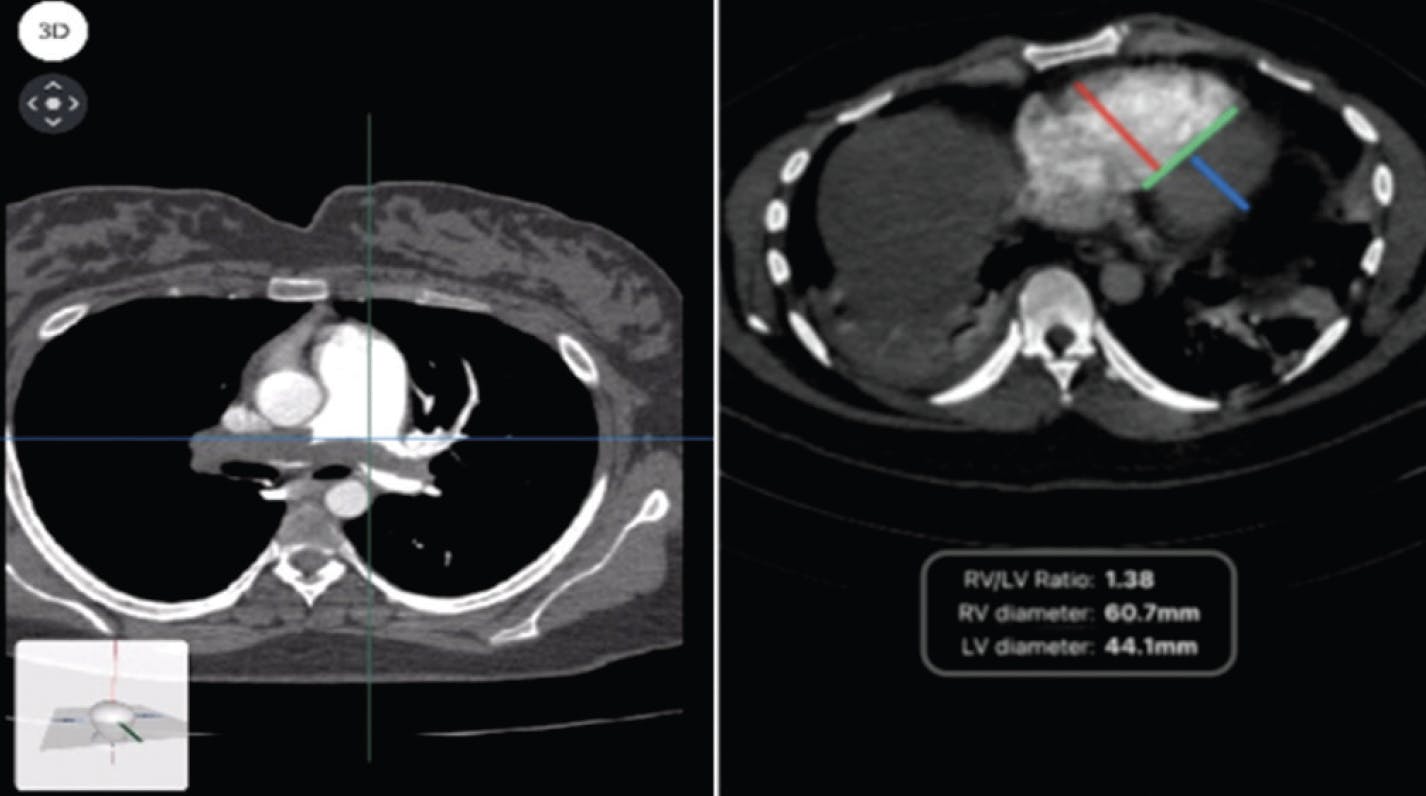
Figure 1. Automatic detection of the radiodensity and automatic calculation of RV/LV ratio.
AI and Mortality Prediction
AI’s role in PE care extends beyond diagnosis and risk stratification; it also holds promise in disease prognosis. Sadegh-Zadeh et al demonstrated that machine learning can effectively predict mortality in patients with acute PE.34 Similarly, Wang et al demonstrated that machine learning models can effectively predict low risk of mortality, suggesting its potential in helping with judicious allocation of critical care resources.35
PE CARE AND PERTs
The care of PE patients is intricate and requires a multidisciplinary approach. Although radiology reporting of a positive PE finding on CTPA is crucial, equally critical is the activation of a PERT. A typical PERT includes critical care pulmonologists, cardiologists, cardiac surgeons, and vascular specialists. The AI-driven rapid detection of a positive PE scan, particularly one with high-risk features, and its swift communication to the PERT through automated software prove to be invaluable tools. High-risk features include, but are not limited to, radiographic evidence of RV dysfunction and an RV/LV ratio of > 1. This approach has demonstrated improvements in both time to diagnosis and management. Moreover, the swift interhospital transmission of AI-driven analyses of CTPA scans enables the early identification of patients with high-risk features. This timely recognition facilitates the efficient transfer of these individuals to tertiary care centers equipped with advanced vascular and surgical interventions, ensuring that they receive appropriate medical attention when necessary.
EVOLVING PARAMETERS AND FUTURE DIRECTIONS
Recent data highlight ongoing advancements in using deep learning networks for the detection and segmentation of PE,36 identifying important features associated with PE risk37 and indicating continuous progress in improving diagnostic accuracy and efficiency. A recent study demonstrated the ability of deep learning methods to detect chronic PE on CTPA, emphasizing its potential to distinguish between acute and chronic clots.38
The dynamic evolution of PE management presents a promising frontier, particularly with the integration of AI capabilities. AI stands as a substantial data repository, streamlining data mining and refinement within the PERT registry. This transformative potential has the capacity to revolutionize both research and clinical medicine.
AI’s ability to track patient scans offers unprecedented insights, enabling the observation of therapeutic responses, clot resolution, and disease progression. Moreover, it facilitates the seamless transition of care as patients leave the hospital and provides postacute phase follow-up. In ongoing trials within the dynamic PE landscape, AI-driven automated reads emerge as a transformative tool, addressing the urgency of patient enrollment. By swiftly and accurately diagnosing individuals, AI broadens the pool of eligible participants, fostering active contribution to and benefit from evolving medical trials. This not only accelerates research progress but also holds the promise of uncovering novel insights, ultimately improving overall patient outcomes in the field of PE management. An excellent example of this is the ongoing PE-TRACT study, which investigates whether up-front thrombus removal with catheter-directed therapy reduces the incidence of these post-PE impairments. This study uses AI-driven patient recruitment, allowing for efficient and swift identification and recruitment.
CONCLUSION
The integration of AI into the realm of PE diagnosis and management represents a transformative and promising frontier in health care. The studies discussed underscore the remarkable capabilities of AI, from enhancing diagnostic accuracy in detecting acute PE to significantly reducing wait times for critical interventions. The symbiotic relationship between AI tools and health care professionals, particularly in the context of a PERT, showcases the potential for AI to streamline multidisciplinary care and improve patient outcomes.
1. Agnelli G, Becattini C. Acute pulmonary embolism. N Engl J Med. 2010;363:266-274. doi: 10.1056/NEJMra0907731
2. Becattini C, Vedovati MC, Agnelli G. Diagnosis and prognosis of acute pulmonary embolism: focus on serum troponins. Expert Rev Mol Diagn. 2008;8:339-349. doi: 10.1586/14737159.8.3.339
3. Stein PD, Fowler SE, Goodman LR, et al. Multidetector computed tomography for acute pulmonary embolism. N Engl J Med. 2006;354:2317-2327. doi: 10.1056/NEJMoa052367
4. Kline JA, Garrett JS, Sarmiento EJ, et al. Over-testing for suspected pulmonary embolism in American emergency departments: the continuing epidemic. Circ Cardiovasc Qual Outcomes. 2020;13:e005753. doi: 10.1161/CIRCOUTCOMES.119.005753
5. Konstantinides SV, Meyer G, Becattini C, et al. 2019 ESC guidelines for the diagnosis and management of acute pulmonary embolism developed in collaboration with the European Respiratory Society (ERS): the task force for the diagnosis and management of acute pulmonary embolism of the European Society of Cardiology (ESC). Eur Respir J. 2019;54:1901647. doi: 10.1183/13993003.01647-2019
6. Bach AG, Bandzauner R, Nansalmaa B, et al. Timing of pulmonary embolism diagnosis in the emergency department. Thromb Res. 2016;137:53-57. doi: 10.1016/j.thromres.2015.11.019
7. Huhtanen H, Nyman M, Mohsen T, et al. Automated detection of pulmonary embolism from CT-angiograms using deep learning. BMC Med Imaging. 2022;22:43. doi: 10.1186/s12880-022-00763-z
8. Kourounis G, Elmahmudi AA, Thomson B, et al. Computer image analysis with artificial intelligence: a practical introduction to convolutional neural networks for medical professionals. Postgrad Med J. 2023;99:1287-1294. doi: 10.1093/postmj/qgad095
9. Weikert T, Winkel DJ, Bremerich J, et al. Automated detection of pulmonary embolism in CT pulmonary angiograms using an AI-powered algorithm. Eur Radiol. 2020;30:6545-6553. doi: 10.1007/s00330-020-06998-0
10. Langius-Wiffen E, Nijholt IM, Van Dijk RA, et al. An artificial intelligence algorithm for pulmonary embolism detection on polychromatic computed tomography: performance on virtual monochromatic images. Eur Radiol. Published online August 5, 2023. doi: 10.1007/s00330-023-10048-w
11. Aydın N, Cihan Ç, Çelik Ö, et al. Segmentation of acute pulmonary embolism in computed tomography pulmonary angiography using the deep learning method [Article in Turkish]. Tuberk Toraks. 2023;71:131-137. doi: 10.5578/tt.20239916
12. Grenier PA, Ayobi A, Quenet S, et al. Deep learning-based algorithm for automatic detection of pulmonary embolism in chest CT angiograms. Diagnostics (Basel). 2023;13:1324. doi: 10.3390/diagnostics13071324
13. Batra K, Xi Y, Bhagwat S, et al. Radiologist worklist reprioritization using artificial intelligence: impact on report turnaround times for CTPA examinations positive for acute pulmonary embolism. AJR Am J Roentgenol. 2023;221:324-333. doi: 10.2214/AJR.22.28949
14. Khan M, Shah PM, Khan IA, et al. IoMT-enabled computer-aided diagnosis of pulmonary embolism from computed tomography scans using deep learning. Sensors. 2023;23:1471. doi: 10.3390/s23031471
15. Ajmera P, Kharat A, Seth J, et al. A deep learning approach for automated diagnosis of pulmonary embolism on computed tomographic pulmonary angiography. BMC Med Imaging. 2022;22:195. doi: 10.1186/s12880-022-00916-0
16. Cheikh AB, Gorincour G, Nivet H, et al. How artificial intelligence improves radiological interpretation in suspected pulmonary embolism. Eur Radiol. 2022;32:5831-5842. doi: 10.1007/s00330-022-08645-2
17. Ma X, Ferguson EC, Jiang X, et al. A multitask deep learning approach for pulmonary embolism detection and identification. Sci Rep. 2022;12:13087. doi: 10.1038/s41598-022-16976-9
18. Fink MA, Seibold C, Kauczor HU, et al. Jointly optimized deep neural networks to synthesize monoenergetic images from single-energy CT angiography for improving classification of pulmonary embolism. Diagnostics (Basel). 2022;12:1224. doi: 10.3390/diagnostics12051224
19. Li X, Wang X, Yang X, et al. Preliminary study on artificial intelligence diagnosis of pulmonary embolism based on computer in-depth study. Ann Transl Med. 2021;9:838. doi: 10.21037/atm-21-975
20. Buls N, Watté N, Nieboer K, et al. Performance of an artificial intelligence tool with real-time clinical workflow integration—detection of intracranial hemorrhage and pulmonary embolism. Phys Med. 2021;83:154-160. doi: 10.1016/j.ejmp.2021.03.015
21. Woller B, Daw A, Aston V, et al. Natural language processing performance for the identification of venous thromboembolism in an integrated healthcare system. Clin Appl Thromb Hemost. 202;27:107602962110131. doi: 10.1177/10760296211013108
22. Langius-Wiffen E, De Jong PA, Hoesein FAM, et al. Retrospective batch analysis to evaluate the diagnostic accuracy of a clinically deployed AI algorithm for the detection of acute pulmonary embolism on CTPA. Insights Imaging. 2023;14:102. doi: 10.1186/s13244-023-01454-1
23. Zaazoue KA, McCann MR, Ahmed AK, et al. Evaluating the performance of a commercially available artificial intelligence algorithm for automated detection of pulmonary embolism on contrast-enhanced computed tomography and computed tomography pulmonary angiography in patients with coronavirus disease 2019. Mayo Clin Proc Innov Qual Outcomes. 2023;7:143-152. doi: 10.1016/j.mayocpiqo.2023.03.001
24. Ebrahimian S, Digumarthy SR, Homayounieh F, et al. Predictive values of AI-based triage model in suboptimal CT pulmonary angiography. Clin Imaging. 2022;86:25-30. doi: 10.1016/j.clinimag.2022.03.011
25. Topff L, Ranschaert ER, Bartels-Rutten A, et al. Artificial intelligence tool for detection and worklist prioritization reduces time to diagnosis of incidental pulmonary embolism at CT. Radiol Cardiothorac Imaging. 2023;5:e220163. doi: 10.1148/ryct.220163
26. Langius-Wiffen E, De Jong PA, Mohamed Hoesein FA, et al. Added value of an artificial intelligence algorithm in reducing the number of missed incidental acute pulmonary embolism in routine portal venous phase chest CT. Eur Radiol. Published online August 3, 2023. doi: 10.1007/s00330-023-10029-z
27. Wiklund P, Medson K, Elf J. Incidental pulmonary embolism in patients with cancer: prevalence, underdiagnosis and evaluation of an AI algorithm for automatic detection of pulmonary embolism. Eur Radiol. 2022;33:1185-1193. doi: 10.1007/s00330-022-09071-0
28. Batra K, Xi Y, Al-Hreish KM, et al. Detection of incidental pulmonary embolism on conventional contrast-enhanced chest CT: comparison of an artificial intelligence algorithm and clinical reports. AJR Am J Roentgenol. 2022;219:895-902. doi: 10.2214/AJR.22.27895
29. Wildman-Tobriner B, Ngo L, Mammarappallil JG, et al. Missed incidental pulmonary embolism: harnessing artificial intelligence to assess prevalence and improve quality improvement opportunities. J Am Coll Radiol. 2021;18:992-999. doi: 10.1016/j.jacr.2021.01.014
30. Rothenberg SA, Savage CH, Abou Elkassem A, et al. Prospective evaluation of AI triage of pulmonary emboli on CT pulmonary angiograms. Radiology. 2023;309:e230702. doi: 10.1148/radiol.230702
31. Petry M, Lansky C, Chodakiewitz Y, et al. Decreased hospital length of stay for ICH and PE after adoption of an artificial intelligence-augmented radiological worklist triage system. Radiol Res Pract. 2022;2022:2141839. doi: 10.1155/2022/2141839
32. Henzler T, Roeger S, Meyer M, et al. Pulmonary embolism: CT signs and cardiac biomarkers for predicting right ventricular dysfunction. Eur Respir J. 2012;39:919-926. doi: 10.1183/09031936.00088711
33. Foley RW, Glenn-Cox S, Rossdale J, et al. Automated calculation of the right ventricle to left ventricle ratio on CT for the risk stratification of patients with acute pulmonary embolism. Eur Radiol. 2021;31:6013-6020. doi: 10.1007/s00330-020-07605-y
34. Sadegh-Zadeh SA, Sakha H, Movahedi S, et al. Advancing prognostic precision in pulmonary embolism: a clinical and laboratory-based artificial intelligence approach for enhanced early mortality risk stratification. Comput Biol Med. 2023;167:107696. doi: 10.1016/j.compbiomed.2023.107696
35. Wang G, Xu J, Lin X, et al. Machine learning-based models for predicting mortality and acute kidney injury in critical pulmonary embolism. BMC Cardiovasc Disord. 2023;23:385. doi: 10.1186/s12872-023-03363-z
36. Pu J, Gezer NS, Ren S, et al. Automated detection and segmentation of pulmonary embolisms on computed tomography pulmonary angiography (CTPA) using deep learning but without manual outlining. Med Image Anal. 2023;89:102882. doi: 10.1016/j.media.2023.102882
37. Zou B, Zou F, Cai J. An efficient machine learning framework to identify important clinical features associated with pulmonary embolism. PLoS One. 2023;18:e0292185. doi: 10.1371/journal.pone.0292185
38. Vainio T, Mäkelä T, Savolainen S, Kangasniemi M. Performance of a 3D convolutional neural network in the detection of hypoperfusion at CT pulmonary angiography in patients with chronic pulmonary embolism: a feasibility study. Eur Radiol Exp. 2021;5:45. doi: 10.1186/s41747-021-00235-z
Advertisement
Advertisement