Advertisement
Advertisement
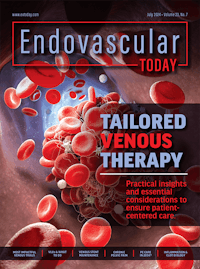
There has never been a better time to be a venous specialist. The venous disease space is no longer the “upstart” in the house of vascular disease; it is a robust specialty, enriched by dedicated practitioners, high-quality data efforts, burgeoning consensus, and prolific therapy development. But with any area of rapid growth, challenges await. The community must be mindful of what is supported in the data and what we simply don’t know, which is considerable. Within that “in-between” space, we must move toward tailoring therapy to the patient in front of us, the central theme of this issue of Endovascular Today.
We open our feature with a look at some of the most impactful trials to date, with a review of deep venous trials by Drs. Misaki Kiguchi and Kyle Reynolds and a review of superficial venous trials by Dr. Manj Gohel. Ask any five venous specialists which trials have had the most impact on the field or their practices, and you’ll likely hear five unique responses, which shows both the variety of data sets currently available but also the need for continued development of high-level evidence to support our practices.
We are now several years into the rapid rise in the use of venous stents, fueled by the availability of dedicated disease-specific platforms. While we continue to focus on the need for understanding the appropriate indications for placement, as well as factors such as proper sizing and deployment techniques, it has become clear that patency is a vexing concern, most notably in the postthrombotic population. There is a clear need for long-term solutions to meet these challenges. In our next article, we introduce the concept of “stent maintenance.” Drs. Gerald O’Sullivan, Erin Murphy, Stephen Black, and myself discuss our strategies for keeping stents open, a process that starts before the decision to stent is made and continues through follow-up.
One theme in our collective approach to venous disease in 2024 is a commitment to better understanding the underlying causes and etiologies of the conditions we are treating. In their article, Drs. Alexandra Murillo Solera and José Diaz take a close look at the role inflammation plays in venous thrombosis. Continued study of pathological mechanisms should help with new pharmacologic and device development as well as enhancing our understanding of disease progression posttreatment.
Despite the frequency with which they are encountered, venous leg ulcers (VLUs) remain challenging to accurately diagnose and treat; but the lack of rigor with which we communicate about VLUs is a conundrum that forms the basis of our roundtable with Drs. Raghu Kolluri, Eri Fukaya, and Kumar Madassery. The trio discusses the wide variety of presentations that can be called VLUs, the potential benefits of a classification system, and how to communicate with patients and providers. Similarly, female pelvic pain of venous origin remains challenging to diagnose and categorize. Dr. Neil Khilnani leads a discussion featuring Drs. Gloria Salazar, Ronald Winokur, and Aleksandra Jaworucka-Kaczorowska, sharing their current understanding of key real-world and clinical study needs, as well as the start of the EMBOLIZE trial.
We have seen great interest in the treatment of pulmonary embolism (PE) in the past 10 years, including the formation of dedicated PE response teams, along with rapid introduction of dedicated devices and initiation of numerous trials to improve our understanding of the disease. What will things look like in 2034? We’ve assembled a panel to “look into the crystal ball” and discuss what the next 10 years what might hold for PE care, with Drs. Brent Keeling, Mae West, Robert Lookstein, and Eric Secemsky all weighing in.
Outside of our feature on venous disease, the Endovascular Today editors share an enlightening interview with Prof. Athanasios Saratzis, who gives updates on a family of clinical trials currently underway, as well as his philosophies for collaborative, impactful study design and management.
Reviewing the insightful contributions of the authors and panelists who have given their time and talents to this edition of Endovascular Today, I am most grateful for the humility with which they all approach the study, treatment, and ongoing discussion of venous disease. Each article balances the known with the unknown, with no shame in tilting toward the latter when appropriate. Increasingly, it is clear that it “takes a village” to ensure progress; physicians, scientists, and industry asking questions and collaborating to find answers and develop therapeutics so that we may all do better for our patients.
On behalf of the contributors, I hope you enjoy this edition of Endovascular Today and invite you to share your progress, questions, setbacks, and perspectives with us so that we may all continue to learn together.
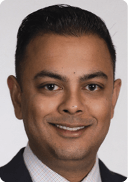
Kush R. Desai, MD, FSIR
Guest Chief Medical Editor
Advertisement
Advertisement