Advertisement
Advertisement
June 2024
The Changing Carotid Landscape
Comparing evidence and the value of new trials, patient selection by procedure and medical management approaches, technical improvements and next-generation enhancements, ensuring proper training and credentialing to ensure optimal outcomes, and the path toward multispecialty collaboration.
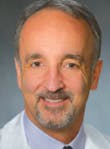
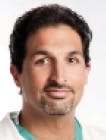
With William A. Gray, MD; Joseph V. Lombardi, MD; and Adnan H. Siddiqui, MD, PhD

TRIALS AND DATA
In your opinion, how do the respective bodies of evidence for transfemoral carotid artery stenting (TF-CAS), transcarotid artery revascularization (TCAR), and carotid endarterectomy (CEA) compare?
Dr. Gray: CEA has established the foundation of carotid intervention over the past 70 years, and it is the standard to which all other therapeutic options are compared. Although the early experience with CEA needed to be improved in terms of death and stroke, it has become a largely safe and highly effective stroke prevention strategy in both symptomatic and asymptomatic patients with significant atherosclerotic bifurcation carotid disease.
Leveraging this foundation, over the past 15 years, more than 8,000 patients have been randomized to either CEA or TF-CAS across all symptom status and surgical risk profiles, with equivalent outcomes for the primary endpoint of perioperative death, stroke, myocardial infarction (MI), and ipsilateral stroke to 4 to 5 years, thus establishing TF-CAS as a viable alternative to CEA.
TCAR, introduced in the United States in 2017, has been evaluated in two small, well-conducted, single-arm studies and has entered more than 75,000 self-reported patient outcomes into the Vascular Quality Initiative (VQI) registry, with comparable outcomes in both standard- and high-surgical-risk patients. Unfortunately, there are no direct, randomized data to best inform us as to the place of TCAR in the management of the carotid patient.
Dr. Lombardi: As far as the reproducibility of data with respect to stroke reduction, safety, and long-term patency, CEA has been superior to all other forms of carotid revascularization. TCAR is the only form of carotid stenting that demonstrates procedural stroke results close or comparable to CEA. Although long-term data with respect to longitudinal stroke reduction and patency are still baking, TCAR is already vastly superior to TF-CAS, which, in my opinion, should only be performed in the rare instance when CEA and/or TCAR is contraindicated.
Dr. Siddiqui: There are excellent real-world and tremendous volume of randomized data with historical contexts and improvements for CEA and TF-CAS. For TCAR, there are core lab–adjudicated as well as real-world data to support its use, but it currently lacks randomized cohorts.
What are we seeing from current trials of newer potential entries to the TF-CAS market?
Dr. Lombardi: Although the anticipated completion of the CREST-2 trial will offer more balanced and contemporary data, incorporating the value of modern medical management with antiplatelet and statin therapy against the traditional indications for asymptomatic carotid disease, I am skeptical that it will significantly change the management approach. Regardless of the findings, it is likely that the interventionalists or surgeons whose practices are not supported by the data will raise concerns of bias, citing their traditional values or algorithms for intervention or surgery.
Dr. Siddiqui: Two trials were presented at VIVA last fall that showed 30-day stroke and MI death rates of 0.6% and 0.9%, respectively, which are the lowest rates ever observed in any studied cohort for any carotid revascularization procedure, which augurs very well for an improvement in innovation in this space that has been dormant for well over 10 years.
Dr. Gray: Two trials testing advances in TF-CAS technology in surgically high-risk patients were presented at the VIVA 2023 meeting last fall. The C-GUARDIANS study was a single-arm study in approximately 300 patients using a novel, mesh-covered stent, which is intended to address the issue of “late,” off-table neurologic events, presumed to be due to previously optical coherence tomography–demonstrated plaque protrusion through the larger cells of current stents. The 30-day stroke rate was very low at < 1%, and the 1-year data were presented at the 2024 LINC meeting.
The PERFORMANCE II study assessed the value of the integrated Neuroguard system (Contego Medical) with a combined stent, balloon, and a handle-actuated filter with 40-µm pore size, used in concert with a distal filter embolic protection device (EPD) (typically with pore sizes 100-120 µm). Prior data confirmed that the majority of particulate debris captured in the Neuroguard filter was < 100 µm, thus the potential value of double filtration. In a single-arm study of about 300 patients, the 30-day stroke rate was ~1%, with no major strokes. One-year data were similarly impressive with only one additional stroke, which was minor and unrelated to the stent. Durability was excellent with no clinically driven target lesion revascularization.
Taken together, a 1% procedural stroke rate (most of which was minor) in two separate studies in over 600 high-risk CEA patients is a remarkable achievement for the field and never achieved before in any carotid therapy. If approved by the FDA, this will be a very positive development for our patients.
CREST-2 is nearing completion of enrollment. Some of those opposed to the 2023 expansion of reimbursement called the National Coverage Determination (NCD) premature with CREST-2 results still pending. When can results from this trial realistically be anticipated, and what unique learnings will this data set bring to the space?
Dr. Siddiqui: This is a fundamental misunderstanding—the NCD was not about who to treat but how to treat. It was about incorporating TF-CAS into the standard armamentarium and not about what criteria are used to treat. The Centers for Medicare & Medicaid Services (CMS) just stuck with currently accepted guidelines for who to treat and they expanded the how to treat.
CREST-2 will determine if we need to change who to treat. That is an important and critical question that the trial will provide, and based on the results, we will either revise or continue with the current guidelines.
Dr. Gray: CREST-2 is hoping to answer the lingering but critically important question of what impact systematically applied, “modern” optimized medical therapy (OMT) will have versus revascularization with CAS or CEA (combined with OMT), which for the purposes of the trial are combined to compare outcomes. The trial is within a few dozen CAS patients of being completed.
The outcome of CREST-2 really had no relevance on the NCD question of whether CAS should be covered for an option for carotid patients.
Handicapping the outcome of this trial is a fool’s errand, but we might anticipate event rates in both arms—based on the contemporary CREST-2 CAS registry outcomes, recent CEA outcomes in prior asymptomatic trials, and the natural history of carotid disease treated with OMT—to be very low. That is great for our patients but may make the statistical distinction between the two arms challenging. An important caveat of the results of this trial will be the severity of the stenosis of patients enrolled, and hopefully it will have been severe enough to answer the meaningful question being posed.
TECH AND TECHNIQUE
With medical management, CEA, TF-CAS, and TCAR all available to offer patients, how are you currently selecting the OMT for each patient? Who are your “hard no” patients for each?
Dr. Gray: That is a short question with an expansive answer. In broad terms (and without getting into the weeds too much), we should consider the strengths and weaknesses of each approach when counseling patients regarding their options. The reality is that any of the interventions will have similar risk and outcomes in the significant majority of patients, so it will come down to patient preference, and the NCD made it clear that these choices should be part of a shared-decision paradigm and documented as such.
But to answer the question, for patients with specific anatomic or physiologic conditions that put them at higher risk for open CEA, TCAR and CAS should be considered. For difficult aortic arch or common carotid anatomy, TCAR and CEA might be better choices. For tortuous, long or heavily calcified lesions, CEA may be preferred. And, in the older patient with a calcified stable lesion where the risk of any intervention is higher, OMT without revascularization is a very reasonable choice.
It should be obvious from the above outline that physicians managing carotid patients will both need to have a good understanding of the various options available and, in most cases, will need to be willing to refer the patient to the appropriate specialist for treatment because most of us do not offer all the available choices.
Dr. Siddiqui: I start with the assumption that all three techniques are equivalent and also that less invasive is better for patient recovery. I obtain a CTA of the head and neck and look at the aortic arch. If it is shaggy, severely atherosclerotic, or severely tortuous (type III) the patient is excluded from TF-CAS. If the arch is clean and not severely tortuous (type I and II), then they are considered for TF-CAS.
Then, I look at the carotid stenotic lesion; if it is densely and concentrically calcified, then patient gets CEA. However, this is starting to change with intravascular lithotripsy making these lesions amenable to stenting. If the lesion is severely angulated, then patient gets a CEA.
In summary, all patients who have a carotid lesion amenable to stenting (not concentrically calcified or severely angulated) undergo TF-CAS unless they have a shaggy or type III arch, in which case they get TCAR; for lesions that are severely concentrically calcified or severely angulated, CEA is the preferred option.
Dr. Lombardi: Although I remain steadfast that CEA is still the gold standard, I believe that a patient’s anatomy, medical history, age, and lesion characteristics play a crucial role in my decision-making process. I have largely abandoned TF-CAS in favor of TCAR, and my TCAR patients are more commonly advanced in age, have high bifurcations or minimally calcified lesions, or have a history of neck radiation or prior surgery in the neck area. On the other hand, my CEA patients are generally younger with calcified lesions and surgically optimal anatomy.
However, there are many variations in patient presentations that fall between these scenarios. In such cases, I engage in thorough discussions with the patients, weighing the risks and benefits of each method of revascularization. Ultimately, a collective decision is made between the patient and myself, taking into account their specific circumstances and preferences.
How has CEA evolved over the past decade? What kinds of technical improvements have been seen, and how do these show up in outcomes?
Dr. Siddiqui: Results have improved for CEA because of the focus on quality and performance. In my mind, what I consider as critical is the use of (1) neuroanesthesia with optimized blood pressure and cerebral perfusion in light of evaluation of the circle of Willis and patient’s baseline blood pressure; (2) neuromonitoring including electroencephalography and somatosensory evoked potentials to assess the need for shunting; and (3) a microscope that allows primary repair of the carotid artery without a patch.
Dr. Lombardi: Although there has been a general acceptance that current antiplatelet and statin therapy significantly decreases the risk of stroke, this has not been quantified enough to change my belief in treating asymptomatic carotid disease. However, it has influenced my threshold for treating asymptomatic carotid stenosis, which I now consider at 80% for standard lesions. Nonetheless, lower-grade lesions with a soft, ulcerative appearance tend to make me more aggressive in treatment, given their potential for rupture compared to calcified lesions.
For the past 20 years, I have been using a nontraditional modified eversion technique for CEA, which we have previously described. I seldom use a patch unless an endpoint is not perfectly visible.
With reimbursement largely dormant in recent years, the entry of new TF-CAS devices to the market has been limited. What kinds of enhancements are you looking for in next-generation platforms?
Dr. Lombardi: I would love to see a cerebral embolic protection system that matches what is offered from current flow reversal scene in TCAR procedures. But even then, traversal of the aortic arch with the associated catheter manipulation would need to precede such a system prior to establishing flow reversal. I’m just not sure there will be enough innovation with TF-CAS devices to sway those who have developed a proficiency and comfort level with TCAR.
Dr. Gray: We have reams of data that, once implanted (by any route), a stent provides equivalent—and excellent—subsequent long-term durability and stroke prevention as compared with CEA. So, the name of the game in carotid disease intervention is minimizing the procedural risks—most of which are neurologic—and this is what new technology will be evaluated on.
Dr. Siddiqui: I am really excited about the two platforms introduced via trials last year at VIVA, the C-Guard stent (InspireMD), which provides excellent plaque protection during and post procedure (two-thirds of stroke occur after procedure), and the Neuroguard system, which unitizes all parts of the procedure—distal protection, angioplasty, and stenting all in one step with a faster and easier procedure.
What developments would you like to see in the TCAR space?
Dr. Siddiqui: A percutaneous system.
Dr. Gray: There may be improvements in the catheter that are possible (angulation, maximizing flow reversal). Additional choices in more contemporary stents fitted with shorter delivery systems might further enhance operator experience and possible outcomes.
Dr. Lombardi: A sheath system that has a shorter length within the carotid artery and a smoother transition for entry. We would like to see a balloon system that has a greater ability to handle calcified lesions.
TRAINING AND CREDENTIALING
Due to previous reimbursement constraints, relatively few operators and centers have a significant volume of experience relative to other peripheral vascular procedures. How should newer operators and those who have not seen high CAS volumes in recent years ensure their skills are up to par before embarking on a more robust CAS practice?
Dr. Lombardi: I believe it is the responsibility of each hospital’s credentialing committee to ensure that any provider performing CAS has undergone ample documented training and demonstrated confirmed proficiency, certified by an experienced expert in the field. This proficiency can be established during a fellowship or residency training program or by scrubbing a specified number of cases under supervision after completing formal training.
However, hospitals should be wary of providers who may have a false sense of proficiency solely based on their experience in peripheral vascular procedures. CAS requires specialized training and expertise in cervicocerebral interventions, as the consequences of inadequate training can be grave. Credentialing committees must enforce stringent criteria and mandate formal neuroscience training, as outlined in published standards, for those performing carotid interventions, similar to the rigorous requirements for coronary interventions.
Ensuring patient safety and optimal outcomes should be the primary focus, and credentialing committees must promote adequate standards of training and experience that are uniform across all specialties.
Dr. Siddiqui: We need to develop carotid training courses to be hosted by high-volume centers to provide didactic education, practical exposure to clinical cases and discussion, and three-dimensional printed models with arch access and difficult lesions for hands-on training. This is fundamental to developing personal technical skills critical in training the current and future workforce.
Dr. Gray: There has been so much work by innumerable researchers, patients, industry, and government regulatory and payment agencies to get the outcomes and coverage to where we are today. It is incumbent on all of us to get the necessary training appropriate to our prior experience (or lack thereof) to ensure the best patient outcomes. These educational opportunities are in process of being developed and include virtual online materials, in-person hands-on flow models and simulation, and observation and proctorship.
What can or should be the role of professional societies and device manufacturers in ensuring operators are sufficiently trained to achieve optimal outcomes?
Dr. Gray: Both professional societies and device manufacturers will be involved with this process, the former in both setting the requirements and providing the device-agnostic education, and the latter with financial support for this training as well as possible device-specific educational endeavors.
Dr. Lombardi: This is an excellent question, as when I graduated from my fellowship, I had performed over 50 CAS procedures. However, when I began practicing, I was initially hesitant to perform TF-CAS. At that time, there was very little guidance from industry and our surgical societies in developing this type of practice because it was relatively novel and there were high levels of turf discord.
Today, it feels far less contentious than those early days, and there are resources available to obtain proficiency in these areas through mini-fellowships supported by our societies. One of the best training programs I have seen since my fellowship has been developed by Silk Road, with their “test drive” training program. Indeed, much has changed, and it’s encouraging to see the level of accountability from our industry and societies in developing high standards for proficiency and procedural understanding.
Dr. Siddiqui: Professional societies are critical for setting guidelines for who to treat as well as who should treat. The companies can help ensure that the docs who use their devices for carotid disease fulfill these requirements.
What are your thoughts on how operators and centers should be monitoring their outcomes to ensure high quality?
Dr. Siddiqui: I strongly believe in registry data, especially with future advancements including imaging and automated data entry such as those we are trialing with the NVQI-QOD (Neurovascular Quality Initiative–Quality Outcome Database) run by the Society of NeuroInterventional Surgery in partnership with CV Section and Society of Vascular and Interventional Neurology, as well as the sister database, the VQI. Even though CMS didn’t mandate it, societies and industry should strongly encourage physicians to participate in registries to allow for quality data collection and process and service improvement.
Dr. Lombardi: Within our health system, we are fortunate to have a comprehensive tracking system for all carotid stenting outcomes, which is a requirement for the certification of our stroke center. This system encompasses the outcomes of CAS procedures performed by all specialties. However, for those facilities or providers not seeking stroke center certification, there is no such requirement to track and report their carotid stenting outcomes. This lack of a mandatory registry raises concerns about the potential for unmitigated procedural variability and inconsistencies in outcomes, as there is no centralized monitoring or quality control mechanism in place.
Dr. Gray: Like any procedure or surgery, at a minimum, institutions should collect and monitor outcomes and address adverse events by case reviews to identify any operator or process education/improvements that can be made. This can be done using entry of local data into national databases like the VQI or simply collected on-site. The VQI process has the advantage of an already developed data collection vehicle and the ability to compare to national outcomes.
TURF
Carotid revascularization has been among the most contested procedure spaces in the multispecialty arena of vascular care. What will it take to see improved harmony among the societies and specialties in the carotid field?
Dr. Gray: The analogous cross-specialty heart team model now in place and functioning well for the treatment of valvular/structural heart patients was largely driven by CMS mandates, which are not present for carotid disease. Therefore, it will take a realization at the national/societal level that no one group of practitioners has primacy in this space, as well as efforts at a local level to collaborate wherever and whenever possible. As someone intimately involved with the heart team model, it is abundantly clear that we have much to learn from each other as specialties, which can ultimately only accrue to our patients’ benefit.
Dr. Siddiqui: It will take time. The next generation of interventionalists and surgeons will prioritize multispecialty efforts and a collaborative approach.
Dr. Lombardi: I think the answer lies within each society’s and specialty’s ability to ensure their standards are high and indications are strong. Improved harmony among societies and specialties would require a collaborative, multidisciplinary approach focused on:
1. Developing consensus guidelines and credentialing criteria across all relevant specialties through joint efforts and evidence-based decision-making.
2. Prioritizing optimal patient outcomes and safety over specialty-specific interests through robust quality monitoring systems and registries.
3. Establishing unified standards for training, proctoring, and credentialing to ensure all providers meet the highest competency levels, regardless of specialty.
4. Implementing validated, multispecialty shared decision-making tools to involve patients in selecting the most appropriate revascularization procedure.
5. Fostering continued research and innovation through cross-specialty collaboration to advance techniques and identify appropriate indications.
Harmony is possible with embracing a culture of collaboration, prioritizing patient-centered care, and adhering to rigorous standards to provide the best possible care for patients with carotid artery disease.
Disclosures
Dr. Gray: Consultant to Contego Medical, Medtronic, Boston Scientific Corporation, InspireMD, Gore & Associates, and Cordis Corporation; receives institutional research support from Contego Medical.
Dr. Lombardi: None.
Dr. Siddiqui: Financial interest/investor/stock options/ownership in InspireMD, Silk Road Medical; consultant/advisory board for Boston Scientific, Cordis, InspireMD, Medtronic, MicroVention, and Silk Road Medical.
Advertisement
Advertisement