Advertisement
Advertisement
March 2024
Improving EVAR Through Simulation Training
Integrating scrub nurses into simulated training programs results in improved patient safety and job satisfaction.
By Rebecca Skov, MD; Jonathan Lawaetz, MD, PhD; Lise Westerlin, RN; Timothy Resch, MD, PhD; and Jonas Eiberg, MD, PhD
Endovascular aneurysm repair (EVAR) is currently the preferred treatment for abdominal aortic aneurysms.1 This mandates that vascular surgeons obtain endovascular skills, and thus, EVAR simulation training is well established and integrated into the training of future vascular surgeons in many centers.
The principle guiding this approach is the understanding that the initial steps and inevitable learning curve should ideally unfold in a simulated environment. This practice is designed to mitigate preventable errors and enhance overall patient safety. Literature supports the efficacy of simulation training regarding technical and nontechnical skills. This literature spans studies exploring didactic methods, the value of e-learning, and optimal training program structures.2,3 It supports evidence-based simulation programs characterized by standardized feedback mechanisms and validated proficiency assessments that offer the potential for certification on attaining the desired skills.3-6
Maybe not surprisingly, most of these research projects and educational programs are centered on the doctor and, specifically, the surgeon in training. However, in pursuing the most efficient training path for surgeons, we have overlooked a crucial ally: the scrub nurse. Scrub nurses are indispensable to the endovascular team and demand in-depth knowledge of the procedure and equipment.
TRAINING THE NURSE IN SURGICAL TASKS
Several simulation-based training programs are already in place for prospective vascular surgeons, and some are mandatory for Danish vascular surgical trainees. Given the success of these programs, we strategically decided to extend the same simulation-based training opportunities to the scrub nurses involved in EVAR and the endovascular treatment of peripheral artery disease (Figure 1 and Figure 2). Both programs were already available and ready for use and, thus, were more or less “plug and play.”
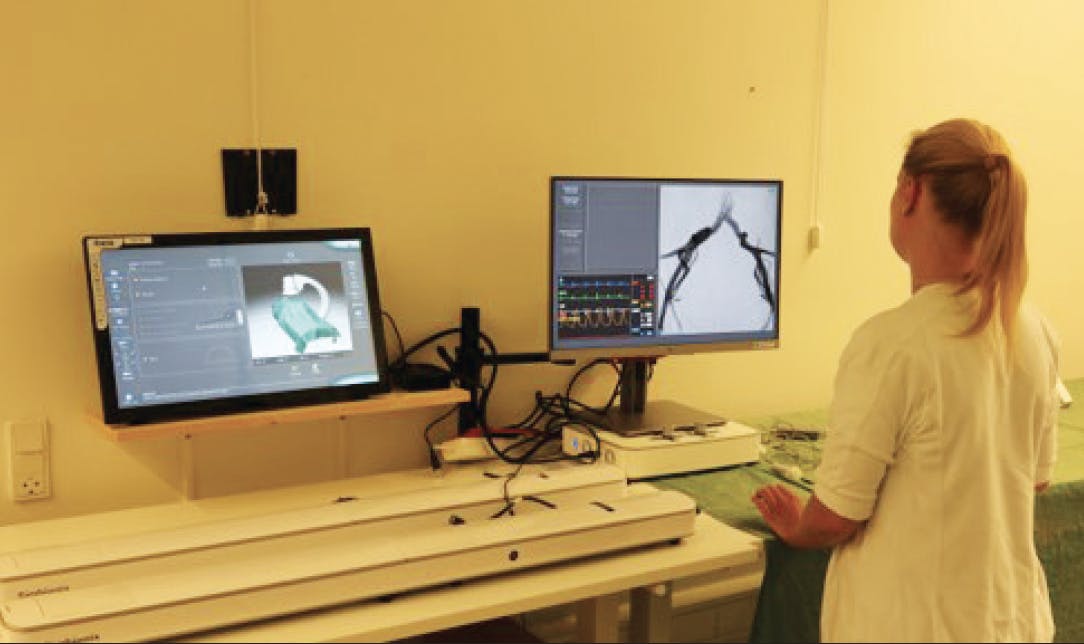
Figure 1. The simulated setup in the course on peripheral endovascular procedures.
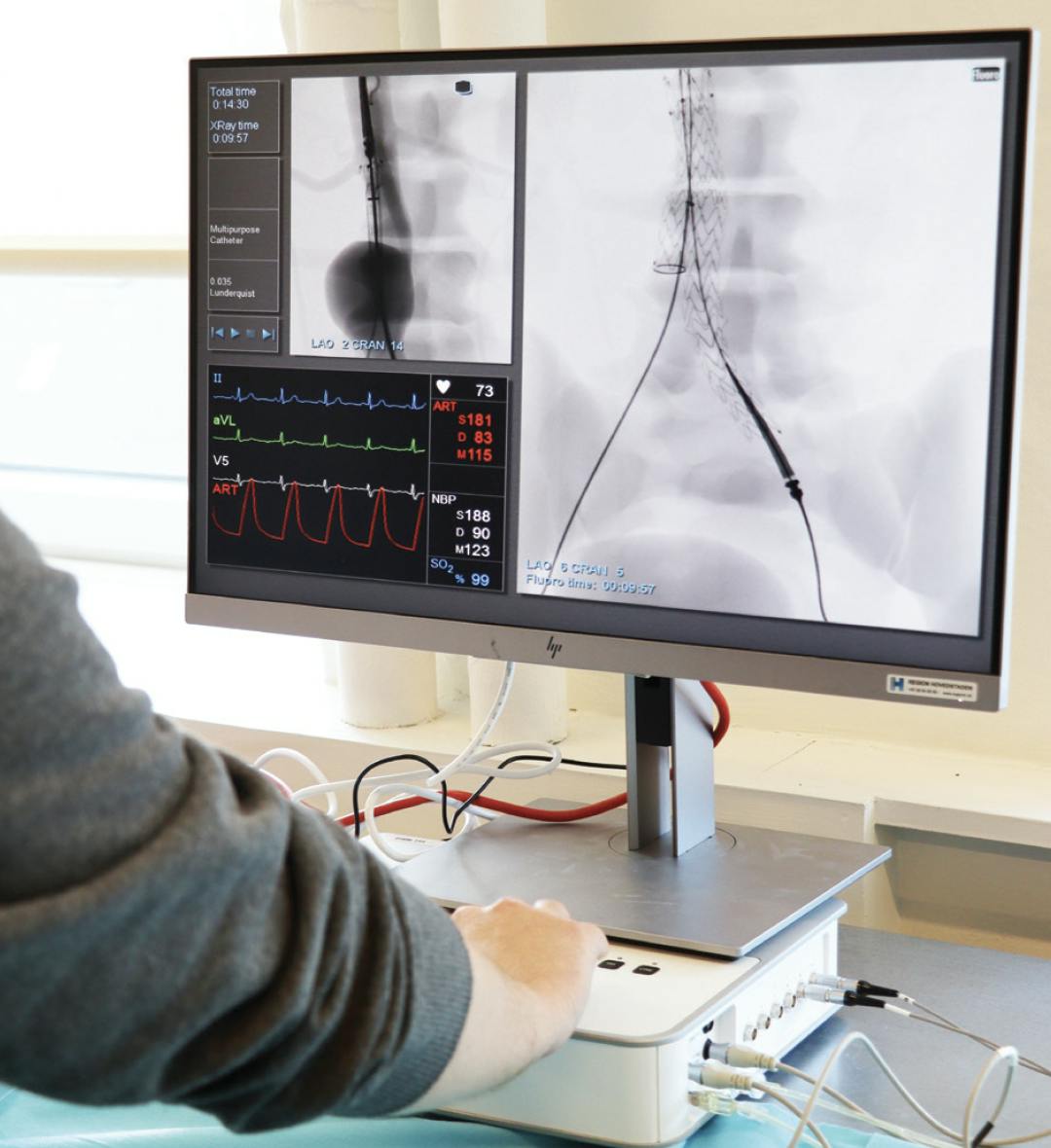
Figure 2. A simulated case of standard EVAR.
Introducing the concept of training nurses in surgical skills initially sparked controversy and prompted questions such as, “Why teach nurses to operate?” Both the nurses and surgeons voiced this skepticism. However, this approach is uncontroversial and aligns with established educational theory and didactics known as “role-reversal training.” In role-reversal training, the scrub nurse undergoes training as a surgeon to ensure an optimal understanding of the procedure and its sequential steps.7 This fits our ambitions to increase scrub nurses’ knowledge of procedural flow and insight into procedural steps and to reduce failure to rescue by enabling more team members to speak up.
TECHNICAL SKILL TRAINING TO IMPROVE NONTECHNICAL SKILLS
Despite a primary focus on procedural steps, improvement in nontechnical skills was seen as a result of this training. We observed a notable enhancement in the communicative interplay between scrub nurses and surgeons after implementing simulation-based education (SBE) for the scrub nurses. This phenomenon underscores a fundamental concept: Focusing SBE on one team component will improve the team’s overall performance. This positive shift resulted in fewer misunderstandings, a reduction in errors, and an increased willingness among nurses to vocalize observations that require attention.8 After the training, the nurses described the procedures as less stressful, a critical consideration given the well-established correlation between heightened stress levels among surgical staff, compromised performances, and increased errors that could potentially compromise patient safety.9
RECRUITMENT AND RETENTION OF NURSES
Subsequently, we have included SBE as part of job advertisements in connection with unfilled positions, which has increased our recruitment opportunities. We have realized that it has become easier to retain scrub nurses after we have systematized simulation training. As in most other countries, experienced surgical nurses are in short supply in Denmark, and it is difficult to retain them when they have gained experience. The latter is particularly problematic—training a nurse is resource demanding, as it takes time to train someone new.
WHAT DID THE NURSES AND SURGEONS THINK?
The impact of our SBE is uniformly positive, resonating with both experienced and novice scrub nurses. The novices feel safer entering the operating room and become more confident in their role faster than with a standard introduction. Some experienced nurses obtained hands-on experience with procedural steps that they never fully comprehended because they had been standing with their backs toward the procedures to prepare the instruments. Due to the SBE, they had, for the first time, not only seen but also tried these critical steps. This improves the overall understanding of the procedure.
The feedback from surgeons further underscores the positive impact of the training. Surgeons noted a significant improvement in the working environment, describing it as more comfortable while also facilitating better collaboration, streamlining workflow, and notably reducing the opening of unnecessary equipment during procedures.
THE ABILITY TO SPEAK UP
We have experienced how the nurses become more active team members in the hybrid suite, actively discussing and suggesting treatment options. This is likely an essential step in preventing failure to rescue because more team members can identify critical aspects and near-misses, thus improving patient safety. Notably, before undergoing the SBE, scrub nurses often grappled with feelings of inadequacy that stemmed from a lack of understanding of the procedures and a perceived passivity during surgeries. They now express pride in their roles, viewing themselves as skilled team members whose insights and voices are valued. This newfound confidence is well received by the surgeons in the department, further affirming the positive impact of the training on team dynamics and collaborative communication.
WHICH TRAINING MODALITY TO CHOOSE?
Traditionally, SBE for scrub nurses predominantly occurred within team-based scenarios, emphasizing crucial skills such as communication and teamwork.10 From our pragmatic perspective, the choice revolves more around identifying a feasible option that can be integrated into the demanding schedules of a busy clinical practice. The best training is the one that is actually done. In this context, role-reversal training emerges as a pragmatic choice, given its ease of planning and execution. Unlike team-based simulations that necessitate coordinating participants from different units, role-reversal training can be implemented more seamlessly, requiring less logistical coordination.11
IMPLEMENTATION ACROSS SURGICAL SPECIALITIES
We believe there is significant potential for more widespread adoption of “the Copenhagen Experience”: role-reversal simulation training for scrub nurses across various surgical specialties. Many surgical disciplines have comprehensive training programs already established for their surgeons that could be extended to similar training opportunities for nurses. In implementing this training for nurses, it is crucial to transparently communicate the purpose behind such initiatives. We encountered some reservations during our initial phases of introducing simulation for nurses. Notably, there were concerns among nurses who feared that this training was prompted by dissatisfaction with their performance among surgeons. However, the initiative was warmly received once we clarified that the training was rather aimed at enhancing their job satisfaction and ensuring patient safety.
IS IT WORTH THE PRICE?
When the conversation turns to SBE, a recurring question often concerns of whether we can afford it. But the question should rather be, can we afford to not invest in such training?
It has already been shown that simulation-based training is cost-beneficial for vascular surgical trainees,12 but how about the scrub nurses? To contextualize the expenses, providing 3 days of evidence-based SBE with a 1:2 instructor-to-trainee ratio incurs costs equivalent to 10% of an EVAR stent graft or the price of 10 hours in the intensive care unit. Then, consider these costs against the potential expenses of preventable errors and the need to introduce new scrub nurses to the specialty due to dissatisfaction among experienced staff.
If SBE can mitigate even a fraction of these costs, the decision becomes apparent, and the potential consequences of neglecting SBE should serve as a compelling argument for its regular inclusion in training protocols.
CONCLUSION
When considering SBE, surgeons should remember that the scrub nurses are their strongest allies. Training scrub nurses with SBE in the surgeon’s tasks improves teamwork, reduces errors, and can be a tool to reduce failures to rescue. There is a great potential to improve job satisfaction, recruitment, and staff retention by implementing SBE for all staff, and role-reversal training enables more straightforward implementation because new training programs do not need to be developed for each staff group.
1. Budtz-Lilly J, Venermo M, Debus S, et al. Editor’s choice-assessment of international outcomes of intact abdominal aortic aneurysm repair over 9 years. Eur J Vasc Endovasc Surg. 2017;54:13-20. doi: 10.1016/j.ejvs.2017.03.003
2. Soenens G, Lawaetz J, Doyen B, et al. Massed training is logistically superior to distributed training in acquiring basic endovascular skills. Eur J Vasc Endovasc Surg. 2023;66:730-737. doi: 10.1016/j.ejvs.2023.07.019
3. Skov RAC, Lawaetz J, Stroem M, et al. Certification of basic skills in endovascular aortic repair through a modular simulation course with real time performance assessment. Eur J Vasc Endovasc Surg. Published online November 17, 2023. doi: 10.1016/j.ejvs.2023.11.016
4. Maertens H, Aggarwal R, Desender L, et al. Development of a proficiency-based stepwise endovascular curricular training (PROSPECT) program. J Surg Educ. 2016;73:51-60. doi: 10.1016/j.jsurg.2015.07.009
5. Soenens G, Lawaetz J, Bamelis AS, et al. international implementation of a proficiency based stepwise endovascular curricular training (PROSPECT) in daily practice. Eur J Vasc Endovasc Surg. 2021;62:992-998. doi: 10.1016/j.ejvs.2021.09.029
6. Lawaetz J, Nayahangan LJ, Strøm M, et al. Learning curves and competences of vascular trainees performing open aortic repair in a simulation-based environment. Ann Vasc Surg. 2021;72:430-439. doi: 10.1016/j.avsg.2020.09.009
7. Gowda S, Elsabra R, Lindero E, Mohan A. Improving interprofessional teamwork in plastic surgery: a novel approach to microsurgical skills training. Plast Surg Nurs. 2021;41:203-207. doi: 10.1097/PSN.0000000000000399
8. Skov RAC, Lawaetz J, Konge L, et al. Simulation-based education of endovascular scrub nurses reduces stress and improves team performance. J Surg Res. 2022;280:209-217. doi: 10.1016/j.jss.2022.07.030
9. D’Ambrosia C, Aronoff-Spencer E, Huang EY, et al. The physiology of intraoperative error: using electrokardiograms to understand operator performance during robot-assisted surgery simulations. Surg Endosc. 2023;37:4641-4650. doi: 10.1007/s00464-023-09957-0
10. Buljac-Samardzic M, Doekhie KD, van Wijngaarden JDH. Interventions to improve team effectiveness within health care: a systematic review of the past decade. Hum Resour Health. 2020;18:2. doi: 10.1186/s12960-019-0411-3
11. Glaser B, Schellenberg T, Koch L, et al. Design and evaluation of an interactive training system for scrub nurses. Int J Comput Assist Radiol Surg. 2016;11:1527-1536. doi: 10.1007/s11548-016-1356-9
12. Maertens H, Vermassen F, Aggarwal R, et al. Endovascular training using a simulation based curriculum is less expensive than training in the hybrid angiosuite. Eur J Vasc Endovasc Surg. 2018;56:583-590. doi: 10.1016/j.ejvs.2018.07.011
Advertisement
Advertisement