Advertisement
Advertisement
March 2024
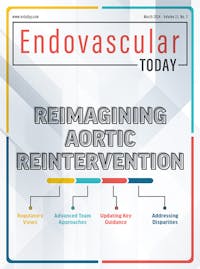
Recognizing Disparities: Aortic Intervention That Is Avoidable, Unnecessary, Unjust?
A commentary on the impact of equity domains in AAA surveillance and reintervention and the current understanding of individual domains on outcome after EVAR.
Health disparity is fundamentally intertwined with the precept of social justice—justice in the treatment of socioeconomically disadvantaged and advantaged groups with respect to health care access, quality, and outcomes. Thus, disparity is the recognition of treatment patterns that are “avoidable, unnecessary, or unjust.” In Healthy People 2030, disparities are closely linked to disadvantage in the areas of environmental, social, or economic disadvantage, characteristics historically related to discrimination or exclusion. Explicitly acknowledged characteristics include race, ethnicity, religion, sex, age, gender, cognitive or physical disability, socioeconomic status, or geographic location.1 Thus, health equity in abdominal aortic aneurysm (AAA) care, or specifically endovascular aneurysm repair (EVAR), is not the absence of difference, but the tempering of sociodemographic factors that negatively affect outcome after EVAR (ie, health justice). Those factors may not be generalizable across nations, geographic regions, or health care models and may be shared with other jurisdictions, but fundamentally the pattern and intersectionality of these social and demographic factors are unique to the institution/region/country in which one practices; the effect of intersecting equity domains may be more or less than additive.2
This is not to say that we should be unaware of the overarching histories of disparity, with far-reaching generational consequences to our patients, that have led to health injustice. It is to argue that the context of practice is likely to greatly impact equity domains and determine their interplay. To clarify the impact of equity domains in AAA surveillance/reintervention, it is useful to consider our current understanding of some individual domains on outcome after EVAR.
SEX AND AGE IN ENDOVASCULAR AORTIC INTERVENTION
The health equity domains that produce consistent disparity effects after EVAR are primarily those that are readily categorized, consistently recorded in medical records, and are not codependent with other domains. The effect of sex on perioperative and long-term outcomes after EVAR, thoracic endovascular aortic repair (TEVAR), and complex EVAR, has been described in single centers, multicenter experiences, and registry data sets linked to national data sets. A recent study linking Vascular Quality Initiative (VQI) and Medicare data to interrogate sex differences in EVAR outcome over follow-up to 5 years demonstrated higher aneurysm rupture rates in females compared to males, with higher mortality over follow-up.3 This sex-based disadvantage is consistently reported across the literature examining infrarenal EVAR, TEVAR, and branched/fenestrated EVAR, with women having worse perioperative complications (notably, renal injury, bowel ischemia, spinal ischemia), 30-day mortality, and long-term mortality. Reintervention after EVAR is also higher in women, particularly in the context of emergent treatment.4 The reason for these outcomes is likely multifactorial, including the degree of anatomic complexity, the inclusion of predominantly male populations in randomized controlled trials of aneurysm repair that likely biases aneurysm measurements and risk stratification to the male context, as-yet unrecognized hormone-related differences in aneurysm/vascular pathophysiology, and social disparities in the recognition and treatment of pain and illness in women. Thus, although the sex-related disparity in outcome after EVAR is consistently reported, assigning culpability is unclear.
There is a similar consistency in the reported interaction of age and outcome after EVAR. Although long-term mortality is (not surprisingly) increased in older patients, age has not consistently been reported to be associated with anatomic unsuitability for EVAR, AAA diameter, or reintervention rate. Similar results documenting moderately higher perioperative mortality, but no differences in major adverse events, reintervention, or branch instability have been documented after complex EVAR in octogenarians versus nonoctogenarians.5
GEOGRAPHY, RACE, INCOME, GENDER, HEALTH LITERACY, AND COGNITIVE/PHYSICAL DISABILITY IN AORTIC INTERVENTION
There are fewer data on the effect of geography and race on outcomes after EVAR, and there is very scant literature examining the impact of gender, education, income, and cognitive/physical disability on AAA care, even though many of these disparity domains are covariates, muddying data interpretation. In some studies, patients of lower socioeconomic status are more likely to undergo open surgical repair of their AAA rather than EVAR.6 Lower socioeconomic status, Black and Hispanic individuals, and those residing in rural areas are also more likely to present with a ruptured rather than intact AAA.7 Although rural location and presentation at a hospital without vascular services results in longer time to operative intervention for ruptured AAA, in some studies, this was not associated with higher perioperative mortality.8 Indeed, in the treatment of intact AAAs in a study from the United States, rural patients were more likely to undergo intervention at high-volume centers, with a decreased odds of perioperative mortality or rehospitalization.9
Multidomain scores of deprivation, such as the Area Deprivation Index in the United States or the Index of Multiple Deprivation in the United Kingdom, have been correlated with ruptured AAA presentation, open surgical repair over EVAR, rupture at a younger age, and delay between presentation and operative intervention. Higher deprivation scores were also covariates with female sex and self-identification as Black but not comorbidities.10,11 The effect of nonbinary gender identity or cognitive/physical disability has not been evaluated in relation to AAA repair. Although the effect of health literacy on outcomes, surveillance, and reintervention after EVAR has not been explored, the most commonly accessed online patient educational materials about AAA repair have an average reading level of 12.8 (ie, college-level) and far exceed the American Medical Association/National Institutes of Health recommended 6th-grade reading level; the average reading grade level in the United States is 8th grade. One study in the United Kingdom demonstrated a significant association between health literacy, cognitive ability, and all-cause mortality in older adults.12
LIMITATIONS OF DATA SOURCES AND POTENTIAL SOLUTIONS
Conclusions regarding AAA-related disparities may be discordant across institutions, regions, or countries, particularly within domains that are intersecting or defined in nonbinary terms. It may be tempting to reflect upon this, in part, as a manifestation of equalization through universal access to health care, as in public versus private health care models. Although there are undeniably differences in access and treatment that reflect health care provenance, the data variability may equally reflect patient-specific individual differences, education, and health literacy or the intersectionality of these factors. It would be premature to draw broad conclusions about the impact of health care structure on health injustice at this juncture.
Equally, interrogation of health justice in vascular surgery brings into focus the sources of data being probed. Typically, interrogation of outcomes after EVAR has utilized single or multicenter experiences, randomized controlled trials, or registries to quantify outcome. To date, much of these data sources continue to be relevant, but their limitations become clear. For example, one advantage and also a limitation of single-center experiences is the granularity of data produced and the specificity of inequity that may be uncovered that is reflective of the particular sociodemographic milieu of the practicing institution. These data could be enormously instructive in implementing change within that institution within a quality improvement framework and may provide a benchmark for exploration of similar issues in another institution. However, broad applicability of this work on a state, provincial, or national level may be inappropriate.
Single-center experiences also often suffer from significant data degradation/loss to follow-up over the long term. Our knowledge of EVAR failure and reintervention suggests that long-term assessment over a minimum of 5-year follow-up is paramount. However, there is no associated time benchmark for assessing inequity domains on health outcomes, although they are also likely to require protracted surveillance. For these reasons, registry data, combined with national databases, provide vital counterpoints to institutional experiences in delineating health inequity. Although data sources like the VQI, a prospectively maintained database primarily composed of participating American and Canadian vascular surgery institutions, has furnished some aspects of the data described previously and provides an avenue to overcome the regionality of single-center experiences, I would posit that the focus of this (and other) databases is primarily on assessing procedural and early outcomes-based data for the purpose of research, rather than on appraising quality, equity, and access to care. The caveat of loss of long-term follow-up and data degradation equally plagues these large data sets.
One solution would be to establish EVAR-specific databases at a state/provincial or national level, with the purpose of providing long-term patient monitoring, regardless of geographic location, facilitating data transfer between institutions and with the overarching goal of improving the quality of patient care, rather than the generation of data for research; some of these databases exist or are under construction (eg VISION). Fundamentally, work assessing health injustice must be supported at all levels of health care governance through financial funding/incentives, recognition of the importance of health equity research, robust quality improvement programs at the institutional and regional levels, and investment in ongoing reappraisal of quality initiatives. New metrics that address quantitative and qualitative disparities in the patient experience may be required to facilitate health justice in AAA care.
1. US Department of Health and Human Services; Office of Disease Prevention and Health Promotion. Healthy People 2030: About disparities data. Accessed January 24, 2024. https://health.gov/healthypeople/objectives-and-data/about-disparities-data
2. Canadian institute for Health Information (CIHI). In pursuit of health equity: defining stratifiers for measuring health inequality—a focus on age, sex, gender, income, education and geographic location. April 2018. Accessed January 24, 2024. https://www.cihi.ca/sites/default/files/document/defining-stratifiers-measuring-health-inequalities-2018-en-web.pdf
3. Marcaccio CL, Patel PB, de Guerre LEVM, et al. Disparities in 5-year outcomes and imaging surveillance following elective endovascular repair of abdominal aortic aneurysm by sex, race, and ethnicity. J Vasc Surg. 2022;76:1205-1215.e4. doi: 10.1016/j.jvs.2022.03.886
4. Ramkumar N, Suckow BD, Columbo JA, et al. Sex differences in outcomes among adults undergoing abdominal aortic aneurysm repair. J Vasc Surg. 2023;78:1212-1220.e5. doi: 10.1016/j.jvs.2023.06.105
5. Elahwal M, Richards T, Imsirovic A, et al. Systematic review of the results of fenestrated endovascular aortic repair in octogenarians. Ann R Coll Surg Engl. Published online August 29, 2023. doi: 10.1308/rcsann.2023.0032
6. Faulds J, Bell NJ, Harrington DM, et al. Socioeconomic and geographic disparities in access to endovascular abdominal aortic aneurysm repair. Ann Vasc Surg. 2013;27:1061-1067. doi: 10.1016/j.avsg.2013.02.020
7. Wu VS, Caputo FJ, Quatromoni JG, et al. Association between socioeconomic deprivation and presentation with a ruptured abdominal aortic aneurysm. J Vasc Surg. 2024;79:44-54. doi: 10.1016/j.jvs.2023.08.127
8. Munday E, Walker S. Mortality outcomes of ruptured abdominal aortic aneurysms and rural presentation. Vascular. 2016;24:449-453. doi: 10.1177/1708538115599315
9. Mell MW, Bartels C, Kind A, et al. Superior outcomes for rural patients after abdominal aortic aneurysm repair supports a systematic regional approach to abdominal aortic aneurysm care. J Vasc Surg. 2012;56:608-613. doi: 10.1016/j.jvs.2012.02.051
10. Mota L, Marcaccio CL, Patel PB, et al. The impact of neighborhood social disadvantage on abdominal aortic aneurysm severity and management. J Vasc Surg. 2023;77:1077-1086.e2. doi: 10.1016/j.jvs.2022.10.048
11. Phillips AR, Andraska EA, Reitz KM, et al. Association between neighborhood deprivation and presenting with a ruptured abdominal aortic aneurysm before screening age. J Vasc Surg. 2022;76:932-941.e2. doi: 10.1016/j.jvs.2022.03.009
12. Bostock S, Steptoe A. Association between low functional health literacy and mortality in older adults: longitudinal cohort study. BMJ. 2012;344:e1602. doi: 10.1136/bmj.e1602
Advertisement
Advertisement