Advertisement
Advertisement
May 2024 Supplement
Sponsored by Surmodics, Inc.
Case Report: Successful Revascularization of a 99% Left CFA Stenosis Via a Radial Approach Facilitated by the Sublime™ Microcatheter
Patient Presentation
A man in his early 70s with a prior medical history of a left femoral endarterectomy, peripheral artery disease, diabetes, hyperlipidemia, and hypertension presented with a recurrent wound in his left lateral malleolus from the original femoral endarterectomy. An arterial ultrasound demonstrated severe left femoral arterial stenosis with peak systolic velocity at 300 cm/second. Based on the patient’s arterial ultrasound and prior history, the patient was immediately taken to the angiography suite.
DIAGNOSTIC FINDINGS
To avoid the femoral complication, a radial access approach was chosen; the right radial artery was accessed using ultrasound guidance. A 5/6 Fr Glidesheath Slender® hydrophilic coated introducer sheath (Terumo Interventional Systems) was introduced, and an internal mammary (IM) catheter was used to navigate through the aortic arch down into the lower extremity vasculature. The IM catheter was swapped out for a Glidecath™ PV multicurve catheter (Terumo Interventional Systems) and an angiogram was obtained. The initial angiogram showed a 99% left common femoral artery (CFA) stenosis, likely due to an injury from the original endarterectomy (Figure 1). The interventional strategy was to resolve the stenosis while avoiding the femoral complication area.
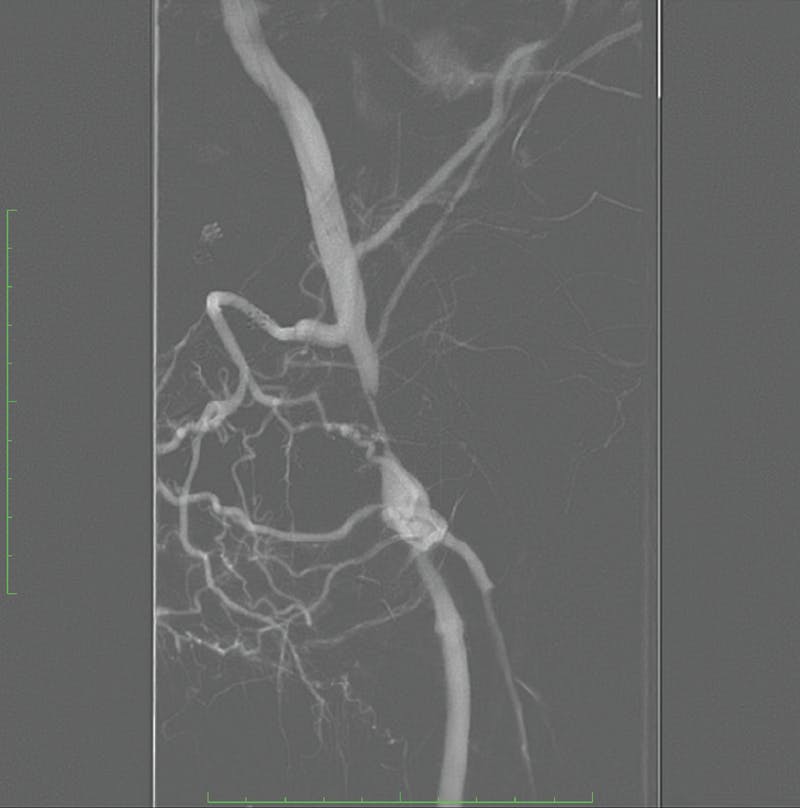
Figure 1. Initial angiogram of the CFA showing 99% stenosis.
The Glidecath™ PV multicurve catheter was removed and the initial 5/6 Fr Glidesheath Slender® hydrophilic coated introducer sheath was exchanged for a 119 cm R2P™ Destination Slender™ guiding sheath (Terumo Interventional Systems). A stiff, angled Glidewire® guidewire (Terumo Interventional Systems) was introduced into the vasculature. Due to tough stenosis and tortuosity, a 200 cm length, .035 guidewire-compatible Sublime™ Microcatheter (Surmodics, Inc.) was introduced to aid in crossing the lesion. After a quick angulation of the catheter tip and in combination with the guidewire, the catheter was able to easily navigate through the stenosis and enable further execution of the intervention strategy. The Sublime™ Microcatheter was then used to exchange the initial stiff, angled guidewire for a ViperWire™ peripheral guidewire (Abbott).
Over the ViperWire™ peripheral guidewire, a 2 mm max crown Diamondback 360® orbital atherectomy system (Abbott) was introduced and two passes were made at 60,000 and 90,000 rpm to debulk the stenosis (Figure 2). After the two passes, a 6 X 100 mm Jade® PTA balloon catheter (Abbott, manufactured by OrbusNeich) was introduced to resolve residual stenosis in the CFA. After percutaneous transluminal angioplasty, a final angiogram was obtained, revealing full restoration of flow through the CFA with two-vessel runoff down to the foot with no embolization (Figure 3).
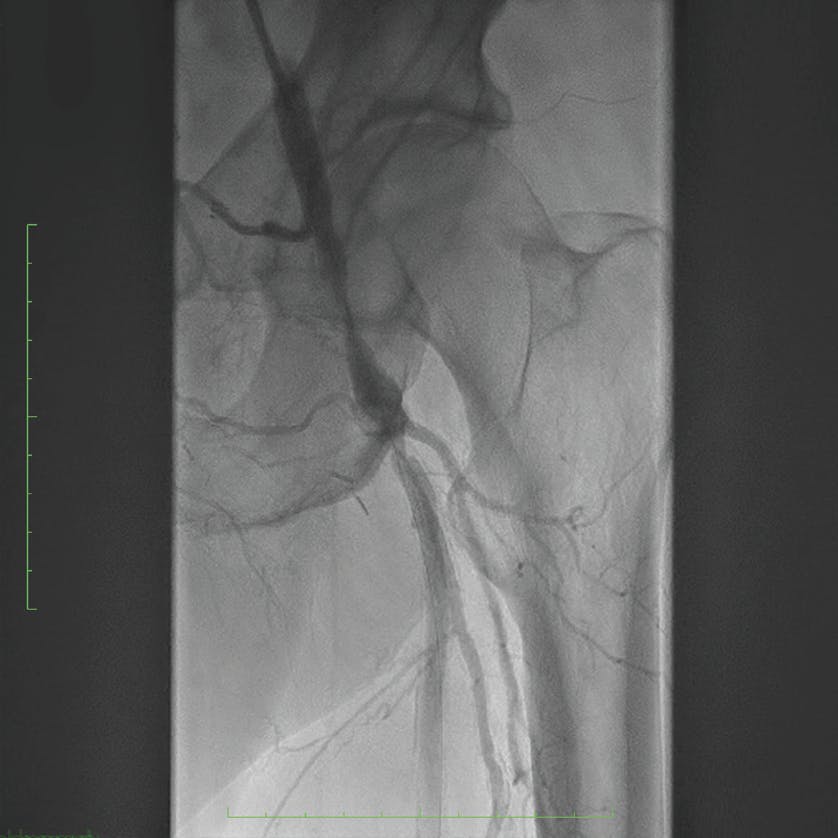
Figure 2. Angiogram of CFA postatherectomy.
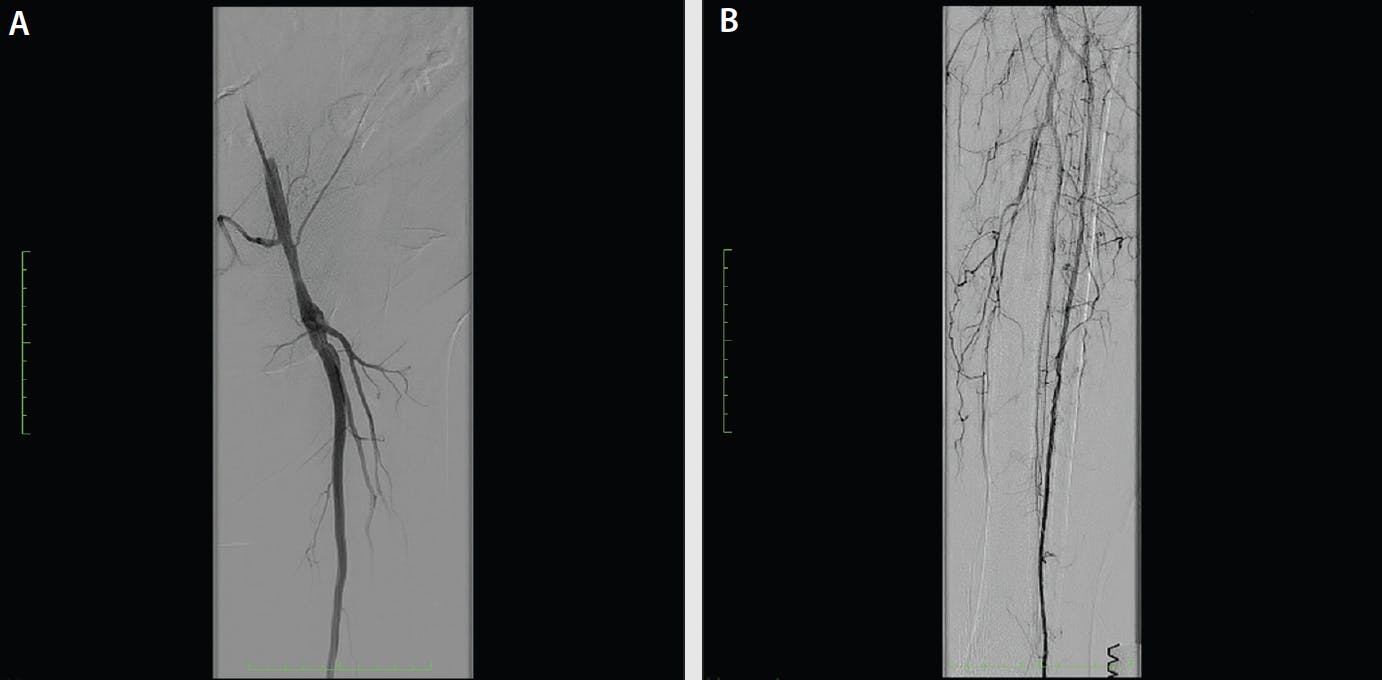
Figure 3. Final angiogram showing a patent CFA (A) and runoff to the distal vasculature with no embolization (B).
POST-PROCEDURE OUTCOME
The patient was discharged 90 minutes after the intervention. The patient’s wound was healed at 2-week follow-up. The Sublime™ Microcatheter facilitated an effective true lumen crossing of the stenotic lesion, thereby allowing for further use of other interventional equipment to successfully complete the case.
Caution: Federal (US) law restricts the Sublime™ Radial Access .014, .018, and .035 Microcatheters to sale by or on the order of a physician. Please refer to each product’s Instructions for Use for indications, contraindications, warnings, and precautions. SURMODICS, SUBLIME, and SURMODICS and SUBLIME logos are trademarks of Surmodics, Inc. and/or its affiliates. Third-party trademarks are the property of their respective owners.
Advertisement
Advertisement