Advertisement
Advertisement
September 2024 Supplement
Sponsored by Cagent Vascular
The Serranator® PTA Serration Balloon Catheter: It’s Time for a New Standard of Care
Peripheral artery disease (PAD) and critical limb ischemia (CLI) are major and growing health concerns with profound implications for both patients and health care systems. PAD affects approximately 200 million people globally, and its prevalence is increasing due to rising rates of obesity and diabetes.1 CLI, a severe form of PAD, involves critical reductions in blood flow to the limbs, leading to severe complications such as nonhealing ulcers and gangrene. The severity of CLI is reflected in its high rates of limb amputation and mortality, with a 45% mortality rate at 12 months for patients who undergo a major amputation.2 The mortality rate for CLI exceeds that of many cancers, with some experts describing it as “vascular cancer” due to its severe and often fatal nature.3
Moreover, CLI imposes a substantial economic burden. The cost of CLI-related major amputations is significant, with an estimated direct medical cost of $13.4 billion. However, this amount doesn’t include the costs related to long-term care and loss of productivity; the annual cost for follow-up care exceeds $160,000 per patient, with lifetime costs adding an additional $11.1 billion, for a total of $24.5 billion.4 Alarmingly, over 50% of CLI patients receive major amputations without undergoing adequate revascularization, emphasizing the need for improved screening and intervention strategies to reduce both the human and economic toll of this condition.5 Addressing these challenges requires concerted efforts to enhance treatment approaches and preventive measures to better manage this debilitating disease.
SERRATION BALLOON ANGIOPLASTY
The Serranator® PTA Serration Balloon Catheter (Cagent Vascular) represents a significant advancement over plain old balloon angioplasty (POBA). Unlike other focal force therapies that use helical or longitudinal wires, the Serranator has stainless steel serrated elements along the surface of the balloon so that pressure can be concentrated longitudinally along many points of contact (Figure 1). This design generates a point force over 1,000 times greater than POBA. This technology may reduce the risk of dissection and uncontrolled fractures often associated with POBA by directing energy along the serrated line. Serranator can be utilized for vessel preparation prior to drug or stent delivery or as a standalone tool while minimizing recoil and dissections. It is effective across all lesion morphologies, including both fibrotic and calcific tissues, providing optimal lumen gain. The PRELUDE and PRELUDE BTK studies demonstrated a > 97.7% freedom from target lesion revascularization rate at 6 months6,7 and only a 1.9% bailout stent rate in the PRELUDE BTK study.7
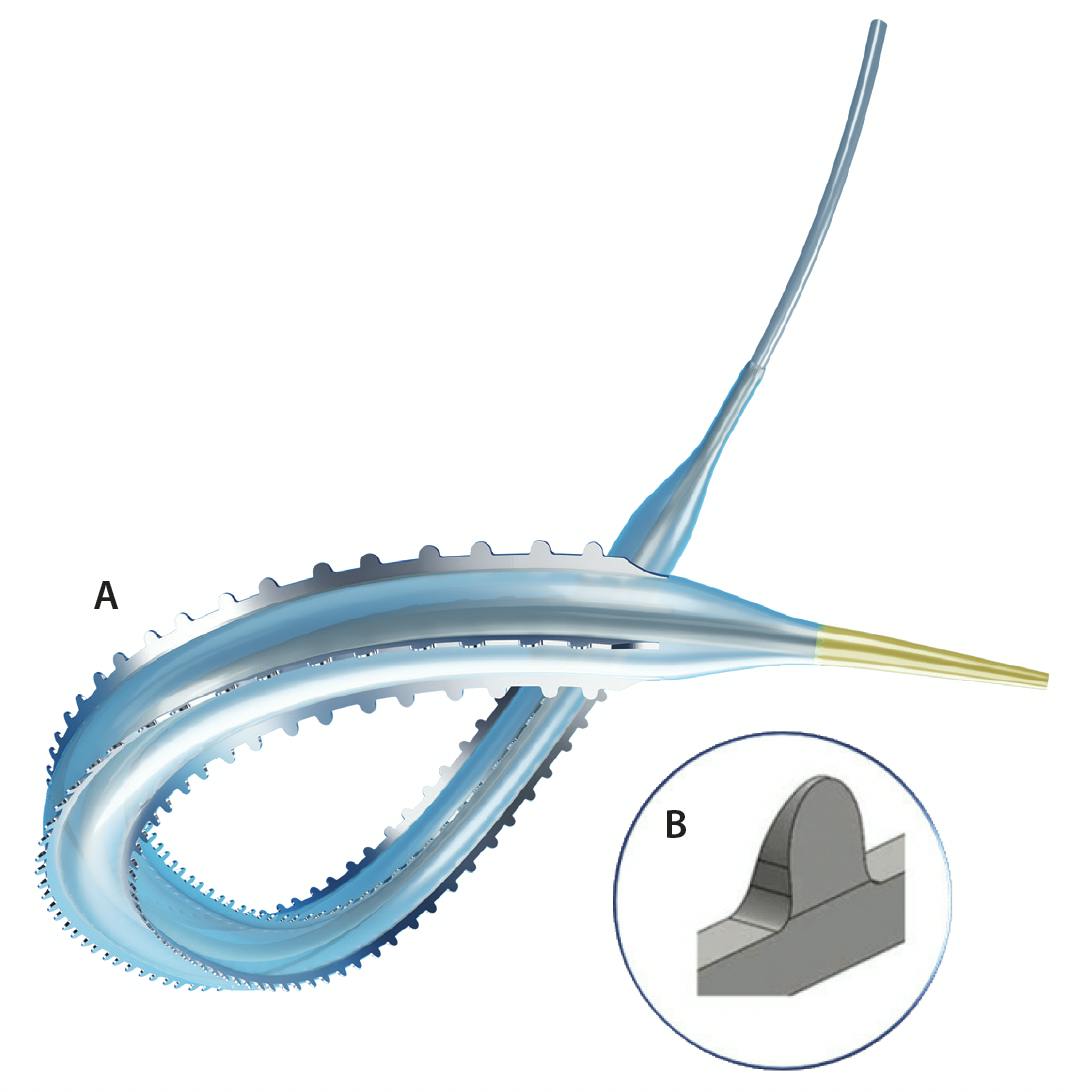
Figure 1. The Serranator has stainless steel serrated elements along the surface of the balloon to create linear, interrupted scoring along the endoluminal surface (A). Serranator applies 1,000 times the force compared to POBA (B).
ATK LANDSCAPE
Above-the-knee (ATK) interventions generally involve larger vessels, where endovascular techniques, drug-coated or drug-eluting therapies, and stenting are more straightforward. The primary challenge in the ATK space is achieving durable outcomes without concerns about intensive anticoagulation. Although stenting is more commonly used ATK, where the risk of thrombosis and bleeding complications is comparatively lower than below the knee (BTK), drug-coated balloon (DCB) angioplasty may help mitigate restenosis and offer a more durable result. Proper lesion preparation was emphasized in the THUNDER study as critical before DCB use, particularly in minimizing the occurrence of flow-limiting dissections that could compromise the effectiveness of the DCB.8 Serration angioplasty enables controlled lesion expansion and luminal gain and reduces the risk of uncontrolled dissection and therefore can be an effective tool prior to the use of DCB.
BTK LANDSCAPE
BTK interventions present unique challenges that differentiate them from ATK treatments. BTK disease tends to be more diffuse, with longer and more heavily calcified lesions. Although scaffolding has proven to be effective in ATK disease, it is not typically a strategy in BTK due to the lack of available devices, particularly for distal tibial locations where stent crush is possible.
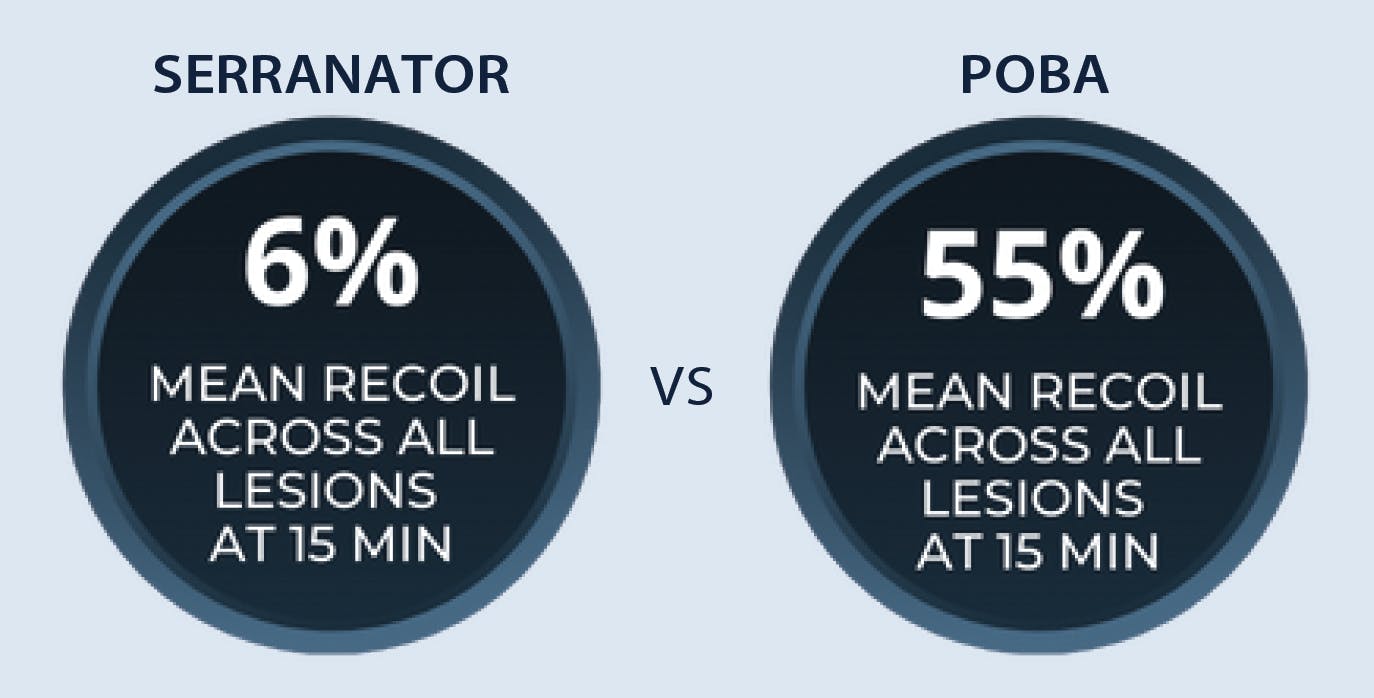
Recoil is also a significant issue in vascular interventions, as highlighted in the study by Baumann and colleagues, which demonstrated a 29% recoil rate just 15 minutes after treatment.9 This study has been widely recognized for its impact on how we understand and approach vascular recoil. Additionally, the more recent RECOIL study, led by Michael Lichtenberg, MD, further emphasized the challenges of recoil. This study compared Serranator and POBA, resulting in only 6% mean recoil following the use of Serranator as compared with 55% mean recoil following POBA.10 These findings underscore the importance of addressing recoil to improve the success of vascular procedures. Providing durable lumen gain in these tibial vessels is important for preventing restenosis and improving flow to the foot to promote wound healing and prevent amputation.
IMPORTANCE OF VESSEL PREPARATION AND OPTIMAL LUMEN GAIN
Multiple studies have demonstrated the importance of quality vessel preparation prior to the use of definitive therapy in both the ATK and BTK space. Although stenting has not historically been included in the treatment algorithm for BTK disease, the LIFE-BTK study represented a significant advancement for drug-eluting stent (DES) technology in the BTK space. This study focused on the use of a novel DES, Esprit BTK (Abbott), which is specifically designed for BTK arteries. The study showed a primary patency rate of 76.9% at 6 months, with a low major adverse limb event rate of 6.7%.11 However, this DES is limited for use in the proximal third of the BTK vessels.
Coronary DESs have been used BTK, mostly as a bailout option, and they are available only in very short lengths. Given that most BTK disease is diffuse, calcified, and occlusive, it’s not practical or economically tenable to use 10 or 12 coronary stents in a single patient. Therefore, it is even more important in these long tibial vessels to open the lesion without causing a flow-limiting dissection.
Another study of note is the REAL trial, which compared DCB to DES in BTK disease, and found that DESs outperformed DCBs, demonstrating better patency rates and clinical outcomes.12 However, many patients in the study received “full metal jackets,” with long stent lengths used to cover extensive disease. Although this approach improved outcomes compared to DCBs, it also raises concerns about antithrombotic management and the risks associated with leaving a permanent prosthesis in these small, distal vessels.
Serranator in My Practice
Serration technology finds a role in both my ATK and BTK procedures. The 120-mm-length device is particularly useful in the diffusely diseased, tibial vessels and allows me to treat long lesions quickly and economically while providing a predictable result. Serranator has also proven useful in the common femoral, superficial femoral, and profunda arteries, utilized prior to a DCB. With Serranator, it’s impressive to see what looks like a “stent-like” result but without the stent (Figure 2). I’ve also had a very positive experience with the device for treating in-stent restenosis and for preparing proximal and distal anastomosis sites in patients undergoing Detour (Endologix LLC) percutaneous bypass procedures.
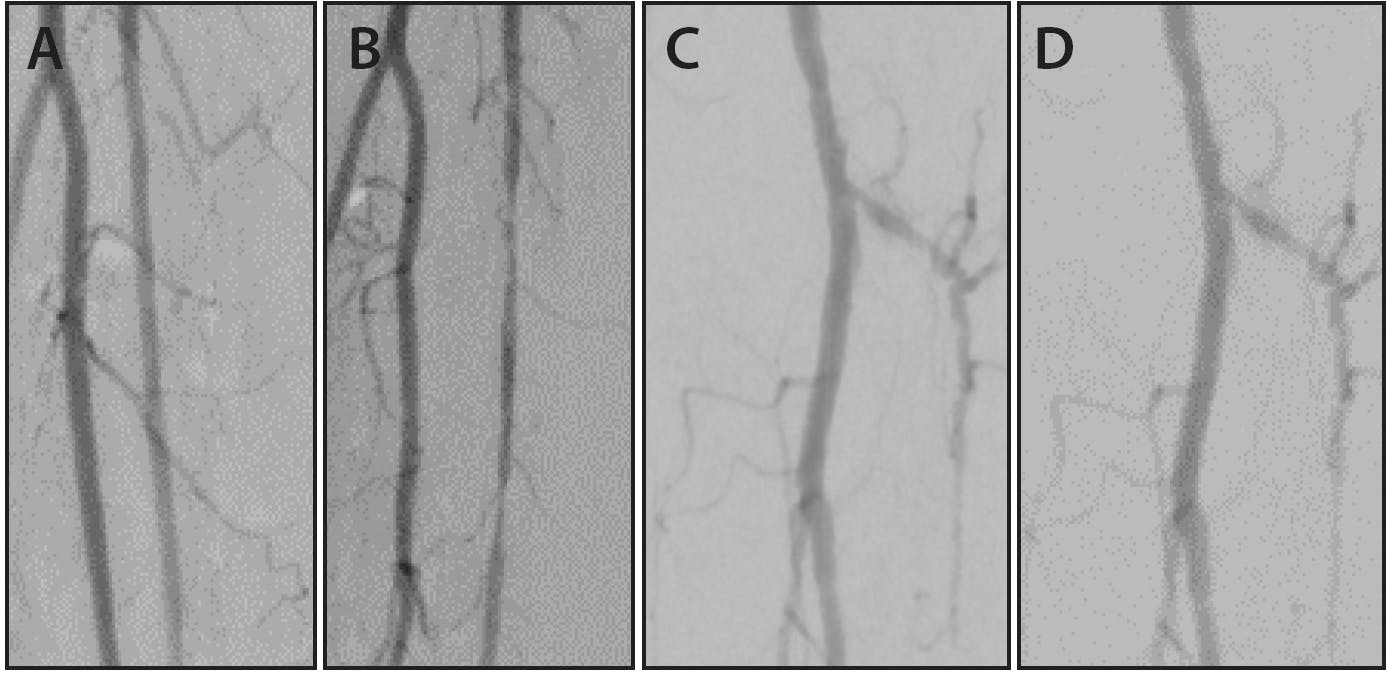
Figure 2. Results post-POBA at 0 (A) and 15 minutes (B) and post-Serranator angiography at 0 (C) and 15 minutes (D).
One of the reasons for the limited success of DCB trials in BTK disease has been inadequate vessel preparation and device undersizing. For example, Fujihara et al confirmed that BTK interventions guided by intravascular ultrasound (IVUS) resulted in a significantly higher wound healing rate compared with angiographically guided interventions, with similar freedom from target lesion revascularization and limb salvage rates. Mean balloon size was 2.45 ± 0.4 mm versus 2.23 ± 0.4 mm (P < .001) in the IVUS-guided group with greater skin perfusion pressures but similar technical success and complication rates.13 Techniques such as atherectomy, intravascular lithotripsy, and advanced vessel preparation devices like the Serranator can improve outcomes by optimizing vessel conditions before using drug-eluting therapies.
SOLUTION
If DCBs for BTK become available and are combined with effective vessel preparation with the Serranator, I anticipate that this approach will likely become a standard treatment method for BTK interventions. The Serranator allows for more controlled and predictable vessel dilation along the linear serrated line at comparatively lower inflation pressures. We all recognize the critical importance of vessel preparation, and in my view, the only way to make significant progress in treating CLI is to combine thorough vessel preparation with advanced drug delivery technologies.
1. Fowkes FG, Aboyans V, Fowkes FJ, et al. Peripheral artery disease: epidemiology and global perspectives. Nat Rev Cardiol. 2017;14:156-170. doi: 10.1038/nrcardio.2016.179
2. Joshi GS, Zhang SM, Wang K, et al. Predictors of amputation-free survival after endovascular intervention for chronic limb-threatening ischemia in the modern era. Ann Vasc Surg. 2022;86:268-276. doi: 10.1016/j.avsg.2022.04.052
3. Mustapha JA, Katzen BT, Neville RF, et al. Determinants of long-term outcomes and costs in the management of critical limb ischemia: a population-based cohort study. J Am Heart Assoc. 2018;7:e009724. doi: 10.1161/JAHA.118.009724
4. The Sage Group. The cost of critical limb ischemia (CLI). Why is the disease so costly? Accessed September 10, 2024. https://www.thesagegroup.us/reports/the-cost-of-critical-limb-ischemia/
5. Goodney PP, Travis LL, Nallamothu BK, et al. Variation in the use of lower extremity vascular procedures for critical limb ischemia. Circ Cardiovasc Qual Outcomes. 2012;5:94-102. Published correction appears in Circ Cardiovasc Qual Outcomes. 2012;5:e27. doi: 10.1161/CIRCOUTCOMES.111.962233
6. Holden A, Hill A, Walker A, et al. PRELUDE prospective study of the Serranator device in the treatment of atherosclerotic lesions in the superficial femoral and popliteal arteries. J Endovasc Ther. 2019;26:18-25. doi: 10.1177/1526602818820787
7. Holden A, Lichtenberg M, Nowakowski P, et al. Prospective study of serration angioplasty in the infrapopliteal arteries using the Serranator device: PRELUDE BTK study. J Endovasc Ther. 2022;29:586-593. doi: 10.1177/15266028211059917
8. Tepe G, Zeller T, Albrecht T, et al. Local delivery of paclitaxel to inhibit restenosis during angioplasty of the leg. N Eng J Med. 2008;358:689-699. doi: 10.1056/NEJMoa0706356
9. Baumann F, Fust J, Engelberger RP, et al. Early recoil after balloon angioplasty of tibial artery obstructions in patients with critical limb ischemia. J Endovasc Ther. 2014;21:44-51. doi: 10.1583/13-4486MR.1
10. Lichtenberg M. RECOIL study: core-lab adjudicated study to assess recoil after scoring PTA vs POBA. Presented at: Leipzig Interventional Course (LINC) 2023; June 6-9, 2023; Leipzig, Germany.
11. Varcoe RL, DeRubertis BG, Kolluri R, et al. Drug-eluting resorbable scaffold versus angioplasty for infrapopliteal artery disease. N Engl J Med. 2024;390:9-19. doi: 10.1056/NEJMoa2305637
12. Bausback Y, Wittig T, Schmidt A, et al. Drug-eluting stent versus drug-coated balloon revascularization in patients with femoropopliteal arterial disease. J Am Coll Cardiol. 2019;73:667-679. doi: 10.1016/j.jacc.2018.11.039
13. Fujihara M, Yazu Y, Takahara M. Intravascular ultrasound-guided interventions for below-the-knee disease in patients with chronic limb-threatening ischemia. J Endovasc Ther. 2020;27:565-574.

Advertisement
Advertisement
