Advertisement
Advertisement
September 2024 Supplement
Sponsored by Cagent Vascular
Tibial Occlusive Disease Treated With Serranator® PTA Serration Balloon Catheter

PATIENT PRESENTATION
A woman in her late 50s, a nonsmoker with a history of diabetes mellitus, coronary artery disease, congestive heart failure, and ischemic cardiomyopathy, presented to the hospital with osteomyelitis of the right great toe and plantar foot abscess (Figure 1A). She has had no previous arterial interventions in her lower extremities. She underwent emergent incision and drainage by the podiatry service, with tarsometatarsal amputation of the great toe and extensive soft tissue debridement of the foot for source control (Figure 1B and 1C). Vascular surgery was consulted postoperatively for the lack of palpable pulses and concerns for wound healing potential.
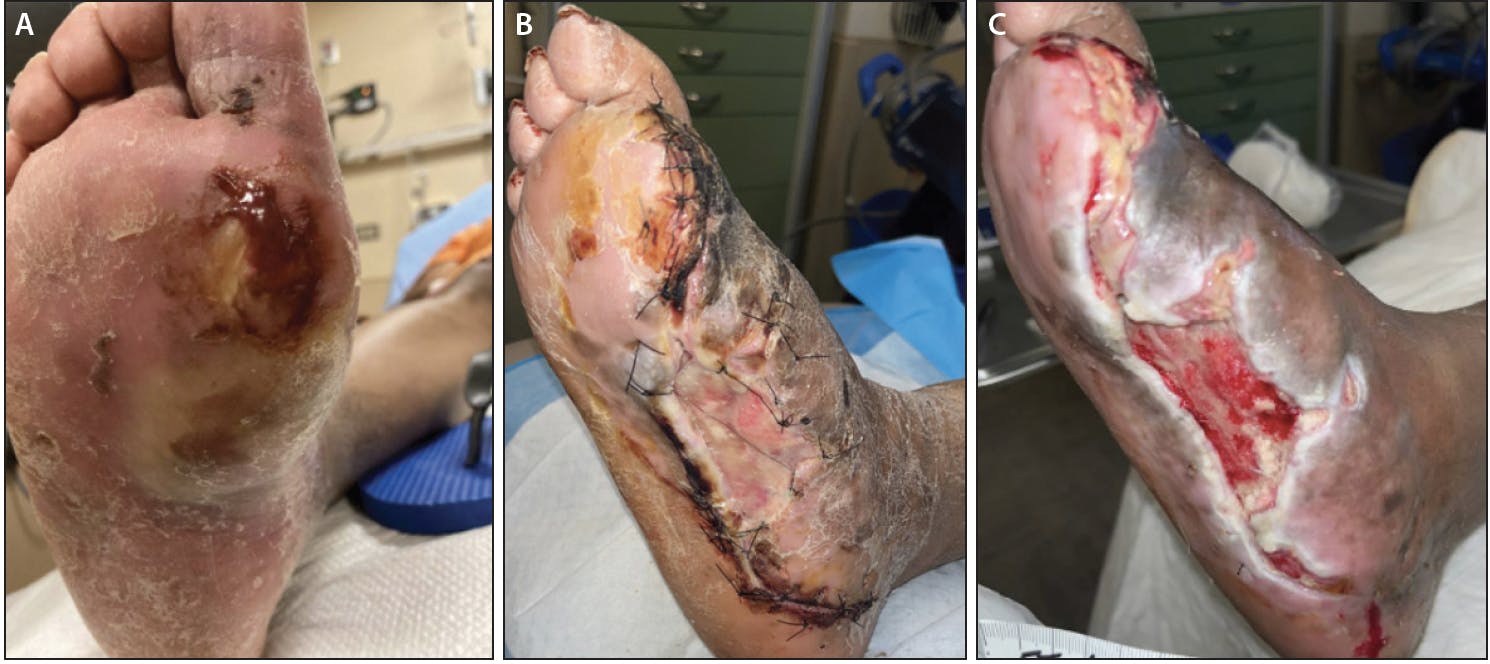
Figure 1. Initial presentation (A). After incision and drainage and amputation (B). At follow-up in wound care with a granulating wound after revascularization (C).
She underwent noninvasive vascular testing with ankle-brachial index (ABI)/pulse volume recording showing a right ABI of 0.56 and a right toe-brachial index of 0.24. CTA with runoff showed multifocal stenosis with a high-grade lesion in the distal superficial femoral artery (SFA) as well as tibial occlusive disease. She was offered angiography with intervention to restore inline flow to the foot and facilitate wound healing.
PROCEDURAL OVERVIEW
Angiography of the right leg was performed via ultrasound-guided left femoral artery access, and right leg runoff imaging was obtained. There was evidence of calcified vessels but no hemodynamically significant stenosis from the aortic bifurcation to the mid SFA. There were two hemodynamically significant stenoses in the distal SFA leading into Hunter’s canal. The popliteal artery was patent without significant disease. The dominant outflow in the calf was via the anterior tibial (AT) artery, filling the dorsalis pedis (DP) artery (Figure 2A). The tibioperoneal trunk (TPT) and proximal posterior tibial (PT) artery were occluded. There was reconstitution of the mid and distal PT artery, which was then continuous into the foot, filling the plantar branches. The peroneal artery was occluded. There was no continuous pedal arch, with both the DP and plantar arteries filling into terminal branches (Figure 2B).
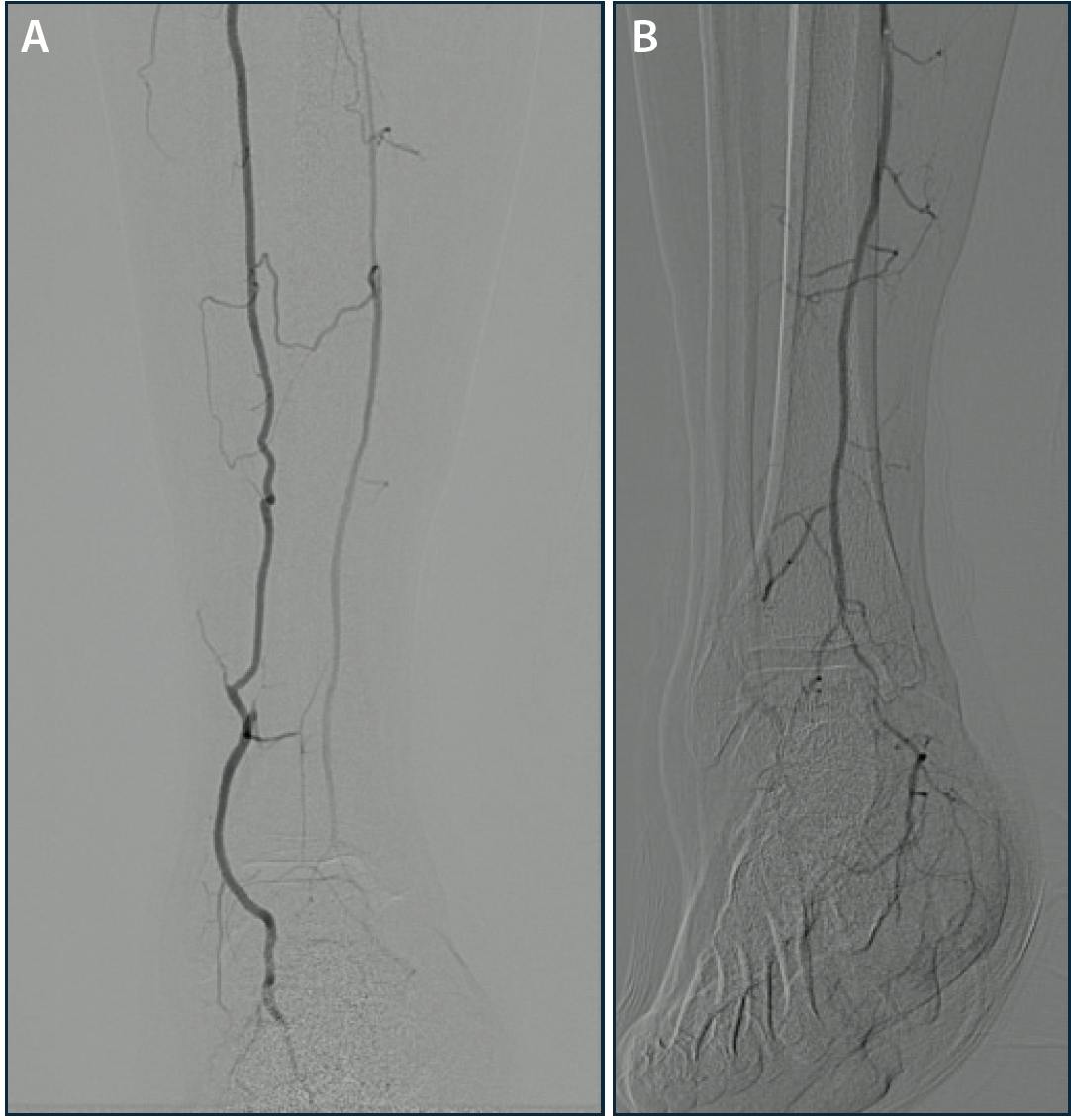
Figure 2. AT and DP artery outflow showing no pedal arch (A). PT artery outflow showing filling of plantar vessels but no pedal arch (B).
No intervention was necessary on the anterior circulation to the foot other than maximizing blood flow; however, the posterior circulation to the foot required inline flow.
After administering heparin, a 6-F, 60-cm sheath was advanced, and we crossed the SFA lesions and focused first on the tibial disease. We manipulated a 0.014-inch Hi-Torque Command wire (Abbott) into the TPT and ultimately into the PT artery with the assistance of an 0.014-inch TrailBlazer catheter (Medtronic). After angiography confirmed we were within the true lumen, serial balloon angioplasty of the lesion was performed, first utilizing a 1.5- X 80-mm Ultraverse balloon (BD Interventional) inflated up to 12 atm, followed by a 3- X 120-mm Serranator® PTA Balloon Catheter (Cagent Vascular) inflated up to 6 atm for 2 minutes (Figure 3A and 3B). Repeat imaging showed continuous flow throughout the PT artery into the pedal vessel without evidence of recoil (Figure 3C). The SFA lesion was then treated with a 5- X 40-mm Ultraverse balloon inflated to 12 atm for 2 minutes (Figure 4A). Repeat imaging showed good flow through the treated areas without any significant recoil (Figure 4B) and no further treatment was deemed necessary. At case completion, the patient had inline flow to the foot via both AT and PT arteries.
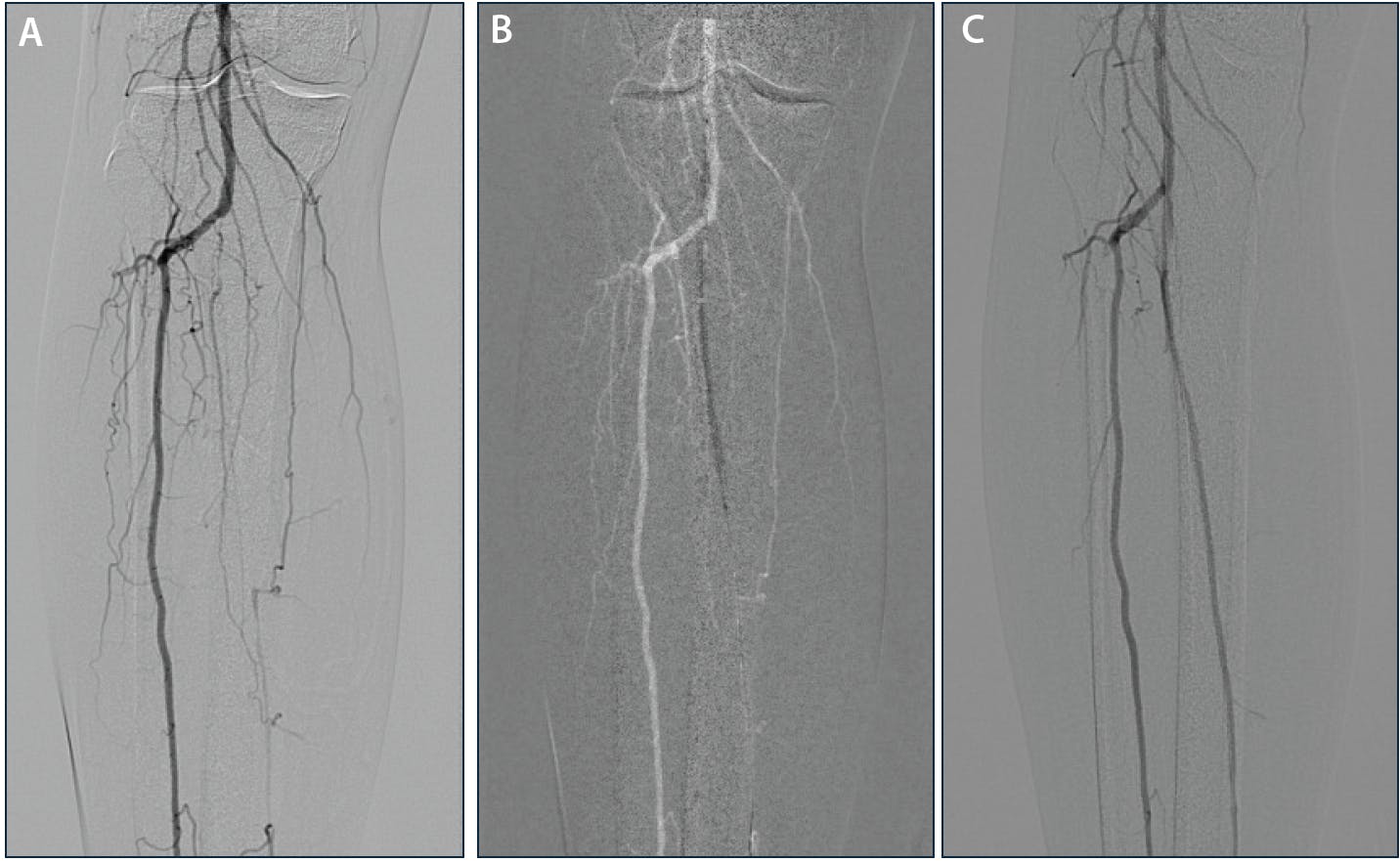
Figure 3. Initial angiogram (A). Use of a 3- X 120-mm Serranator (B). Completion angiogram (C).
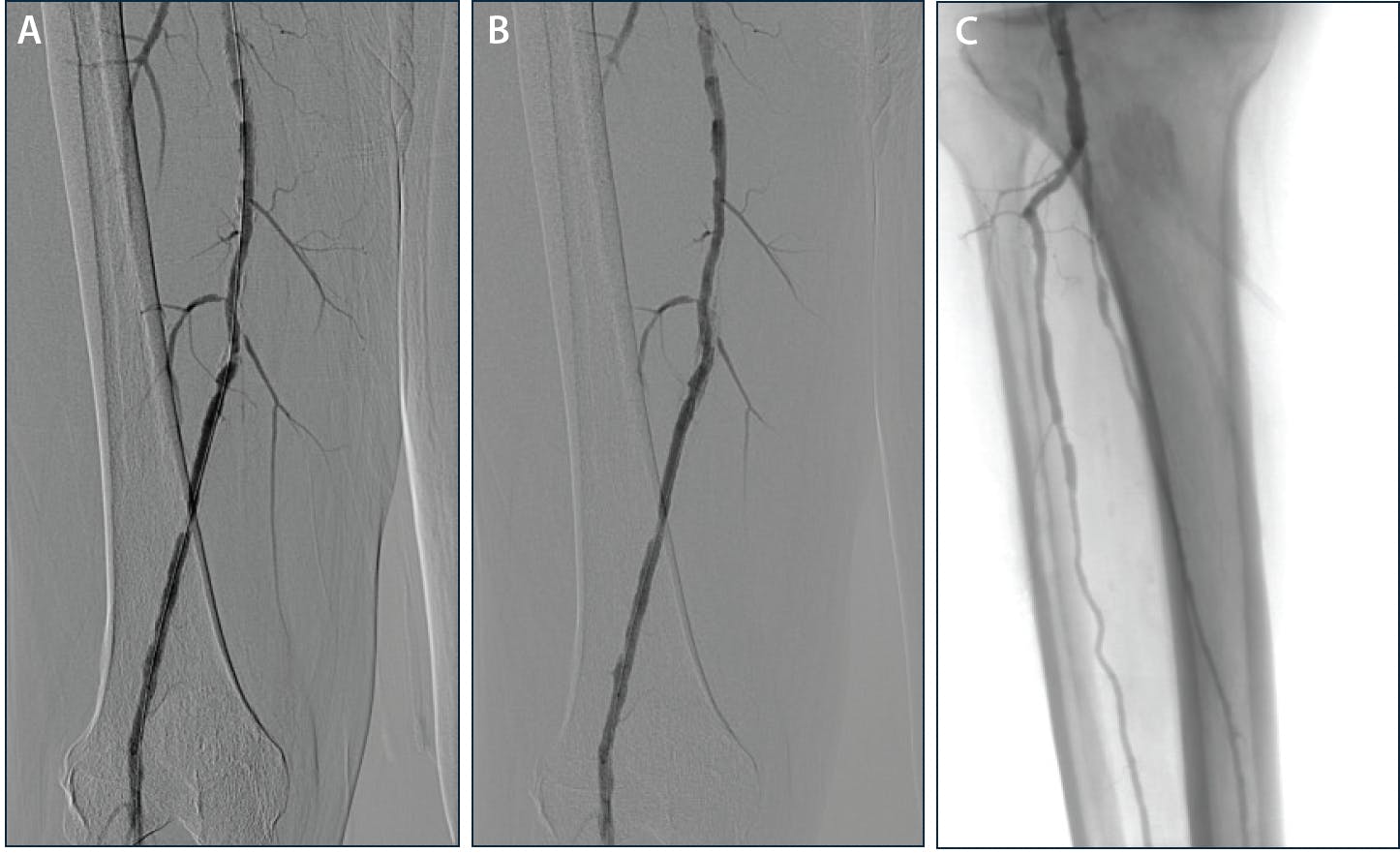
Figure 4. Initial angiogram (A). Completion angiogram (B). This POBA-treated SFA required revascularization 4 months later and was treated at an outside institution. At that time, the Serranator-treated PT artery was still patent (C).
POSTTREATMENT COURSE
The patient subsequently underwent serial debridements and ultimately Integra graft placement (Integra LifeSciences) with the podiatry team to facilitate wound healing. The patient underwent repeat angiography 4 months later at an outside institution. She underwent stenting of the SFA at that time; however, the previously treated tibial vessels were still patent and did not require further intervention (Figure 4C).
What is your typical treatment algorithm for peripheral artery disease (or critical limb ischemia [CLI] if a below the knee [BTK]) cases, and when do you choose Serranator?
Dr. Lieb: BTK disease is historically difficult to treat given the heavily calcified vessels. Traditional angioplasty relies on high-pressure balloon inflations to fracture plaque, which can lead to dissection flaps. The Serranator technology allows for increased luminal gain at lower inflation pressures due to the multiple contact points along the balloon provided by the serration strips. This results in multiple fracturing points throughout the plaque achieved at lower pressures than standard balloon angioplasty. The end result is improved luminal gain with lower chance of complications.
How important is excellent lumen gain prior to using drug-coated balloon (DCB) therapy? Do you feel like Serranator consistently provides this?
Dr. Lieb: DCB offers significant benefit to prevent long-term restenosis in the appropriate patients. As the DCB delivery balloon is not intended for the initial treatment of the lesion, it is important to have the most optimal luminal gain achievable prior to using the DCB. In my practice, Serranator has consistently provided reliable luminal gain in cases where traditional angioplasty has resulted in lesion recoil.
How concerned are you with recoil in these smaller BTK arteries?
Dr. Lieb: Target lesion recoil can be a significant issue in the heavily calcified tibial vessels. This is likely secondary to the linear fracture pattern and incomplete plaque remodeling, which is achieved with plain old balloon angioplasty (POBA). The Serranator technology results in more fracture points along the treated plaque, resulting in better remodeling of the plaque around the balloon. This is also achieved at lower pressures than standard balloon angioplasty, lowering the chance for dissection in these heavily diseased vessels.
Is there something about the Serranator’s mechanism of action that you believe makes it different?
Dr. Lieb: The multiple contact points on the serration strips provides focused pinpoint pressure delivered directly to the calcified arterial wall. This results in multiple, controlled fracture points along the treated lesion at lower pressures than those needed to form the linear fractures achieved with standard balloon angioplasty. The increased fracture points allow for better lesion remodeling around the angioplasty balloon, which reduces the risk of lesion recoil. Additionally, treatment at lower pressures reduces the risk of vessel damage and dissections.
Advertisement
Advertisement
