Advertisement
Advertisement
April 2025
Sponsored by AngioDynamics, Inc.
Case Report: Successful Management of Acute, Submassive Pulmonary Embolism Utilizing the AlphaVac F1885 Thrombectomy System
Pulmonary embolism (PE) is a significant cause of morbidity and mortality, particularly in patients classified as acute, intermediate-high risk complicated by acute cor pulmonale.1 Although anticoagulation remains the standard treatment, mechanical thrombectomy (MT) has emerged as a promising alternative for high-risk patients.2 Recent advancements in MT technology, such as the AlphaVac system (AngioDynamics, Inc.), have the potential to enhance procedural and patient outcomes.
The AlphaVac F1885 system features a dual-mode handle (10 and 30 mL) that serves as both the engine and vacuum source, paired with an 18-F cannula that has an angled funnel tip (85°) and expands to 33 F (Figure 1). As the PE community continues to explore the optimal application of MT techniques, devices like the AlphaVac F1885 system have been shown to be safe and effective, with significant improvements in right ventricular (RV) function, reductions in pulmonary artery pressures (PAPs), and a decrease in overall clot burden.3 This article examines the utilization of the AlphaVac F1885 system in a patient presenting with acute, intermediate-high–risk PE, highlighting its potential benefits and clinical implications.
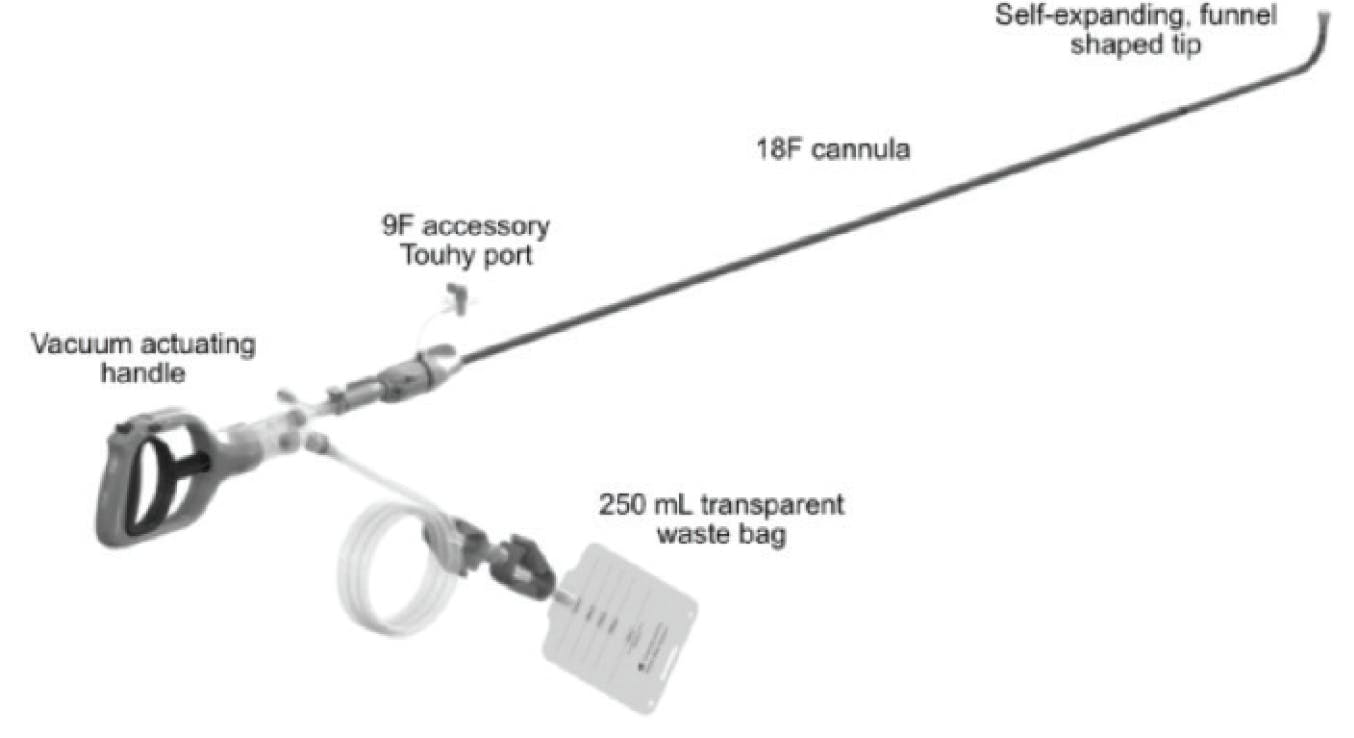
Figure 1. The AlphaVac F1885 system.
CASE PRESENTATION
A man in his late 60s with a history of hypertension and hyperlipidemia presented to the emergency department (ED) after a syncopal episode at home. He was found unresponsive and diaphoretic after attempting to walk to the bathroom.
Upon arrival to the ED, he was found to have new-onset atrial fibrillation with rapid ventricular response and hypoxemia. His vital signs included a heart rate in the 110s bpm, blood pressure in the 100s/70s mm Hg, a respiratory rate of 26 breaths/minute, and oxygen saturation of 90% on 2 L via nasal cannula. Results of laboratory testing were significant for an elevated serum troponin of 0.59 ng/mL and normal serum hemoglobin of 14.7 g/dL.
Chest CT with contrast was obtained, which showed multiple pulmonary filling defects consistent with PE, including large clot burden in the right interlobal and truncus anterior (TA) branches and throughout the left pulmonary artery (PA) (Figure 2). Right ventricular/left ventricular ratio on CT was 1.3. The patient also underwent echocardiography, which demonstrated an enlarged right ventricle with reduced systolic function, consistent with acute cor pulmonale (Figure 3).
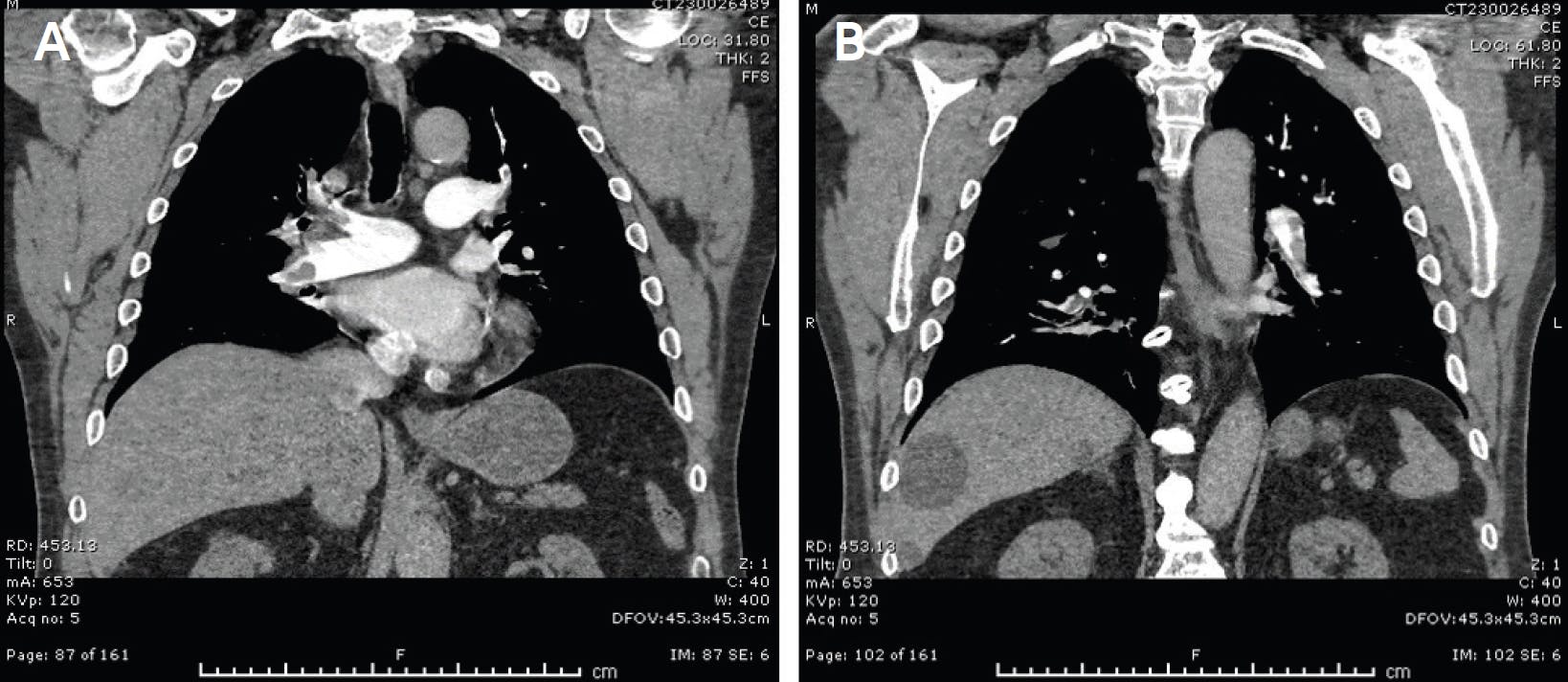
Figure 2. CT of the chest showing thrombus burden in the interlobal and TA branches (A) and thrombus burden in the left PA (B).
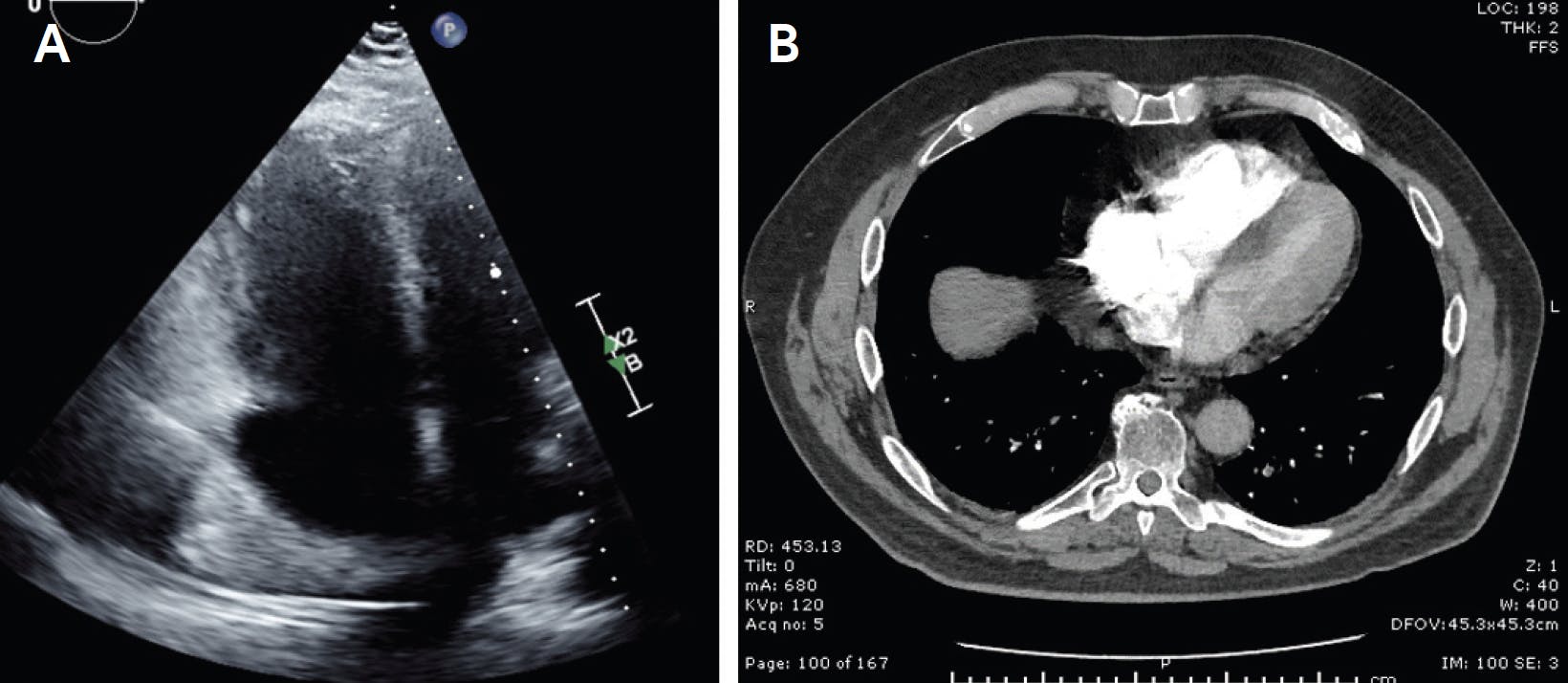
Figure 3. Echocardiogram (A) and CT (B) demonstrating an enlarged right ventricle.
After imaging, the patient was evaluated by the PE response team (PERT) for management of unprovoked, submassive bilateral PE complicated by acute cor pulmonale. The patient fell into the intermediate-high–risk PE category with an additional high-risk feature of syncope. A weight-based heparin protocol was initiated, and MT was recommended by the PERT.
PROCEDURAL OVERVIEW
MT of the bilateral PAs was performed using the AlphaVac F1885 system (Figure 4 and Figure 5). Right femoral access was obtained with micropuncture under ultrasound guidance. After placement of two Perclose (Abbott) sutures, the venotomy was dilated, followed by placement of a 26-F Gore DrySeal sheath (Gore & Associates). The AlphaVac F1885 sheath was placed by passing through the tricuspid valve using a 5-F pigtail catheter, leaving an exchange-length Amplatz Super Stiff guidewire (Boston Scientific Corporation) with a 1-cm tip wire placed in the right PA, and advancing the AlphaVac F1885 sheath over the wire into the right PA just prior to the TA branch. After removing the wire and dilator, the AlphaVac F1885 cannula was advanced, the final priming step was completed, and the funnel was advanced to the distal end of the AlphaVac sheath. The sheath was retracted, exposing the funnel and full 85° bend of the cannula. A 5-F, 125-cm multipurpose catheter was then advanced into the cannula via the accessory Touhy port, with the tip of the catheter placed in the cannula just prior to the funnel to allow for continuous pressure monitoring and angiography. The cannula was then advanced to the interlobal branch followed by the TA (Figure 4). MT was performed utilizing 10- and 30-mL handle pulls, with the extracted clots retained in the waste bag of the system.
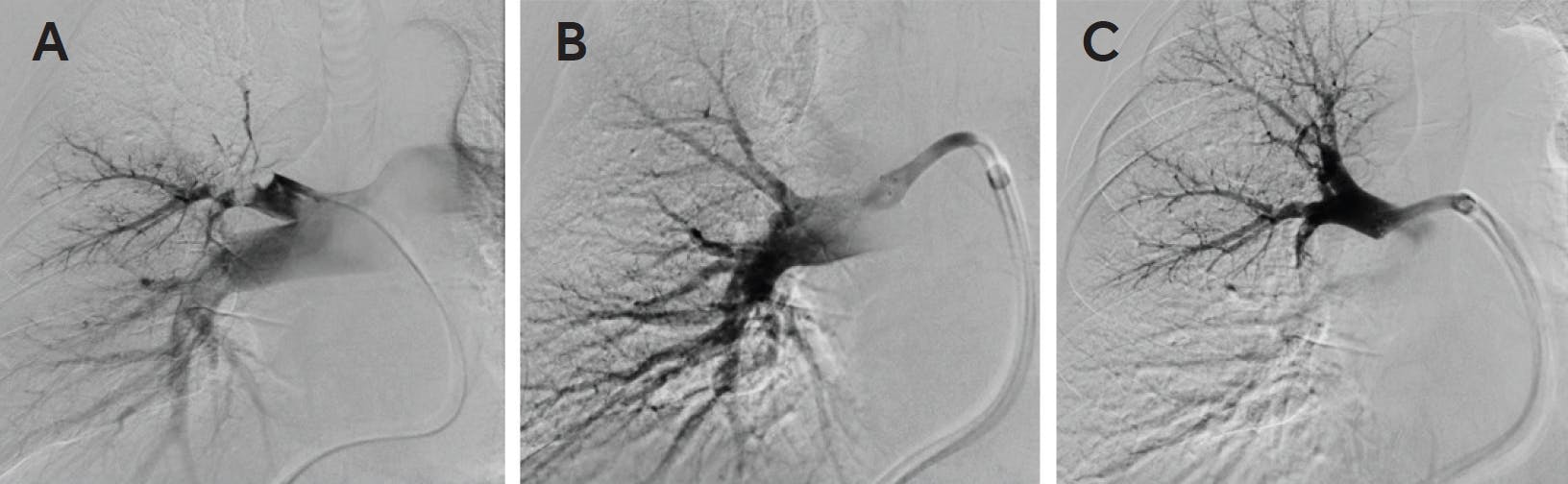
Figure 4. Pulmonary angiograms of the right PA. Prethrombectomy (A), after thrombectomy of the interlobal branch (B), and after thrombectomy of the TA branch (C).
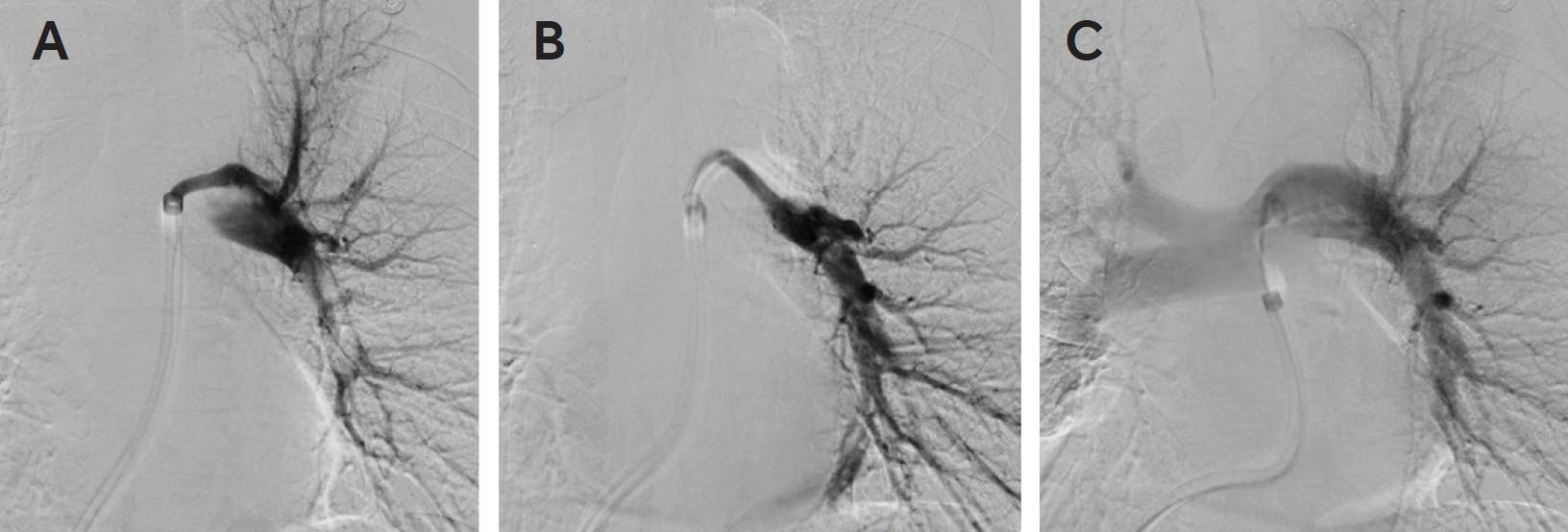
Figure 5. Pulmonary angiograms of the left PA. Prethrombectomy (A), partial left PA thrombectomy (B), and final PA angiography postthrombectomy (C).
Once the right PA had been sufficiently cleared of thrombotic material, the cannula was retracted, anteriorly rotated 270° to direct it toward the left PA, and then advanced to the mid vessel. Again, 10- and 30-mL handle actuations were utilized to extract the thrombus from multiple locations in the left PA, including the apicoposterior branch of the left lung apex, down to the bifurcation of the posterior and lateral basilar branches (Figure 5).
The patient had a significant reduction in the PAP with thrombectomy (prethrombectomy PAP, 54/18 mm Hg [mean, 34 mm Hg]; postthrombectomy PAP, 30/12 mm Hg [mean, 21 mm Hg]). A lower extremity ultrasound was performed revealing left lower extremity deep vein thrombosis involving the distal femoral and popliteal veins. The patient was asymptomatic and intervention was not required at the time of admission. The patient tolerated the procedure well and was discharged to home on hospital day 4 on a direct oral anticoagulation protocol of apixaban. Serum hemoglobin on discharge was 13.0 g/dL.
POSTPROCEDURE FOLLOW-UP
The patient returned to the PERT clinic for a 3-month follow-up. There were no symptoms noted to suggest development of chronic thromboembolic hypertension or chronic thromboembolic disease. Repeat echocardiography demonstrated normalization of RV size and function. The patient had returned to his full baseline functional capacity.
CONCLUSION
The role of MT in the initial management of patients with intermediate- and high-risk PE is expanding, as this procedure offers a safe and effective treatment option to quickly decrease thrombus burden and reverse the adverse hemodynamic consequences of obstructive PE. As interventional techniques for management of higher-risk PE are becoming more widely adopted, the AlphaVac F1885 system appears poised to play an integral role in the treatment of these patients.
1. Bĕlohlávek J, Dytrych V, Linhart A. Pulmonary embolism, part I: epidemiology, risk factors and risk stratification, pathophysiology, clinical presentation, diagnosis and nonthrombotic pulmonary embolism. Exp Clin Cardiol. 2013;18:129-138.
2. Benavente K, Fujiuchi B, Virk HUH, et al. A practical clinical approach to navigate pulmonary embolism management: a primer and narrative review of the evolving landscape. J Clin Med. 2024;13:7637. doi: 10.3390/jcm13247637
3. Ranade M, Foster MT, Brady P. Novel mechanical aspiration thrombectomy in patients with acute pulmonary embolism: results from the prospective APEX-AV trial. J Soc Cardiovasc Angiog Interv. 2025;4:102463. doi: 10.1016/j.jscai.2024.102463
AlphaVac MMA F1885 System
US and Canada Indications for Use:
The Cannula is indicated for:
- the non-surgical removal of thrombi or emboli from the vasculature
- aspiration of contrast media and other fluids from the vasculature
The Cannula is intended for use in the venous system and for the treatment of pulmonary embolism.
The Handle is indicated as a vacuum source for the AlphaVac Multipurpose Mechanical Aspiration System.
EU Indications for Use:
The Cannula is indicated for:
- the non-surgical removal of thrombi or emboli from the pulmonary arteries
- aspiration of contrast media and other fluids from the pulmonary arteries
The Cannula is intended for the treatment of pulmonary embolism.
The Handle is indicated as a vacuum source for the AlphaVac Multipurpose Mechanical Aspiration System.
Refer to Directions for Use provided with the product for complete Instructions, Warnings, Precautions, Possible Adverse Effects and Contraindications. Observe all instructions for use prior to use. Failure to do so may result in patient complications.
https://www.angiodynamics.com/about-us/risk-information/?prod=alphavac
CAUTION: Federal law (USA) restricts this device to sale by or on the order of a physician.
AngioDynamics and AlphaVac are trademarks and/or registered trademarks of AngioDynamics, Inc., an affiliate or subsidiary.
Advertisement
Advertisement