Advertisement
Advertisement
August 2025 Supplement
Sponsored by Merit Medical Systems, Inc.
The Evolution of Covered Stents for Hemodialysis Access
The WRAPSODY® Cell-Impermeable Endoprosthesis (CIE) addresses the shortcomings of previous covered stents, offering a durable, optimized option for treating stenosis in AVFs and AVGs.
Covered stents (also called stent grafts) have become one of the mainstays for treatment of hemodialysis access stenosis, with extensive data to support their use. Since the concept of a small-vessel covered stent was published 30 years ago,1 there have been many important covered-stent innovations that have improved outcomes for patients who rely upon hemodialysis for their survival. This is a brief review of the evolution of covered stents, from the earliest experience to advanced design concepts that are pivotal for maintaining well-functioning hemodialysis access circuits for patients with end-stage renal disease.
ORIGINS OF COVERED STENT TECHNOLOGY
The underlying problem for many hemodialysis arteriovenous (AV) circuits is development of obstruction, which is the dominant failure mode in both hemodialysis AV grafts (AVGs) and AV fistulas (AVFs). Although most of these stenoses responded well when treated with percutaneous transluminal angioplasty (PTA), restenosis is common. The use of self-expanding bare-metal stents (BMS), such as the WallStent™* Endoprosthesis (Boston Scientific Corporation) and later various nitinol stents, seemed to be an attractive adjunct to PTA, as the angiographic result after stent placement was often better than what was achieved using only PTA. However, BMS did little to improve patency due to development of in-stent restenosis (ISR) caused by ingrowth of neointimal tissue through the interstices of the bare stent (Figure 1). The concept of applying a polymeric covering on the stent to prevent ingrowth of tissue made sense, hence the early development of covered stents for the purpose of preventing ISR.
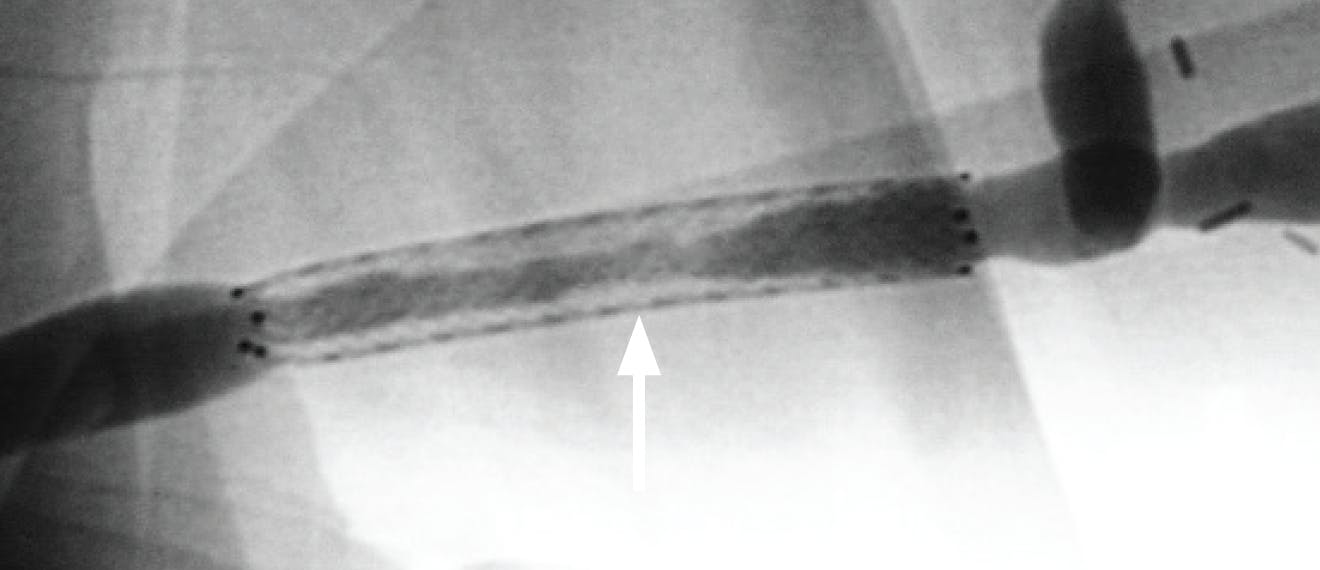
Figure 1. Diffuse ISR (white arrow) in a bare self-expanding stent placed at the venous anastomosis of an AVG.
Different covering materials were considered for stents: polyethylene terephthalate (PET), often referred to as polyethylene or by the trade name Dacron®* [DuPont]); and expanded polytetrafluoroethylene (ePTFE), often referred to as Teflon®* (the Chemours Company). One of the first reports of a covered stent in hemodialysis access circuits used the PET-covered Cragg Endopro™* System I (Boston Scientific Corporation), which was available in sizes appropriate for this application. The WallGraft™* Covered Stent (Boston Scientific Corporation) was another self-expanding, PET-covered stent used in AV access. Unfortunately, these PET-covered stents developed restenosis within the body of the implants. In vivo investigations showed that stenosis within PET-covered stents was caused by an inflammatory giant cell reaction,2-4 sometimes with clinical manifestation of inflammation. In one case, surgical removal of a Cragg Endopro System I device was required due to inflammation.3 PET was clearly not suitable for use in AV access covered stents.
The shortcomings of PET devices led to investigations of ePTFE, which proved to be much less inflammatory than PET. The first ePTFE-covered stent designed for AV access was the Flair™* Endovascular Stent Graft (BD Interventional), specifically intended for use in AVGs at the venous anastomosis. Because of this specific application, it was only available in short lengths and limited diameters. It was also fairly inflexible due to its relatively rigid self-expanding stent. Although it was safe and significantly improved both the target lesion primary patency (TLPP) and access circuit primary patency (ACPP) compared to PTA,5,6 it was not suitable nor tested for use in AVFs. The Fluency™* Plus Endovascular Stent Graft (BD Interventional) was studied in AVGs and central thoracic veins where a previously placed BMS developed ISR. In a randomized prospective comparison to PTA, the Fluency stent proved to be superior to PTA for treating ISR.7 The Gore Viabahn®* Endoprosthesis (Gore & Associates) proved superior to PTA for treatment of AVG stenosis in both stenotic and thrombosed AVGs but has not been adequately studied in AVFs.8
More recently, the Covera™* Vascular Covered Stent (a newer generation of the Flair stent) used ePTFE on a flexible, laser-cut LifeStent™* (BD Interventional). Covera was studied in both AVGs and AVFs and has demonstrated superior TLPP compared to PTA.9,10 However, ACPP for patients with AVF was not statistically better with the Covera, perhaps due to the inclusion of other stenoses in the circuit that could only be treated with PTA.10
Although in vivo and human clinic studies showed that ePTFE-covered stents performed well and were not inducing inflammation, the porous nature of ePTFE allowed cells to penetrate into and through the ePTFE covering. This cellular proliferation could extend into the flow lumen of the various covered stents and in some cases led to significant ISR (Figure 2). Furthermore, ePTFE-covered stents were built on self-expanding stents with the greatest degree of outward expansile force at the ends, not in the middle. This outward edge expansile force has been theorized to explain why edge stenosis is the leading cause of covered stent restenosis and failure (Figure 3).
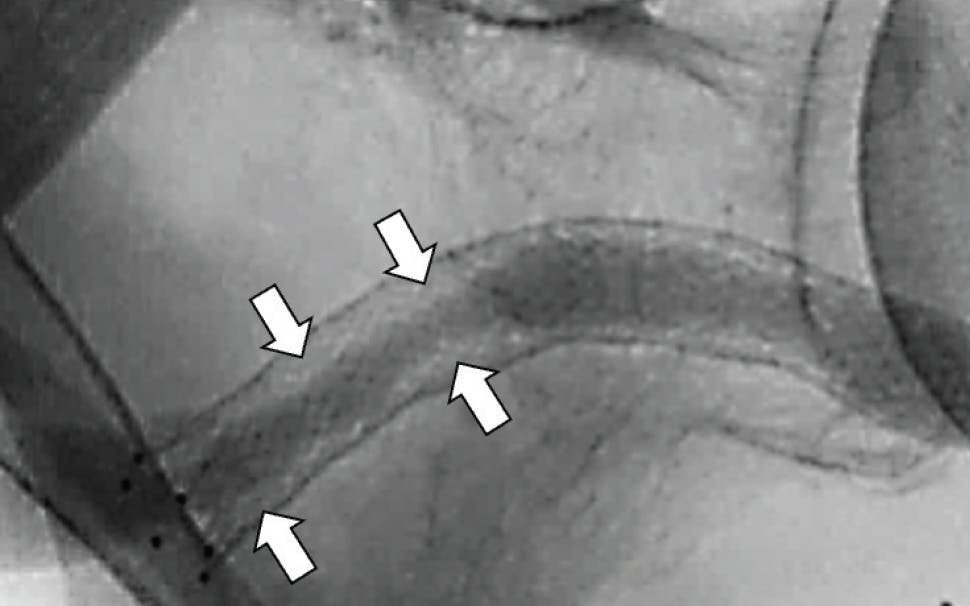
Figure 2. Diffuse ISR within an ePTFE-covered stent (white arrows) placed in the cephalic vein arch of an AVF at 8 months.
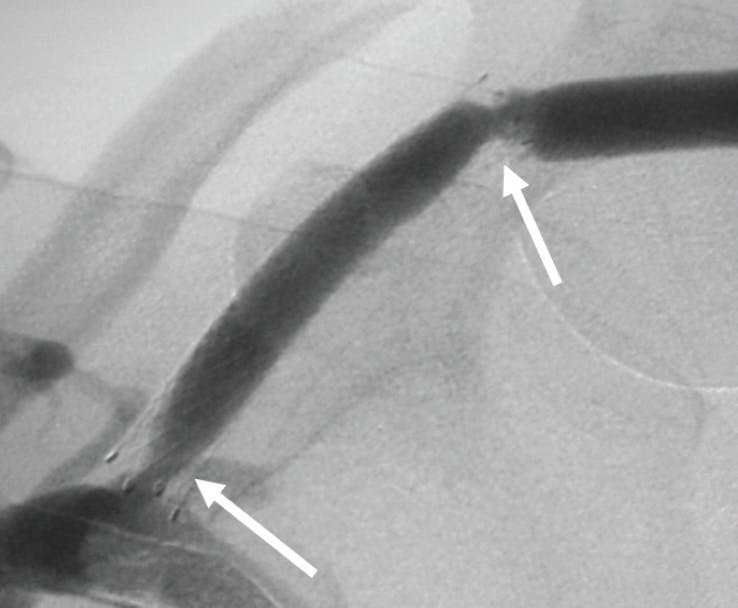
Figure 3. Classic edge stenoses (white arrows) in a covered stent placed in the cephalic vein arch of an AVF.
WRAPSODY CIE: THE NEXT INNOVATION
To overcome the various limitations of ePTFE-covered stents, the WRAPSODY CIE (Merit Medical Systems, Inc.) was developed. The base stent is a wire-wound nitinol stent designed to reduce the degree of radial force at the ends of the device, with the intent of reducing edge stenosis. Greater outward expansile force was achieved throughout the body of the device to hold the treatment site open. The wire-wound stent design also afforded a greater degree of flexibility that can prevent the kink formation often seen with laser-cut, nitinol covered stents in small-radius angulations (Figure 4).
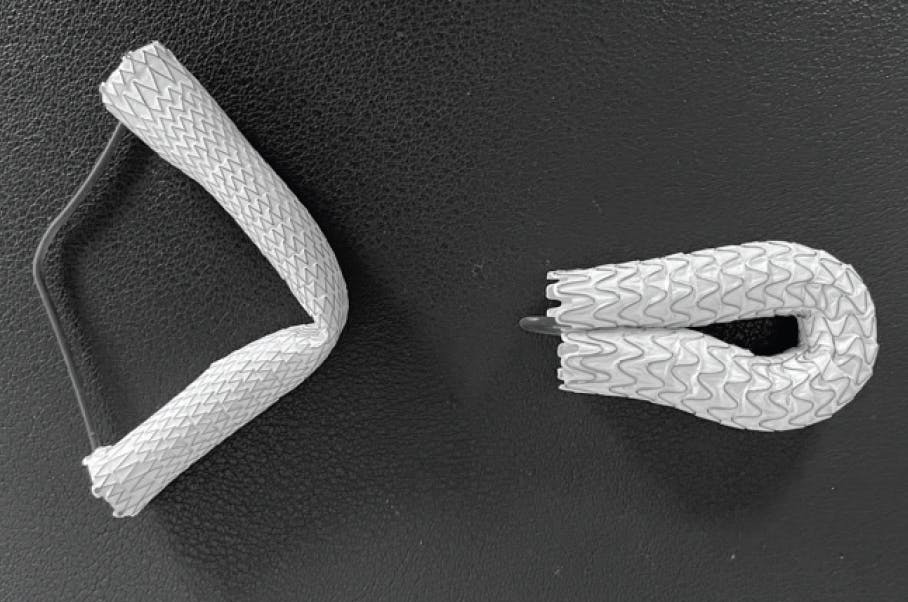
Figure 4. Benchtop demonstration showing a kinked, laser-etched, ePTFE-covered stent that kinked at 90° (left) and the wire-wound WRAPSODY CIE at 180° remaining free from kinking (right).
Beyond stent design, the covering of the WRAPSODY CIE has a novel structure with three bonded layers.11 The inner-most layer, which is exposed to blood flow, is not ePTFE but rather a novel-spun PTFE (Figure 5). Compared to ePTFE, spun PTFE reduces fibrin deposition and thrombus formation without coatings or drugs.12 The cell-impermeable middle layer prevents cells from migrating through the covering to the luminal surface, thereby preventing ISR (Figure 6). In vivo histology demonstrated that the cell-impermeable layer prevented ingrowth of tissue into the covering and inhibited formation of luminal neointima (Figure 7).11 The outermost third layer of the covering is “typical” ePTFE, which has been shown to allow adequate healing and incorporation of the abluminal surface of the device when placed within a blood vessel.
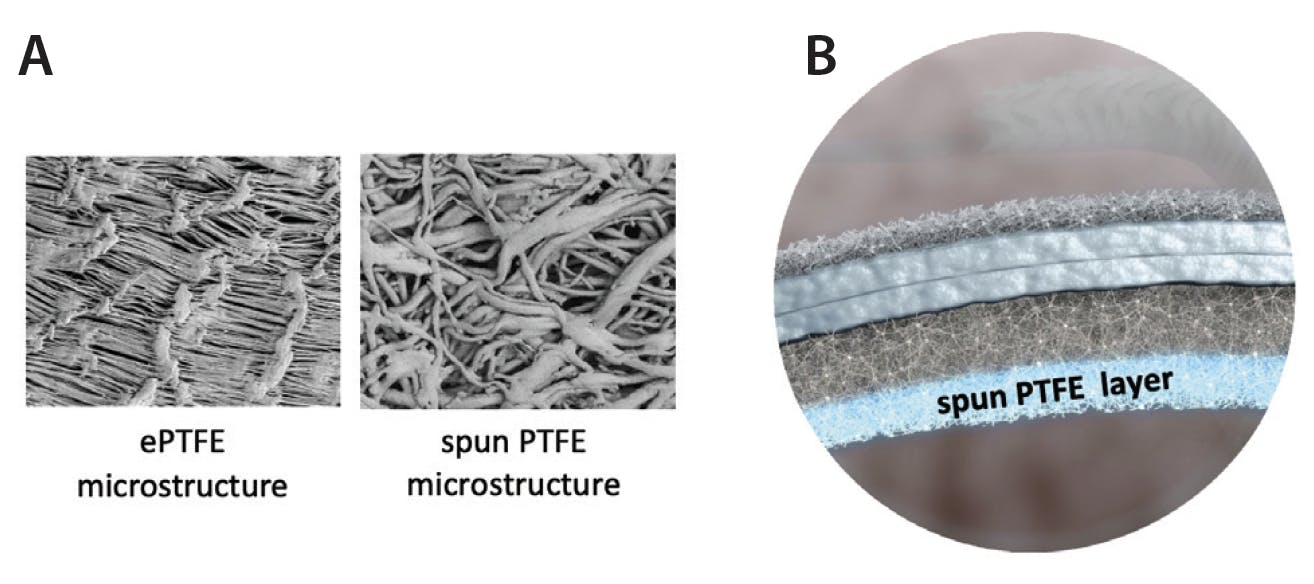
Figure 5. Micrographs of the surface of ePTFE and spun PTFE demonstrate the different microstructures (A). A graphic illustration shows the location of this inner-most spun PTFE layer in a WRAPSODY CIE (B).
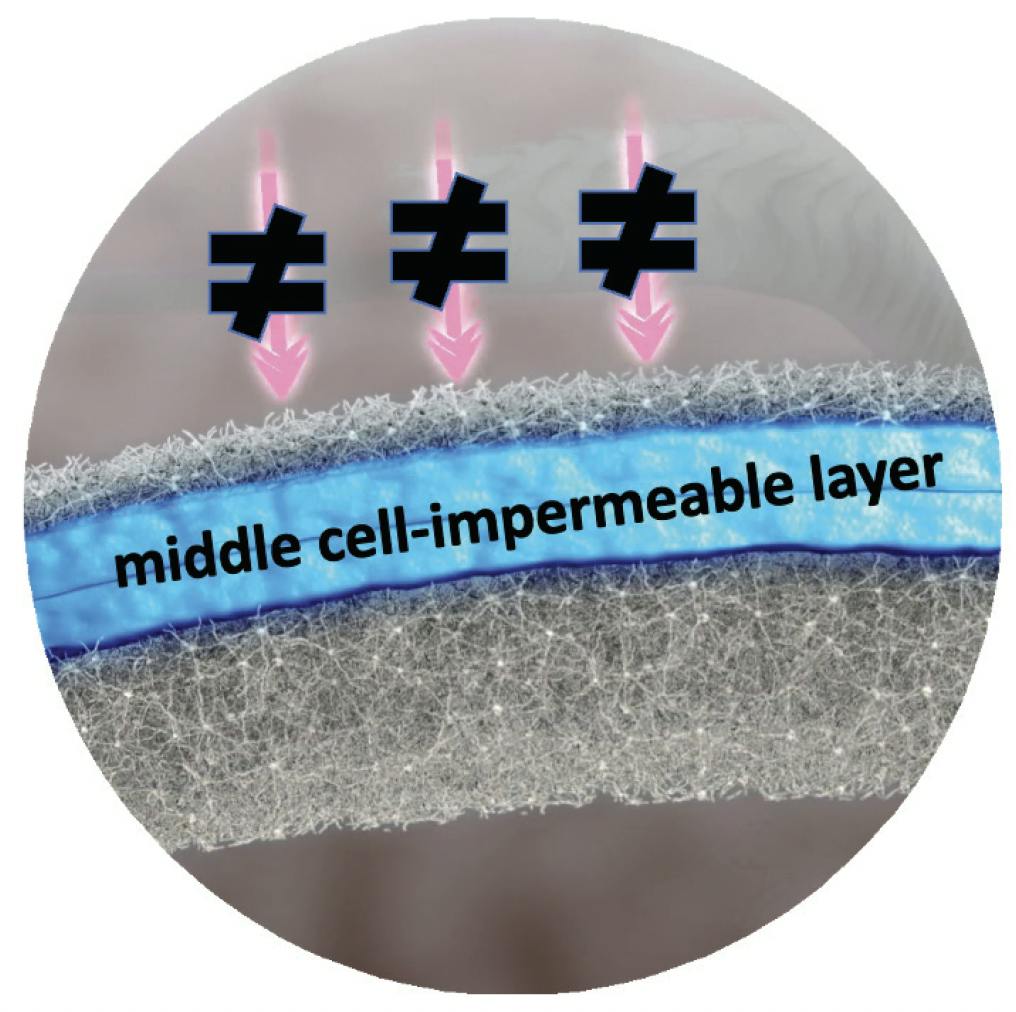
Figure 6. Graphic illustration of the middle cell-impermeable layer in the WRAPSODY CIE polymeric covering. Hatched arrows indicate that cells cannot penetrate from the adventitia through the graft covering.
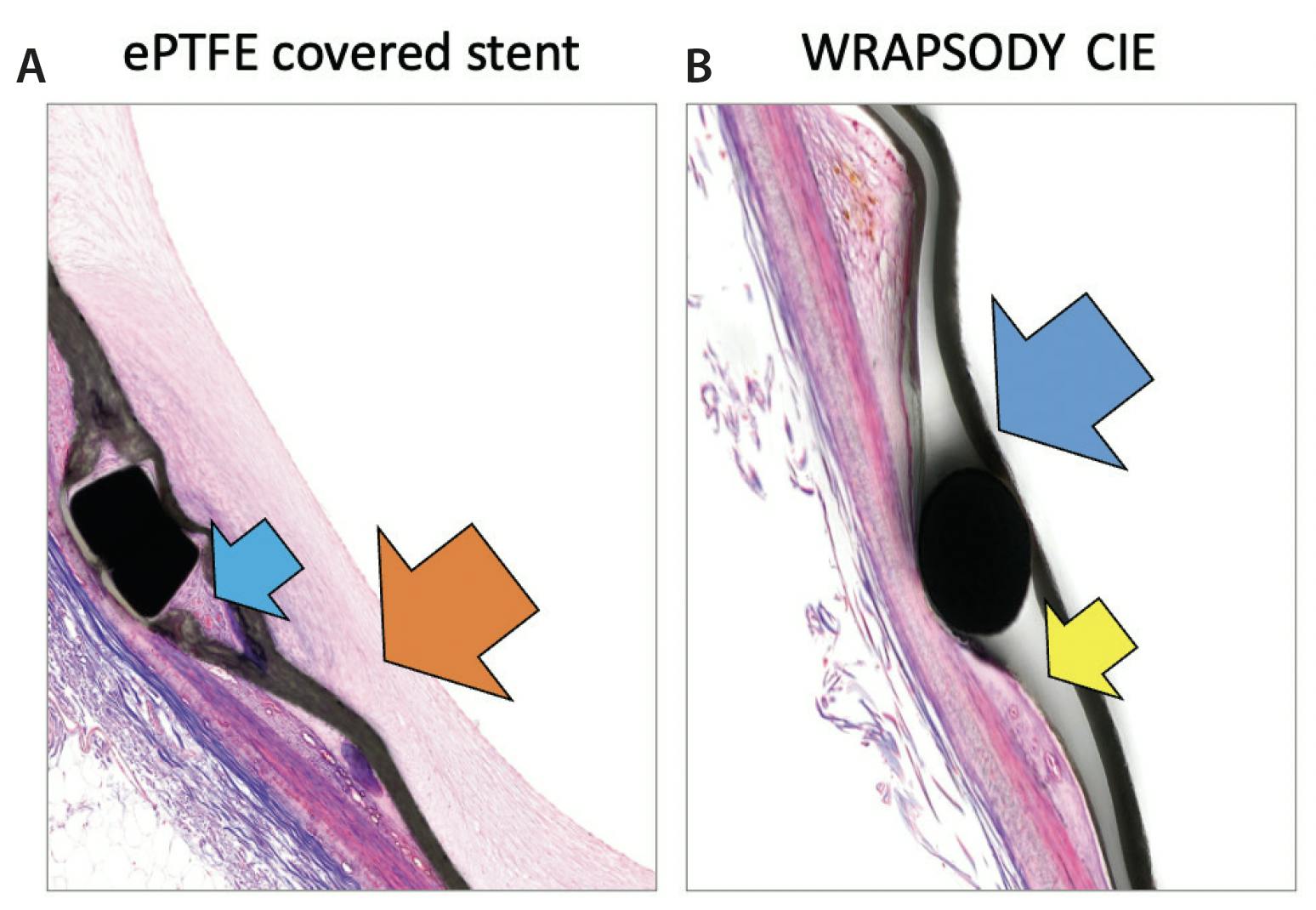
Figure 7. Healing of the WRAPSODY CIE in an ovine arterial model.11 Histologic cross-sections of the ePTFE-covered stent demonstrate ingrowth of tissue through the graft, around the stent strut (blue arrow), and into the lumen (orange arrow) (A). The WRAPSODY CIE has a middle cell-impermeable layer (yellow arrow) that prevents luminal neointimal formation (blue arrow) (B).
How does the WRAPSODY CIE compare to other AV access covered stents in human clinical trials? In AVGs, it has the best patency compared to other covered stents.13,14 In AVFs, it has demonstrated not only the highest TLPP when compared to PTA but also has shown statistically superior ACPP.15 Circuit patency is important because prolonged circuit patency is beneficial for both the patient and the payor.
On a more technical note, the WRAPSODY CIE has a very broad range of diameters and lengths, including diameters from 6 mm to 16 mm. For the larger diameters (12, 14, and 16 mm), the size matrix provides lengths in 10-mm increments—for example, the 14-mm WRAPSODY CIE comes in lengths of 14 X 30, 40, 50, 60, 70, and 80 mm. It is no longer necessary to accept the sizing limitations of ePTFE-covered stents. Given the broad size matrix available, selection of an on-label covered stent for treating AV access stenosis can be based on clinical data showing superior performance in an AV access circuit, rather than on the basis of available device sizes. In this regard, the WRAPSODY CIE is well suited for treatment of nearly all AV access stenoses.
Finally, the WRAPSODY CIE delivery system allows extremely accurate placement, employing a one-handed delivery handle, a hydrophilic surface coating that facilitates ease of placement of the delivery catheter system, and easily visualized markers on the device and delivery catheter system.
CONCLUSION
Since the 1990s, a great deal has been learned about optimizing the design of covered stents for treating stenosis in AVGs and AVFs. The shortcomings of prior covered stents have been recognized. The latest device—the WRAPSODY CIE—addresses the many limitations of previous covered stents and will further improve the durability of AV access circuits for patients who require hemodialysis.
1. Marin ML, Veith FJ, Cynamon J, et al. Initial experience with transluminally placed endovascular grafts for the treatment of complex vascular lesions. Ann Surg. 1995;222:449-465; discussion 465-9. doi: 10.1097/00000658-199522240-00004
2. Cejna M, Virmani R, Jones R, et al. Biocompatibility and performance of the Wallstent and the Wallgraft, Jostent, and Hemobahn stent-grafts in a sheep model. J Vasc Interv Radiol. 2002;13:823-830. doi: 10.1016/s1051-0443(07)61992-7
3. Sapoval MR, Turmel-Rodrigues LA, Raynaud AC, et al. Cragg covered stents in hemodialysis access: initial and midterm results. J Vasc Interv Radiol. 1996;7:335-342. doi: 10.1016/s1051-0443(96)72863-4
4. Dolmatch BL, Dong YH, Trerotola SO, et al. Tissue response to covered Wallstents. J Vasc Interv Radiol. 1998;9:471-478. doi: 10.1016/s1051-0443(98)70302-1
5. Haskal ZJ, Trerotola S, Dolmatch B, et al. Stent graft versus balloon angioplasty for failing dialysis-access grafts. N Engl J Med. 2010;362:494-503. doi: 10.1056/NEJMoa0902045
6. Haskal ZJ, Saad TF, Hoggard JG, et al. Prospective, randomized, concurrently-controlled study of a stent graft versus balloon angioplasty for treatment of arteriovenous access graft stenosis: 2-year results of the RENOVA study. J Vasc Interv Radiol. 2016;27:1105-1114. doi: 10.1016/j.jvir.2016.05.019
7. Falk A, Maya ID, Yevzlin AS, RESCUE Investigators. A prospective, randomized study of an expanded polytetrafluoroethylene stent graft versus balloon angioplasty for in-stent restenosis in arteriovenous grafts and fistulae: two-year results of the RESCUE study. J Vasc Interv Radiol. 2016;27:1465-1476. doi: 10.1016/j.jvir.2016.06.014
8. Vesely T, DaVanzo W, Behrend T, et al. Balloon angioplasty versus Viabahn stent graft for treatment of failing or thrombosed prosthetic hemodialysis grafts. J Vasc Surg. 2016;64:1400-1410. doi: 10.1016/j.jvs.2016.04.035
9. Dolmatch B, Waheed U, Balamuthusamy S, et al. Prospective, multicenter clinical study of the Covera vascular covered stent in the treatment of stenosis at the graft-vein anastomosis of dysfunctional hemodialysis access grafts. J Vasc Interv Radiol. 2022;33:479-488. doi: 10.1016/j.jvir.2022.02.008
10. Dolmatch B, Cabrera T, Pergola P, et al. Prospective, randomized, multicenter clinical study comparing a self-expanding covered stent to percutaneous transluminal angioplasty for treatment of upper extremity hemodialysis arteriovenous fistula stenosis. Kidney Int. 2023;104:189-200. doi: 10.1016/j.kint.2023.03.015
11. Dolmatch BL, Hall JW, Mower WL, Rousselle SD. Evaluation of a novel spun polytetrafluoroethylene stent graft in an ovine external iliac artery model. J Vasc Interv Radiol. 2020;31:494-502. doi: 10.1016/j.jvir.2019.07.036
12. Data on file, Merit Medical Systems, Inc.
13. US Food and Drug Administration. Summary of safety and effectiveness data (SSED): WRAPSODY® Cell-Impermeable Endoprosthesis. Accessed June 16, 2025. https://www.accessdata.fda.gov/cdrh_docs/pdf24/P240023b.pdf
14. Haskal ZJ, Dolmatch BL. Hemodialysis access stent graft trials: past, present, and future. Cardiovasc Intervent Radiol. 2023;46:1154-1161. doi: 10.1007/s00270-023-03389-y
15. Razavi MK, Balamuthusamy S, Makris AN, et al. Six-month safety and efficacy outcomes from the randomized-controlled arm of the WRAPSODY arteriovenous access efficacy (WAVE) trial. Kidney Int. 2025;107:740-750. doi: 10.1016/j.kint.2025.01.006
*All trademarks and brand names are the property of their respective owners.
*The WRAPSODY CIE is not approved for use in central veins in the United States.

Advertisement
Advertisement