Advertisement
Advertisement
August 2025 Supplement
Sponsored by Merit Medical Systems, Inc.
WRAPSODY® WAVE Study Core Lab Findings and Health Economics
A summary of my center’s experience in the WAVE pivotal trial, what makes the WRAPSODY Cell-Impermeable Endoprosthesis (CIE) unique, and the importance of access circuit primary patency in payment models and costs of arteriovenous access management.
Patency maintenance in arteriovenous (AV) access is critical for sustaining optimal dialysis to achieve adequate clearance of nitrogenous waste products and electrolytes. Although there are several implantable devices available on the market intended to sustain access patency, none of them have demonstrated benefit in improving access circuit primary patency (ACPP) compared to percutaneous transluminal angioplasty (PTA). The WRAPSODY CIE (Merit Medical Systems, Inc.) is manufactured for deployment in dysfunctional AV fistulas (AVFs) and AV grafts (AVGs) due to an obstruction in the venous outflow. Unlike stent grafts (SGs), the endoprosthesis has a middle cell-impermeable layer designed to prevent in-stent restenosis (ISR). The luminal-spun polytetrafluoroethylene (PTFE) microstructure is also unique in the WRAPSODY CIE compared to commercially available SGs.
WRAPSODY ARTERIOVENOUS ACCESS EFFICACY (WAVE) PIVOTAL TRIAL: OUR EXPERIENCE
The WAVE study is a prospective, international, multicenter trial designed to evaluate the safety and performance of the WRAPSODY CIE. Tarrant Vascular (Texas Research Institute) was one of the 43 sites that enrolled patients with AVFs and AVGs into the study. The study included two patient cohorts: those with dysfunctional AVFs and AVGs. Patients in the AVF cohort were randomized (1:1) to treatment with the WRAPSODY CIE or standard PTA.1 All patients with dysfunctional AVGs were treated with the WRAPSODY CIE, and primary safety and efficacy endpoints were compared to performance goals based on data from prior trials at the time the study was designed. The eligibility criteria and endpoints of the WAVE trial were similar to prior published SG trials. The primary efficacy outcome was 6-month target lesion primary patency (TLPP). The primary safety endpoint was freedom from localized or systemic events through 30 days following treatment that affected the access or venous outflow circuit and resulted in reintervention, hospitalization, or death. Clinically driven target lesion revascularization or reintervention for target lesion thrombosis were attributed to the primary efficacy endpoint rather than safety. A key secondary endpoint was ACPP, which is the time to occurrence of any venous outflow reintervention, access thrombosis, or access abandonment following the index procedure. Core laboratory analysis was performed on stenotic, restenotic, and thrombotic lesions that required intervention. The CIE devices were available in diameters ranging from 6 mm to 16 mm; this enabled investigators to size the device according to the reference vessel diameter as specified in the trial protocol. Enrollment in the study was based on symptomatic AV access dysfunction that required an intervention to improve access function. Our vascular laboratory services a large population in North Texas for AV access creation and maintenance, and therefore, recruiting to the trial was accomplished within a relatively brief period due to the unmet need for managing AV access outflow stenosis.
WHAT MAKES THE WRAPSODY CIE UNIQUE
There are four SGs available in the dialysis access market. Each is supported by robust data through randomized controlled trials, so one might question the need for additional trials. The best TLPP rate at 12 months was approximately 70%; however, no statistically significant improvements in ACPP were observed relative to PTA. As a result, the ability to reduce reinterventions and extend functionality of the AV access remains an unmet need in this patient population.2-4 The improved technology associated with the WRAPSODY CIE was developed to help address these unmet needs. In addition to the cell-impermeable middle graft layer, the WRAPSODY CIE was designed with softer stent edges (ie, end rows), maintains high radial force in the body of the device, and offers a novel-spun PTFE luminal surface (Figure 1). The device is loaded on a coaxial delivery system with a ratchet handle that facilitates precise deployment at the target site (Figure 2).
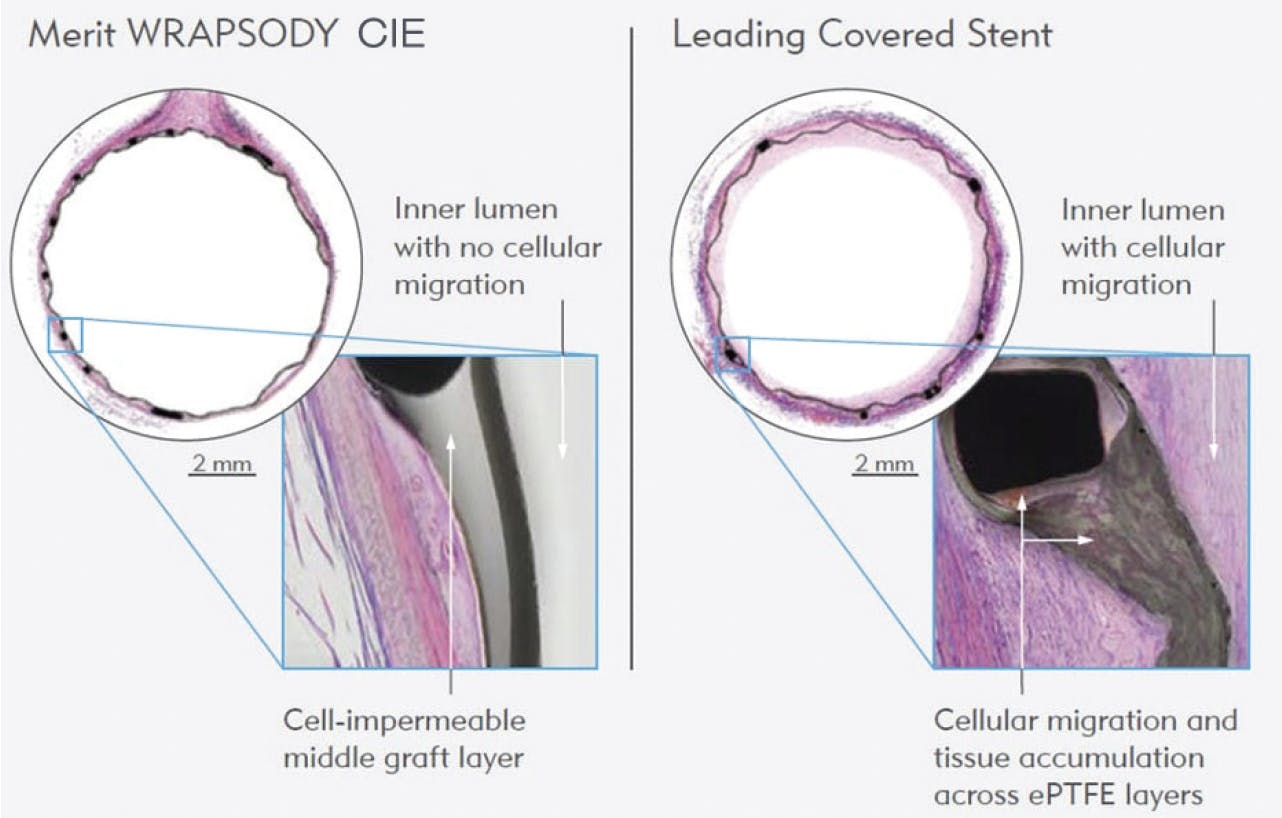
Figure 1. Histopathologic difference in endothelialization with WRAPSODY CIE and SG.
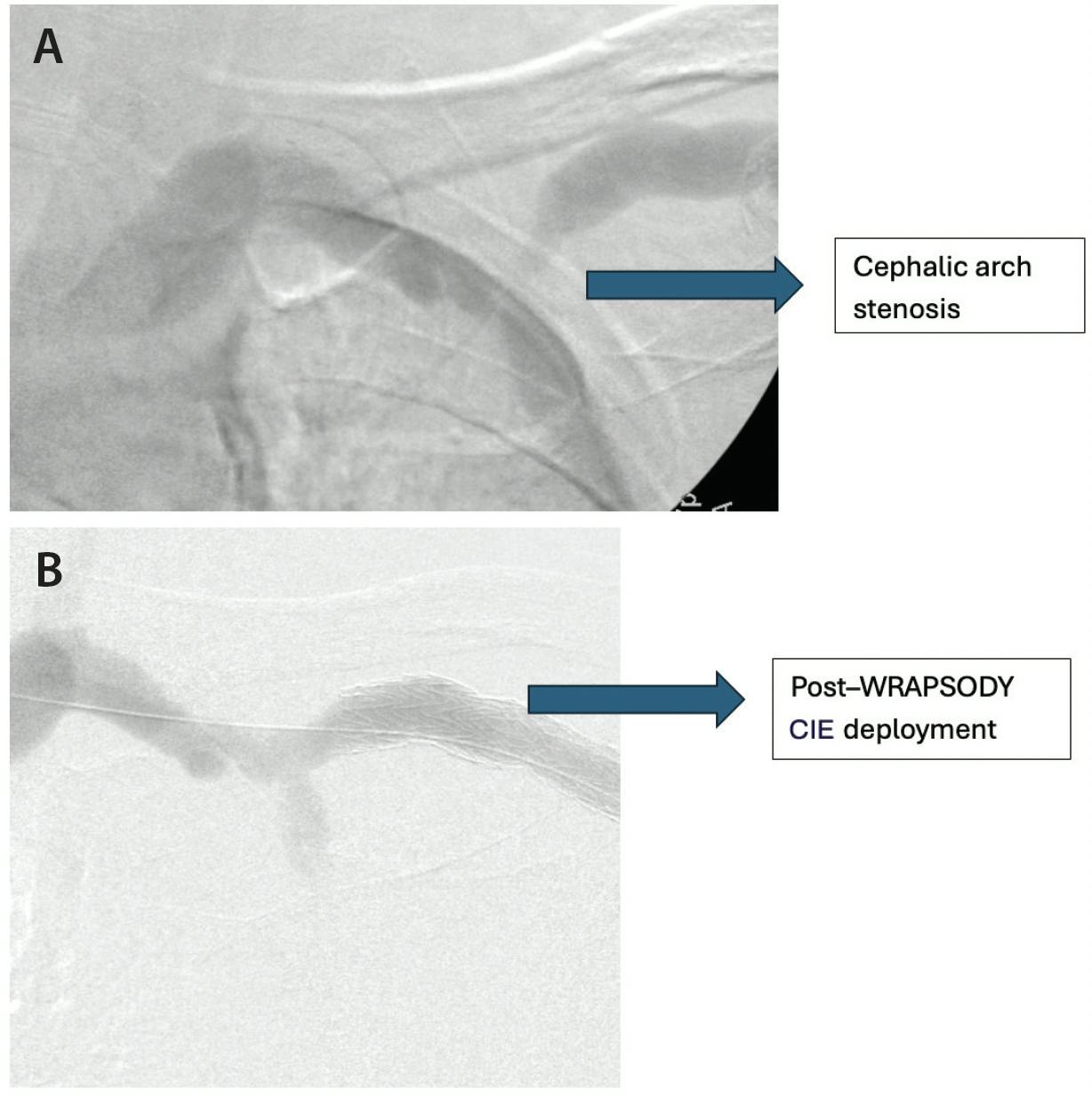
Figure 2. Cephalic arch stenosis (A) and WRAPSODY CIE deployed across a high-grade cephalic arch stenosis (B).
PIVOTAL TRIAL RESULTS AND ANALYSIS
Results from the WAVE trial demonstrated statistically significant improvement associated with the WRAPSODY CIE versus PTA at 6 months for TLPP (89.8% vs 62.8%) and ACPP (72.6% vs 57.9%). These improved patency rates in the AVF cohort were maintained at 12 months, with statistically significant improvement with WRAPSODY CIE versus PTA for TLPP (70.1% vs 41.6%) and ACPP (58.1% vs 34.4%).1 For the first time in AV access maintenance, significant improvements in ACPP are reported with an implantable device compared to PTA.
Although a direct comparison was not performed between the CIE and SGs, hypotheses could be formulated based on observations from the core laboratory analysis of patients who developed target lesion or access circuit restenosis or thrombosis and required a clinically indicated reintervention. Restenosis that occurred with the CIE was different from what we have observed in SGs. Unlike prior devices, in our experience stenoses that developed following treatment with the CIE were observed outside the body of the device (Figure 3).
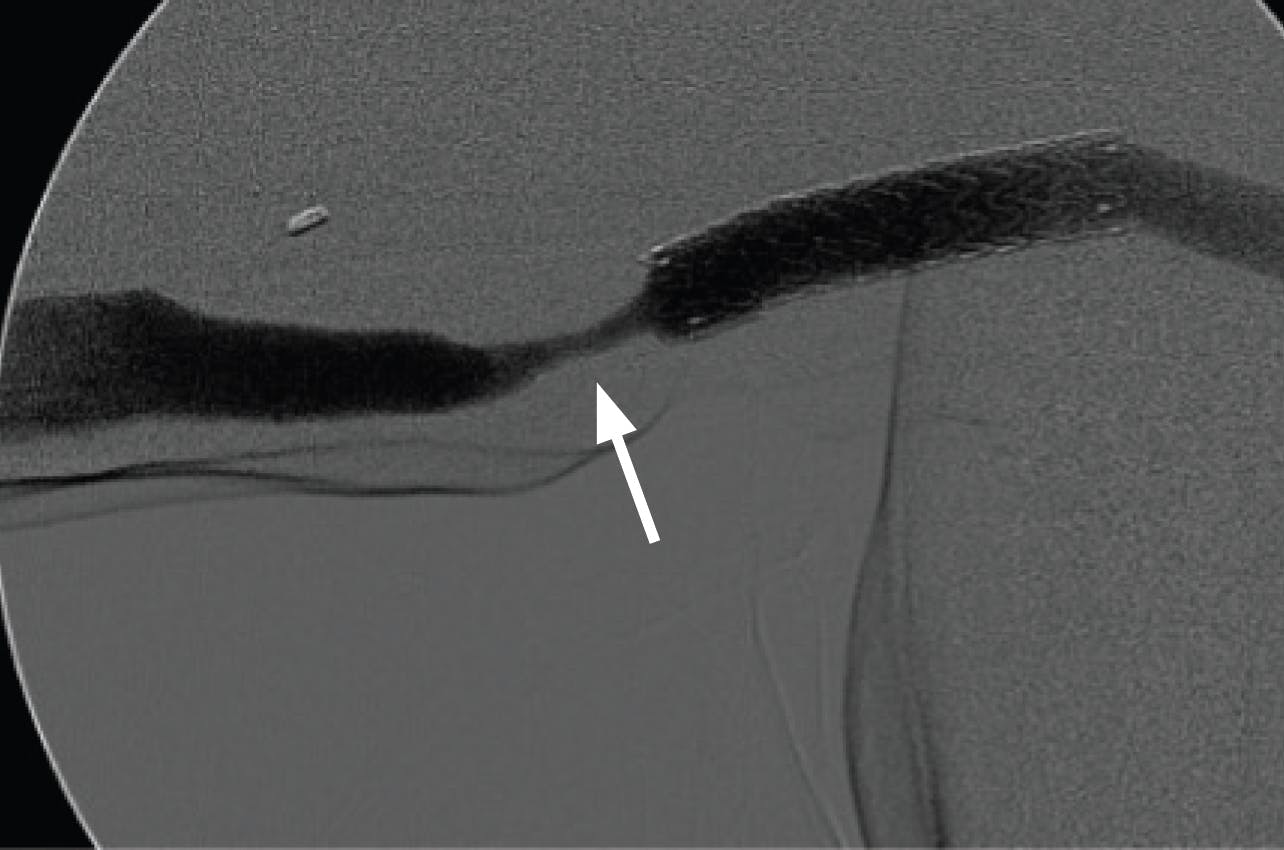
Figure 3. Core laboratory image of ISR seen with the WRAPSODY CIE. Stenosis is seen outside the CIE in the adjoining vessel (white arrow) as opposed to within the CIE body.
PAYMENT MODELS IN CHRONIC KIDNEY DISEASE AND END-STAGE RENAL DISEASE (ESRD)
Optimal dialysis vascular access care has a significant bearing not only on patient outcomes and satisfaction but also on clinical metrics and cost benchmarks needed to demonstrate success in value-based care programs. The Centers for Medicare & Medicaid Services has initiated quality initiative programs in chronic kidney disease and ESRD over the last 7 years. The recently concluded ESRD treatment choices program and the ongoing Comprehensive Kidney Care Contracting program (part of the Kidney Care Choices model) have been adopted by several nephrology practices across the country that provide care to fee-for-service Medicare beneficiaries.5 Physician performance is measured with metrics, such as starting patients on an optimal access, initiating a home modality of renal replacement therapy, tunneled dialysis catheter avoidance, increasing transplants, and decreasing hospitalizations. Physician practices could be responsible for the cost of care if they exceed the approved benchmarks and do not meet the aforementioned quality metrics. Therefore, for practice viability, it is imperative to preserve patency of AV access as long as possible with the least number of interventions.
ECONOMIC IMPLICATIONS IN AV ACCESS
Using a hypothetical model of reinterventions based on SG trials by Dolmatch et al to analyze the total cost of AV access care in patients on dialysis,6 with each PTA reintervention costing anywhere between $1,200 to $6,500 based on site of service, a 0.5 mean reintervention with CIE compared to 1.08 with PTA would mean a > 50% reduction in procedures. However, it should be noted that assumptions in the Dolmatch et al study were based only on TLPP, as no available data at that time demonstrated a significant result in ACPP with implantable devices.
It would be difficult to directly estimate the impact of reinterventions between the CIE and SGs, because there are no data comparing the two approaches. However, there could be an incremental cost reduction over a 12-month period on reinterventions with CIEs compared to SGs given the significant patency in the access circuit seen in 56% of patients. In our experience, AVFs have a median survival of 5 to 9 years (depending on their location), with 0.5 to 2 interventions required each year to maintain patency in most of these fistulas. Hence, reducing reinterventions over the life of an access could help reduce not only the direct procedural cost but also indirect costs associated with hospitalization due to access dysfunction. Actuarial analysis of long-term, real-world data would be needed to assess the cumulative cost impact of the WRAPSODY CIE on reintervention reductions in dysfunctional AV access compared to PTA and other SGs.
CONCLUSION
There has been a need for advancing stent technology to achieve ACPP and decrease the need for reinterventions in AV access. Reducing the number of cumulative interventions would improve patient-reported outcomes and help patients adhere to renal replacement therapy without interruption. With improvements in cardiovascular care, the overall survival of our patients has increased; thus, it is important to preserve their vascular access as long as possible with the fewest number of interventions.
1. Razavi MK, Balamuthusamy S, Makris AN, et al; WAVE trial investigators. Six-month safety and efficacy outcomes from the randomized-controlled arm of the WRAPSODY Arteriovenous Access Efficacy (WAVE) trial. Kidney Int. 2025;107:740-750. doi: 10.1016/j.kint.2025.01.006
2. Haskal ZJ, Trerotola S, Dolmatch B, et al. Stent graft versus balloon angioplasty for failing dialysis-access grafts. N Engl J Med. 2010;362:494–503. doi: 10.1056/NEJMoa0902045
3. Jones RG, Willis AP, Jones C, et al. Long-term results of stent-graft placement to treat central venous stenosis and occlusion in hemodialysis patients with arteriovenous fistulas. J Vasc Interv Radiol. 2011;22:1240-1245. doi: 10.1016/j.jvir.2011.06.002
4. Dolmatch BL, Duch JM, Winder R, et al. Salvage of angioplasty failures and complications in hemodialysis arteriovenous access using the FLUENCY Plus Stent Graft: technical and 180-day patency results. J Vasc Interv Radiol. 2012;23:479-487. doi: 10.1016/j.jvir.2011.12.024
5. Centers for Medicare & Medicaid Services. Kidney Care Choices (KCC) model. Accessed June 16, 2025. https://www.cms.gov/priorities/innovation/innovation-models/kidney-care-choices-kcc-model
6. Dolmatch B, Hogan A, Ferko N. An economic analysis of stent grafts for treatment of vascular access stenosis: point-of-care and Medicare perspectives in the United States. J Vasc Interv Radiol. 2018;29:765-773.e2. doi: 10.1016/j.jvir.2018.01.777

Advertisement
Advertisement