Advertisement
Advertisement
August 2025
Acute GI Bleed Management: Lessons Learned at a High-Volume Academic Medical Center
Patient throughput and management of GI bleeds, from initial presentation through definitive management.
By Alborz Feizi, MD, PhD; Rahul Patel, MD; Kirema Garcia-Reyes, MD; and Aaron Fischman, MD
Gastrointestinal (GI) bleeding continues to be a life-threatening condition in hospitals globally. The incidence of upper GI bleeding is approximately 100 per 100,000 individuals annually, while lower GI bleeding is less prevalent, with an incidence rate of 20 to 27 per 100,000 individuals each year.1,2 Both types of bleeding contribute to high rates of hospitalization and demand urgent clinical attention. Despite advancements in diagnostic imaging and therapeutic interventions, mortality and rebleeding rates remain high, particularly in patients with underlying coagulopathy. These challenges underscore the importance of a multidisciplinary approach, combining the expertise of the gastroenterology, interventional radiology (IR), and critical care teams.
Advancement in the field of IR has brought notable improvements to the management of GI bleeds, including reducing reliance on high-risk surgeries. For instance, GI bleed embolization traditionally relied on coils, which were effective for clear bleeding points but had limitations in patients with coagulopathy and complex vascular networks. The introduction of liquid embolic agents, such as ethylene vinyl alcohol (EVOH) copolymers (eg, LAVA, Sirtex Medical Inc.), has expanded therapeutic options by enabling deeper vessel penetration and effective hemostasis independent of the patient’s coagulation status. However, the use of these agents requires careful case selection and a thorough understanding of potential risks and benefits.
This article aims to provide a comprehensive overview of our strategy for managing GI bleeds, from initial patient presentation through diagnostic evaluation and therapeutic intervention. We will explore the critical role of imaging modalities, discuss the decision-making processes guiding the choice of embolic agents, and share insights from our experience with liquid embolics in both routine and challenging cases.
COORDINATING CARE
When a GI bleed is suspected, the initial management should focus on two priorities: (1) stabilization and (2) localization. Hemodynamic stability must be promptly assessed, with activation of a massive transfusion protocol if necessary. Additionally, conducting an initial clinical evaluation to determine whether the bleeding originates from the upper or lower GI tract is essential to guide subsequent steps. As shown in Figure 1, initial endoscopic evaluation is often favored for suspected upper GI bleeding. In cases of lower GI bleeding, colonoscopy may not always provide clear visualization of the bleeding source, in which case a CTA can be considered as an initial diagnostic tool.
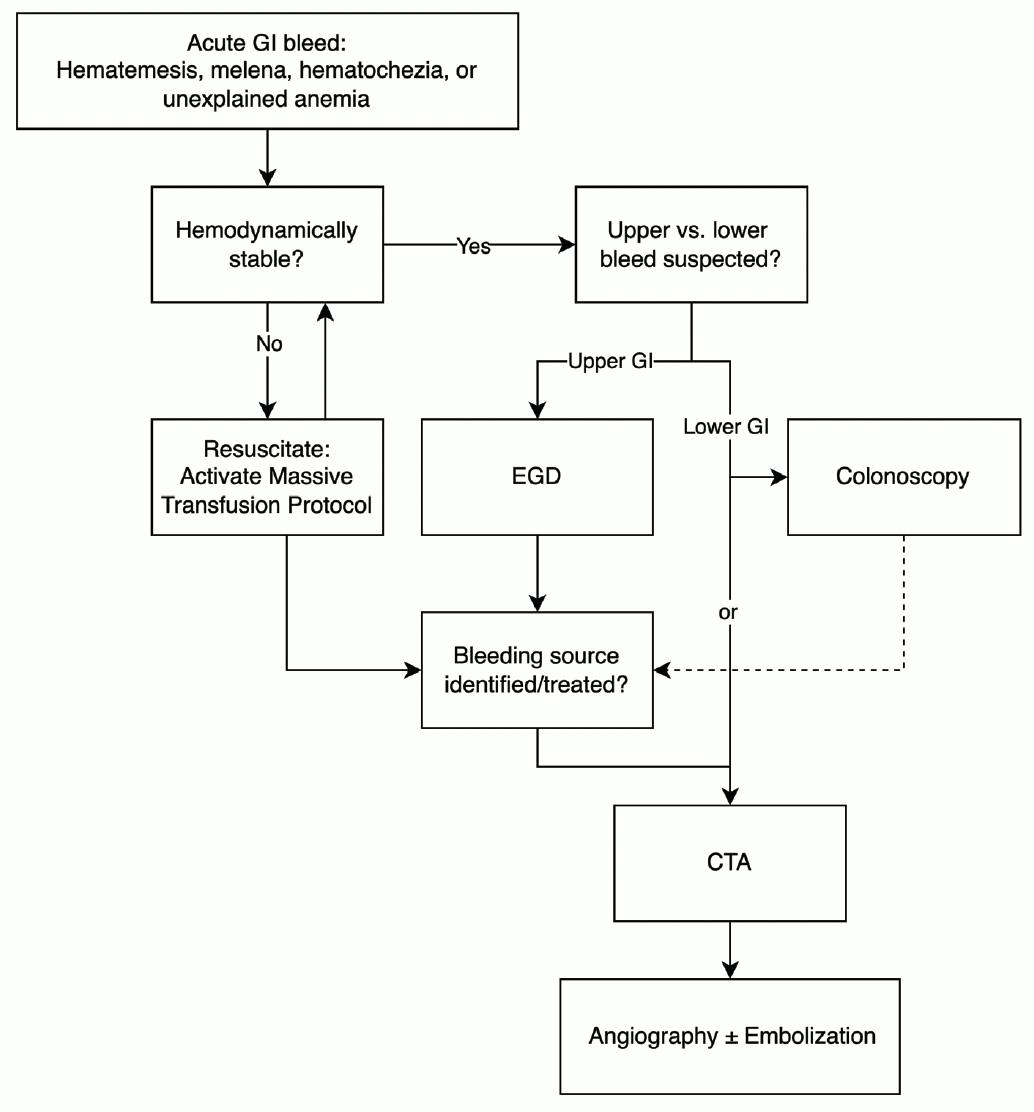
Figure 1. Algorithm for the initial evaluation and management of acute GI bleeding. EGD, esophagogastroduodenoscopy.
CTA plays a critical role in confirming active hemorrhage and guiding subsequent endovascular intervention. With a sensitivity that can reach 90% when the extravasation rate exceeds 0.3 mL/min, CTA provides essential anatomic details to inform catheter selection and positioning. In our experience, angiography after a negative CTA rarely identifies a bleeding source. In such cases, repeat CTA may be more beneficial in guiding management rather than relying on blind angiography. On the other hand, positive CTA significantly increases the likelihood of successful angiography outcomes if performed immediately afterward.
In instances where angiography fails to identify a source, cone-beam CT can serve as a valuable adjunct, offering three-dimensional clues to source localization. Another highly sensitive imaging tool for detection of GI hemorrhage is a tagged red blood cell scan. While this modality has traditionally been part of GI bleed diagnostics, its limited spatial resolution and prolonged acquisition times reduces its utility in IR planning. Furthermore, many hospitals lack the resources to perform this scan. Nonetheless, tagged red blood cell scans may aid in conservative management or guide endoscopic or surgical decisions when other imaging modalities are inconclusive. Looking ahead, artificial intelligence (AI) could further enhance diagnostic pathways by improving triage accuracy and localizing bleeding sources. As these tools evolve, they may help standardize care and improve clinical outcomes.
EMBOLIZATION STRATEGIES
The selection of embolic agents for managing GI bleeding depends on various factors, including the patient’s coagulation status, the location and cause of the hemorrhage, and imaging findings. Rapid and sustained hemostasis is especially critical in cases involving coagulopathic patients, where reliance on natural clotting mechanisms is insufficient. Among the options, liquid embolics, such as N-butyl cyanoacrylate (NBCA) and EVOH copolymers, stand out for their ability to penetrate distal vessels effectively (Figure 2).
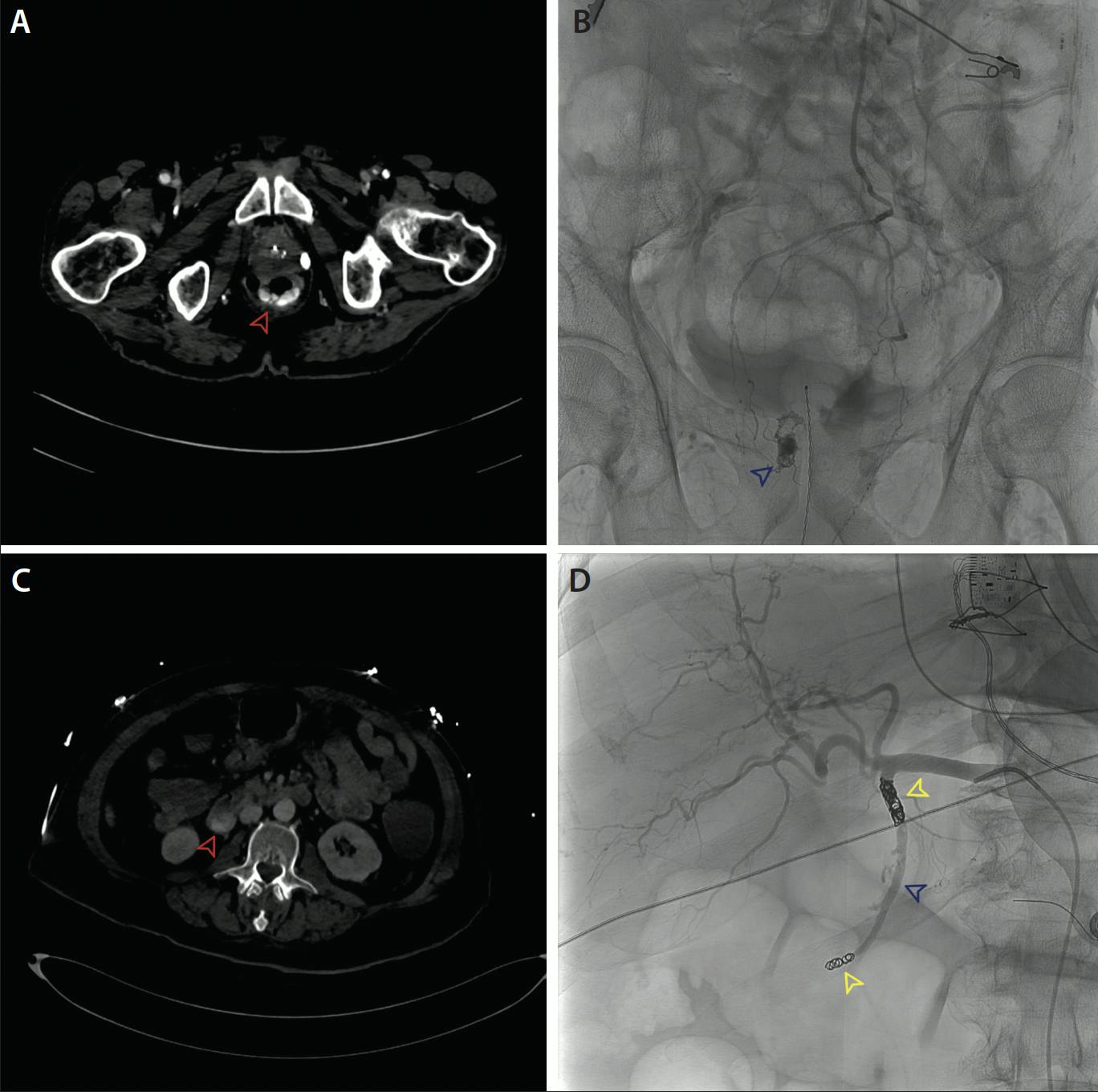
Figure 2. Demonstration of liquid embolic agents for GI bleeding. Axial CTA indicating active contrast extravasation in the rectum (red arrow) (A). Angiogram of the inferior mesenteric artery obtained after targeted embolization with NBCA (blue arrow) at the site of rectal hemorrhage (B). Axial CTA from a different patient showing active extravasation in the duodenum (red arrow) (C). Angiographic image acquired after dual embolization technique using coils (yellow arrows) and Obsidio liquid embolic (blue arrow) to achieve hemostasis in the duodenum (D).
Liquid Embolic Agents
NBCA has demonstrated efficacy as a primary intervention for acute, hemodynamically unstable lower GI bleeding.3,4 Nonetheless, clinicians must remain cautious about complications like late-onset colonic occlusion and ischemic injuries demonstrated in animal models.5,6 Similarly, EVOH copolymers have gained recognition for their controlled delivery, offering an efficient method for selective embolization in lower GI bleeding.7 Recent research, including the LAVA study, has further validated the safety and efficacy of EVOH-based agents, reinforcing their utility in high-risk GI bleeding.8
Although newer embolic agents show promising efficacy, further studies are essential to validate the safety and proposed delivery method of each embolic agent—specifically in the context of acute GI hemorrhage. For instance, Obsidio (Boston Scientific Corporation) is a novel conformable gel that creates a mechanical blockage through a soft, cast-like structure. Although it shows potential in peripheral embolization, its application in GI bleeding has been associated with nontarget embolization and bowel ischemia, particularly when delivered using aliquot or saline flush techniques.9
Synergistic Embolization Techniques
In the case of high-flow bleeding, cirrhosis-related bleeding, and recurrent or refractory hemorrhages, a combination of coil and liquid embolic may be used, providing both mechanical occlusion and deeper embolization. We find great utility in using this technique for gastroduodenal artery embolization in cases of recurrent hemorrhage (Figure 2D).
Another challenging scenario in GI bleeding is hemorrhage secondary to tumors, which often necessitates targeted embolization of hypervascular neoplastic vessels. While calibrated microspheres and polyvinyl alcohol particles are effective options, liquid embolics may offer the added benefits of durability and more uniform penetration into the tumor microcirculation. In cases of recurrent or refractory tumor-associated hemorrhage, dual embolization strategies—such as combining particles with liquid embolics—may also be considered.
Embolization in the Absence of Angiographic Evidence
Empirical embolization is another valuable approach, particularly when angiography does not reveal active extravasation despite strong clinical suspicion of ongoing bleeding. This technique is typically guided by prior imaging or endoscopic findings and targets vessels with predictable anatomy and robust collateral networks. Gelfoam slurry is commonly employed for temporary occlusion, offering a favorable safety profile. In select cases, liquid embolics may also be used empirically to achieve more durable hemostasis. Although empirical embolization carries a risk of nontarget ischemia, it can be lifesaving in hemodynamically unstable patients when angiographic findings are inconclusive.
In rare scenarios where both imaging and angiography fail to detect bleeding but clinical suspicion remains high, provocative embolization may be employed. This involves the intra-arterial administration of agents such as tissue plasminogen activator to induce extravasation, allowing visualization of the bleeding source and targeted embolization. Provocative embolization is utilized in rare cases, particularly those involving the small bowel, and requires close interdisciplinary collaboration to mitigate the risks of iatrogenic hemorrhage.
Together, these strategies underscore the versatility and evolving role of embolic techniques in managing complex GI bleeding cases. Whether through a single embolic agent or dual embolization approaches that combine the strengths of multiple agents, the goal remains the same: achieving durable hemostasis while minimizing risks such as nontarget ischemia. Moreover, empirical and provocative embolization methods offer critical solutions in scenarios where conventional imaging fails to reveal the source, demonstrating the adaptability of endovascular techniques in addressing challenging GI bleed presentations.
CONCLUSION
IR plays a central role in the modern management of GI bleeding, particularly when endoscopic and medical therapies prove insufficient. When dealing with complex cases such as coagulopathy or elusive sources not identified by initial imaging, it is crucial to perform careful multidisciplinary evaluation and meticulous procedural planning to mitigate risks such as nontarget embolization. We anticipate that advances in imaging, embolic materials, and AI will continue to refine and personalize care for patients with GI bleeding.
Disclosure of AI use: Microsoft Copilot, integrated into Microsoft Word for Mac version 16.96, was used to edit the original content drafted by the authors.
1. Wilkins T, Khan N, Nabh A, Schade RR. Diagnosis and management of upper gastrointestinal bleeding. Am Fam Physician. 2012;85:469-476.
2. Longstreth GF. Epidemiology and outcome of patients hospitalized with acute lower gastrointestinal hemorrhage: a population-based study. Am J Gastroenterol. 1997;92:419-424.
3. Huang CC, Lee CW, Hsiao JK, et al. N-butyl cyanoacrylate embolization as the primary treatment of acute hemodynamically unstable lower gastrointestinal hemorrhage. J Vasc Interv Radiol. 2011;22:1594-1599. doi: 10.1016/j.jvir.2011.07.018
4. Frodsham A, Berkmen T, Ananian C, Fung A. Initial experience using n-butyl cyanoacrylate for embolization of lower gastrointestinal hemorrhage. J Vasc Interv Radiol. 2009;20:1312-1319. doi: 10.1016/j.jvir.2009.06.031
5. Toyoda H, Kumada T, Sone Y, et al. Late-onset colonic occlusion after emergent selective embolization of sigmoid artery with n-butyl cyanoacrylate for life-threatening traumatic bleeding. J Vasc Interv Radiol. 2009;20:1376-1379. doi: 10.1016/j.jvir.2009.07.023
6. Ikoma A, Kawai N, Sato M, et al. Ischemic effects of transcatheter arterial embolization with n-butyl cyanoacrylate-lipiodol on the colon in a swine model. Cardiovasc Intervent Radiol. 2010;33:1009-1015. doi: 10.1007/s00270-010-9867-1
7. Urbano J, Cabrera JM, Franco A, Alonso-Burgos A. Selective arterial embolization with ethylene–vinyl alcohol copolymer for control of massive lower gastrointestinal bleeding: feasibility and initial experience. J Vasc Interv Radiol. 2014;25:839-846. doi: 10.1016/j.jvir.2014.02.024
8. Arslan B, Razavi MK, Siskin G, et al. The LAVA study: a prospective, multicenter, single-arm study of a liquid embolic system for treatment of peripheral arterial hemorrhage. J Vasc Interv Radiol. 2025;36:436-445.e2. doi: 10.1016/j.jvir.2024.11.005
9. US Food and Drug Administration. Class 1 device recall Obsidio. Accessed June 1, 2025. https://www.accessdata.fda.gov/scripts/cdrh/cfdocs/cfres/res.cfm?id=206388
Advertisement
Advertisement