Advertisement
Advertisement
August 2025
An Interview With Pascal M. Jabbour, MD
Dr. Jabbour discusses the evolution of transradial access for neurointervention, his collaboration with Wills Eye Hospital on intra-arterial chemotherapy for pediatric patients with retinoblastoma, keys to a robust research practice, and the biggest challenges in stroke care today.
What was your journey to neurovascular surgery like? When did you know this was the path for you?
As a medical student, I always knew I wanted to become a neurosurgeon. That aspiration was solidified during my first clinical rotation, which was in neurosurgery at Hotel Dieu De France Hospital in Beirut, Lebanon. From the very first day, I was captivated by the complexity of the cases, the precision required in each procedure, and the profound impact neurosurgery has on patients' lives. It was during that rotation that I truly fell in love with the field, and I knew with certainty that this was the path I was meant to follow. After completing my first neurosurgery residency in Beirut at Hotel Dieu De France Hospital, I decided to move to the United States to get the best training. I did a year of pre-residency fellowship and research at the University of Colorado and then matched in the neurosurgery residency there. I did my PGY1 and PGY2 there, then I moved to Thomas Jefferson and finished my residency.
The neurosurgery residency program at Thomas Jefferson is where my love for neurovascular started, as it was very heavy in vascular. Watching neurosurgeons perform both open and endovascular cases triggered a big interest in me, so I finished my residency at Thomas Jefferson and stayed for a vascular fellowship.
As a prominent champion for the field of transradial (TR) access for neurointervention, can you tell us about how this has evolved since your initial experiences?
The TR approach was a very interesting journey that we started in 2017 with a few neurointerventionalists. At the time, we didn’t know much. We were struggling—figuring out patient positioning and selection, which catheters to use, and how to deal with complications. We had no dedicated TR tools, so we relied on communication with colleagues across the country, sharing struggles and problem-solving together. The introduction of TR-specific catheters changed the game.
Interest in TR access among the neurointerventional community then started to increase. We started organizing courses and publishing papers on all aspects of the TR approach, which increased adoption further. Dr. Eric Peterson and I published the first textbook on the TR approach for neurointervention.
Overall, we thought the approach made a lot of sense, with low complications and better patient satisfaction. Now in 2025, the number of neurointerventionalists who have adopted the TR approach has increased significantly.
Another passion of yours is robotics for endovascular neurosurgery. In terms of future applications for robotics in this space, where do you see the most potential? Do you think challenges of cost and scale can be overcome to realize that potential?
This is another exciting journey that started just before the COVID pandemic. The CorPath (Siemens Healthineers) was the first endovascular robot FDA approved for peripheral vascular procedures. We jumped on board early on and started doing diagnostic angiograms and carotid stents. We saw the potential for future application in remote stroke intervention for patients living in remote geographic areas, far away from a thrombectomy-ready center.
The next-generation endovascular robot is getting ready to be launched. There will be some technical and legal challenges, but I am confident that we will be performing remote stroke interventions in 5 to 10 years.
In partnership with Dr. Carol L. Shields at Wills Eye Hospital, you’ve made great progress in the area of intra-arterial chemotherapy for pediatric patients with retinoblastoma. How did this collaboration between ophthalmology and neurosurgery come about? What do you think other neuro specialists should know about this procedure?
This project is very dear to my heart. I was fortunate to be associated with Wills Eye hospital, a premier ophthalmological hospital in the United States, and specifically with Drs. Carol and Jerry Shields, who defined the field of ocular oncology. We started doing intra-arterial chemotherapy for retinoblastoma in 2008. At that time, no one believed in this treatment. All of those children were still undergoing intravenous chemotherapy and radiation, with all the associated side effects, and 80% ending up undergoing enucleation.
Intra-arterial chemotherapy for retinoblastoma has come a long way and is now the gold-standard treatment of this disease. We can now cure the disease and avoid enucleation in 80% of all-comers and all grades. It is really rewarding to know that we can change the outcome of this aggressive disease, and the children and their families are very happy and grateful.
Your group at Jefferson has a very fast-paced, robust research practice, publishing several papers monthly. How would you describe your team’s philosophy regarding research? How are you able to maintain this pace of research and publication?
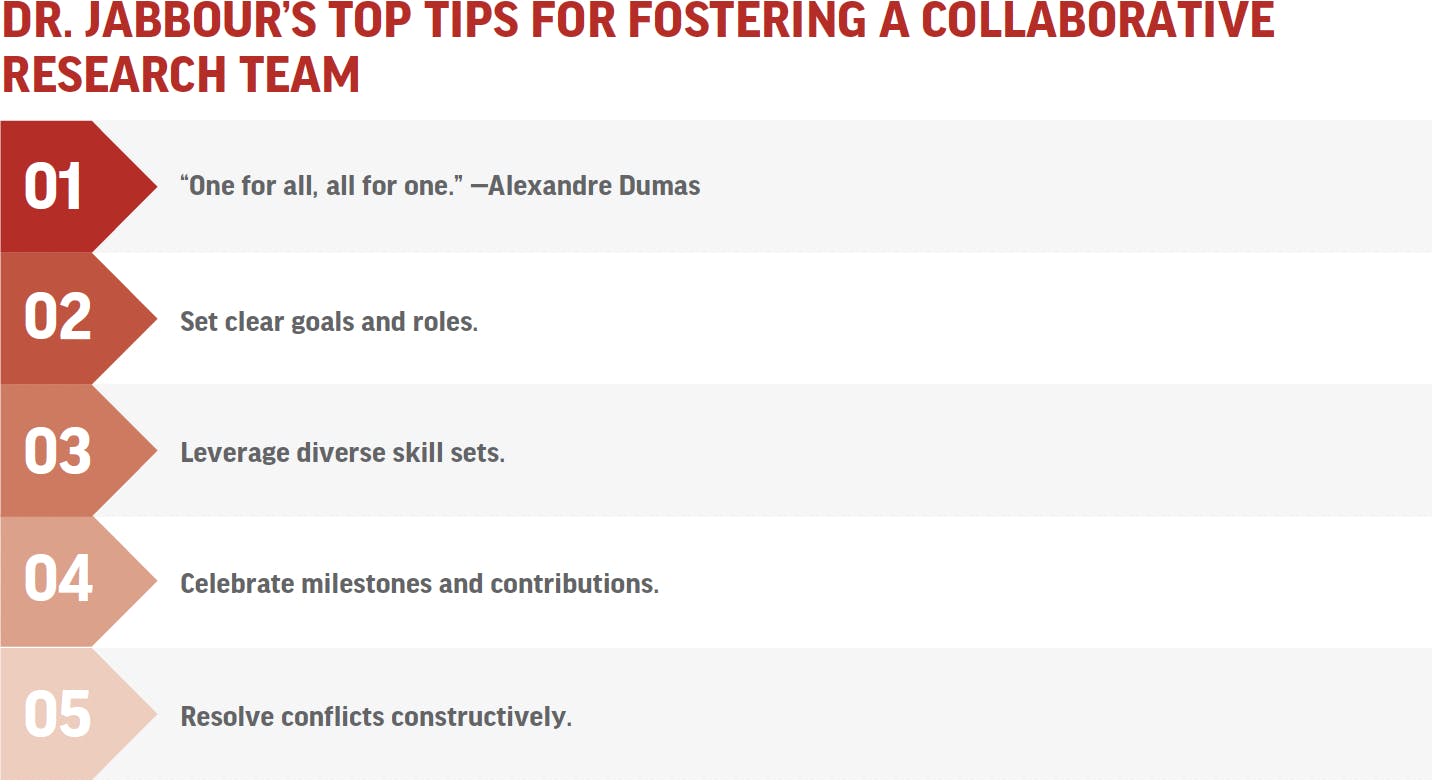
I consider myself lucky to be part of the Jefferson team, where we publish around 80 to 100 papers a year from the neurovascular division. In 2010, I created a new research fellowship position, and these fellows are the driving force behind our high publication volume; they maintain our database, are in charge of our clinical trials, and manage our multicenter collaborations.
This program is mainly geared toward international medical graduates interested in matching into neurosurgery residency in the United States, which can be nearly impossible. This position allows them the opportunity to improve their CVs and publish, and I also help them match into a neurosurgery residency program. I’ve been able to place every single research fellow of mine in a neurosurgery residency program for the last 15 years.
If you were to pick three recent papers that are representative of the Thomas Jefferson University Hospital Department of Neurological Surgery’s research priorities, what would they be?
1. Jabbour P, Dmytriw AA, Sweid A, et al. Characteristics of a COVID-19 cohort with large vessel occlusion: a multicenter international study. Neurosurgery. 2022;90:725-733. During COVID, we led a large international, multicenter study where we described for the first time the association between COVID and stroke in young patients. At that time, this was the largest series of patients with COVID with large vessel occlusion treated with mechanical thrombectomy.
2. El Naamani K, Chen CJ, Jabre R, et al. Direct versus indirect revascularization for moyamoya: a large multicenter study. J Neurol Neurosurg Psychiatry. 2024;95:256-263. We led this large multicenter collaboration where we looked at direct versus indirect revascularization in moyamoya patients. This study was published in JNNP, which is a high impact factor journal.
3. Musmar B, Adeeb N, Abdalrazeq H, et al. Comparative outcomes of arteriovenous malformations treatment in eloquent versus non-eloquent brain: a multicenter study with propensity-score weighting. Int J Stroke. Published online February 13, 2025. In this paper, we looked at a subpopulation of patients with brain arteriovenous malformation in eloquent areas and compared them to patients with noneloquent areas. In eloquent areas, there was a high risk of complications and lower obliteration rate.
What do you think are the current biggest challenges related to stroke care?
The biggest challenges are divided into three categories, prehospital, hospital, and posthospital.
- Prehospital challenges: Recognizing the stroke symptoms (the patients and their families), realizing the urgency, and getting to a thrombectomy center early enough to get the best outcome.
- Hospital challenges: Streamlining the process to allow for the shortest door-to-needle time, knowing how to select the best patient for mechanical thrombectomy, choosing the right tool to perform the procedure, and having a good neurocritical care team. It’s not enough to perform a mechanical thrombectomy—the medical management after the procedure is also crucial.
- Posthospital challenges: Rehab plays a major role in stroke recovery, and it’s very important to get those patients into a good rehab center in a timely manner; patient compliance with medication and with risk factor reduction are also challenges.
You’ve shared that you like to stress lifestyle changes for your patients to prevent recurrence and reduce risk. What do these conversations typically involve? What have you found most effective in encouraging these changes?
Prevention is key, and risk factor reduction is crucial to prevent patients from having a stroke or a recurrence of a stroke. I usually explain to my patients that 50% of a stroke is genetic; there’s nothing they can do about it. However, the rest is modifiable risk factors, and I encourage patients to try to keep these under control to reduce the risk of a stroke. This includes lifestyle changes like diet, exercise and smoking cessation, as well as making sure blood pressure, glycemia, and cholesterolemia are all under control. This is a collaborative effort involving primary care, physicians, and the stroke neurologist. Taking the time to explain to the patient the importance of lifestyle changes and risk reduction makes a big difference.
Outside of your work as a physician, you’re also a certified level 4 sommelier and can often be seen lecturing on wine tasting and hosting events. What do you like most about oenophilic pursuits, and as someone with a very demanding career, what benefit do you find that it offers?
Our field is very demanding and intense, and I think it is very important for each of us to have an interest outside the medical field to help decompress and open the horizons.
Growing up, I was interested by wine and the wine-making process. I started collecting wine during residency, and all of my readings outside the medical field were about wine. Eventually, I decided to go to wine school to pursue a degree. I am very proud to be a level 4 sommelier. This has helped me build international friendships and travel to so many exciting parts of the world! I also ventured into wine-making, and I truly believe the wine world is fascinating, from wine-making to blind tasting to food pairing. I’m increasingly invited to give wine lectures, which to me are as much fun as lecturing about my other passion of neurosurgery!
Advertisement
Advertisement
Interested in reading more interviews?
To read more interviews with thought leaders in the vascular field, check out our Profiles & Perspectives hub.
Read More