Advertisement
Advertisement
August 2025
Sponsored by Endologix
Navigating the Reimbursement Landscape for PTAB With the DETOUR™ System
A Q&A addressing common questions around coding, payment models, and value-based care alignment for percutaneous transmural arterial bypass (PTAB).
As the prevalence of complex peripheral artery disease (PAD) continues to rise, so too does the need for innovative solutions that deliver both clinical efficacy and economic value. Percutaneous transmural arterial bypass (PTAB) with the DETOUR™ System (Endologix) offers a novel endovascular approach to treating long, complex femoropopliteal disease, one historically relegated to open surgical bypass.
PTAB provides an entirely percutaneous, durable solution that bypasses complex long occlusions by rerouting blood flow through the femoral vein. Clinical evidence at 3 years has demonstrated its safety and efficacy through long-term patency, low complication rates, and shorter hospital stays compared to other treatment options.1
The DETOUR System is indicated for percutaneous revascularization in patients with symptomatic femoropopliteal lesions ranging from 200 to 460 mm in length. This therapy is especially valuable for patients with few remaining options, those who are poor surgical candidates due to severe comorbidities, those who have failed prior surgical bypass, or those who have undergone multiple unsuccessful endovascular interventions. It also offers a solution for chronic total occlusions that are not crossable using conventional techniques.
With innovation comes economic scrutiny. Hospitals and health systems face increasing pressure to balance quality outcomes with cost efficiency, particularly for new, high-tech interventions. This Q&A explores the health care economic and reimbursement landscape for PTAB—addressing common questions around coding, payment models, and value-based care alignment. While PTAB is not without up-front investment, its long-term potential to reduce hospital stays, reinterventions, and complications offers compelling value, both clinically for the patient and strategically for the system.
I’m new to DETOUR. What code(s) should I use to report the DETOUR procedure?
In most cases, the only code you would use is the category III CPT code 0505T, which was specifically created to report the DETOUR procedure:
“Endovenous femoral-popliteal arterial revascularization, with transcatheter placement of intravascular stent graft(s) and closure by any method, including percutaneous or open vascular access, ultrasound guidance for vascular access when performed, all catheterization(s) and intraprocedural road mapping and imaging guidance necessary to complete the intervention, all associated radiological supervision and interpretation, when performed, with crossing of the occlusive lesion in an extraluminal fashion”
As you can see, the most common procedural elements are captured in the code descriptor.
How much does CPT code 0505T pay the physician?
Medicare payment varies by geographical region and ranges from roughly $500 to $1,000. Private payer payment is negotiated independently between physicians and payers.
What if my employer’s physician compensation model is based on relative value units (RVUs) rather than dollars?
The Endologix Health Economics & Reimbursement (HE&R) staff have compiled a resource derived from recommendations made by physicians experienced in lower extremity revascularization, including DETOUR, and “crosswalked” DETOUR to CPT codes and associated RVUs based on similar physician work time and intensity, as well as anatomic location of the treatment.
DETOUR has a fixed price of $25,000. How does the transitional pass-through payment make the DETOUR program financially feasible for a hospital?
As an FDA-designated Breakthrough Device, DETOUR is eligible for the transitional pass-through payment in the outpatient payment program and the new technology add-on payment (NTAP) in the inpatient payment program. These incremental payments, added to the standard Medicare hospital procedural payments, are designed to (i) cover the cost of the technology through the outpatient pass-through payment program, or (ii) defray the cost of the technology as the costliest component of the total cost of the procedure in the inpatient NTAP program.
As an example under Medicare, the average outpatient procedural payment is $11,341, and the average inpatient payments range from $12,485 to $24,481 depending on patient illness severity and the corresponding DRG selected by the billing software. The incremental device-related payments are added to the procedural payments. The DETOUR procedure is most commonly performed in the outpatient setting, and Figure 1 shows an example of how the transitional pass-through payment can work in a high-level pro forma, using national average payment data.
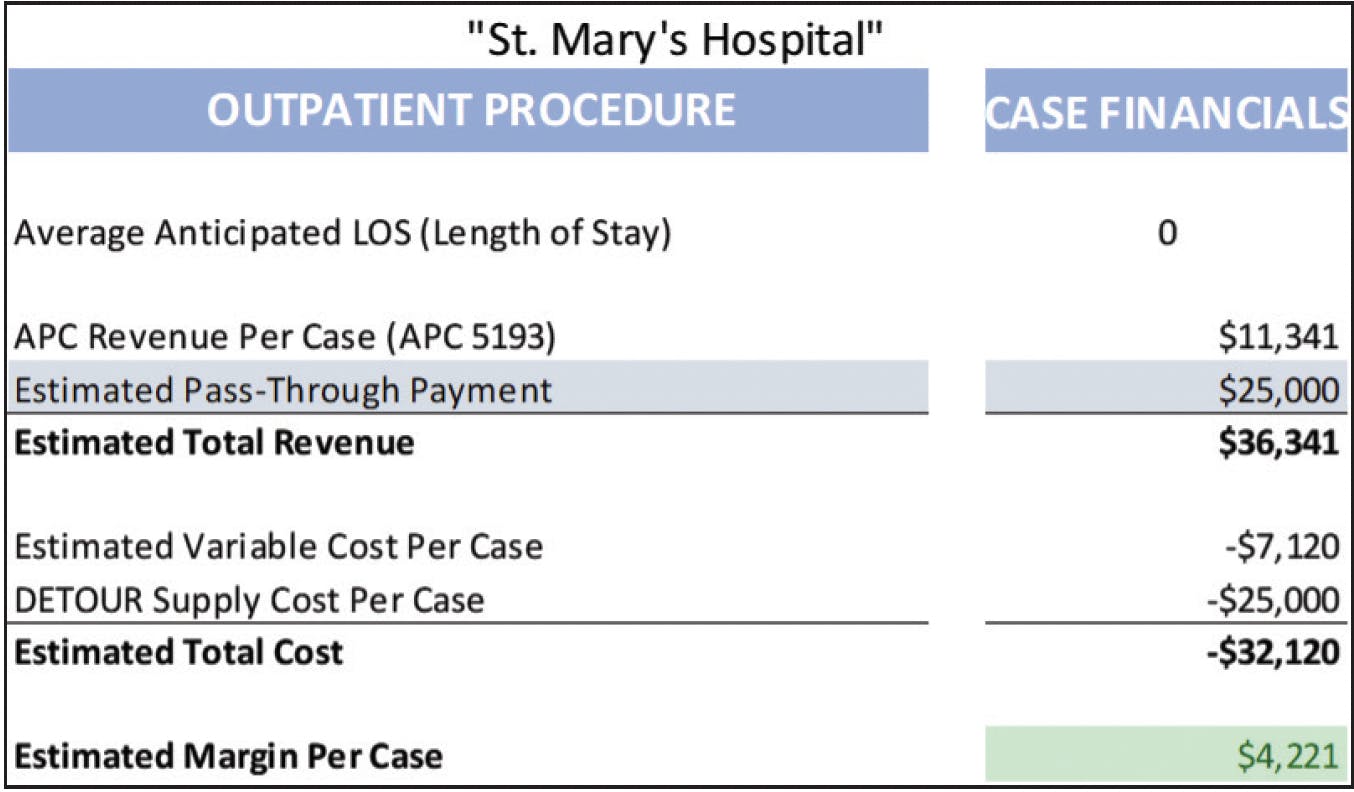
Figure 1. An example of transitional pass-through payment APC (Ambulatory Payment Classification).
Medicare calculates the pass-through payment based on the submitted charges for the DETOUR System, adjusted to cost using the hospital-specific, implantable device cost-to-charge ratio (CCR). Each hospital has a unique device CCR and procedural payment, and Endologix HE&R staff can prepare a pro forma tailored to hospital-specific financial inputs to generate an estimated financial outcome (Figure 2).
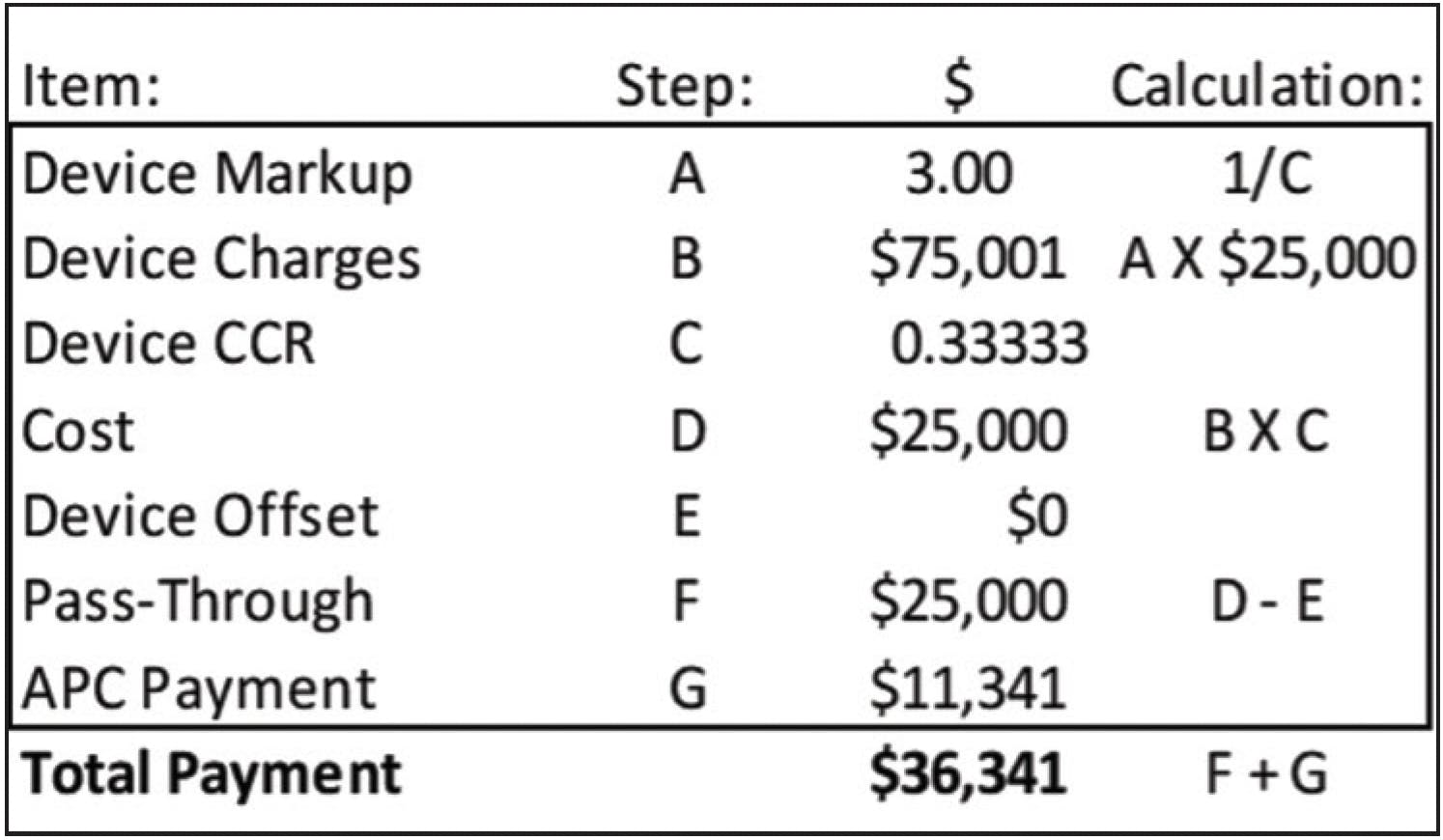
Figure 2. An example of estimated financial outcome based on hospital-specific inputs.
Additionally, many private payers are paying incrementally for the DETOUR System through a variety of mechanisms, including “Medicare payment methodology,” carve-outs and payments based on invoice, and single-case agreements. Endologix HE&R staff are available to work with finance departments and other relevant hospital functions to demonstrate the financial feasibility of a DETOUR program.
Does health insurance cover DETOUR?
Medicare has no DETOUR-specific coverage policies, and, importantly, no negative policies; thus, the DETOUR procedure is paid based on a determination of “medical necessity,” like most medical care paid for by Medicare. Several private payers, including Anthem and Cigna, have positive policies for DETOUR, and Endologix recommends seeking prior authorization in all cases with private payers.
Does Endologix offer assistance with prior authorization and payer claims processes?
Yes. Through the Reimbursement Support Center (RSC)—a HIPAA-compliant service provided to customers for the benefit of their patients—Endologix will either seek prior authorization or provide the template materials and knowledge that office staff can use to seek prior authorization. The RSC can answer questions and provide general guidance to the office staff toward successfully obtaining authorization and payment for the DETOUR procedure. (The RSC has a 94% success rate in obtaining prior authorization for the DETOUR procedure.)
What is the DETOUR procedure patient out-of-pocket (OOP) payment responsibility?
Medicare Part A and B beneficiaries will have a maximum facility OOP of $1,632 after satisfying the Medicare annual deductible and 20% of the physician Medicare payment. There is no patient OOP responsibility for the DETOUR System pass-through payment. For patients with Medicare Advantage and other private health plans, OOP will vary by health plan, benefit structure, and other factors. Patients are recommended to check with their provider and payer for more precise information.
Conclusion
The DETOUR System represents a significant advancement in the treatment of complex PAD, combining strong long-term clinical evidence, a fully percutaneous approach, and a favorable reimbursement pathway, including transitional pass-through and payer-specific solutions. PTAB with DETOUR offers hospitals and physicians a feasible path forward in treating PAD. This breakthrough therapy is designed for patients with long, complex superficial femoral artery disease, delivering surgical-level durability with the safety benefits of a minimally invasive approach. As adoption grows, DETOUR continues to redefine what’s possible in femoropopliteal revascularization, bringing meaningful value to patients, physicians, and health systems alike.
Important Note: This article is for informational purposes only and contains data from publicly available sources. It does not contain legal or billing advice. For specific claims or reimbursement guidance, please confer with your billing team, consultant, or legal counsel.
1. Lyden SP. Results of the DETOUR2 study: durability of percutaneous transmural arterial bypass for treatment for complex femoropopliteal disease. Presented at VAM 2024; June 19-22, 2024; Chicago, Illinois.
The DETOUR™️ System and associated components, ENDOCROSS™ Device and TORUS™ Stent Graft System, are not available in all countries or regions. Please contact your Endologix representative for details regarding product availability. Prior to use, refer to Instructions for Use for more information concerning Indications, Contraindications, Specific Anatomic Considerations, Warnings, Precautions, and Adverse Events. Rx only.
©2025 Endologix LLC. All rights reserved. MM2937-US Rev 01
CPT® codes and descriptions are copyright 2024 American Medical Association (AMA). All rights reserved. CPT® is a registered trademark of the AMA.
Applicable FARS/DFARS Restrictions Apply to Government Use. Fee schedules, relative value units, conversion factors and/or related components are not assigned by the AMA, are not part of CPT®, and the AMA is not recommending their use. The AMA does not directly or indirectly practice medicine or dispense medical services. The AMA assumes no liability for data contained or not contained herein.
Advertisement
Advertisement