Advertisement
Advertisement
August 2025
Urgent-Start Peritoneal Dialysis: Patient Selection and Procedural Considerations
An interventional radiologist’s guide to placement of urgent peritoneal dialysis catheters, an efficient, cost-effective, minimally invasive alternative to traditional surgical placement.
By Ahmed K. Abdel-Aal, MD, PhD; Mohamed Shahin, MD, PhD, MBA; Shahroz K. Aziz, MD; Husameddin M. El Khudari, MD; and Ammar Almehmi, MD, MPH
Peritoneal dialysis (PD) is favored over hemodialysis (HD) in many developing countries due to factors including the socioeconomic status of the patient, medical insurance, accessibility to the medical system, and availability of equipment. Outcomes for PD appear to be similar, or even superior, to HD therapy.1,2 Studies have shown a survival advantage with PD over HD in the first 2 years of therapy, with equivalent outcomes at 5 years.3-7 Further, the notion that increasing age, comorbid conditions, and body mass index (BMI) are contraindications to PD use in the dialysis population have been dispelled.8
URGENT-START PD: BACKGROUND AND INTERVENTIONAL RADIOLOGY INVOLVEMENT
PD catheter placement in the late-referred chronic kidney disease (CKD) patient can be performed on an urgent basis. Typically, late-referred CKD patients, even those felt suitable for PD, would be initiated on HD with a temporary vascular access due to the inability to place an urgent surgical PD catheter. However, these temporary vascular catheters are associated with a high risk of bacteremia and sepsis, recurrent hospital admissions, and malfunction requiring replacement.9
Initiating dialysis with a PD catheter in the late-referred patient allows for a single procedure to suffice for short- and long-term access. An urgent-start PD (USPD) setting is defined as PD catheter insertion within 24 to 48 hours of presentation with kidney failure in a patient with no prior vascular access. The placement of urgent PD catheters by interventional radiology (IR) was introduced as a quality improvement pathway to avoid temporary vascular access catheters in late-referred advanced CKD patients who are deemed to be suitable PD candidates10 An increasing number of USPD programs have since been created worldwide.
PD catheter placement can be performed by surgeons in the operating room or by interventional radiologists and nephrologists using minimally invasive techniques in the IR suite or outpatient procedure center. Surgical placement has evolved from simple open laparotomy to basic laparoscopic and advanced laparoscopic techniques that include tunneling of catheter segments within the rectus muscle sheath, adhesiolysis, and omentopexy.11 Successful surgical placement of PD catheters has been described using all of the surgical techniques; however, these outcomes may be largely due to individual operator experience and skill set.
PD catheter placement by IR allows for certain operational efficiencies, including avoiding the need for initial surgical consultation and operating room scheduling, as well as preoperative anesthesia evaluation and workup. It also reduces hospital costs and length of stay, as the procedure can be performed on an outpatient basis. Therefore, PD catheter placement by IR has been advocated as a cost-effective and efficient procedure.12
PATIENT SELECTION
The indications and contraindications for placement of PD catheters are similar between the surgical and interventional approaches, although a laparoscopic approach may be advantageous for patients with a BMI > 30 kg/m2, a prior history of abdominal surgeries, or hernias, as this approach allows for simultaneously performing adhesiolysis, omentopexy, and hernia repair.13 Absolute contraindications to PD catheter placement include ongoing infection (eg, active diverticulitis), recent placement of gastrostomy/enterostomy, and coagulopathy. Relative contraindications include previous abdominopelvic surgery, inflammatory bowel disease, chronic constipation, abdominal wall hernias/mesh, and morbid obesity. A dedicated PD management team should assess the home cleanliness, manual dexterity, visual acuity, and physical ability of the patient.14,15
PROCEDURAL CONSIDERATIONS
Bowel Preparation
Bowel preparation should be performed the night before the procedure to decrease the risk of bowel injury and postprocedural constipation. Phosphate and magnesium enemas should be avoided in renal failure patients.14,16
Catheter Selection and Site Markings
The patient’s weight and body habitus determine the catheter exit site location, which could be above/below the belt line or presternal. Exit site and laterality is decided based on the patient’s preference. The belt line should be identified to determine the peritoneal entry and skin exit sites.
Although there are significant advantages to the designs of all the available catheters, the most-used design is the double-cuff, swan-neck Tenckhoff catheter (Figure 1). To avoid pericatheter leaks, the deep (preperitoneal) cuff is secured within the rectus abdominis muscle substance. To lessen the likelihood of cuff infection or extrusion, the superficial (subcutaneous) cuff is inserted into the subcutaneous tissue about 2 to 3 cm away from the exit site location. The cuffs are manually squeezed in a saline-filled bowl to release trapped air and facilitate tissue ingrowth.15
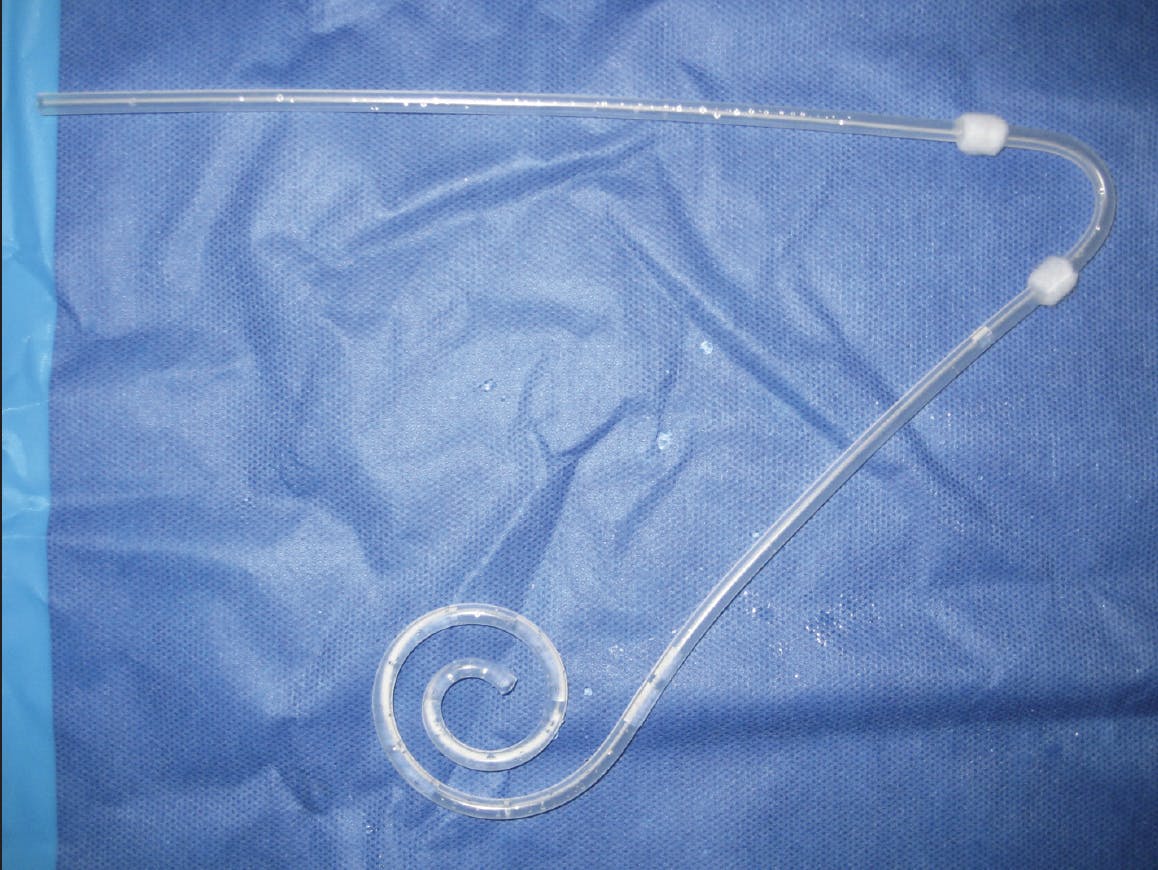
Figure 1. The most commonly used design of PD catheters: the double-cuff, swan-neck Tenckhoff catheter.
Image Guidance and Placement Technique
Preferably, ultrasound and fluoroscopy are used to guide placement. The entry site should be approximately 2 to 4 cm lateral to the umbilicus at a site in the midrectus muscle to anchor the deep cuff. Using ultrasound guidance, access to the peritoneum is performed using a 21-gauge micropuncture needle advanced at 45° toward the pelvis (Figure 2). A blunt-tip needle or Veress needle can be used to avoid bowel injury. Peritoneal location of the needle should be confirmed using a small amount of iodinated contrast under fluoroscopy (Figure 3). The needle is then exchanged for a 4- or 5-F microsheath, and a 0.035-inch guidewire is inserted and manipulated into the pelvis. To access the cul de sac, a Bentson wire (Cook Medical) or Glidewire (Terumo Interventional Systems) and Berenstein or Cobra catheter are used. Because the cul de sac is the most dependent part of the peritoneum and is devoid of the omentum and small intestine, placing the catheter tip at that location enhances the efficiency of dialysate exchange and prevents omental wrap. Ipsilateral oblique projections can help manipulate the wire into the cul de sac posteriorly.14,16,17
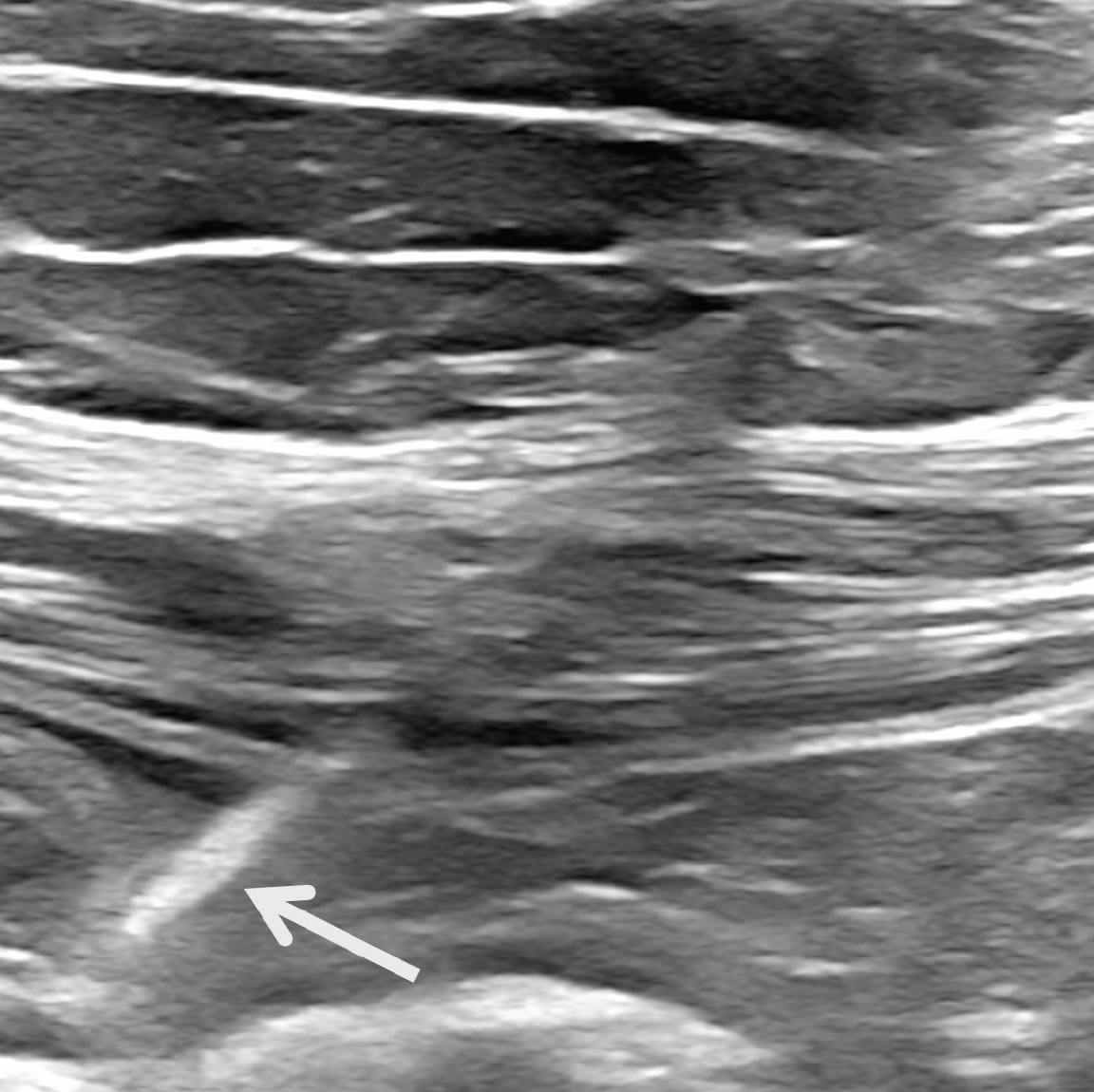
Figure 2. Ultrasound-guided access with the tip of the needle (arrow) in the peritoneal cavity.
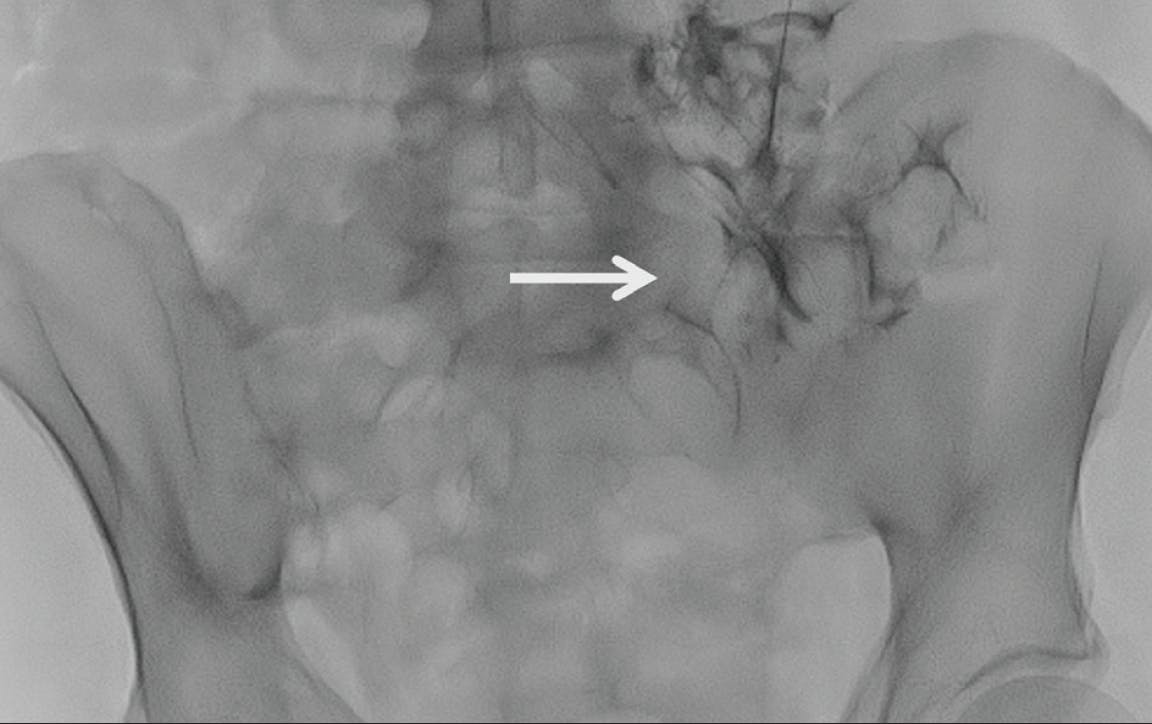
Figure 3. Fluoroscopic image after injection of contrast through the access needle showing diffuse spread of contrast around the bowel loops (arrow).
After a skin incision is made at the entry site, dissection to the level of the anterior rectus sheath is performed, and a 6-F introducer sheath is advanced over the wire into the peritoneal cavity using fluoroscopic guidance. The peritoneal cavity is then filled with 500 to 1,000 mL of normal saline to separate bowel loops and allow placement of the PD catheter in a pelvic location. The tract is then serially dilated up to 16 F to allow for placement of the pull-apart sheath, again under fluoroscopic guidance (Figure 4). The coiled end of the catheter is advanced in the pull-apart sheath and then into the cul de sac (Figure 5), and the deep cuff is buried in the rectus abdominis muscle.15
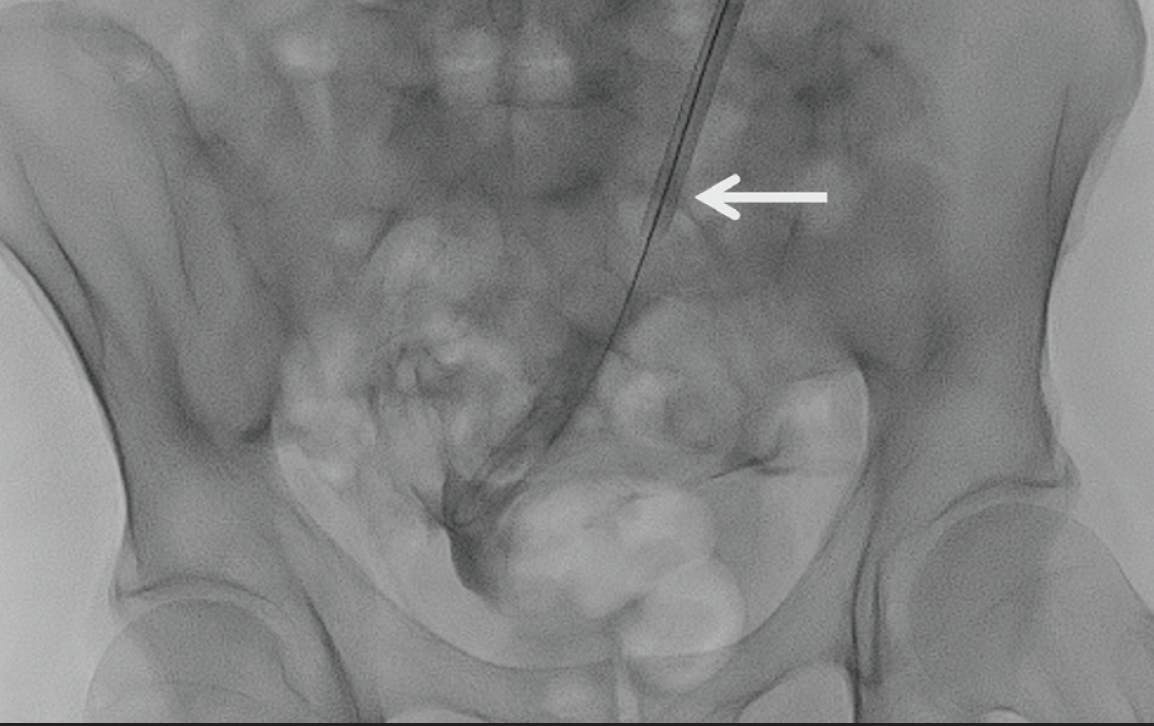
Figure 4. Placement of the pull-apart sheath (arrow) over the wire after dilatation.
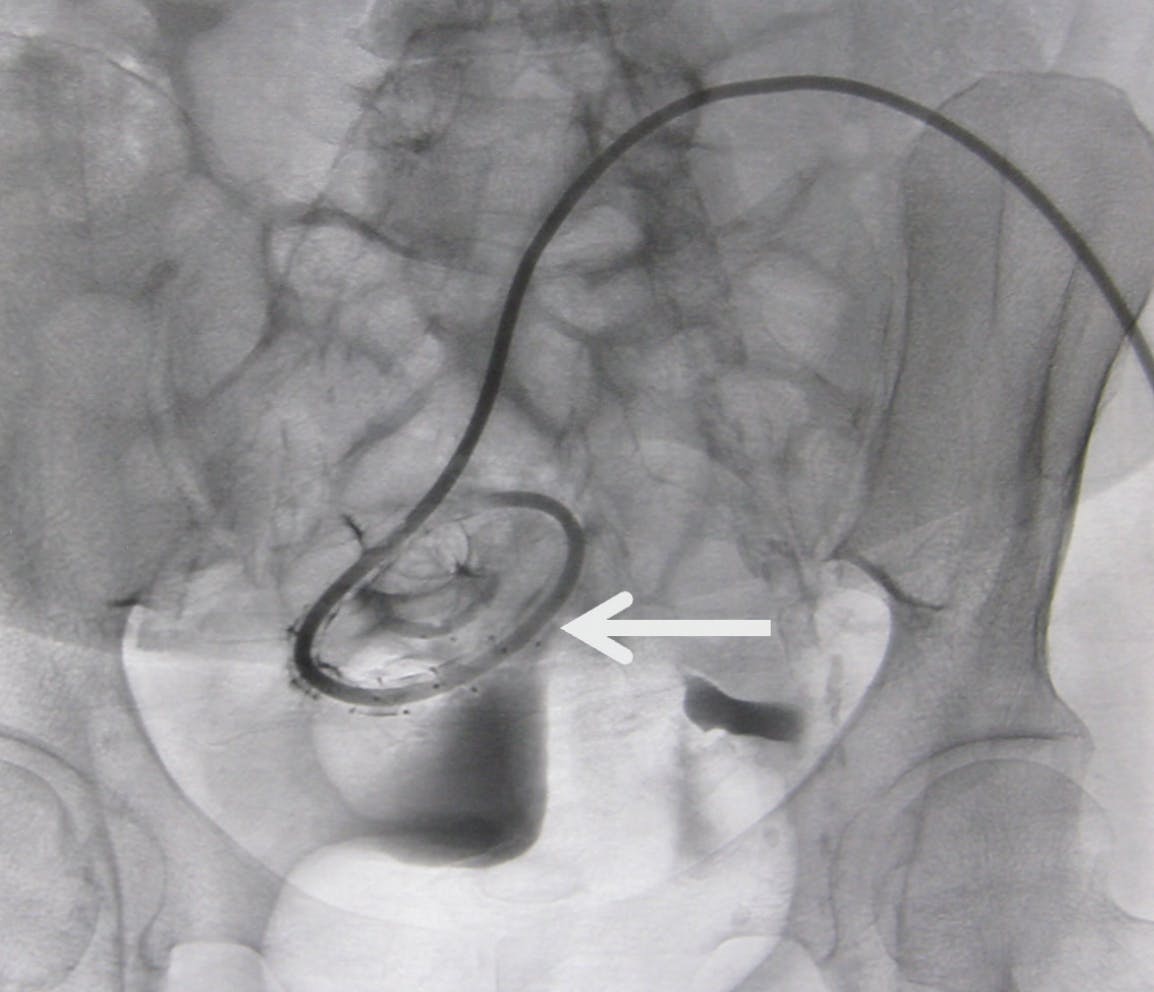
Figure 5. Injection of contrast in the PD catheter after placement in the pelvis, showing free flow of contrast and absence of any kinks.
A catheter exit site is chosen approximately 4 cm inferior and lateral to the peritoneal entry site to avoid debris and sweat from entering the tunnel and causing tunnel infection. The straight end of the catheter is then tunneled toward the exit site with caution to avoid dislodging the deep cuff. After attaching a Luer lock adapter, contrast is injected to confirm appropriate positioning of the catheter without kinks and free flow of contrast into the peritoneal cavity. The catheter functionality is tested by infusing 1 L of warm normal saline, to avoid hypothermia. The entry site incision is closed in two layers. A topical skin adhesive may be applied. Suturing at the catheter exit site is prohibited, as it is associated with high risk of tunnel infection.14-17 A MiniCap transfer set (Baxter Healthcare) containing povidone-iodine is then attached. The final dressing can be accomplished using an impermeable, sterile, transparent, semiocclusive dressing such as Tegaderm (3M).
Postprocedure Catheter Care
Unless there are signs of bleeding or suspicion of infection, the dressing should not be changed until at least 7 days postprocedure, and it should be done by health care personnel. The exit site should be kept dry for 3 weeks until healing is complete, with only sponge showers permitted. To avoid dislodgement of the deep rectus abdominis cuff, the patient should abstain from heavy lifting for 4 weeks.
Technical Considerations in Obese Patients
To allow for better accuracy and localization in obese patients, bony landmarks (iliac crests) should be used instead of the belt line.14,16,18 A curved ultrasound transducer and a longer, 22-gauge, 15-cm Chiba needle may be needed for peritoneal entry.18 In cases of morbid obesity, it is recommended to place a surgical presternal PD catheter under general anesthesia.19
Potential Complications
Overall, percutaneous insertion of USPD catheters has demonstrated increased risk of mechanical complications such as catheter migration and leakage compared to standard PD placement, regardless of catheter type or technique.20,21 To reduce catheter leak, it is recommended that patients decrease the dialysate volume and perform dialysis in a recumbent position until the track matures.10,20 Studies have found that catheter-related peritonitis in USPD patients is associated with younger age, higher creatinine levels, and presence of heart failure.21
OUTCOMES
The most common complications of the USPD procedure are tunnel infection and peritonitis, major and minor leaks, primary catheter dysfunction, and bowel perforation.22 Several studies have shown similar outcomes between surgically placed catheters and those placed percutaneously using image-guided techniques. However, there was a trend toward greater leakage, malfunction, malposition, and bleeding in the surgical group. Only the newer and less used advanced laparoscopic techniques appear to have superior outcomes to radiologically placed catheters.23-26
CONCLUSION
In this new era of USPD, placement of a PD catheter within 24 to 48 hours is an essential component to a successful program. The placement of PD catheters by interventional radiologists offers a more expeditious way for catheter placement. Apart from being a cost-effective, minimally invasive alternative to traditional surgical placement in the operating room under general anesthesia, PD catheter placement with the IR technique allows for urgent initiation of PD and avoids the need for temporary vascular access catheters. The use of ultrasound and fluoroscopic guidance offers enhanced safety and confirmation of catheter placement, and it also minimizes complications.
1. Yu AW, Chau KF, Ho YW, Li PK. Development of the “peritoneal dialysis first” model in Hong Kong. Perit Dial Int. 2007;27(suppl 2):S53-S55.
2. Li PK, Szeto CC. Success of the peritoneal dialysis programme in Hong Kong. Nephrol Dial Transplant. 2008;23:1475-1478. doi: 10.1093/ndt/gfn068
3. Vonesh EF, Snyder JJ, Foley RN, Collins AJ. The differential impact of risk factors on mortality in hemodialysis and peritoneal dialysis. Kidney Int. 2004;66:2398-2401. doi: 10.1111/j.1523-1755.2004.66028.x
4. Heaf JG, Løkkegaard H, Madsen M. Initial survival advantage of peritoneal dialysis relative to hemodialysis. Nephrol Dial Transplant. 2002;17:112-117. doi: 10.1093/ndt/17.1.112
5. Fenton SS, Schaubel DE, Desmeules M, et al. Hemodialysis versus peritoneal dialysis: a comparison of adjusted mortality rates. Am J Kidney Dis. 1997;30:334-342. doi: 10.1016/s0272-6386(97)90276-6
6. Jaar BG, Coresh J, Plantinga LC, et al. Comparing the risk for death with peritoneal dialysis and hemodialysis in a national cohort of patients with chronic kidney disease. Ann Intern Med. 2005;143:174-183. doi: 10.7326/0003-4819-143-3-200508020-00003
7. Weinhandl ED, Foley RN, Gilbertson DT, et al. Propensity-matched mortality comparison of incident hemodialysis and peritoneal dialysis patients. J Am Soc Nephrol. 2010;21:499-506.
8. Mehrotra R, Kermah D, Fried L, et al. Chronic peritoneal dialysis in the United States: declining utilization despite improving outcomes. J Am Soc Nephrol. 2007;18:2781-2788. doi: 10.1681/ASN.2006101130
9. Vats HS. Complications of catheters: tunneled and nontunneled. Adv Chronic Kidney Dis. 2012;19:188-94. doi: 10.1053/j.ackd.2012.04.004
10. Ghaffari A. Urgent-start peritoneal dialysis: a quality improvement report. Am J Kidney Dis. 2012;59:400-408. doi: 10.1053/j.ajkd.2011.08.034
11. Crabtree JH, Burchette RJ. Effective use of laparoscopy for long-term peritoneal dialysis access. Am J Surg. 2009;198:135-141. doi: 10.1016/j.amjsurg.2008.10.019
12. Brunier G, Hiller JA, Drayton S, et al. A change to radiological peritoneal dialysis catheter insertion: three-month outcomes. Perit Dial Int. 2010;30:528-533. doi: 10.3747/pdi.2009.00114
13. Zheng S, Drasin T, Dybbro P, et al. Advanced image-guided percutaneous technique versus advanced laparoscopic surgical technique for peritoneal dialysis catheter placement. Kidney Med. 2023;6:100744. doi: 10.1016/j.xkme.2023.100744
14. Morris CS. Interventional radiology placement and management of tunneled peritoneal dialysis catheters: a pictorial review. Radiographics. 2020;40:789-1806. doi: 10.1148/rg.2020200063
15. Khudari HE, Abdel-Aal AK, Abaza M, et al. Peritoneal dialysis catheter placement: percutaneous and peritoneoscopic techniques. Semin Intervent Radiol. 2022;39:23-31. doi: 10.1055/s-0041-1740940
16. Abdel-Aal AK, Joshi AK, Saddekni S, Maya ID. Fluoroscopic and sonographic guidance to place peritoneal catheters: how we do it. AJR Am J Roentgenol. 2009;192:1085-1089. doi: 10.2214/AJR.07.4017
17. Abdel Aal AK, Mahmoud K, Moustafa AS, et al. Comparative study on the outcomes of elective-start versus urgent-start peritoneal dialysis catheter placement. Radiol Res Pract. 2020;2020:3751827. doi: 10.1155/2020/3751827
18. Abdel-Aal AK, Dybbro P, Hathaway P, et al. Best practices consensus protocol for peritoneal dialysis catheter placement by interventional radiologists. Perit Dial Int. 201;34:481-493. doi: 10.3747/pdi.2013.00029
19. Kandinata N, Van Fossen K. Anatomy, abdomen and pelvis: epigastric artery. In: StatPearls [Internet]. StatPearls Publishing; 2025. Updated August 14, 2023. https://www.ncbi.nlm.nih.gov/books/NBK537156/
20. Phongphithakchai A, Dandecha P, Raksasuk S, Srithongkul T. Urgent-start peritoneal dialysis for end-stage renal disease patients: literature review and worldwide evidence-based practice. Ren Replace Ther. 2021;7. https://doi.org/10.1186/s41100-021-00384-2
21. Hernández-Castillo JL, Balderas-Juárez J, Jiménez-Zarazúa O, et al. Factors associated with urgent-start peritoneal dialysis catheter complications in ESRD. Kidney Int Rep. 2020;5:1722-1728. doi: 10.1016/j.ekir.2020.07.025
22. Kim K, Son YK, Lee SM, et al. Early technical complications and long-term survival of urgent peritoneal dialysis according to break-in periods. PLoS One. 2018;13:e0206426. doi: 10.1371/journal.pone.0206426
23. Liu FX, Ghaffari A, Dhatt H, et al. Economic evaluation of urgent-start peritoneal dialysis versus urgent-start hemodialysis in the United States. Medicine (Baltimore). 2014;93:e293. doi: 10.1097/MD.0000000000000293
24. Oza-Gajera BP, Abdel-Aal AK, Almehmi A. Complications of percutaneous peritoneal dialysis catheter. Semin Intervent Radiol. 2022;39:40-46. doi: 10.1055/s-0041-1741484
25. Abdel Aal AK, Guest SS, Moawad S, et al. Outcomes of fluoroscopic and ultrasound-guided placement versus laparoscopic placement of peritoneal dialysis catheters. Clin Kidney J. 2018;11:549-554. Published correction appears in Clin Kidney J. 2018;12:308. doi: 10.1093/ckj/sfx132
26. Maher E, Wolley MJ, Abbas SA, et al. Fluoroscopic versus laparoscopic implantation of peritoneal dialysis catheters: a retrospective cohort study. J Vasc Interv Radiol. 2014;25:895-903. doi: 10.1016/j.jvir.2014.01.023
Advertisement
Advertisement