Advertisement
Advertisement
February 2025
Embolization: From the Academic Center to Private Practice
Dr. Jafar Golzarian discusses his move from academic practice to an OBL, case selection and procedure planning, decision-making for what’s on the shelf, cost considerations, and his advice for establishing an OBL practice and working with industry on device procurement.
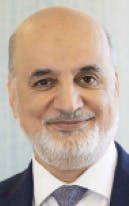
After many years in academic practice, you have transitioned to an office-based lab (OBL) setting. Why did you choose to make the switch?
I’ve spent 30 years in academic practice in a tenured position, and the complexity of system in an academic institution or hospital makes it very difficult to really put the patient front and center. This is not to say that patients are not the focus in these settings, but there are so many things that factor into decision-making. Any decision to change a machine is likely going to be a long-term project. Acquiring new materials usually comes through a committee that has no interventional radiology voice, and they primarily look at the cost instead of what tools are best for the patient. In addition, a lot of staff are leaving in favor of a better quality of life and work/life balance. Similarly, there are complexities in doing research, bringing in an industry partner to help become a center of excellence, and physician training.
Given these complexities, I just started to think: Is there any other way to deliver treatment to patients? I started to look at other options and talk to other physicians, and the idea of an OBL/ambulatory surgical center became more and more attractive. In my opinion, in the OBL setting, I can do a better job of making the patient the center of attention. Access is easier, communication and scheduling are easier, and patients get to know the staff. It’s much more personal.
Are there particular cases that you do in one setting versus the other, and how do you make those decisions?
There are multiple things that factor into the decision-making about case selection. A combination of complexity of the case, cause/type of procedure, and need for admission/anesthesia are all important considerations when deciding between the hospital or OBL setting. I don’t like to do a case in the OBL and then have to admit the patient at the hospital. So, for complex cases, I think it’s better to treat the patient in the hospital. Another consideration is whether the patient needs general anesthesia, and those patients are better treated in a hospital setting. Cost is another thing you have to keep in mind. In the OBL setting, you get an overall lump sum, including your expenses, your nurse and techs, and your physician fee. There is no specific facility fee for the OBL. For example, consider a case such as a visceral or splenic aneurysm that might require embolization with five to 10 large, detachable coils. Given the cost of the coils, the whole price of the procedure has just skyrocketed, and for an OBL, this is definitely not an ideal case.
Regarding decision-making for what’s on the shelf for any given case, how important is research into cost-effectiveness of particular options?
In an OBL, you learn to do procedures that make financial sense, and you try to adjust how you perform procedure so that you can minimize the cost. Of course, some materials are never going to be used in an OBL due to cost. For example, some of the liquid embolics are quite expensive, so they will likely not be used in an OBL setting. Although glue is used in the OBL setting, there are instances when it’s mixed, which increases the cost. Because of this, you might focus on procedures such as fibroid embolization, prostate artery embolization, genicular artery embolization, and treatment of peripheral artery disease and varicose veins in the OBL. Some insurances accept delivery of yttrium-90 in the site of service, so we can use it in the OBL. I think treating cancer patients in the OBL makes a lot of sense.
For some of the procedures that may not be as marketable, how do you generate referrals?
I invited some physicians initially to come and see the OBL for a tour and watch some procedures. They realized we have more advanced equipment for cone-beam CT and vessel mapping, and then they started to refer more patients. Others saw that referring to our OBL is actually easier than through the hospital, and they know the patient will return back to their care after the referral.
Because we are in the age of digital marketing, we market in two ways. First, we try to use social media to our advantage and promote the procedures we’re doing. Second, through a marketing group, we target advertisements to specific populations of patients, such as prostate or uterine fibroid.
In addition, I try to cultivate relationships with referring physicians. For instance, I give lectures to other physician groups on the types of embolization procedures we perform. I communicate with referring physicians through text on the status of their patients to keep them in the loop. This goes a long way in establishing more referrals.
Is there any difference in the OBL versus the hospital setting in how you schedule your cases? Do you cluster similar cases together, or do you just schedule as it comes?
The beauty of the OBL is that you can schedule to your preference, and my colleague (Dr. Amin Astani) and I try to fit what works best for the patient. As you begin in an OBL, you are not quite sure how many patients you can treat on a daily basis, and as you become busier, you start to adjust to your capacity and then can determine if you need additional personnel. This is different than in the hospital, where you have to go through a lot of administration to request more personnel. In our OBL, our goal is to perform a maximum four cases a day. Right now, we tend to cluster procedures.
Are there any differences in the procedure itself from one setting to the next?
Yes, there’s a slight difference in personnel between the OBL and hospital. We have a scrub tech in our OBL who scrubs in and helps during the whole process, which we didn’t have at the hospital, and we don’t have a fellow. We also have a second tech and one nurse in the room.
Along with case selection and leaving the more complex cases for the hospital, is there anything you do additionally to ensure safety throughout?
Our goal is always to be able to provide the best patient care. We are really committed to hiring the best staff and having the best equipment to take care of our patients. We take extra precautions during scheduling in reviewing patient labs and the patient’s ability to tolerate sedation, and we discuss the plan with the nurses. We really have exceptional capabilities at our OBL.
What would you recommend to colleagues about starting an OBL? What are the “musts”?
As a first step, I recommend that you go and see how different OBLs operate and their equipment. Do they have a mobile C-arm or a fixed unit? What are their building space and room setup like? Talk to your colleagues about their perspectives. Then, you can start to make your own judgment about the complexity of establishing an OBL practice.
Once you’re set on starting an OBL, I would recommend that you don’t do it alone. Find a group, a manager, who can help you with the process of finding a space, understanding financing, negotiating with the payers, and establishing contracts, systems, and licenses.
Do you have any tips on differences or nuances in working with industry on your procurement?
There are groups, such as Margin, that specialize in negotiating with industry to obtain a central price. Margin has technology where you can order supplies directly based on the price they have negotiated. For peripheral vascular disease, a lot of companies have what you need within a reasonable price. For embolization, most companies do not yet understand OBL pricing compared to the hospital, but they are getting there.
In an OBL, initially, I recommend one main device/material and a backup and use those for most cases until you become proficient. Then, little by little, you realize that 90% of all your procedures can be done with one specific microcatheter and through one provider. Some OBLs work with one company and use their devices, but in our practice, we work with multiple companies to obtain our tools.
How has the society interaction with OBL physicians changed over the past few years, and what do you see as the future?
I think most societies have started to incorporate OBL physicians and content into their meetings. The Society of Interventional Radiology added a 2-day meeting solely on revenue cycle management, and at the annual meeting, there is a whole section on OBLs. Last year, GEST started a main session on OBLs and is initiating a webinar service. And as we know, OEIS (Outpatient Endovascular and Interventional Society) was created to support OBL physicians. Even in Europe, physicians are leaving academia to go into private practice, and some OBL-focused sessions are included in meetings there.
I think these societies should work together to develop guidelines on the dos and don’ts of establishing an OBL. We’re not there yet, but I think it’s something that we should definitely focus on.
There have been positive and negative headlines surrounding outpatient facilities. How do we ensure that this stays a positive experience in the embolization space and appropriate care is offered at all locations?
I think having society guidelines on patient selection for the OBL would be beneficial to help guide appropriate care. We have to work in collaboration with other physician groups and not undermine their value. We should be motivated to provide the best care for the patient and not by financial interests.
Advertisement
Advertisement